
Why Victoria’s NTB Visit Matters Beyond the Ceremony
A Lombok Notebook on what Crown Princess Victoria’s NTB visit signals, and what disciplined investors should not infer from it.
Quick answer: Crown Princess Victoria of Sweden’s visit to Mataram gives West Nusa Tenggara a rare international showcase for its tourism, agricultural and creative-economy potential. For Lombok investors, it is a useful reputational signal, not evidence of a new investment programme, policy change or immediate uplift in asset values.
Diplomatic visits can look ceremonial from afar. Yet they can also concentrate attention on places that are usually understood only through a narrow tourism lens. Crown Princess Victoria’s programme in West Nusa Tenggara (NTB) offered a more textured introduction: one centred on local enterprise, recovery, craft and the institutional work of the United Nations Development Programme (UNDP).
The Context
Governor Lalu Muhammad Iqbal described the visit as an opportunity to introduce NTB’s strengths and potential to a broader international audience, particularly in Sweden. The emphasis matters. The provincial case being presented was not confined to beaches or resort development; it joined tourism and agriculture with locally made products and small-business capability.
During her visit to the craft and creative-industry hub at the Hubbul Wathan Mosque Islamic Center Complex in Mataram, Crown Princess Victoria viewed typical NTB products including woven fabrics, pearls, processed foods and souvenirs. The head of the NTB Industry and Trade Office, Lalu Wiranata, confirmed that she bought pearls and woven fabrics, noting her interest in the natural dyes used in the textiles.
That detail is modest, but it conveys something investors often miss. International exposure is not only created through airport arrivals, hotel openings or large announcements. It can also emerge through credible encounters with products whose provenance, workmanship and local economic connection are immediately legible.
“She bought some items, but we have yet to calculate the value,” Lalu Wiranata said, according to Antara Business.
There is no basis for treating the purchases themselves as an economic measure. Their significance is symbolic: the visit brought the province’s exportable story into direct contact with an international public figure acting in her role as a UNDP Goodwill Ambassador.
For a region seeking wider recognition, this kind of visibility is best understood as a long-duration asset. It may enlarge the set of people who recognise NTB, prompt further institutional conversations, and make the province easier to place in an international discussion about tourism, sustainability and livelihoods. None of those possibilities is a forecast; all depend on what regional institutions, businesses and partners do after the cameras have gone.
A More Complete Picture of NTB
The most consequential feature of the programme was its focus on people rebuilding and operating businesses. Crown Princess Victoria spoke with small- and medium-sized industry operators from Sambik Elen Village in North Lombok District. They had participated in empowerment and training programmes following the Lombok Island earthquake, supported by UNDP and the regional government.
This changes the frame through which investors should read the visit. It was not merely a destination-promotion exercise. It placed enterprise resilience at the centre of the province’s international presentation. That is relevant because a durable investment environment is wider than an attractive property or tourism proposition. It includes whether local businesses can participate in demand, whether public and development institutions can work together, and whether recovery is translated into capability.
The source also says the Crown Princess was scheduled to observe ongoing and planned projects during her stay in NTB. Investors should resist filling in the blanks. The report does not identify those projects, their funding, their commercial status or their implications for private capital. It would therefore be premature to treat the itinerary as confirmation of Swedish investment, UNDP financing or a defined infrastructure pipeline.
Still, the visit illuminates a useful distinction between attention and execution:
- Attention is the province receiving an international platform for its tourism, agricultural and creative sectors.
- Execution is the conversion of that platform into investable projects, business partnerships, stronger visitor demand or improved market access.
- Evidence would be specific commitments, published project details, formal partnerships or measurable commercial outcomes.
Only the first is clearly present in the reported visit. The second remains an ambition. The third has not been established by the source.
That discipline is particularly important in emerging markets. A high-profile visitor can create a narrative premium quickly, while the underlying work, land governance, operating quality, distribution, local skills, finance and buyer confidence, moves at a different pace. Sophisticated investors need both the narrative and the evidence, but should not confuse one for the other.
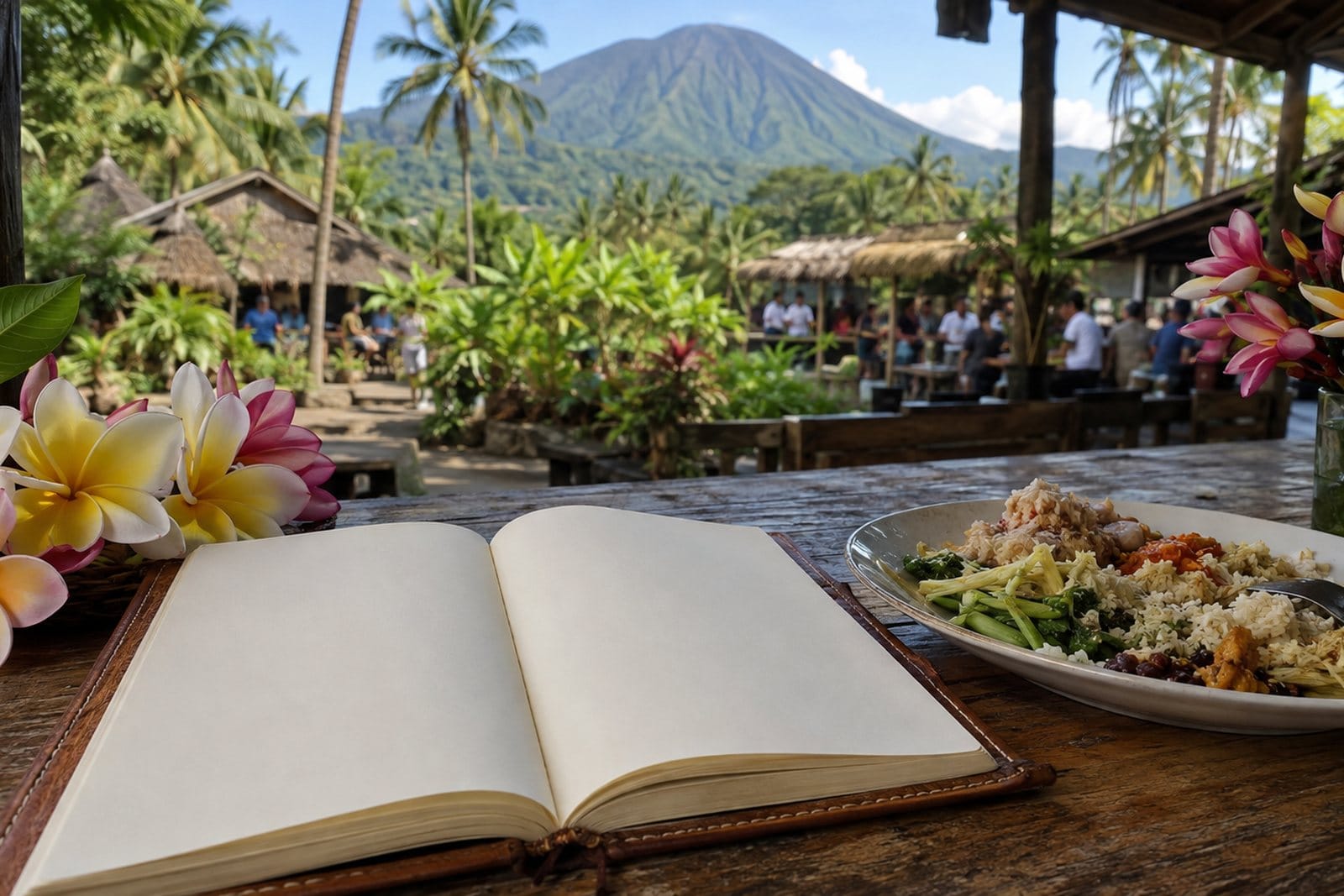 Why Victoria’s NTB Visit Matters Beyond the Ceremony · Illustration: HubLombok (AI-generated)
Tourism, Craft and Agriculture as One Investment Story
Governor Iqbal’s formulation of NTB’s potential points towards a broader economic proposition. Tourism may bring visitors, while agriculture, food production, weaving, pearl trading and creative enterprise can provide reasons for expenditure to circulate beyond a single accommodation or destination asset.
For an investor, this is less a claim about any individual company than a framework for due diligence. The central question is not simply whether a place becomes more visible. It is whether that visibility strengthens an ecosystem in which local suppliers, operators and communities can contribute to, and benefit from, economic activity.
The craft hub visit offers a practical illustration. Woven fabric is not only a retail object; it represents design, material inputs, techniques, makers, routes to market and cultural identity. Pearls and processed foods similarly connect visitor spending with production and small enterprise. In a well-functioning tourism economy, these connections can deepen the guest experience while spreading commercial opportunity.
The source does not quantify these channels, and neither should investors. But its reporting points to where further questions belong:
| Investor lens | What the visit highlights | What still requires verification | |---|---|---| | International profile | NTB received exposure through a Swedish royal visit | Whether awareness becomes sustained demand or partnerships | | Local enterprise | SMEs presented products and recovery experience | Commercial scale, margins and market access | | Tourism proposition | Officials promoted tourism potential | Specific projects, operating performance and visitor behaviour | | Institutional capacity | Regional government and UNDP supported training | Terms, duration and outcomes of future programmes |
This is where the Lombok story becomes more interesting than a simple destination comparison. The strongest long-term proposition is unlikely to rest on scenic appeal alone. It will rest on whether international interest can be joined to distinctive local supply, credible operators and public institutions capable of supporting a more diversified economy.
The visit also carried a quiet lesson in positioning. NTB was not presented as a blank canvas awaiting outside capital. Its representatives showcased existing products, enterprises and recovery work. That is a healthier starting point for investors than a narrative built solely around extraction or speculative appreciation. It implies that outside capital, where appropriate, should look for ways to reinforce local capability rather than merely capture a short-lived wave of attention.
What This Means for Investors
The immediate investment conclusion is measured. Crown Princess Victoria’s visit is a positive visibility event for NTB, especially because it connected the province with Sweden and the UNDP’s development mandate. It is not, on the reported facts, a transaction signal.
Investors assessing Lombok or the wider NTB economy can nevertheless use the visit as a prompt to improve the quality of their questions. Examine how an opportunity connects to the province’s real economic fabric. Ask whether an operator has credible local relationships; whether a tourism proposition benefits from regional culture and supply; and whether claims of international interest are supported by documents, contracts or operating evidence.
The distinction is especially valuable when marketing materials lean heavily on prestige. A royal visit can validate that a region is worth noticing. It cannot validate a valuation, a revenue model, a legal structure or a project timetable. Those require their own scrutiny.
A prudent reading, then, is neither cynical nor euphoric. NTB has gained a sophisticated moment of international attention, one that showcased resilience as well as aspiration. The opportunity now lies in converting that attention into patient, verifiable economic relationships. For investors, the most attractive response is to watch the follow-through: not the ceremony, but the institutional and commercial work that may, or may not, follow it.
Stay informed, subscribe to the free Lombok Briefing for market intelligence like this, published twice a month.
Does Crown Princess Victoria’s NTB visit indicate new investment commitments?
No. The reported visit gave NTB international exposure and highlighted tourism, agriculture, creative products and small enterprises. The source does not identify any new investment commitment, financing arrangement, commercial partnership or project terms, so investors should not treat it as a transaction signal.
What did Crown Princess Victoria do during her visit to Mataram?
As a UNDP Goodwill Ambassador, Crown Princess Victoria visited a craft and creative-industry hub in Mataram, viewed woven fabrics, pearls, processed foods and souvenirs, and spoke with small- and medium-sized industry operators from North Lombok who joined recovery training programmes after the Lombok Island earthquake.
How should Lombok investors interpret international attention for NTB?
International attention can improve a province’s profile and support longer-term conversations around tourism, agriculture and local enterprise. It does not establish asset values or project performance. Investors should seek specific evidence such as published commitments, project details, legal documentation and operating results.
The Lombok Buyer's Field Guide
Legal structures ranked by risk, the honest ROI math line by line, all six zones ranked, and the 24-point due-diligence checklist. The whole book, free in your inbox.
See what's inside