
Prabowo Mandates Year-End Budget Discipline as Fiscal Deficit Tightens
Indonesia orders strict year-end spending efficiency as ministries face a Rp 990 trillion disbursement target alongside global oil market volatility.
Quick answer: Indonesia's directive enforcing year-end fiscal efficiency highlights Jakarta's commitment to macroeconomic stability amid global commodity volatility. For foreign investors, disciplined state expenditure protects sovereign credit ratings, curbs domestic inflationary pressure, and guarantees sustained private-sector infrastructure priorities across emerging secondary destinations, ensuring long-term project viability across key regional economic corridors without fiscal slippage.
Fiscal discipline in emerging markets often faces its sterner tests during the closing months of any calendar year. As Jakarta approaches the final stretch of 2026, President Prabowo Subianto has moved decisively to pre-empt reckless disbursement cycles across state institutions. For foreign direct investors and asset managers assessing sovereign durability, this operational prudence offers reassuring proof of budgetary restraint.
The Context
The arithmetic facing the Ministry of Finance in Jakarta is both substantial and time-sensitive. Finance Minister Suahasil Nazara has confirmed that the state apparatus must disburse approximately Rp 990 trillion, or roughly US$54.70 billion, during November and December 2026 alone. Concurrently, tax and non-tax revenue targets require the collection of over Rp 600 trillion, equivalent to approximately US$33.15 billion, before the fiscal year concludes.
Historically, emerging market bureaucracies accelerate procurement programmes as December approaches to avoid returning unutilised allocations to central treasuries. In Indonesia, this seasonal acceleration is a recognised institutional pattern. The administration has explicitly confirmed that while accelerated spending remains permissible, every rupiah disbursed must align strictly with initial output targets and governance criteria.
"We continue to pursue state revenue, while simultaneously ensuring that spending remains efficient," noted Finance Minister Suahasil Nazara following his operational briefing with the President at the Presidential Palace.
This domestic fiscal recalibration unfolds against an unsettled international backdrop. Brent crude and broader global oil benchmarks recently spiked to US$113 per barrel before moderating. For an economy that balances fuel subsidies with capital project commitments, heightened international commodity prices narrow the margin for fiscal error. Jakarta's public finances must remain agile enough to absorb global price shocks without breaching statutory deficit limits.
Fiscal Discipline and the Infrastructure Pipeline
President Prabowo's instruction goes beyond administrative rhetoric: it signals structural coordination between recurrent spending and national developmental targets. The central government has frequently reiterated that public coffers cannot bear the burden of growth in isolation. With national development objectives targeting up to 7 percent investment growth, the state budget functions primarily as a catalyst designed to crowd in private capital.
When line ministries face strict expenditure controls, administrative overheads and low-yield discretionary allocations are curtailed first. Priority infrastructure programmes, including arterial transport networks, utility distribution, and regional connectivity corridors, maintain statutory funding lines. For enterprise investors, this rationalisation process separates essential growth projects from bureaucratic inertia.
| Fiscal Metric | Projected Allocation (Nov-Dec 2026) | Strategic Objective | | :--- | :--- | :--- | | State Expenditure | ~Rp 990 trillion (~US$54.70 billion) | Priority capital projects and verified output targets | | Targeted Revenue | Over Rp 600 trillion (~US$33.15 billion) | Broadened tax compliance and non-tax collection | | Commodity Factor | US$113/barrel benchmark peak | Subsidy preservation and fiscal shock absorption |
By insisting that ministries justify disbursements through measurable deliverables rather than gross outlay, the administration is reinforcing capital productivity. For institutional capital looking at long-horizon asset classes, a sovereign administration willing to enforce expenditure audits provides confidence that critical public infrastructure will reach completion without systemic fiscal compromise.
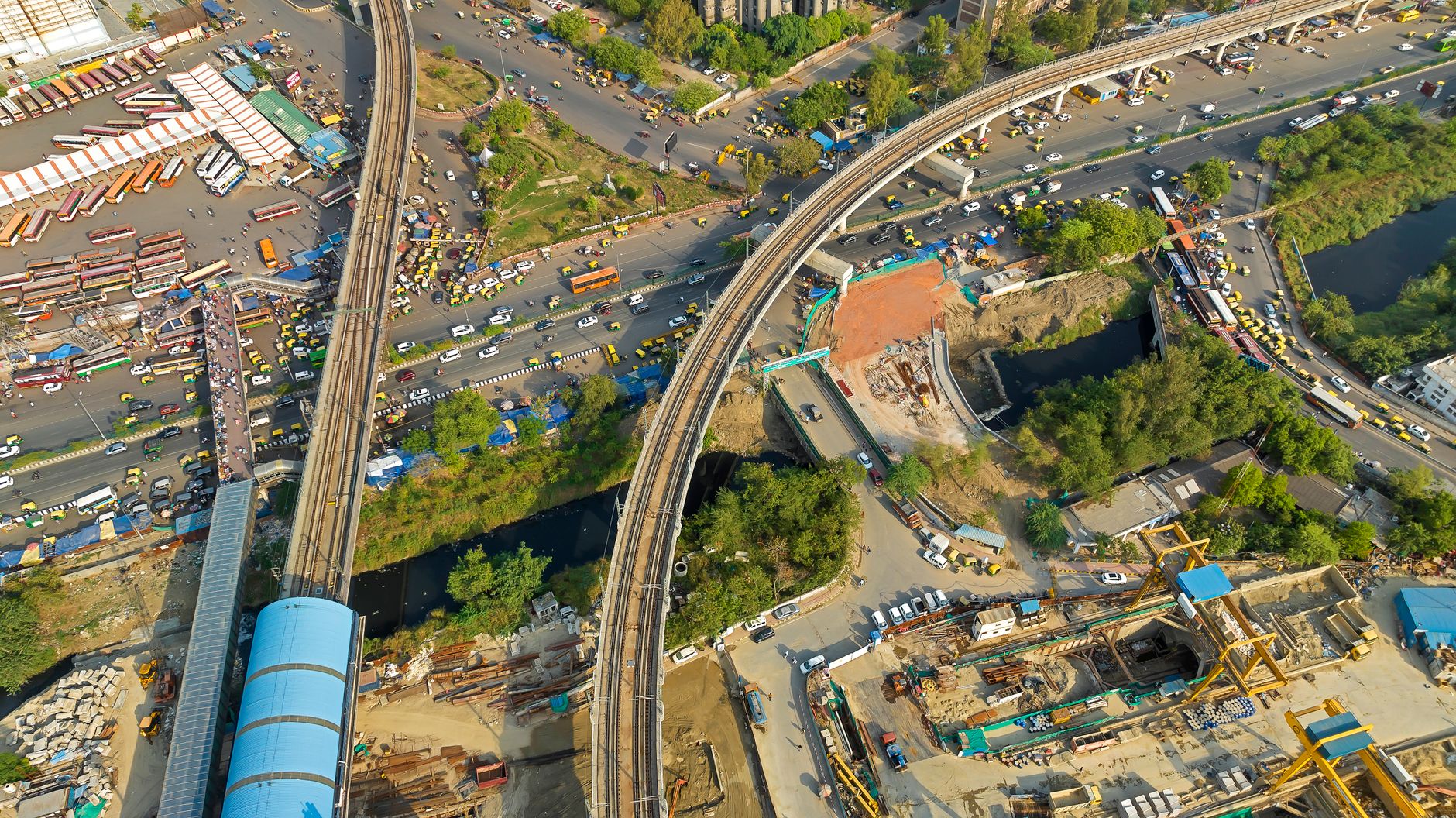 Prabowo Mandates Year-End Budget Discipline as Fiscal Deficit Tightens · Photo by Anil Sharma on Pexels
Commodity Volatility and Sovereign Revenue Pressures
Managing a multi-billion-dollar fiscal bridge during periods of global commodity turbulence requires delicate navigation. The recent surge of crude oil to US$113 per barrel illustrates the external variables testing sovereign treasuries across Southeast Asia. Elevated energy costs exert immediate upward pressure on logistics networks, domestic fuel subsidies, and the procurement costs of key industrial inputs.
Finance Minister Suahasil's strategy reflects an awareness that spending efficiency must run parallel to systematic revenue mobilisation. While fiscal authorities have refrained from detailing specific tax revisions for the remainder of the year, corporate and asset compliance remains under active supervision. The state requires revenue collection to proceed predictably, avoiding ad-hoc tax impositions that might disrupt private enterprise.
This balanced approach protects sovereign credit ratings and domestic currency stability. When state expenditure aligns closely with realised revenue inflows, foreign exchange reserves remain protected and central bank monetary policy is relieved of the need to finance fiscal excesses. International investors allocating capital into Indonesian real assets benefit directly from this sustained currency and interest rate equilibrium.
Furthermore, the government's declared position that "Indonesia cannot rely on the State Budget alone" represents a philosophical shift. State-driven capitalism is yielding space to public-private partnerships. As Jakarta restricts non-essential public outlays, regional economies outside Java that offer viable commercial returns are positioned to capture an increasing share of private capital seeking stable, growth-oriented jurisdictions.
What This Means for Investors
For foreign investors, family offices, and cross-border asset managers, macroeconomic governance dictates long-term asset security. Sovereign fiscal discipline serves as the foundation for private property rights, tax predictability, and regulatory stability. When central administrations maintain balanced budgets, downstream regional projects avoid sudden tax surcharges or abandoned public utilities.
Several clear implications emerge for long-term investors tracking Indonesian assets:
- Inflationary Containment: Limiting deficit spending prevents domestic liquidity surges, dampening consumer price inflation and preserving construction and operational margins across regional developments.
- Infrastructure Continuity: Priority state spending remains anchored to high-impact developmental assets, ensuring that regional connectivity and airport expansions proceed under rigorous fiscal monitoring.
- Private-Sector Primacy: With state authorities driving toward 7 percent investment expansion, regulatory incentives and procedural pathways for foreign direct investment are reinforced.
- Currency Resilience: Measured fiscal management supports foreign exchange stability, lowering risk premiums for offshore entities repatriating yields or acquiring real assets.
Investors deploying capital into secondary hubs must recognise that institutional maturity is an essential prerequisite for sustained capital appreciation. Jakarta's refusal to countenance wasteful year-end spending demonstrates administrative sobriety. Far from signalling austerity, these efficiency directives ensure that national resources are husbanded to protect macroeconomic stability against global headwinds.
As 2026 draws to a close, Indonesia's financial stewardship demonstrates a pragmatic combination of capital discipline and developmental focus. For discerning capital allocators, an administration that subjects its own ministries to transparent output benchmarks provides the ideal macro backdrop for sustainable long-term expansion.
Stay informed: subscribe to the free Lombok Briefing, published twice a month (the 1st and 15th), for market intelligence like this.
Why has Indonesia ordered ministries to tighten year-end budget spending?
President Prabowo Subianto mandated spending efficiency to ensure that approximately Rp 990 trillion in final-quarter outlays matches verified output targets, preventing wasteful disbursement cycles while managing macroeconomic volatility caused by recent global oil price spikes.
How does year-end fiscal discipline impact private foreign investors in Indonesia?
Enforcing budget efficiency maintains sovereign credit stability, limits domestic inflation, and protects national currency reserves. This policy ensures priority infrastructure networks advance smoothly without creating sudden tax liabilities or macroeconomic volatility for international capital.
Can the Indonesian state budget sustain national infrastructure expansion alone?
No. The Ministry of Finance has stated that the state budget cannot fund development alone, prompting public authorities to target 7 percent investment growth by encouraging increased private-sector participation and foreign direct investment.

The Lombok Buyer's Field Guide
Legal structures ranked by risk, the honest ROI math line by line, all six zones ranked, and the 24-point due-diligence checklist. The whole book, free in your inbox.
See what's inside