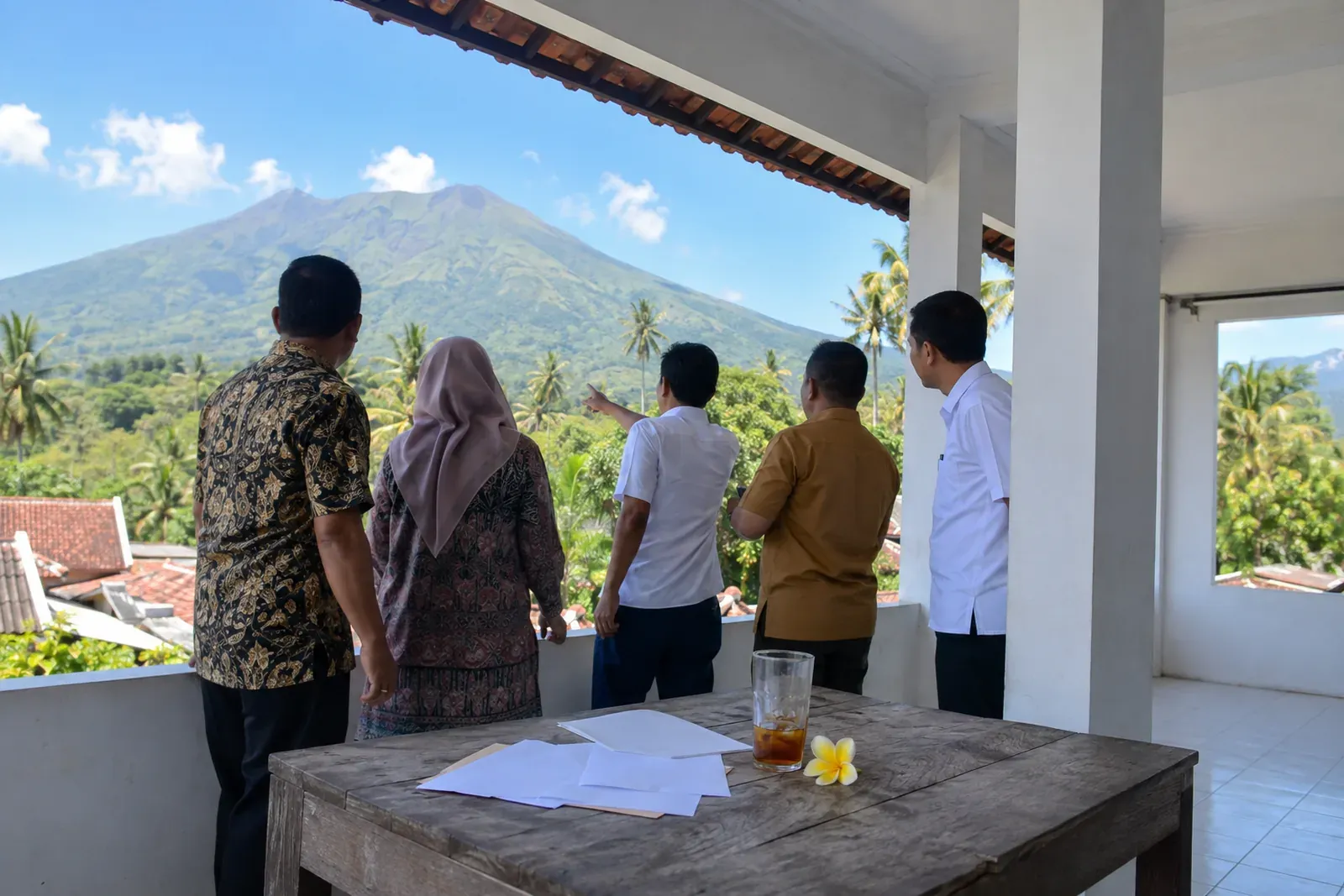
Lombok Notebook: What a Swedish Royal Visit Signals for NTB
Crown Princess Victoria’s visit offered NTB international visibility. For investors, the significance lies in what it may reveal about Lombok’s broader economic narrative.
Quick answer: Crown Princess Victoria of Sweden’s visit to Mataram gave West Nusa Tenggara a credible moment of international attention, centred on local enterprise, tourism and agriculture. For Lombok investors, it is not a market-moving event in itself, but a useful signal of how the province is seeking to present its economic identity beyond Indonesia.
Some visits are ceremonial; others become a lens through which a place explains itself. Crown Princess Victoria’s programme in West Nusa Tenggara, or NTB, was modest in scale but revealing in emphasis: local craft, small industry, recovery and internationally connected development. For investors assessing Lombok, that combination deserves more attention than the headline alone.
The Context
Governor Lalu Muhammad Iqbal described the Swedish royal’s visit as an honour for NTB and a strategic opportunity to introduce the province’s strengths and potential to a broader international audience, particularly the Swedish public. His stated ambition was greater international exposure for NTB’s tourism and agricultural potential.
That framing matters. International interest in an emerging destination is rarely built by a single announcement, a single visitor or a single development. It develops through repeated encounters: a province becoming legible to travellers, investors, operators and institutions that have not previously had reason to look closely.
Crown Princess Victoria visited Indonesia as a Goodwill Ambassador of the United Nations Development Programme, travelling to NTB after visiting Jakarta. In Mataram, the provincial capital, her itinerary included a craft and creative-industry hub at the Hubbul Wathan Mosque Islamic Center Complex. There she viewed typical NTB products, including woven fabrics, pearls, processed food and souvenirs.
The occasion therefore carried a different message from a conventional tourism promotion. It presented NTB through the productive economy surrounding visitor interest: makers, small and medium-sized industry operators, regional products and the practical work of rebuilding livelihoods.
International exposure is most valuable when it gives a market a clearer and more credible story about what it produces, protects and hopes to become.
For a prospective investor, this distinction is useful. Tourism assets may attract initial attention, but a destination’s resilience rests on a wider ecosystem. Local goods, skills, supply chains and institutions help determine whether tourism spend remains connected to the place rather than merely passing through it.
The source does not suggest that the visit produced a new investment commitment, a tourism agreement or a measurable change in demand. It would be premature to infer any of those outcomes. Its significance is instead contextual: NTB used an internationally visible occasion to foreground the components of its economy that it wishes overseas audiences to recognise.
A Visit Focused on Enterprise and Recovery
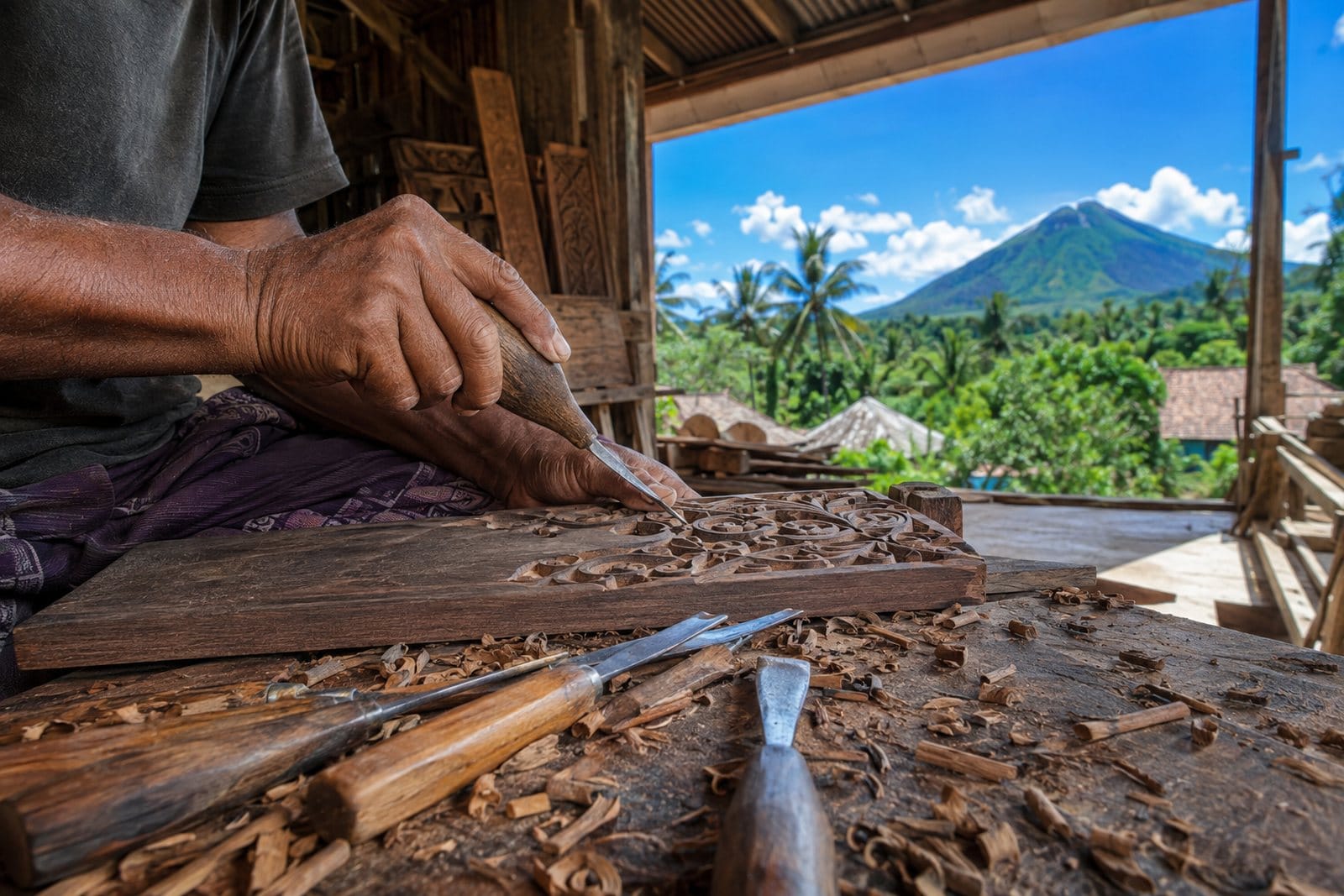
The most concrete element of the Mataram visit was the engagement with local producers. Crown Princess Victoria purchased woven fabrics and pearls, while the head of the NTB Industry and Trade Office, Lalu Wiranata, said she was particularly interested in the natural dyes used for the woven fabrics. The value of the purchases had not been calculated.
That detail should not be overstated as an economic event. Its value is symbolic and narrative-led. Yet it points to a form of destination positioning that investors should take seriously: one based on products with a specific local identity rather than generic visitor consumption.
The royal visitor also spoke with small- and medium-sized industry operators from Sambik Elen Village in North Lombok District. The operators had participated in UNDP empowerment and training programmes after the 2018 Lombok Island earthquake. They expressed appreciation for that support, and Crown Princess Victoria commended survivors for recovery efforts undertaken with regional-government and UNDP support.
For investors, recovery is not simply a historical footnote. It is part of the operating context of an island market. A credible account of resilience should acknowledge both the shock and the work required afterwards: the rebuilding of enterprises, the role of public institutions and the contribution of development partners.
The visit placed these elements together:
- locally made products intended for wider audiences;
- small-business participation rather than only large-project visibility;
- post-earthquake recovery and skills support;
- a provincial effort to connect tourism and agriculture with global awareness.
This is a more rounded proposition than a glossy destination campaign. It does not eliminate execution risk, and it does not substitute for investor due diligence. But it provides evidence of the themes NTB’s leadership is choosing to emphasise when an international audience is present.
 Lombok Notebook · Illustration: HubLombok (AI-generated)
Visibility Is Not the Same as Validation
It is tempting in emerging markets to treat every international visit as a validation of the investment case. That is not a disciplined way to read this event. A royal visit can amplify attention; it cannot establish property values, guarantee demand, resolve legal questions or confirm returns.
The more prudent interpretation is that the visit creates a small addition to NTB’s international profile. Governor Iqbal’s comments were aspirational: he hoped it would help promote the province’s tourism and agricultural potential to Swedish citizens. Hope, in this sense, is a policy objective rather than a completed outcome.
Investors should separate three layers of meaning.
| Layer | What the visit supports | What it does not establish | | --- | --- | --- | | Attention | NTB received an internationally recognisable moment of visibility. | Sustained overseas demand. | | Narrative | The province highlighted crafts, agriculture, tourism and recovery. | Commercial performance in any individual sector. | | Institutional context | UNDP-linked recovery and training programmes were visible in the programme. | A guarantee that every investment project is well governed or suitable. |
That separation is especially important where destination stories travel faster than operational realities. A compelling image can attract a first enquiry. Only detailed work on ownership, counterparties, costs, infrastructure, management and legal structure can support an investment decision.
The event also offers a reminder that Lombok’s appeal is not reducible to a single category. The source presented NTB’s potential through tourism and agriculture, while the Mataram programme focused on craft, food, weaving and pearls. These are distinct economic expressions, but together they suggest a destination attempting to make its international identity more textured.
For hospitality investors, such texture can matter over time. Visitors may arrive for beaches, events or landscapes, but the quality of the broader experience affects how they remember a place. A locally distinctive offer can support differentiation without requiring investors to claim a direct or immediate financial effect from cultural visibility.
There is also a useful lesson in the location of the visit. Mataram, not a resort setting, hosted the craft and creative-industry programme. This directed attention towards provincial enterprise and local production. Investors inclined to view Lombok solely through a resort lens should regard that as a corrective. The investable story of an island is generally wider than its accommodation stock.
What This Means for Investors
The immediate implication is one of perspective. Crown Princess Victoria’s NTB visit should be read as a reputational and contextual development, not as a transaction signal.
For investors already studying Lombok, it may justify a closer look at the wider provincial environment around an asset thesis. Questions worth asking include whether a proposed project connects responsibly with local enterprise, whether its operator understands the destination beyond visitor marketing, and whether the investment case remains sound without relying on headlines or diplomatic symbolism.
For investors earlier in their research, the event provides a sensible starting point for understanding how NTB wishes to be seen internationally. The provincial government’s stated focus is tourism and agriculture. The programme itself showcased crafts, food products, pearls and woven fabrics, alongside entrepreneurs whose businesses were supported after the Lombok earthquake.
That is a more useful basis for research than broad assumptions about an “up-and-coming” island. It encourages a practical distinction between a destination’s promotional promise and the economic activities that give that promise substance.
A disciplined approach would keep several principles in view:
- Treat international visibility as supportive context, never as a substitute for asset-level underwriting.
- Assess claims about tourism or commercial opportunity against independently verifiable operating evidence.
- Consider how a project interacts with local labour, suppliers and the destination’s cultural character.
- Give proper weight to legal, tax and ownership advice before committing capital.
- Avoid converting a goodwill visit into a forecast about prices, occupancy or returns.
The final point is perhaps the most important. Markets often become vulnerable to simplistic narratives precisely when a place begins attracting wider attention. Lombok investors should welcome evidence that NTB is seeking a broader international conversation, while retaining the patience to distinguish exposure from execution.
Crown Princess Victoria’s visit was an honour for the province, in the governor’s words, and an opportunity to present its strengths to new audiences. Its lasting value will depend not on the photographs from Mataram, but on whether the attention it generated is followed by durable engagement with the people, enterprises and institutions it brought into view.
Stay informed, subscribe to the free Lombok Briefing for market intelligence like this, published twice a month.
What did Crown Princess Victoria do during her NTB visit?
Crown Princess Victoria visited Mataram as a UNDP Goodwill Ambassador, toured a craft and creative-industry hub, viewed NTB products and spoke with small- and medium-sized industry operators from North Lombok who had joined UNDP-supported recovery programmes.
Does the Swedish royal visit change Lombok’s investment outlook?
The visit does not itself establish new investment commitments, property values, demand or returns. It is better understood as an internationally visible moment that supported NTB’s effort to present its tourism, agricultural and local-enterprise potential to a broader audience.
Why should Lombok investors care about NTB’s local enterprise?
Local enterprise helps explain the wider economic setting around a destination. During the visit, NTB highlighted woven fabrics, pearls, processed foods and small-business recovery, offering investors context beyond a narrow focus on tourism assets alone.
The Lombok Buyer's Field Guide
Legal structures ranked by risk, the honest ROI math line by line, all six zones ranked, and the 24-point due-diligence checklist. The whole book, free in your inbox.
See what's inside