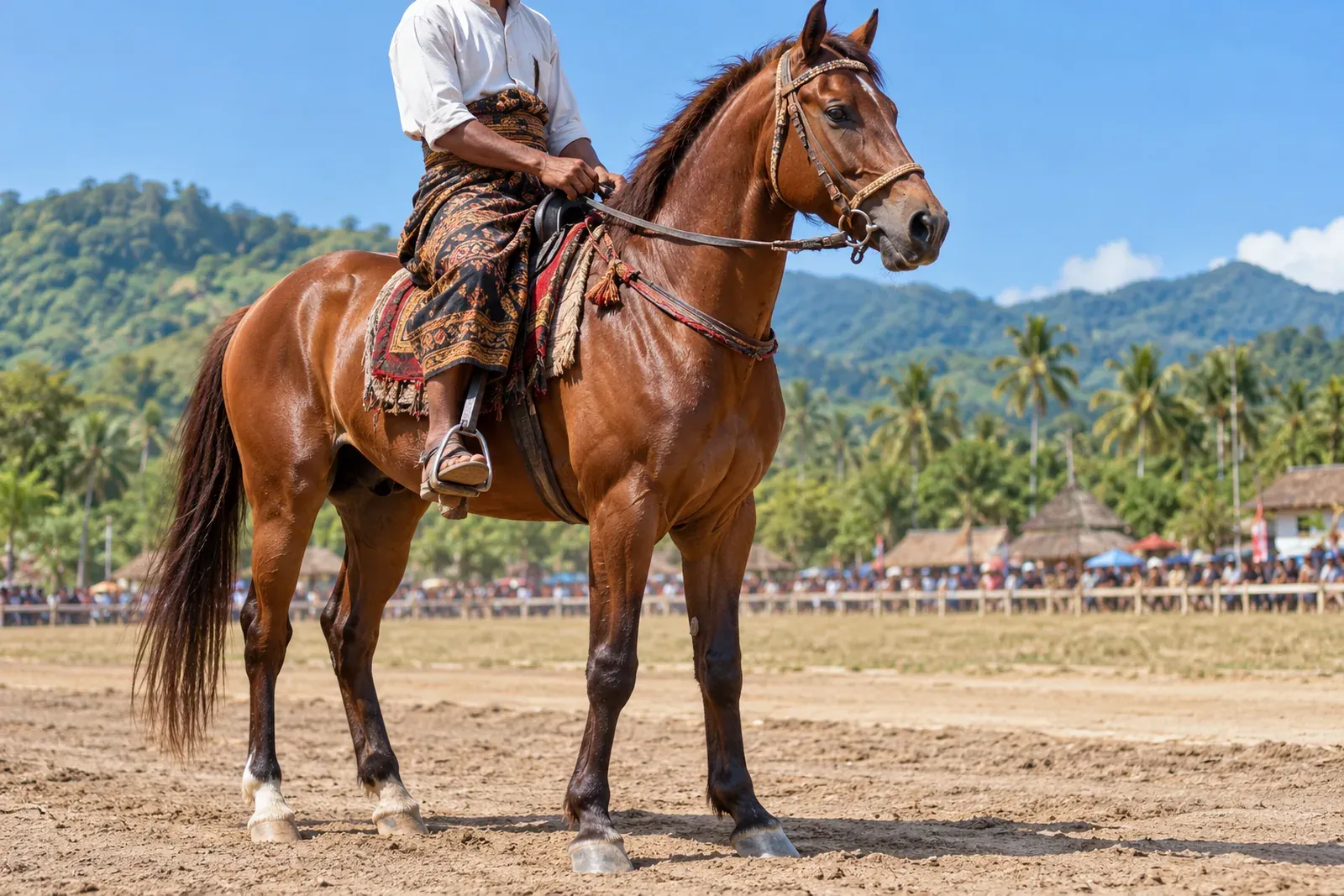
Sumbawa Horse Racing Cup Highlights Regional Event Economy Across NTB
The 2026 Bupati Cup in Dompu underscores how traditional equestrian sports drive grassroots commerce and support broader tourism growth across West Nusa Tenggara.
Traditional sporting events are increasingly viewed as strategic economic catalysts across West Nusa Tenggara. The opening of the Bupati Cup Dompu Maju 2026 horse racing championship in Sumbawa demonstrates how regional cultural heritage is being mobilized to stimulate local business and tourism commerce.
On Saturday, 24 October 2026, the championship officially commenced at the Lembah Kara arena in Lepadi Village, within the Pajo District of Dompu Regency. Presided over by local administrative leadership, including the Acting Regional Secretary of Dompu, the tournament gathered equestrian competitors, community stakeholders, and thousands of spectators. Beyond preserving island heritage, the gathering brought renewed focus to the role of indigenous sporting fixtures in strengthening inter-regency commerce throughout the province.
Cultural Heritage as a Grassroots Economic Catalyst
Horse racing, known locally as pacuan kuda, represents one of the most deeply rooted cultural traditions on the island of Sumbawa. Historically organized around harvest celebrations and community milestones, the sport has evolved into a structured equestrian discipline that attracts stable owners, skilled riders, and spectators from multiple districts across eastern Indonesia.
In Dompu, the economic footprint of the Bupati Cup extends well beyond the perimeter of the Lembah Kara track. Major race meets create immediate liquidity for micro, small, and medium enterprises. Food vendors, hospitality operators, transport providers, and livestock trade services experience concentrated spikes in turnover throughout the competition period. The presence of racing teams, trainers, and visiting delegations requires extended accommodation and logistical support, injecting capital directly into district economies that sit outside primary international resort corridors.
Provincial observers note that this grassroots commercial activity provides essential balance to the broader tourism landscape of West Nusa Tenggara. While international leisure capital continues to concentrate in designated development areas on neighboring Lombok, authentic cultural fixtures on Sumbawa retain significant drawing power for domestic visitors and regional intra-island travelers.
The Strategic Proposal for Cross-Regency Scheduling
A pivotal theme emerging from the opening ceremonies was the formal call for coordinated planning across district borders. Lieutenant Colonel Dahlan publicly proposed establishing a unified annual competition schedule connecting regencies across Sumbawa Island, specifically aligning event calendars between Dompu, Bima, and Sumbawa regencies.
Under current arrangements, local derbies and regional cups are often organized independently, resulting in overlapping dates or extended intervals without competitive activity. An uncoordinated calendar limits commercial sponsorship potential, increases operational friction for traveling stables, and dilutes the aggregate economic return for host communities.
A synchronized provincial circuit offers distinct structural advantages:
- Predictable commercial cycles: A fixed annual calendar allows local hospitality and service businesses to anticipate visitor influxes and adjust operational capacity accordingly.
- Increased private sponsorship: Corporate backers and regional logistics brands can commit capital to a multi-stage championship circuit rather than isolated municipal meets.
- Enhanced animal welfare standards: Standardized rest intervals between sanctioned events support horse health and professionalize the equestrian sector.
- Extended visitor dwell times: Spectators and equine enthusiasts can plan regional itineraries across consecutive race weekends, encouraging multi-destination travel within the province.
By institutionalizing the circuit, administrative leaders seek to transform intermittent traditional festivals into a permanent driver of intra-provincial economic activity.
Regional Integration in West Nusa Tenggara
For analysts tracking the long-term maturation of West Nusa Tenggara, events on Sumbawa cannot be viewed in isolation from the broader provincial economy. The province is characterized by two distinct geographic and commercial halves: Lombok, which serves as the international gateway, and Sumbawa, which boasts rich agricultural, mineral, and cultural resources across an expansive landmass.
As primary investment hubs develop mature hospitality infrastructure, peripheral regencies benefit from provincial connectivity upgrades. Seaport linkages across the Alas Strait and regional domestic airports in Bima and Sumbawa Besar facilitate the movement of goods, competitors, and domestic holidaymakers. A professionalized sporting calendar on Sumbawa diversifies the identity of the entire province, offering cultural depth that complements leisure and coastal real estate offerings.
Furthermore, institutional coordination between military leadership, local government officials, and community elders reflects a stable governance environment. Cross-regency cooperation on cultural tourism initiatives demonstrates an administrative willingness to build cohesive regional frameworks, a positive indicator for broader infrastructure and logistical integration.
What This Means for Investors
While direct foreign property capital remains concentrated in mature coastal zones, developments in the wider provincial economy provide critical macroeconomic context for long-term investors.
- Diversification of provincial revenue: The deliberate development of domestic and cultural tourism engines reduces provincial vulnerability to international market shifts, establishing a broader base of domestic consumer spending across West Nusa Tenggara.
- Infrastructure utilization: Coordinated regional sporting circuits increase passenger and cargo traffic along inter-island transport corridors, improving the commercial viability of public logistics assets.
- Institutional cohesion: Collaborative scheduling initiatives between regencies highlight administrative stability and proactive local governance across eastern Indonesian districts.
As West Nusa Tenggara continues to attract infrastructure funding and private development, the preservation and structured commercialization of unique island traditions like the Bupati Cup ensures that economic expansion delivers tangible benefits to host communities.
Stay informed: subscribe to our free Lombok Briefing, published twice a month (the 1st and 15th), for analysis like this.
What is the economic significance of the Bupati Cup in Dompu?
The tournament acts as an immediate economic driver for Dompu Regency, generating revenue for local hospitality, transportation, and small vendors while commercializing traditional equestrian sports across West Nusa Tenggara.
Why was an annual cross-regency racing calendar proposed?
Lieutenant Colonel Dahlan proposed a unified schedule across Sumbawa regencies to eliminate date conflicts, attract private sponsorship, establish predictable commercial cycles, and lengthen visitor stays within the province.
How does Sumbawa cultural tourism affect the wider provincial economy?
Cultural fixtures diversify provincial revenue streams beyond international resort hubs, strengthening domestic travel networks, supporting inter-island infrastructure, and demonstrating collaborative governance across West Nusa Tenggara.

The Lombok Buyer's Field Guide
Legal structures ranked by risk, the honest ROI math line by line, all six zones ranked, and the 24-point due-diligence checklist. The whole book, free in your inbox.
See what's inside