QRIS–JPQR Link Signals Faster Indonesia-Japan Trade Flows
Bank Indonesia says QRIS–JPQR connectivity could lift Indonesia-Japan trade by making cross-border payments faster, cheaper and easier for merchants.
Bank Indonesia’s latest message on the QRIS-JPQR link is more than a payments update. It is a signal that Indonesia is steadily building the infrastructure for lower-friction trade with Japan, one of Asia’s most important commercial partners. For investors, the immediate question is not whether QR codes are fashionable; it is whether payment rails are becoming a quiet but material advantage for exporters, tourism operators and consumer-facing businesses.
The Context
Bank Indonesia Deputy Governor Filianingsih Hendarta said the integration of Indonesia’s QRIS with Japan’s JPQR standard, which began on 17 August 2025, should help raise the value of trade transactions between the two countries. Her remarks were reported by Antara Business on 26 May 2026, and come as Indonesia continues to expand its cross-border payment network across Asia.
The practical point is simple: if buyers and visitors can pay more easily, transaction friction falls. That matters for commerce, because friction is not just an inconvenience. It is a cost embedded in every invoice, every retail payment and every tourist purchase.
“The value of trade transactions between Indonesia and Japan will increase” as a result of QRIS-JPQR integration, Bank Indonesia said through Deputy Governor Filianingsih Hendarta.
The timing also matters. BI has been accelerating its digital payments agenda through cross-border links with several markets, including Thailand, Malaysia, Singapore, South Korea, China and now Japan. In that context, the Indonesia-Japan corridor is not isolated; it is part of a broader architecture designed to make the rupiah and Indonesia’s payment ecosystem more usable across borders.
For a country seeking to deepen trade, broaden tourism receipts and improve SME participation in the formal economy, this is not cosmetic policy. It is infrastructure.
Why the Payments Link Matters
Cross-border QR functionality is valuable because it removes several layers of operational drag. Travellers no longer need to rely as heavily on cash exchange, card acceptance or expensive intermediary rails. Merchants gain a simpler way to accept foreign customers. Businesses involved in cross-border procurement gain a more standardised settlement environment.
The result is a small change at the point of sale, but potentially a large shift in behaviour over time. In markets where consumer habits are sticky, convenience drives adoption. If Japanese tourists can pay more easily in Indonesia, and Indonesian travellers can spend more easily in Japan, the transaction layer begins to support trade flows rather than merely record them.
That matters for sectors that sit at the junction of tourism and commerce:
- Hospitality operators gain smoother payment acceptance.
- Retailers and F&B businesses face less leakage from cash-only friction.
- Exporters and distributors benefit from a broader digital ecosystem that can support recurring settlement relationships.
- SMEs, which often struggle with costly payment infrastructure, gain a more accessible channel into cross-border spending.
BI’s own framing of QRIS reinforces that logic. The central bank describes QRIS as a tool for faster, easier, more affordable, secure and reliable payments, and as a mechanism for cross-border connectivity. In other words, this is a policy instrument with both domestic and external balance-of-payments implications.
The strategic backdrop is also important. Bank Indonesia recently noted that QRIS transaction growth remains robust, and its wider digitalisation push is part of a monetary and financial stability framework that now extends beyond conventional rates and reserve management. In an environment where regional competition for tourism and trade is intensifying, payment interoperability becomes a quiet differentiator.
| Link | Status | Investor relevance | |---|---:|---| | Thailand | Active | Supports outbound tourism spending | | Malaysia | Active | Useful for regional retail and travel flows | | Singapore | Active | High-value payments and business travel | | Japan | Active since 17 August 2025 | Strategically important trade and tourism corridor | | South Korea | Recently launched | Expands Asia-Pacific acceptance footprint |
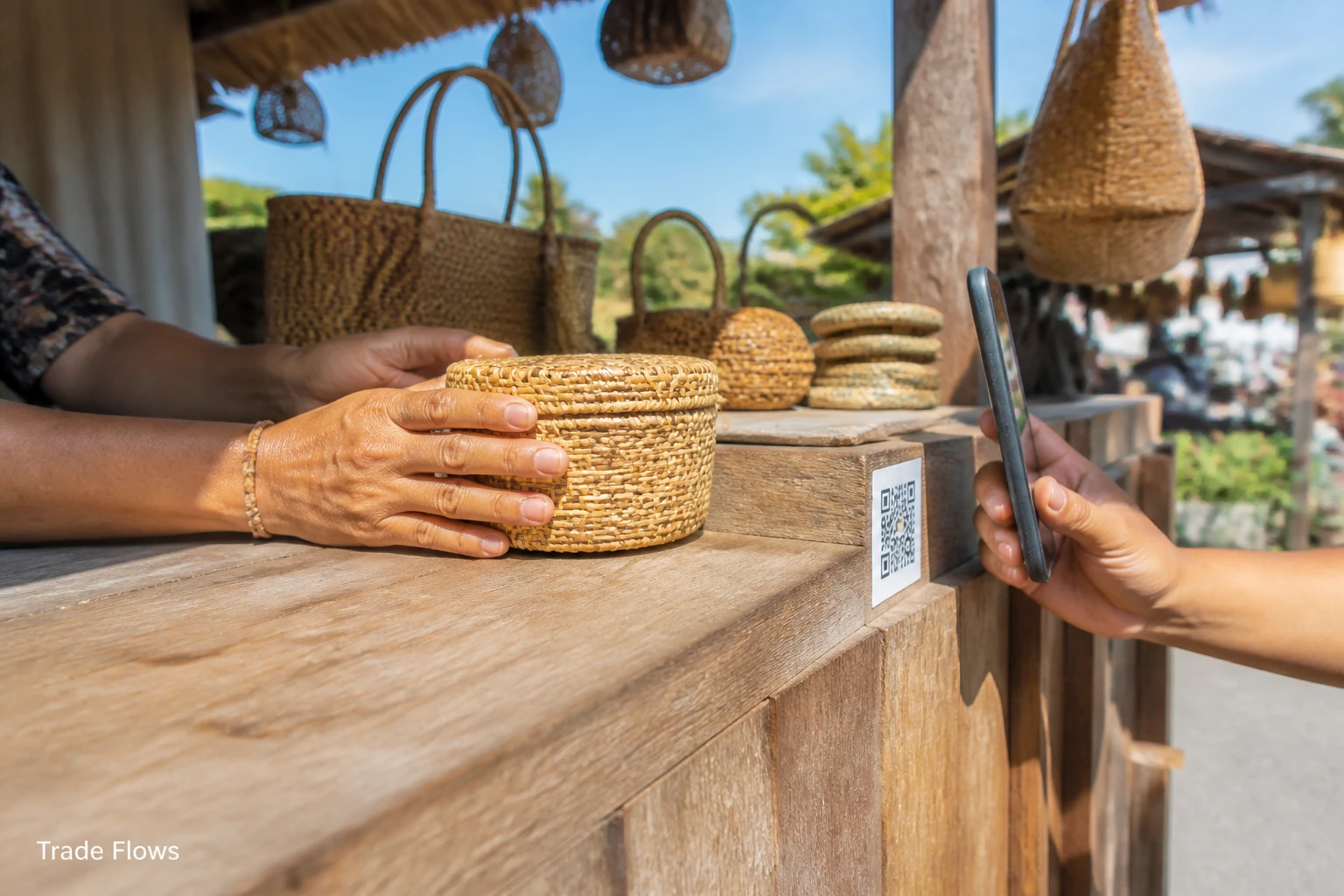
 QRIS–JPQR Link Signals Faster Indonesia-Japan Trade Flows · Photo by Leeloo The First on Pexels
The market should also view this through the lens of destination competition. Indonesian tourism has long depended on Bali’s pull, but the stronger thesis is increasingly the overflow effect: once payment convenience improves, secondary destinations become easier to consume. That includes business and leisure corridors where travellers want fewer payment barriers and more predictable spending experiences.
For Lombok, the relevance is indirect but real. A more seamless Japanese visitor experience supports the broader Indonesia travel story, and that matters when the market is already watching the island’s 12-22% yield narrative, South Lombok entry points in the €95,000-350,000 range and the continuing infrastructure build-out around airport capacity and regional tourism flows. Payment rails alone do not create demand, but they reduce the friction that helps demand convert into actual spending.
There is also a capital-markets angle here. Cross-border payment links are part of a wider effort to make Indonesian assets easier to monetise, easier to sell to foreign visitors and easier to insert into regional consumption patterns. In practical terms, that supports everything from villa rentals to hospitality revenue, especially in locations that rely on a combination of domestic buyers and inbound travellers.
What This Means for Investors
Investors should read this development as a medium-term enhancement to Indonesia’s commercial plumbing, not a headline event that changes fundamentals overnight. But plumbing matters. In real estate, tourism and consumer services, the winners are often the operators who benefit when settlement becomes cheaper and faster.
The implications are clearest in three areas.
First, tourism-linked assets gain another layer of support. If Japanese travellers can spend more easily across Indonesia, merchants and accommodation providers gain a better conversion rate from arrivals to revenue. That is especially relevant for destination markets competing for higher-spending visitors.
Second, SME-heavy businesses become more investable. Small retailers, beach clubs, restaurants, tour operators and villa managers all benefit from a lower-friction payment environment. These businesses do not need giant policy shifts to improve margins; they need fewer operational bottlenecks.
Third, the payment network strengthens Indonesia’s regional positioning. A country that can offer cross-border digital settlement at scale is more attractive to trade partners, tourism operators and fintech ecosystems. Over time, that can improve transaction velocity and widen the addressable market for domestic businesses.
For property investors, the translation is straightforward. In markets such as Lombok, where the investment thesis already rests on tourism growth, improved connectivity, and the Bali-overflow story, easier cross-border spending can support occupancies and rental yields at the margin. It will not replace location, product quality or governance, but it can reinforce them.
The broader lesson is that infrastructure is not limited to roads, ports and airports. Payment connectivity increasingly belongs in the same conversation. If Indonesia keeps expanding QRIS interoperability, it will be building a financial layer that quietly supports trade, tourism and consumer spending across the region.
For investors with exposure to Southeast Asia, that is worth tracking closely. It is not the most dramatic policy lever in the market, but it may prove one of the most durable.
Stay informed, subscribe to the free Lombok Briefing for market intelligence like this, published twice a month.
When did Indonesia's QRIS payment system link with Japan's JPQR go live?
The QRIS-JPQR integration between Indonesia and Japan became active on 17 August 2025. Bank Indonesia Deputy Governor Filianingsih Hendarta stated that the link should help raise the value of trade transactions between the two countries, making it easier for Japanese visitors and businesses to transact across borders without relying on cash exchange or costly intermediary rails.
Which countries does Indonesia's QRIS cross-border payment network currently cover?
As of mid-2026, Indonesia's QRIS cross-border network is active with Thailand, Malaysia, Singapore, Japan (live since 17 August 2025), South Korea and China. Bank Indonesia describes QRIS as a tool for faster, more affordable and reliable cross-border payments, positioning Indonesia's payment ecosystem within a broader Asia-Pacific connectivity architecture aimed at deepening trade and tourism flows.
How does the Indonesia-Japan payments link affect property investment in Lombok?
The effect is indirect but real. A more seamless Japanese visitor experience supports Indonesia's broader travel story. For Lombok, where South Lombok entry points range from €95,000 to €350,000, payment interoperability reduces friction that converts visitor interest into actual spending. Hospitality operators, retailers and villa rental businesses in tourism-dependent locations stand to benefit as cross-border payment infrastructure matures.

The Lombok Buyer's Field Guide
Legal structures ranked by risk, the honest ROI math line by line, all six zones ranked, and the 24-point due-diligence checklist. The whole book, free in your inbox.
See what's inside