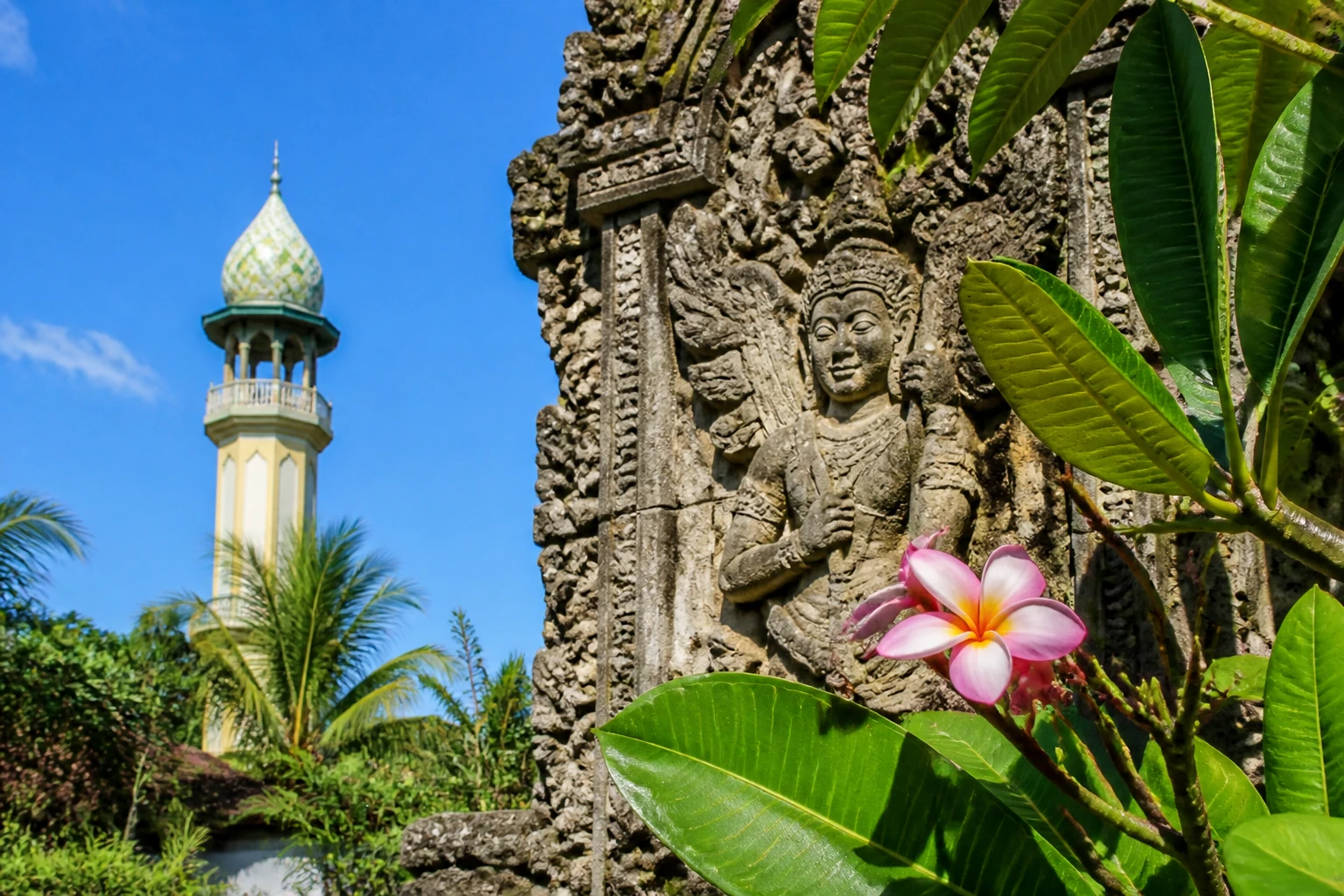
Prambanan Push Puts India Back on Lombok’s Investor Map
Indonesia’s Prambanan tourism message to India sharpens the case for Lombok investors watching culture-led demand and Bali overflow.
Quick answer: Indonesia’s tourism minister is using Prambanan to frame India-Indonesia travel as a cultural bridge. For Lombok investors, the signal is not temple tourism alone: it is a policy-level push to widen demand beyond Bali, strengthening the case for South Lombok hospitality assets.
Antara Business reports that Tourism Minister Widiyanti Putri Wardhana has pointed to Prambanan as a bridge between Indonesia and India, citing strong civilisational ties. That makes today’s news more than a cultural headline.
For investors, the dispatch matters because tourism narratives shape flight interest, itinerary design, operator attention and ultimately property demand. When Jakarta speaks to India through heritage, Lombok should listen through the lens of hospitality yield, infrastructure and the Bali-overflow thesis.
The Context
Prambanan is not in Lombok, and that is precisely why the story deserves attention from Lombok investors. The minister’s message is aimed at positioning Indonesia as a multi-stop, culturally resonant destination for Indian travellers, not simply as a single-island beach escape. In practical terms, that broadens the country’s tourism pitch from resort familiarity to civilisational affinity.
Antara Business published the report on 9 July 2026, making it a live policy signal rather than background colour. The named actor is important: this is not a private tour operator testing a campaign, but Tourism Minister Widiyanti Putri Wardhana giving official weight to the India-Indonesia relationship through Prambanan.
Indonesia and India share strong civilisational ties, with Prambanan now being framed as a tourism bridge.
The investor implication is straightforward. A destination does not need every traveller to land directly on its beaches to benefit from a wider national funnel. Lombok’s opportunity lies in becoming the logical second leg: quieter than Bali, earlier-cycle than Bali, and increasingly legible to travellers who want a richer Indonesian itinerary.
That matters because South Lombok is already moving from discovery to underwriting. The market’s honest net rental yield range is 7-12% after management fees and realistic occupancy, while developer-quoted gross yields sit at 12-22% before costs. Investors who understand that distinction are better placed to read tourism policy as a demand signal, not a guaranteed return.
A short version of the thesis looks like this:
| Investor question | Lombok relevance | | --- | --- | | Is Indonesia broadening beyond Bali? | Today’s Prambanan-India framing says yes. | | Is Lombok still earlier-cycle? | Entry remains materially below comparable Bali stock. | | Are returns automatic? | No: net yield depends on management, occupancy and location. | | Does culture-led tourism help beach assets? | It can, if itineraries extend beyond a single gateway. |
Why This India Signal Matters
India is not being presented in this dispatch as a spreadsheet. It is being addressed through memory, culture and religious-historical familiarity. That is useful for Indonesia because heritage is a stronger foundation than discount travel. It gives agencies, airlines and destination marketers a reason to package Indonesia as a connected experience rather than a collection of unrelated islands.
For Lombok, the signal is indirect but commercially meaningful. International tourists rarely choose property markets; they choose journeys. Investors, however, can observe which journeys are being encouraged and ask where overnight demand may deepen next. Prambanan may anchor the cultural story, while Bali remains the default global magnet. Lombok then sits in the path of the next question: where does a traveller go after Bali, or instead of an overburdened Bali stay?
That is the essence of the Bali-overflow thesis. Rising Bali prices and congestion are pushing attention towards cheaper, earlier-cycle Lombok. The comparison remains stark: turnkey investment-grade villa entry pricing in South Lombok sits around EUR 95,000-350,000, while a comparable specification in Bali is USD 400,000-800,000. Prime tourist-zone land in South Lombok is about Rp 150-400 million per are, with local convention treating 1 are as 100 m².
Investors should resist the temptation to overstate the conclusion. A ministerial comment does not build a villa, fill a calendar or remove execution risk. But it does help define the demand backdrop. A country that tells India a cultural story through Prambanan is a country trying to diversify its inbound appeal. Lombok’s job is to convert that broader appeal into resort stays, villa occupancy and repeatable guest experience.
The operating numbers should remain central. Stabilised occupancy in the first operating years is realistically 55-70% in Lombok, while Bali runs 70-85%. Management fees commonly take 18-22% of gross rental revenue, and OTA or booking commissions add 15-20%. The difference between a glossy projection and an investable asset is often found in those lines.
 Prambanan Push Puts India Back on Lombok’s Investor Map · Illustration: HubLombok (AI-generated)
Lombok’s Read-Through
The Prambanan message lands at a time when Lombok already has several tailwinds. The island is benefiting from tourism recovery, the MotoGP and Mandalika effect, and ongoing airport expansion through 2025-26. The verified foreign-arrivals trend is +40-50% YoY, while Kuta and Mandalika villa rates are about +38% YoY. Those numbers do not prove a straight line from India to Lombok, but they show why every new demand narrative deserves investor attention.
The geography is also changing. Kuta remains the liquidity leader, with land at Rp 300-400M/are. Selong Belanak sits at Rp 150-250M/are, offering a family-tourism and capital-growth profile. Mandalika, around the circuit and special economic zone, is Rp 100-150M/are. Mawun and Bumbang offer lower entry points, at Rp 50-80M/are and Rp 30-50M/are respectively.
Those ranges matter because the right response to tourism news is not to buy the first asset with a sea view. It is to map the likely traveller profile against location, access, nightly-rate potential and exit liquidity. A culture-led India-Indonesia campaign may lift national awareness; Lombok investors still need to choose between liquidity, frontier pricing and operational depth.
The most investable reading is balanced. Lombok is not Bali at a discount in every respect. It has thinner infrastructure, a younger management ecosystem and more variable local execution. But that is also why the entry point exists. If the airport, Mandalika and national tourism messaging continue to widen the funnel, the island’s earlier-cycle assets may become more attractive to investors who can tolerate operational work.
This is particularly relevant for European, Australian and American buyers who are used to mature resort markets. Lombok requires more due diligence, but it also offers a clearer spread between acquisition cost and rental potential. The verified honest net yield range of 7-12% is not a promise; it is a discipline. It tells buyers to underwrite revenue, costs and occupancy rather than accept brochure arithmetic.
What This Means for Investors
The immediate takeaway is not to chase India-facing tourism headlines. It is to recognise that Indonesia’s tourism strategy is becoming broader, more cultural and more itinerary-led. Lombok benefits if that strategy pulls more visitors beyond a single Bali stay.
For investors assessing South Lombok now, the action points are clear:
- Treat today’s Prambanan dispatch as a demand signal, not a standalone investment case.
- Underwrite net yield at 7-12%, not developer-quoted gross yield at 12-22%.
- Use realistic stabilised occupancy of 55-70% for early operating years.
- Compare Lombok entry pricing of EUR 95,000-350,000 against Bali’s USD 400,000-800,000 for comparable specification.
- Price land locally, per are, and keep the zone hierarchy in view.
- Avoid any structure that implies a foreigner can hold freehold directly.
Legal structure remains a non-negotiable part of the investment decision. Foreigners cannot hold freehold, or Hak Milik, in Indonesia. The available routes are leasehold, Hak Pakai for eligible residents, or a PT PMA company holding HGB. Nominee structures, where an Indonesian holds freehold on behalf of a foreign buyer, are illegal and void in court.
That legal context should sit beside the tourism thesis, not behind it. A stronger demand story makes poor structuring more dangerous, because buyers move faster when the market feels urgent. Any serious purchase should involve certificate checks, zoning review, encumbrance checks, tax planning and proper execution through a licensed PPAT notary and the land office.
HubLombok’s view is that today’s Prambanan-India signal strengthens the strategic case for Lombok, but only for investors who keep discipline. The island is benefiting from Bali overflow, tourism recovery and infrastructure momentum. Yet the best assets will still be those that combine defensible location, professional management, realistic cost assumptions and clean legal title.
The cultural bridge may begin at Prambanan. The investment bridge, for Lombok, is built through careful underwriting.
Stay informed, subscribe to the free Lombok Briefing for market intelligence like this, published twice a month.
Why does a Prambanan tourism story matter for Lombok investors?
The ministerial signal shows Indonesia positioning itself to Indian travellers through culture, not only beaches. Lombok may benefit if broader Indonesia itineraries extend beyond Bali, supporting demand for professionally managed villas and hospitality assets.
Should investors change their yield assumptions after this news?
No. Investors should still underwrite honest net rental yield at 7-12% after costs, with realistic stabilised occupancy of 55-70% in early operating years. The Prambanan-India story is a demand signal, not a yield guarantee.
Can foreign buyers hold freehold land in Lombok?
No. Foreigners cannot hold Hak Milik freehold in Indonesia. Usable routes include leasehold, Hak Pakai for eligible residents, or PT PMA ownership of HGB. Nominee structures are illegal and void in court.
The Lombok Buyer's Field Guide
Legal structures ranked by risk, the honest ROI math line by line, all six zones ranked, and the 24-point due-diligence checklist. The whole book, free in your inbox.
See what's inside