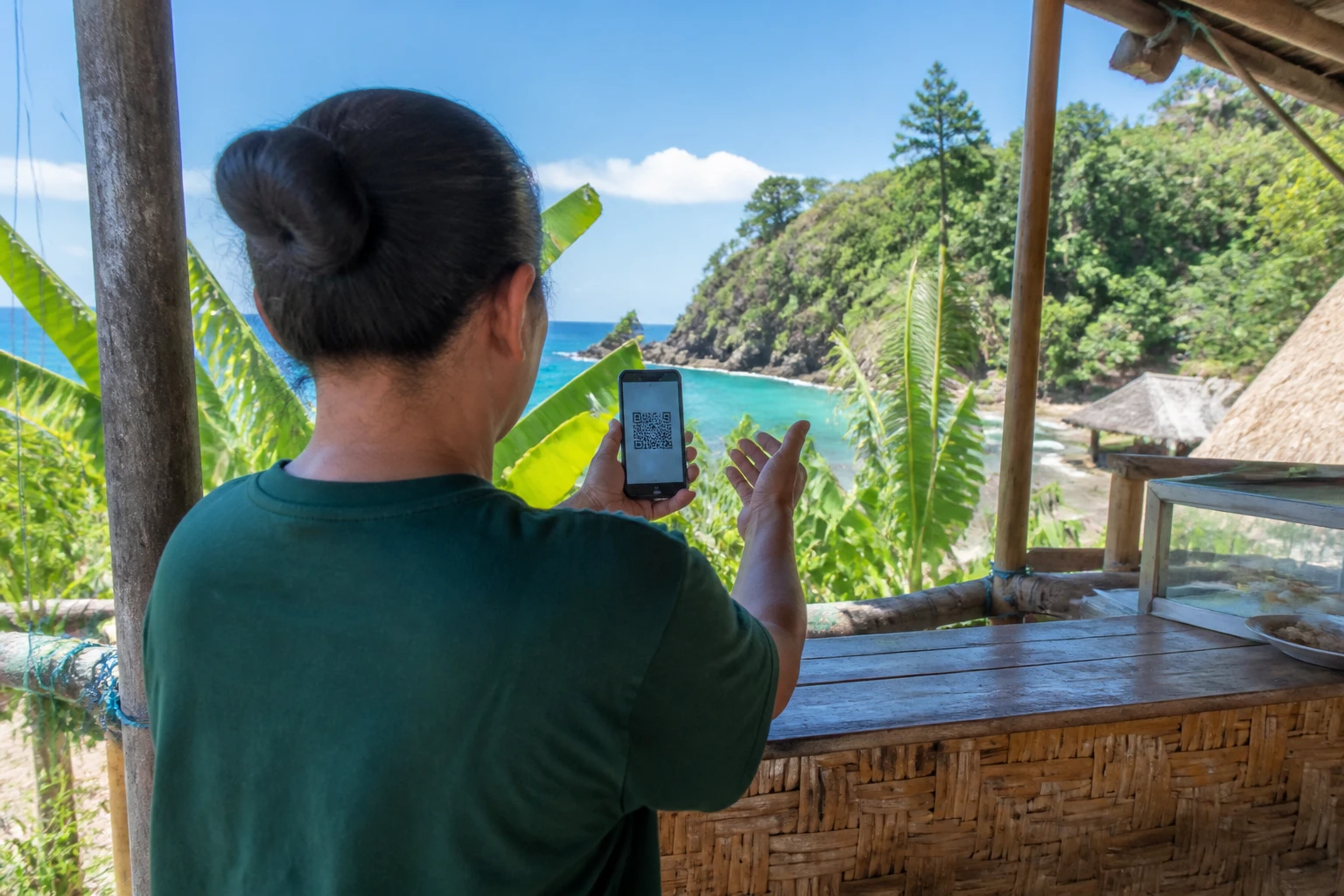
Indonesia-India QR Payment Talks Put Lombok on the Investor Map
Indonesia and India are advancing QR payment and trade cooperation, sharpening Lombok’s appeal as a tourism and property investment market.
Quick answer: Indonesia and India are advancing QR payment and trade cooperation, according to Antara Business. For Lombok investors, the signal is not instant demand but direction: smoother regional payments, deeper tourism links and stronger investor confidence in Indonesia’s fast-formalising visitor economy.
President Prabowo Subianto’s welcome for expanded financial cooperation with India is a timely marker for Lombok. The island’s investment case has long rested on Bali-overflow, improving infrastructure and rising tourism demand; easier cross-border payments would make that case more practical for travellers, operators and property owners.
This is a live Daily Dispatch because the significance lies in timing. Indonesia is not merely promoting destinations; it is strengthening the pipes through which visitors spend, businesses settle and investors underwrite confidence.
The Context
Antara Business reported on Tuesday that Indonesia and India are advancing cooperation on QR payments and trade. President Prabowo Subianto welcomed the expanded financial cooperation, highlighting faster talks on the subject. The detail available today is limited, but the direction is clear: Jakarta wants payments and commerce with India to become easier, more connected and more operational.
For Lombok, that matters because tourism markets are won not only by beaches, villas and airports, but by friction. A destination that is easy to reach, easy to pay in and easy to understand becomes more investable. A destination that still relies too heavily on cash, fragmented payment rails or uncertain purchasing habits leaves yield on the table.
South Lombok’s property story is already entering a more institutional phase. Turnkey investment-grade villas sit at EUR 95,000-350,000, while comparable-spec Bali assets are typically quoted at USD 400,000-800,000. Prime tourist-zone land in South Lombok is about Rp 150-400 million per are, with Kuta at Rp 300-400 million per are and frontier zones still materially lower.
The payment story is not separate from the property story. It is part of the same maturing market: access, spend, settlement and confidence.
The practical link is tourism monetisation. If payment cooperation helps Indian travellers move more easily through Indonesia’s retail, hospitality and booking ecosystem, the beneficiaries are not only national banks or payment companies. They include restaurants, villa operators, tour providers and mixed-use hospitality assets in destinations positioned for the next wave of growth.
Why QR Payments Matter For Lombok
QR payments are infrastructure in miniature. They sit at the counter, on the booking page, at the beach club and inside the villa management office. For a visitor, they reduce hesitation. For an operator, they improve conversion, tracking and settlement discipline. For an investor, they support cleaner revenue visibility.
That last point is often overlooked. Villa investors tend to focus first on purchase price, build quality and headline yield. Those remain essential. But the revenue engine of a rental villa is made of many small transactions: nightly bookings, add-on services, airport transfers, food and beverage partnerships, surf lessons, wellness treatments and local experiences. A more connected payment environment makes that engine easier to measure and easier to professionalise.
Lombok’s current investment profile is already compelling, but it is not risk-free. Honest net rental yields should be framed at 7-12% after management fees and realistic occupancy. Developer-quoted gross yields of 12-22% are a different metric and exclude important costs. Stabilised occupancy in the early operating years is more realistically 55-70%, while Bali runs at 70-85%.
That distinction matters for serious buyers. A payments-led tourism uplift does not automatically turn a weak asset into a strong one. It does, however, favour well-located, well-managed assets with professional operations and transparent accounting.
| Investor question | Lombok relevance | |---|---| | Will visitors spend more easily? | QR cooperation may reduce payment friction for Indian travellers. | | Will operators capture cleaner revenue? | Digital settlement can support better reporting and management oversight. | | Will property demand broaden? | Easier commerce can strengthen the wider tourism ecosystem around investable zones. |
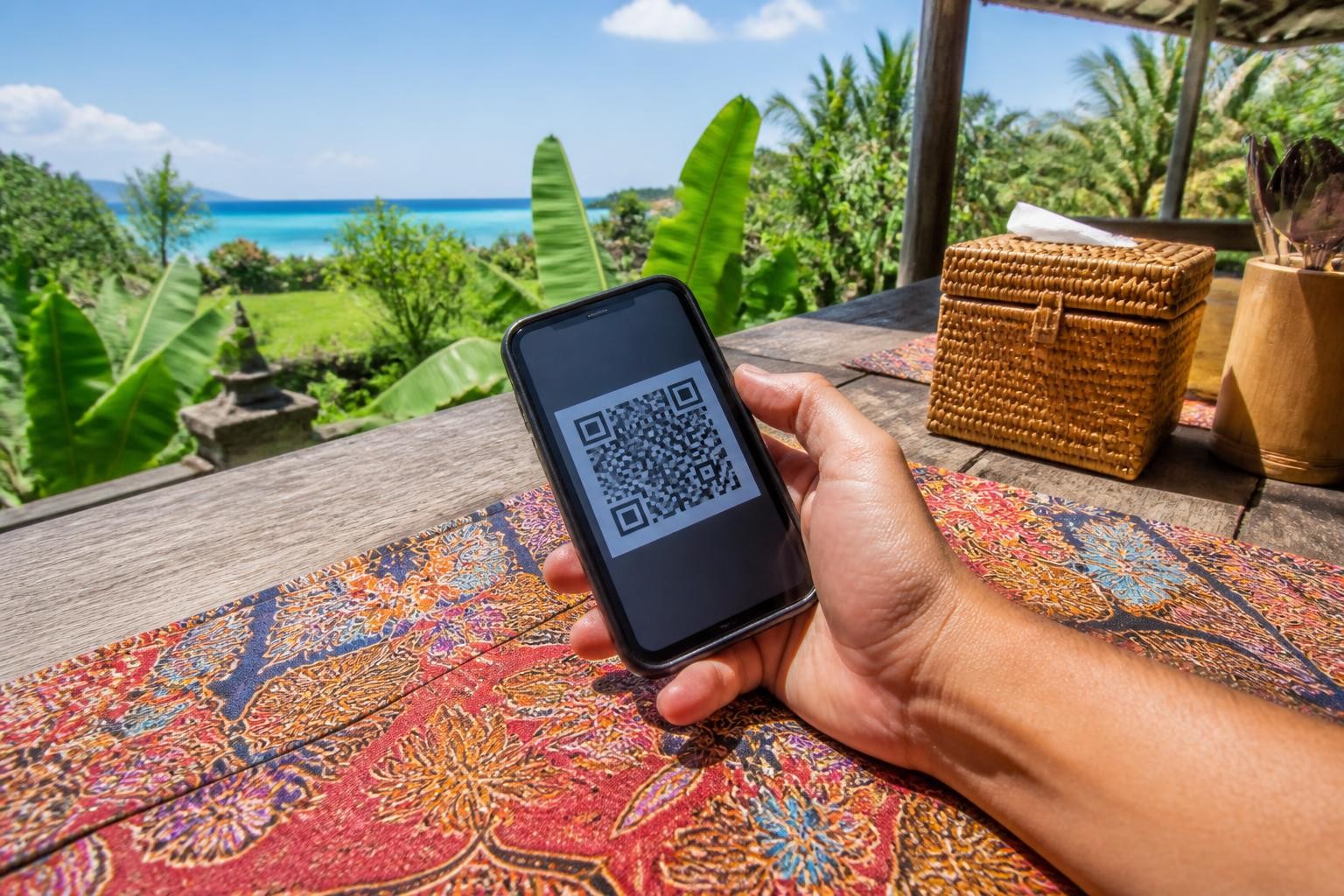 Indonesia-India QR Payment Talks Put Lombok on the Investor Map · Illustration: HubLombok (AI-generated)
The India Angle In A Bali-Overflow Market
India’s relevance to Lombok should be viewed through a regional lens. Bali has been the established international magnet, but its higher pricing and congestion are pushing investors and travellers to look harder at Lombok. That is the Bali-overflow thesis: as Bali becomes more expensive and crowded, earlier-cycle Lombok offers a cheaper base with improving access and a more open growth curve.
The verified market evidence already supports that direction. South Lombok foreign arrivals are trending +40-50% YoY, supported by tourism recovery and the MotoGP/Mandalika effect. Kuta and Mandalika villa rates are about +38% YoY, while Are Guling momentum is about +47% YoY. Those are not promises of future performance; they are signs of a market moving from discovery to underwriting.
The QR-payment discussion with India adds another layer. It suggests Indonesia is not waiting passively for tourism flows to arrive. It is working on the practical systems that make travel and trade easier. For Lombok, still building its reputation among European, Australian and American investors, that institutional posture is valuable.
There is also a brand effect. Investors do not buy only land or villas; they buy into a jurisdiction’s direction of travel. When Indonesia is seen to be deepening financial cooperation with a major Asian partner, it reinforces the impression of a country aligning tourism, trade and digital infrastructure. That impression can matter when an investor is choosing between a mature but expensive Bali asset and an earlier-cycle Lombok position.
Caution is still warranted. Today’s source does not provide implementation details, participating banks, launch timing or tourist-volume forecasts. It would be premature to price this news as a direct uplift to villa yields. The correct reading is more disciplined: payments cooperation is a positive macro signal that may improve the operating environment over time.
What This Means For Investors
For Lombok investors, the immediate action is not to chase headlines. It is to refine underwriting around the type of assets most likely to benefit from a more digital, regionally connected tourism economy.
The strongest candidates are professionally managed villas in zones with clear demand drivers, credible access and transparent rental operations. In South Lombok, that generally means investors should compare land cost, build quality, management terms and occupancy assumptions with care. Management fees typically run 18-22% of gross rental revenue, while OTA and booking commissions are 15-20%. These costs must be included before any net yield claim is taken seriously.
Legal structure remains equally important. Foreigners cannot hold freehold, known as Hak Milik or SHM. Available routes include leasehold, Hak Pakai for qualifying residency situations, and PT PMA structures holding HGB. Nominee structures, where an Indonesian holds freehold on behalf of a foreign buyer, are illegal and void in court.
That legal discipline becomes even more important as Lombok attracts broader international attention. A market with rising demand also attracts weak paperwork, loose promises and informal arrangements. Investors should insist on proper due diligence, licensed PPAT notary execution, BPN land-office checks and a clear understanding of buyer transfer duty, BPHTB, at about 5% of assessed value.
HubLombok is the editorial arm of Samudra Villas, an active developer in Are Guling, South Lombok. Where legal structure, notary work or buyer due diligence is involved, TerraNusa Advisory is our independent licensed-notary and legal desk partner for foreign buyers in Lombok. Its role is to run the whole chain: certificate checks, ownership history, zoning, encumbrances, PT PMA setup where needed, taxes, deed work and title transfer.
The investment takeaway is measured but constructive. Indonesia-India QR payment cooperation is not a stand-alone reason to buy Lombok property. It is, however, one more sign that Indonesia’s tourism economy is becoming more connected, more formal and more investable. For buyers assessing South Lombok against Bali, that matters.
In a market where entry pricing remains far below comparable Bali villas, and where demand is increasingly tied to infrastructure and regional connectivity, payments are part of the investment thesis. The winners will be assets that can convert tourist growth into audited, well-managed cash flow.
Stay informed, subscribe to the free Lombok Briefing for market intelligence like this, published twice a month.
Does the Indonesia-India QR payment news directly raise Lombok yields?
Not directly. The news is best read as a positive operating signal, not a yield guarantee. Lombok investors should still underwrite honest net rental yields at 7-12% after management fees, commissions and realistic occupancy assumptions.
Why does payment cooperation matter for Lombok property investors?
Easier QR payments can reduce friction for visitors and help operators capture cleaner revenue across bookings, services and local spending. For professionally managed villas, better payment infrastructure can support stronger reporting and a more investable tourism ecosystem.
What should foreign buyers check before investing in Lombok villas?
Foreign buyers should avoid nominee structures, which are illegal and void in court. They should use proper leasehold, Hak Pakai or PT PMA routes, verify certificates and zoning, and complete deed and title work through licensed notary and BPN processes.
The Lombok Buyer's Field Guide
Legal structures ranked by risk, the honest ROI math line by line, all six zones ranked, and the 24-point due-diligence checklist. The whole book, free in your inbox.
See what's inside