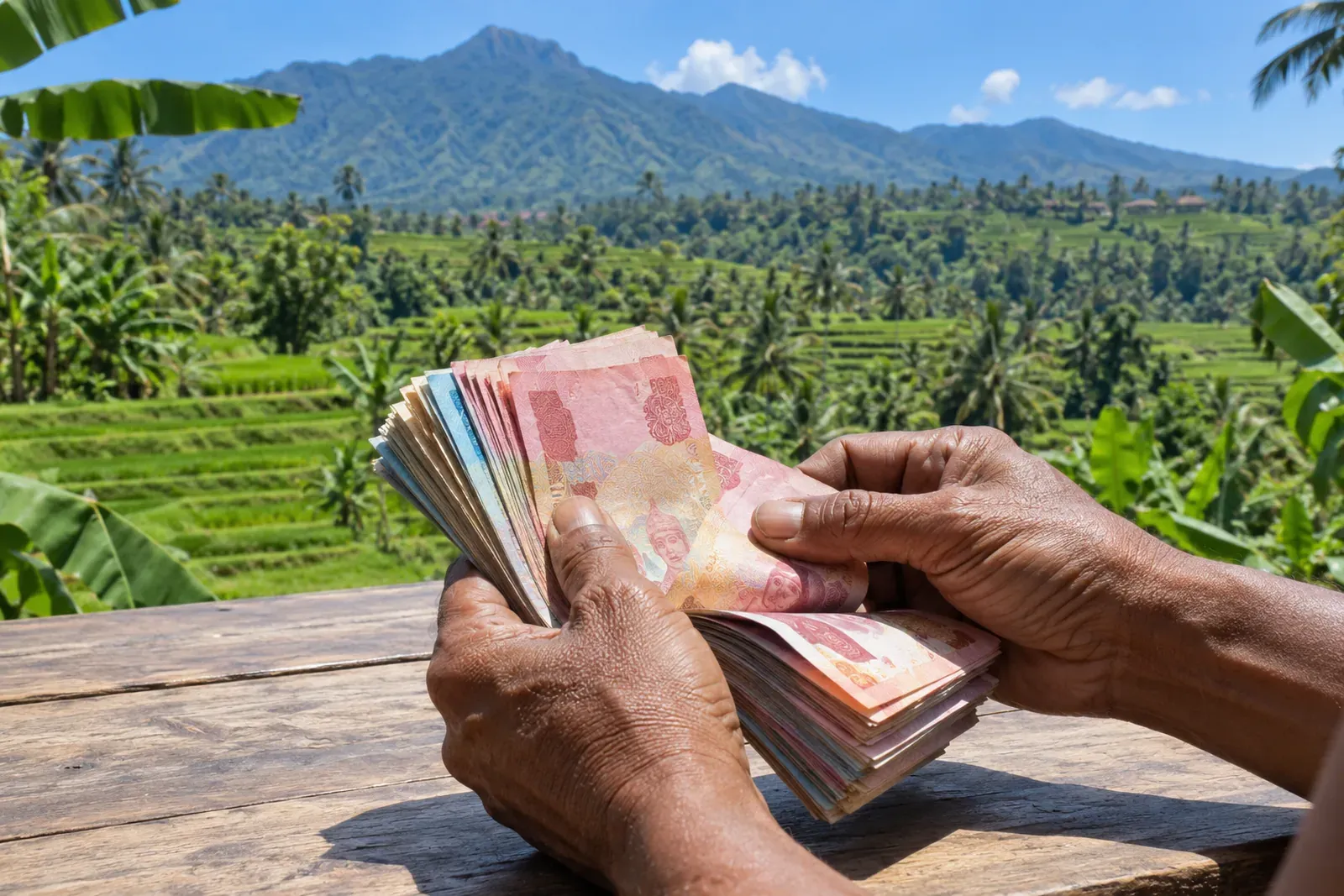
Prabowo Targets Rp400 Trillion Rural Credit: Impact on Lombok Growth
President Prabowo targets Rp400 trillion for rural credit and vows to shut 700 state firms. We examine what regional liquidity means for Lombok investors.
Quick answer: President Prabowo Subianto has unveiled a Rp400 trillion (around USD 22 billion) rural credit target to empower 28 million families, alongside closing 700 unprofitable state enterprises. For investors in Lombok, this aggressive decentralisation of liquidity strengthens regional supply chains, reinforces municipal infrastructure capacity, and stabilizes the agrarian economic foundation surrounding South Lombok's tourism corridors.
Capital allocation in Indonesia is undergoing a structural realignment toward the provinces. Speaking at the 2026 National Coordination Meeting on Regional Financial Access Acceleration Teams (TPAKD) in Gunung Putri, West Java, President Prabowo outlined an ambitious push to direct productive financing away from metropolitan monopolies and straight into village economies. For foreign capital evaluating regional destinations such as Lombok, the dispatch signals a critical policy shift: national growth targets are now formally tethered to rural financial deepening, natural resource reclamation, and state-firm discipline.
The Context
The policy architecture behind this announcement rests on the nationwide rollout of the Regional Financial Access Acceleration Teams. Established through joint coordination between the Financial Services Authority (OJK), Bank Indonesia, and provincial administrations, these teams were active in all provinces, regencies, and cities across Indonesia by late 2024. According to presidential data, the initiative has already channeled Rp53 trillion (around USD 3 billion) in productive financing to roughly two million beneficiaries across the archipelago.
President Prabowo has now dramatically expanded this ambition. The targeted deployment of Rp400 trillion aims to reach 28 million low-income households, with explicit capital ring-fencing for agricultural producers, coastal fisheries, and village entrepreneurs. This funding mechanism is designed to operate in tandem with the newly formed National Financial Welfare Council, an executive body established to coordinate inclusive economic policy across regional jurisdictions.
Crucially, this liquidity injection is paired with assertive state rationalisation and regulatory enforcement. In his address, the President confirmed instructions to Energy and Mineral Resources Minister Bahlil Lahadalia to revoke permits for mining entities that have remained dormant for over two years. Concurrently, the administration has set a deadline of December 2026 to dismantle or shut down roughly 700 state-owned enterprises identified as chronically unprofitable or guilty of falsifying financial accounts. The dual strategy reflects an orthodox fiscal thesis: purge parasitic balance sheets at the federal level while pumping productive credit into agrarian and regional margins.
Decentralised Liquidity and Regional Supply Chains
For decades, foreign investors deploying capital in secondary island markets have contended with fractured provincial supply chains. In West Nusa Tenggara, where tourism growth in South Lombok runs parallel to traditional farming and fishing communities, the economic distance between coastal hospitality developments and rural production centres has remained pronounced. A credit programme of this scale begins to compress that gap.
When village cooperatives and local producers access formal capital, the commercial downstream effects are direct:
- Local food security and hospitality procurement: Hospitality assets in Kuta and Selong Belanak rely heavily on food supplies shipped across the Lombok Strait from Bali or sourced from East Java. Expanding rural working capital directly enhances local poultry, livestock, and produce operations across Central and East Lombok, lowering operating expenditure for regional hospitality operators.
- Stabilised labour markets: Tourism corridors cannot function effectively as affluent enclaves surrounded by undercapitalised villages. Productive rural credit curbs precarious economic displacement, elevating household resilience and fostering a balanced regional economy.
- Informal sector formalisation: Financial inclusion under TPAKD brings rural micro-enterprises into structured banking networks. This accelerates the adoption of digital payments, formal bookkeeping, and commercial reliability across domestic supplier networks.
As President Prabowo observed during the broadcast by the Presidential Secretariat:
"Our plan or target for the coming years is to distribute Rp400 trillion to farmers, fishers, and people living in villages. All our potential is mustered to achieve our goal, which is delivering prosperity to the people."
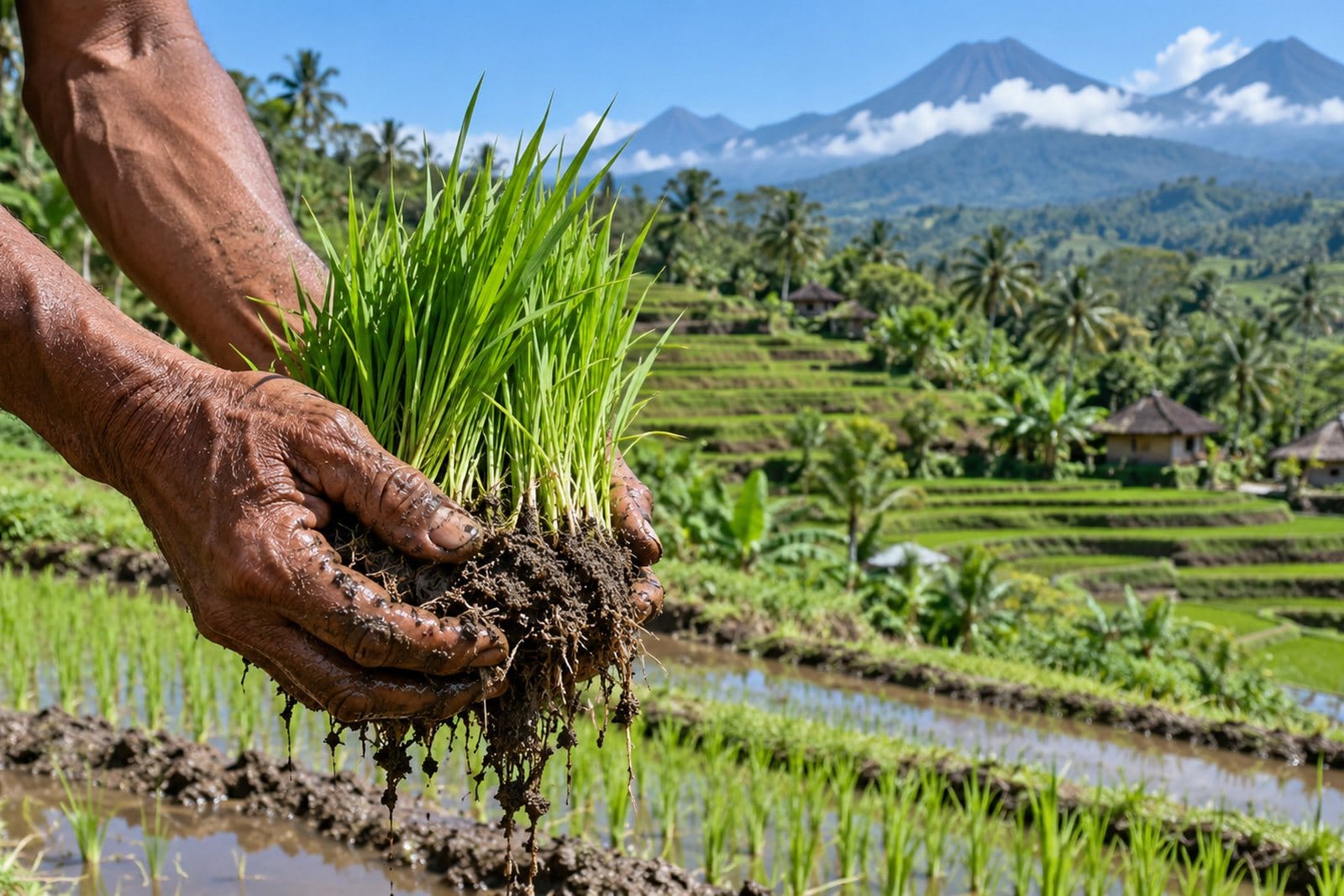 Prabowo Targets Rp400 Trillion Rural Credit · Illustration: HubLombok (AI-generated)
Fiscal Cleanse: The Purge of 700 State-Owned Enterprises
While the headline credit figure will capture domestic political attention, institutional and international investors will focus equally on the planned liquidation of 700 state-owned enterprises by December 2026. State-owned enterprise inefficiency has historically crowded out private capital and absorbed public resources through recurrent subsidies and soft loans.
Eliminating non-viable state entities addresses two chronic structural frictions in the Indonesian economy:
First, it curtails moral hazard across regional procurement. Inactive or commercially distorted state enterprises frequently monopolised concession agreements, logistics routes, and infrastructure contracts without delivering operational performance. Prabowo's explicit mandate to penalise dormant concessions, combined with revoking non-operational mining rights, signals that productive land and commercial licences must yield economic output or face swift redistribution.
Second, dissolving inefficient state balance sheets protects sovereign credit ratings and frees national fiscal capacity. Redirecting state resources toward rural credit mechanisms and institutional infrastructure provides a cleaner, more defensible macroeconomic platform. For foreign direct investment, a government willing to shutter hundreds of underperforming state entities demonstrates an appetite for market discipline that previous administrations often deferred.
| Policy Measure | Operational Mechanism | Target Completion / Scale | | :--- | :--- | :--- | | Rural Productive Credit | TPAKD, Bank Indonesia, and OJK distribution | Rp400 trillion to 28M families | | Preliminary Disbursal | Baseline credit distributed through late 2024 | Rp53 trillion to ~2M recipients | | SOE Rationalisation | Liquidation of unprofitable / non-transparent entities | ~700 state enterprises by Dec 2026 | | Resource Oversight | Revocation of concessions dormant over two years | Immediate ministerial enforcement |
What This Means for Investors
Macroeconomic shifts in Jakarta inevitably manifest as local real estate and commercial dynamics on the ground in Lombok. Indonesia's regional property markets do not operate in a vacuum; they depend on reliable infrastructure, social stability, and functional local economies. International investors holding or evaluating assets across South Lombok should consider three strategic implications:
- Compression of Operational Friction: Sustainable yield performance requires robust local operational ecosystems. In South Lombok, where turnkey investment-grade villas enter between EUR 95,000 and EUR 350,000, operational yields depend on controlling property management costs and supply chains. Reliable local procurement lowers operating expenses, directly protecting the honest net rental yields of 7-12% achieved by well-managed assets in prime locations.
- De-risking of Regional Outliers: As tourism arrivals expand across West Nusa Tenggara, tracking foreign-arrivals momentum of +40-50% year-on-year, regional stability becomes paramount. Capitalising rural communities prevents the stark socioeconomic divergence seen during Bali's early growth cycle, reducing social frictions and strengthening the broader investment environment.
- Clarity on Natural Resources and Land Use: Minister Bahlil's mandate to revoke dormant resource permits underscores a broader legal tightening across Indonesia. Foreign capital must mirror this administrative discipline. Ensuring clean land certification, transacting strictly through licensed PPAT notaries, and securing proper company structures (such as a PT PMA holding Hak Guna Bangunan rather than legally invalid nominee arrangements) is essential as federal oversight intensifies.
Indonesia's economic trajectory under the Prabowo administration is prioritising rural purchasing power alongside disciplined administrative pruning. For investors navigating Lombok's emerging market cycle, a policy environment that bolsters rural resilience while dismantling bureaucratic state inertia offers a supportive backdrop for long-term capital deployment.
Stay informed: subscribe to the free Lombok Briefing, published twice a month (the 1st and 15th), for market intelligence like this.
What is the new Rp400 trillion rural credit initiative announced by President Prabowo?
It is a national financing initiative targeting 28 million rural families, fishers, and farmers. Distributed through Regional Financial Access Acceleration Teams (TPAKD), OJK, and Bank Indonesia, it scales up a preliminary programme that disbursed Rp53 trillion to roughly two million beneficiaries.
How does rural credit expansion in Indonesia impact foreign property investors in Lombok?
Direct credit to rural producers strengthens regional supply chains, lowers food and service procurement costs for hospitality operators, and reinforces socioeconomic stability around emerging tourism zones, helping protect honest net rental yields of 7-12%.
Why is the Indonesian government shutting down 700 state-owned enterprises by 2026?
President Prabowo has ordered the closure of non-viable or non-transparent state firms to eliminate fiscal waste and curb market monopolies, redirecting national capital toward productive regional growth and private-sector efficiency.

The Lombok Buyer's Field Guide
Legal structures ranked by risk, the honest ROI math line by line, all six zones ranked, and the 24-point due-diligence checklist. The whole book, free in your inbox.
See what's inside