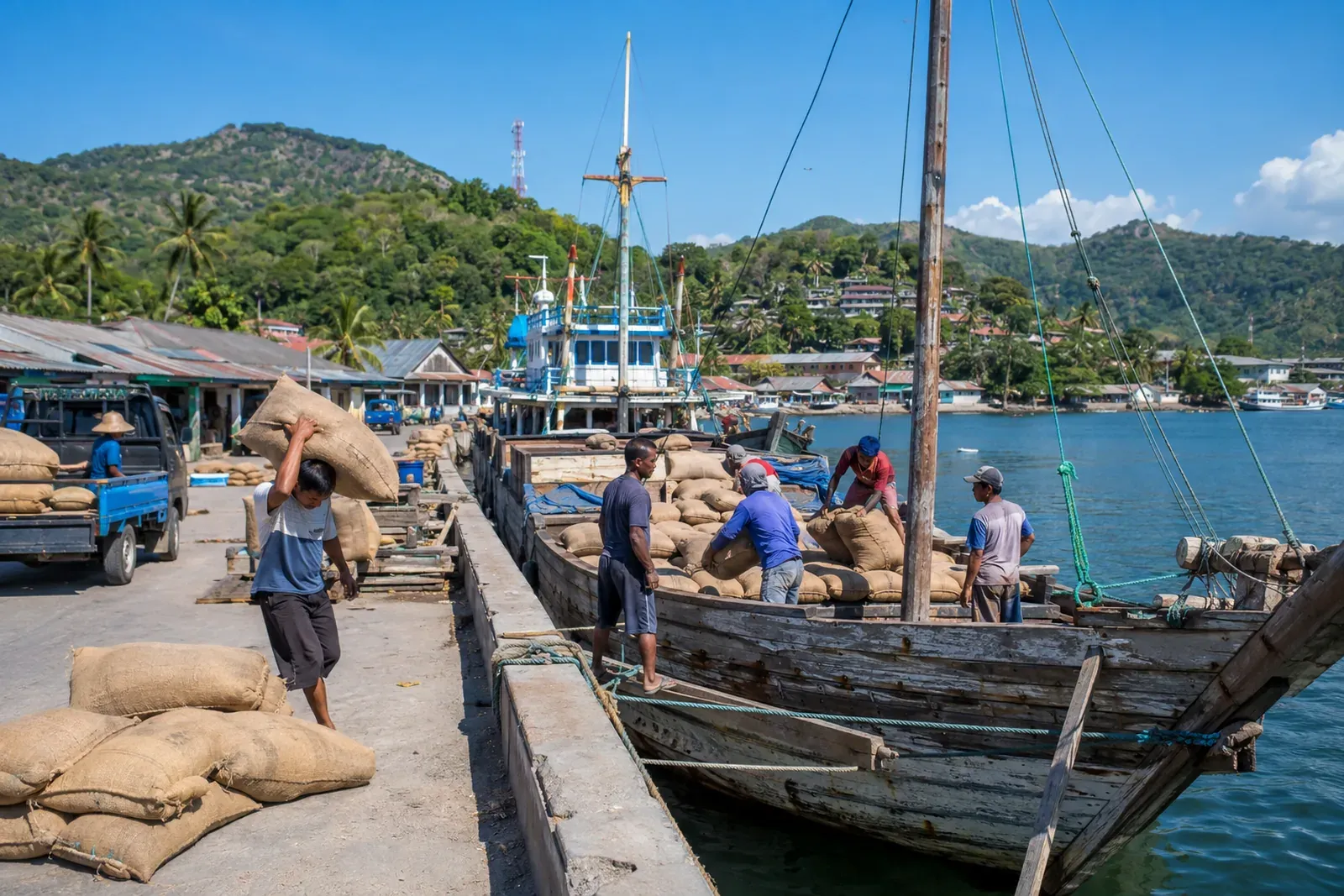
Prabowo Positions the Pacific as Indonesia’s Economic Bridge to Russia
Indonesia’s president used the Eastern Economic Forum to press for closer economic links with Russia’s Far East and the EAEU.
Quick answer: President Prabowo Subianto has used Russia’s Eastern Economic Forum to advocate closer Indonesia–Russia economic ties, presenting the Pacific as a commercial link rather than a divide. For Lombok investors, this is a live diplomatic signal, not an announced local investment policy, project or property-market catalyst.
Indonesia’s president has taken a deliberately expansive view of the Pacific: not as an ocean separating two distant countries, but as an economic route connecting them. Speaking in Vladivostok as guest of honour at the 11th Eastern Economic Forum, Prabowo Subianto argued for stronger bridges between Indonesia, Russia’s Far East and the Eurasian Economic Union.
The immediate significance lies in the direction of travel. Jakarta is publicly placing economic engagement with Russia within a wider Asia-Pacific framework, while Russia is using the forum to deepen trade, investment and energy links with countries in the region. The dispatch is material for internationally minded investors because it clarifies diplomatic intent; it does not, however, announce a transaction, a Lombok scheme or a change to Indonesia’s investment rules.
The Context
Prabowo spoke on Thursday in Vladivostok, Russia’s Far East city, during the Eastern Economic Forum, which is being held from September 1 to 4. The forum’s theme, “The Far East: Development for the Benefit of the People,” was one he explicitly connected to the mandate he said he had received from Indonesian voters.
His central argument was geographical and economic. Indonesia sits between the Indian and Pacific oceans, while both Indonesia and Russia’s Far East have extensive Pacific-facing territories. In his telling, that shared geography creates an opportunity to build stronger ties rather than treating distance as a constraint.
“The Pacific does not separate us. The Pacific connects us,” Prabowo said at the forum.
That framing matters because it places Indonesia’s outreach in practical commercial language. The president described the Pacific as a highway for both economies and said Indonesia was seeking stronger bridges with Russia’s Far East and the Eurasian Economic Union, commonly known as the EAEU.
The source is careful about what has and has not occurred. It records a call for closer economic ties and describes the visit as intended to strengthen bilateral relations, particularly in the economic sector. It does not set out a signed agreement, a specific trade corridor, a named investment commitment, an energy project, or any initiative directed at Lombok.
For investors, that distinction is essential. Diplomatic language can establish a policy direction and a platform for later negotiations. It should not be mistaken for a completed commercial outcome. The measured reading is that Indonesia is signalling openness to deeper engagement, while the commercial details remain outside this dispatch.
A Strategic Message from Vladivostok
The choice of venue gives the remarks additional weight. The Eastern Economic Forum is a setting in which Russia seeks to develop economic relationships with Asia-Pacific countries through trade, investment and energy cooperation. Prabowo’s appearance as main guest of honour therefore placed Indonesia’s message inside a forum explicitly concerned with the economic future of Russia’s Far East.
The president also emphasised personal and political continuity. He said the Vladivostok visit marked the fifth time he had met Russian President Vladimir Putin since taking office. He thanked Putin and the Russian government for the invitation, and said he hoped Indonesia could reciprocate the hospitality by welcoming Putin and other Russian officials.
That combination of language is notable. It joins a broad geopolitical idea, the Pacific as a connector, with a direct bilateral relationship at presidential level. For businesses following Indonesia’s external economic policy, it suggests that Moscow remains a relationship Jakarta is willing to discuss publicly and at senior level.
The investment relevance is best understood through three layers:
- Policy signalling: Indonesia’s leadership is making the case for closer economic bridges with Russia’s Far East and the EAEU.
- Commercial agenda: Trade, investment and energy cooperation are the areas associated with the forum in the source report.
- Execution gap: No deal terms, investment figures, timing, sector allocation or local Indonesian destination have been announced in this report.
This is particularly important in a period when investors can be tempted to convert diplomatic theatre into an immediate investment thesis. The president’s words are substantive as a statement of intent. They are insufficient, on their own, to support assumptions about asset values, tourism flows, development approvals, foreign ownership routes or returns in a particular Indonesian region.
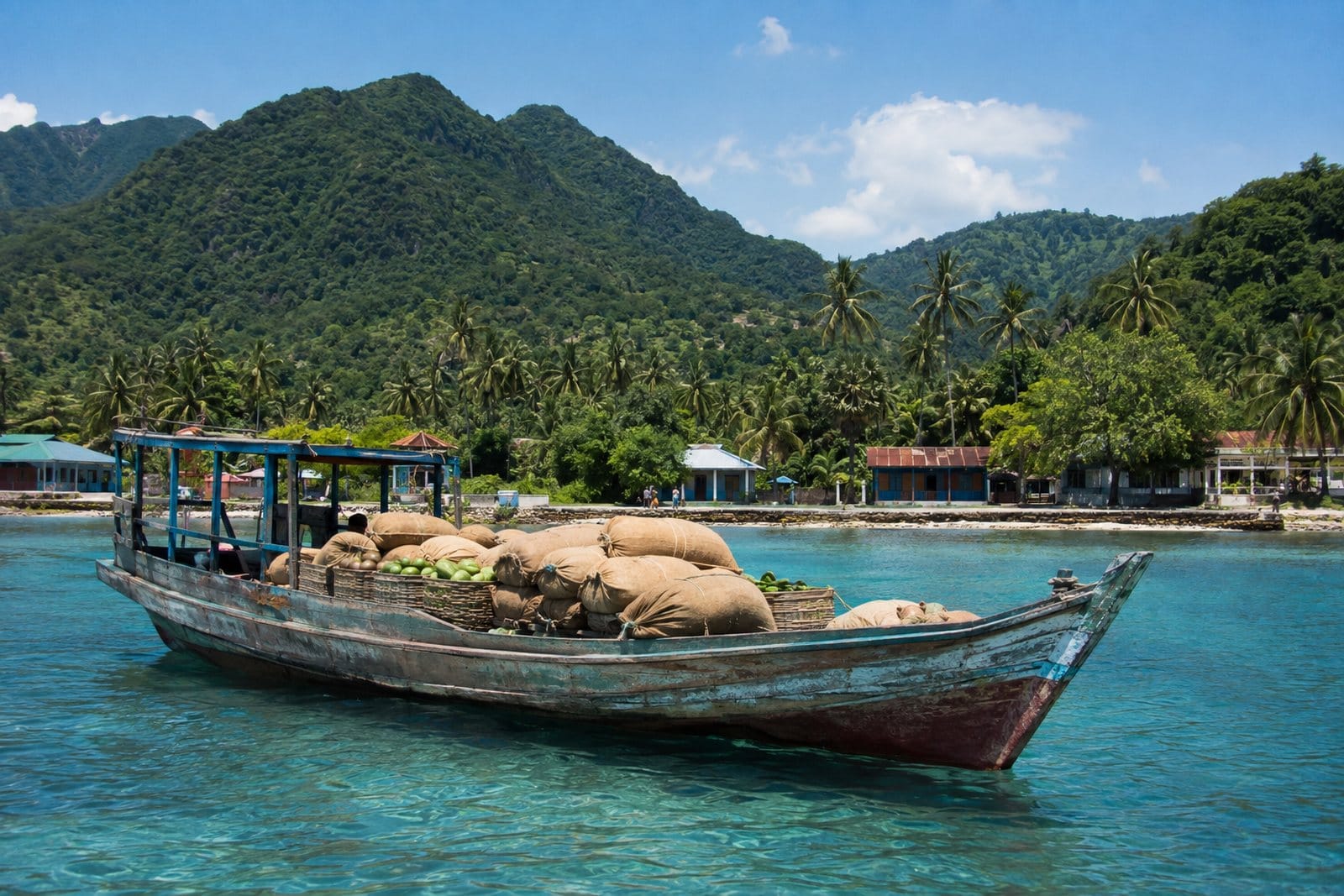 Prabowo Positions the Pacific as Indonesia’s Economic Bridge to Russia · Illustration: HubLombok (AI-generated)
What the Pacific Framing Does, and Does Not, Establish
Prabowo’s Pacific argument is a useful shorthand for Indonesia’s position. Rather than depicting the country as merely a Southeast Asian market, he presented it as a nation with a direct interest in the economic development of a broad Pacific space. That language may resonate with investors whose portfolios span Europe, Australia, the United States and Asia, because it stresses connection across regions rather than a narrow bilateral relationship.
Yet a prudent interpretation requires restraint. The source describes an aspiration to strengthen ties; it does not identify the instruments through which that objective would be implemented. There are no stated commercial terms, no disclosed participating companies and no announced allocation of capital. There is also no stated implication for Indonesian tourism destinations, real estate markets or foreign-buyer procedures.
For Lombok-focused readers, the most accurate conclusion is similarly narrow. Indonesia’s diplomatic effort can be relevant to the country’s longer-run external economic posture, but this report provides no evidence of a direct effect on South Lombok demand, infrastructure, land pricing, villa occupancy or legal arrangements for foreign purchasers.
That does not make the story irrelevant. Investors in emerging markets benefit from understanding the national policy narrative in which local decisions are made. A government seeking wider economic links across the Pacific may have a different set of commercial priorities from one focused only on established partners. But the available evidence here supports attention and monitoring, not a revised underwriting model.
A sensible reading of the report separates confirmed developments from possible future consequences.
| Confirmed in the dispatch | Not announced in the dispatch | |---|---| | Prabowo called for closer economic ties with Russia. | A specific Indonesia–Russia commercial agreement. | | Indonesia is seeking stronger bridges with Russia’s Far East and the EAEU. | A named project, investment amount or timeline. | | Russia is using the forum to deepen Asia-Pacific economic ties. | A Lombok-related tourism, property or infrastructure measure. |
The distinction is more than editorial caution. International investment decisions often suffer when general diplomatic optimism is treated as proof of a local commercial change. In this case, the report provides a clear political message but leaves the investable mechanics unspecified.
What This Means for Investors
The immediate takeaway is to watch official follow-through. Investors should look for subsequent announcements that identify an agreement, sector, legal mechanism, participating institution or Indonesian location. Until then, this remains a high-level statement of economic ambition rather than a transaction-led development.
For those assessing Indonesian exposure, the event reinforces the value of country-level monitoring alongside local due diligence. A national leader’s view of trade and investment partnerships can inform the backdrop for business confidence and cross-border engagement. It does not replace analysis of an individual asset, counterparty, title, financing structure, operating plan or regulatory position.
Lombok investors, in particular, should resist drawing a line from a Vladivostok speech to a local pricing conclusion. The source does not support such a link. There is no stated Russian investment initiative in Lombok, no announced new route, no property policy change and no direct tourism measure in the report.
The more useful question is whether the Pacific-bridge language develops into identifiable economic cooperation. If it does, investors will need to examine its stated scope rather than relying on the broad rhetoric that preceded it. If it does not, the speech will still stand as a concise expression of Indonesia’s willingness to pursue economic relationships beyond its immediate neighbourhood.
For now, Prabowo has made the political case in unusually clear terms: the Pacific should connect Indonesia and Russia. Markets should treat that as a live diplomatic signal, monitor the next formal steps, and keep local investment assumptions grounded in verified project-level evidence.
Stay informed, subscribe to the free Lombok Briefing for market intelligence like this, published twice a month.
What did Prabowo say at the Eastern Economic Forum?
President Prabowo Subianto said the Pacific should connect Indonesia and Russia rather than divide them. Speaking in Vladivostok, he called for closer economic ties with Russia’s Far East and the Eurasian Economic Union.
Has Indonesia announced a Russia-linked investment project in Lombok?
No. The source reports a diplomatic call for closer Indonesia–Russia economic ties, but it does not announce a Lombok investment project, property measure, tourism initiative, infrastructure plan or change to foreign-buyer rules.
What should Lombok investors watch after this announcement?
Investors should watch for official follow-through that identifies specific agreements, sectors, institutions, legal mechanisms, locations or timelines. Until such details emerge, the Vladivostok remarks are a policy signal rather than a local investment catalyst.
The Lombok Buyer's Field Guide
Legal structures ranked by risk, the honest ROI math line by line, all six zones ranked, and the 24-point due-diligence checklist. The whole book, free in your inbox.
See what's inside