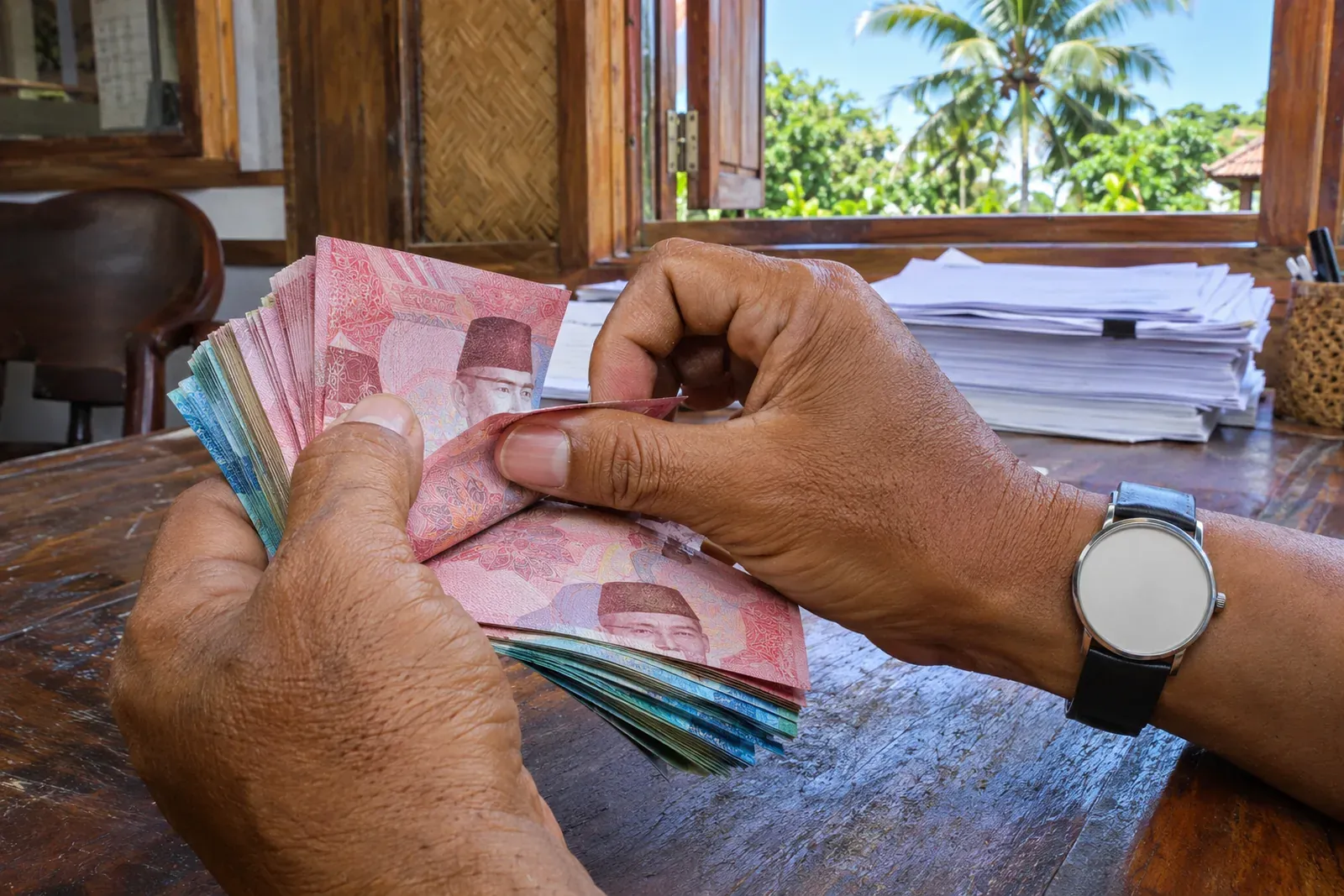
Prabowo Mandates Year-End Fiscal Efficiency as State Revenue Pushes for Rp600 Trillion
President Prabowo orders strict year-end budget efficiency across Indonesian ministries, managing Rp990 trillion in expenditures while securing fiscal stability.
Quick answer: President Prabowo Subianto has instructed all ministries to maintain strict spending efficiency through late 2026 as the state balances Rp990 trillion in planned year-end expenditures against a Rp600 trillion revenue target. For Lombok property investors, this reinforced fiscal discipline signals macro stability, sustained infrastructure execution, and steady sovereign credit conditions without abrupt budgetary shocks.
Fiscal discipline in Southeast Asia's largest economy is entering a decisive seasonal window. Speaking from the Presidential Palace complex in Jakarta following a briefing on the state budget realisation through October 2026, fiscal authorities confirmed that routine year-end spending acceleration will face unprecedented operational scrutiny. For offshore allocators monitoring Indonesian sovereign risk and regional tourism asset valuations, Jakarta's deliberate balancing act offers reassuring confirmation of macroeconomic prudence.
The Context
Seasonal spending patterns in Indonesia historically see substantial budgetary outlays compressed into the final two months of the calendar year. As projects conclude and administrative milestones fall due, disbursements routinely accelerate. In late 2026, however, this cyclical rhythm coincides with tightening external dynamics and significant revenue collection mandates.
According to Finance Minister Suahasil Nazara, the administration must secure more than Rp600 trillion (approximately US$33.15 billion) in state revenue across November and December to keep annual fiscal projections intact. Concurrently, projected state expenditures for the identical eight-week period are forecast to reach approximately Rp990 trillion (US$54.70 billion).
"That is fine, but it must remain efficient and adhere to good governance. We continue to pursue state revenue, while simultaneously ensuring that spending remains efficient.", Suahasil Nazara, Finance Minister
This fiscal posture reflects both internal governance imperatives and heightened volatility across international commodity markets. Global crude oil benchmarks recently surged to US$113 per barrel before moderating slightly, testing energy import assumptions and underlining the necessity of maintaining robust fiscal buffers. While the Ministry of Finance has not specified which individual tax streams will be intensified, the mandate from the presidency is unambiguous: spending must demonstrably match original project output targets rather than serving merely to exhaust annual allocations.
| Fiscal Metric (Nov-Dec 2026) | Projected Amount (IDR) | Approximate USD Value | | :--- | :--- | :--- | | Required State Revenue | > Rp 600 Trillion | ~ US$ 33.15 Billion | | Projected State Expenditure | ~ Rp 990 Trillion | ~ US$ 54.70 Billion | | Peak External Oil Benchmark | - | US$ 113 / barrel |
Fiscal Governance and Infrastructure Continuity
For institutional capital and cross-border private wealth, the primary concern during periods of fiscal consolidation is whether capital expenditure on strategic regional development faces arbitrary disruption. Reassuringly, the presidential directive distinguishes sharply between wasteful administrative overhead and targeted capital disbursements that drive real economic expansion.
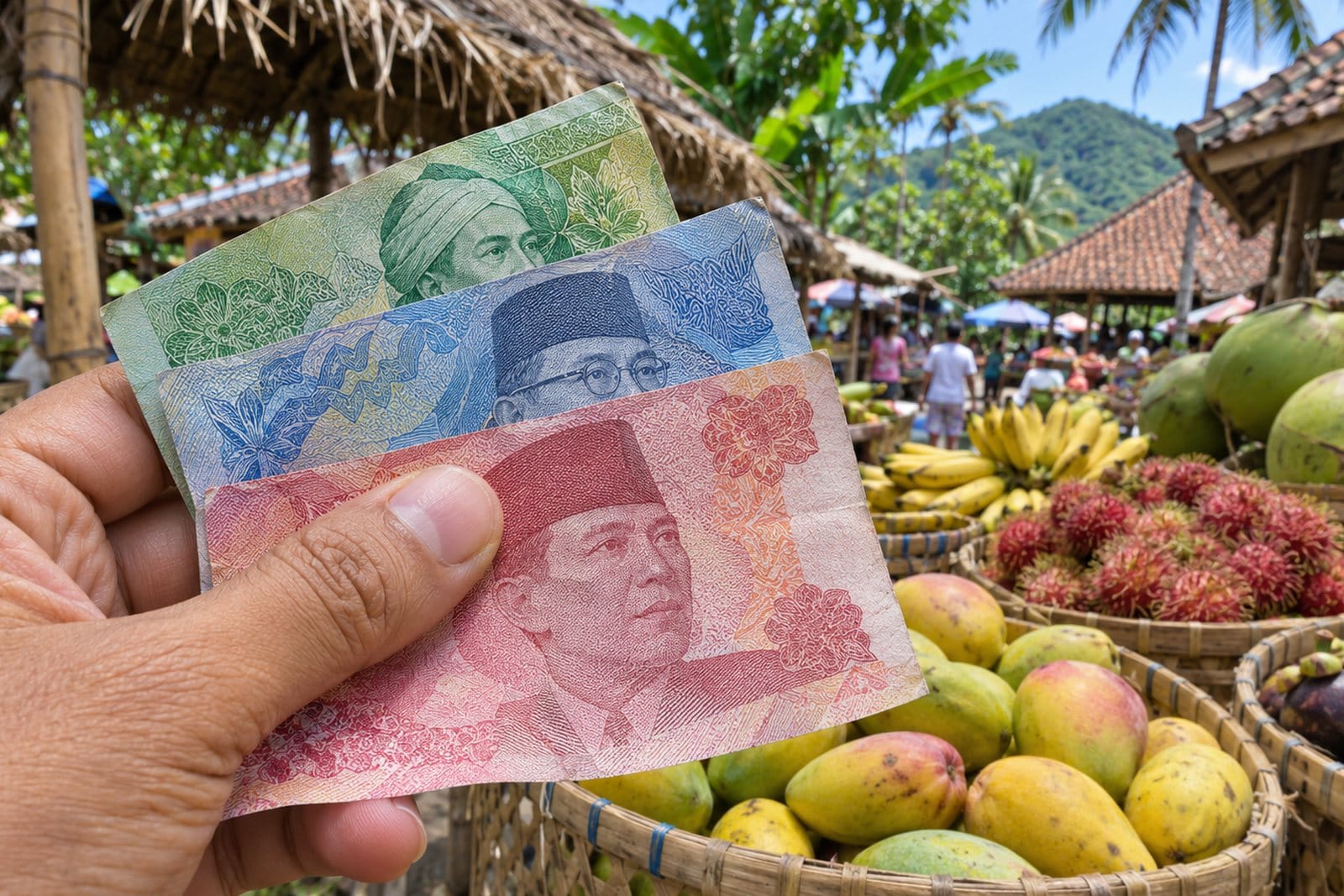 Prabowo Mandates Year-End Fiscal Efficiency as State Revenue Pushes for Rp600 Trillion · Illustration: HubLombok (AI-generated)
Rather than executing blunt, across-the-board spending freezes, the administration's guidelines focus on operational accountability. Strategic infrastructure corridors, including primary arterial upgrades and regional logistical networks serving high-growth regional destinations, operate under multi-year statutory funding commitments that remain ring-fenced. In regional growth epicentres such as West Nusa Tenggara, state-backed capital commitments continue to anchor regional tourism decentralisation.
The broader policy narrative in Jakarta actively reinforces this structural priority. The government continues to target 7 percent national investment growth, an objective that cabinet officials explicitly acknowledge cannot rely upon the state budget alone. By preserving fiscal flexibility and curbing unproductive year-end administrative leakage, Jakarta protects its sovereign balance sheet while deliberately fostering an environment where private domestic and foreign direct investment can compound predictably.
Key policy pillars underpinning this year-end approach include:
- Enforcing strict milestone-based auditing on departmental disbursements before final invoice clearance.
- Maintaining liquidity reserves to absorb external energy and commodity market fluctuations.
- Protecting ongoing public works and transport infrastructure connectivity programmes from discretionary cuts.
- Deepening institutional cooperation with private capital partners to sustain long-term economic momentum.
Sovereign Stability and the Provincial Investment Horizon
A disciplined central treasury is the essential prerequisite for sustainable real estate returns across Indonesia's secondary and tertiary property markets. Private investors acquiring hospitality assets or residential land outside Jakarta depend heavily on sovereign debt stability, stable currency conversion rates, and steady domestic inflation.
When central fiscal authorities successfully balance significant expenditure programmes against rigorous revenue realisation, the broader yield environment remains grounded. For high-growth destinations such as South Lombok, this macro stability is paramount. The regional market has matured significantly beyond its early speculative phase, supported by foreign-arrival growth trending at +40-50% year-on-year across post-pandemic recovery cycles and international sporting events at the Mandalika circuit.
When evaluating real estate opportunities across South Lombok's distinct coastal micro-markets, astute investors analyse entry pricing against realistic operational yields rather than speculative developer projections. The market offers clear structural value when compared with established neighbours:
- Prime Land Pricing: Kuta sits at Rp 300-400 million per are (approximately US$18,200-24,200 per are, where 1 are equals 100 m²), representing South Lombok's commercial core. Emerging family-focused bays such as Selong Belanak trade at Rp 150-250 million per are, while adjacent zones such as Mawun (Rp 50-80 million per are) and Bumbang (Rp 30-50 million per are) offer early-cycle entry levels. Comparable prime tourism land in southern Bali commands roughly US$200-500 per square metre.
- Villa Entry Capital: Turnkey investment-grade villas in South Lombok generally require an entry ticket of EUR 95,000-350,000. By comparison, an asset of equivalent architectural specification in congested Balinese districts demands USD 400,000-800,000.
- Yield Realities: While developer marketing literature frequently quotes gross yields between 12-22%, disciplined investors must deduct standard operating deductions. Typical property management fees account for 18-22% of gross rental revenue, alongside online travel agent commissions of 15-20%. With stabilised occupancy realistic at 55-70% during operational years one to three, an honest net rental yield sits reliably at 7-12%, with top-performing luxury assets occasionally reaching approximately 15% net under exceptional management.
Preserving macroeconomic health ensures that domestic banking liquidity remains sound, tourist transit corridors expand smoothly, and long-term capital preservation strategies remain achievable for foreign asset owners.
What This Means for Investors
For international investors evaluating Indonesian real estate, the Prabowo administration's emphasis on fiscal efficiency carries direct portfolio implications. It validates the stability of Indonesia's investment framework while highlighting the necessity of proper institutional due diligence.
First, foreign buyers must recognise that economic formalisation and revenue enforcement go hand-in-hand. As the Directorate General of Taxes and the Ministry of Finance tighten oversight to achieve their revenue targets, foreign property owners must ensure that their ownership vehicles are fully transparent and compliant. Foreigners cannot hold freehold titles (Hak Milik / SHM), which are reserved exclusively for Indonesian citizens under national agrarian law.
Instead, foreign investors should secure their assets through compliant, legally recognized routes:
- Leasehold (Hak Sewa): Commonly structured for 25-30 years with formal contract extensions, offering straightforward tenure for private residential use.
- Hak Pakai (Right to Use): A formal title held directly by foreign individuals holding legal residency (such as a KITAS or KITAP). When Hak Pakai is registered over land possessing an underlying Hak Milik title, the foreign buyer must clearly understand that they hold only the Hak Pakai title, not the underlying Hak Milik ownership.
- Foreign Investment Company (PT PMA): An Indonesian corporate entity wholly or partially owned by foreign shareholders. A PT PMA holds Hak Guna Bangunan (HGB, right to build) for an initial 30 years, extendable thereafter. It provides robust commercial protection for operating rental villas.
Investors must categorically avoid informal nominee structures. Under Indonesian jurisprudence, private nominee agreements designed to circumvent foreign ownership restrictions are unlawful and null and void in court. Professional due diligence, including the verification of land certificates at the national land agency (BPN), zoning checks, and the formal execution of deeds of sale (AJB) before a licensed PPAT notary, remains non-negotiable. Qualified advisory desks such as TerraNusa Advisory assist buyers across this procedural chain, ensuring corporate tax compliance, BPHTB transfer duties (roughly 5% of assessed value), and proper land registration.
Second, the state's balanced management of currency and budget variables maintains Indonesia's competitive advantage in international travel. A stable, well-managed sovereign economy safeguards tourism expansion while keeping construction, operational staffing, and ongoing property maintenance costs significantly below Western or mature Asian market benchmarks.
Indonesia's closing fiscal months of 2026 underscore a mature macroeconomic consensus. By maintaining rigorous control over state expenditure while driving targeted infrastructure targets, Jakarta protects the foundation upon which regional property returns are built. For patient capital deploying into emerging island destinations, the policy signals remain encouragingly steady.
Stay informed: subscribe to the free Lombok Briefing, published twice a month (the 1st and 15th), for market intelligence like this.
How does year-end budget efficiency impact infrastructure projects in Lombok?
Jakarta's efficiency mandate targets redundant departmental administrative spending rather than strategic capital projects. Ring-fenced transport, tourism connectivity, and public infrastructure programmes in regional growth zones remain prioritized to support national investment goals.
Will heightened government revenue collection target foreign property owners?
The Ministry of Finance aims to meet broad collection targets through standard corporate, income, and transaction taxes. For foreign real estate investors, compliance entails using registered corporate PT PMA structures, paying the standard 5% BPHTB transfer duty, and avoiding illegal nominee arrangements.
What legal structures should foreign investors use to acquire Indonesian property?
Foreigners cannot hold freehold (Hak Milik). Compliant avenues include long-term leasehold (Hak Sewa), personal right-to-use titles (Hak Pakai with residency), or incorporating a foreign-owned company (PT PMA) that holds Hak Guna Bangunan (HGB) titles for up to 30 extendable years.

The Lombok Buyer's Field Guide
Legal structures ranked by risk, the honest ROI math line by line, all six zones ranked, and the 24-point due-diligence checklist. The whole book, free in your inbox.
See what's inside