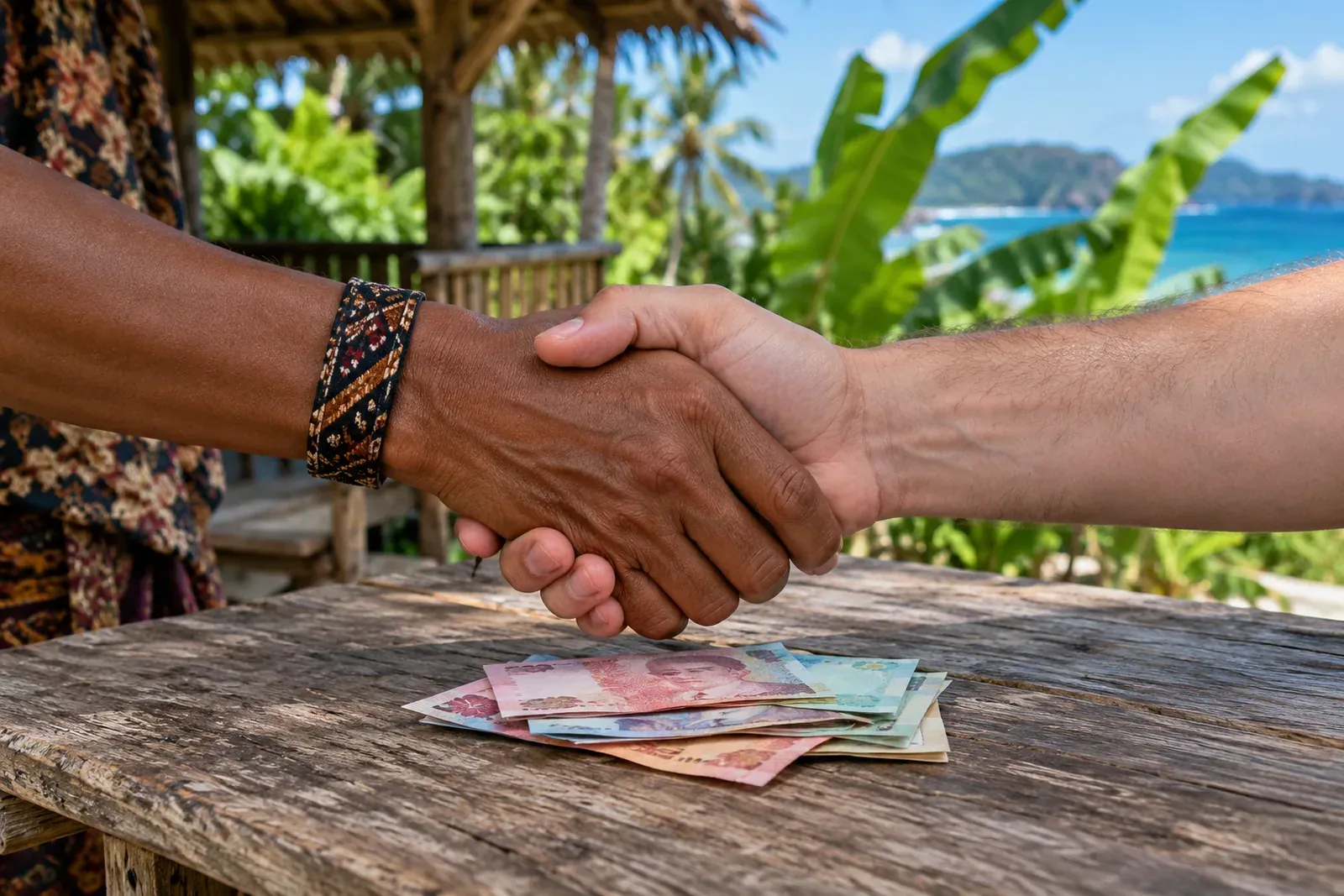
Prabowo's Rp2,000 Trillion Domestic Push Signals Maturing Frontier Growth
Indonesia records nearly Rp2,000 trillion in domestic capital commitments under President Prabowo, reinforcing broader private sector resilience and regional infrastructure momentum.
Quick answer: Indonesia has registered nearly Rp2,000 trillion in domestic private investment under President Prabowo Subianto, according to Kadin. For foreign investors in Lombok, this surging domestic confidence underpins long-term macro stability, reinforces Special Economic Zone infrastructure, and accelerates the transition of regional real estate markets from speculative outposts into institutional-grade tourist corridors.
When domestic capital aggressively commits to home soil, international capital inevitably follows. Fresh data from the Indonesian Chamber of Commerce and Industry (Kadin) reveals that private domestic enterprise has deployed nearly Rp2,000 trillion during the first two years of President Prabowo Subianto's administration. This substantial inflow underscores a structural transition across Southeast Asia's largest economy, with significant implications for decentralised asset markets.
The Context
Speaking at a high-level presidential briefing in Hambalang, West Java, Kadin Chairman Anindya Bakrie presented a detailed assessment of domestic business sentiment. In his address, Bakrie underlined that capital formation is no longer confined to state-directed conglomerates or traditional extraction industries. Instead, deployment has broadened across multiple scales, drawing in medium-sized enterprises and regional operators.
To appreciate the scale of this capital wave, one must evaluate Indonesia's broader macroeconomic balance sheet. National gross domestic product (GDP) currently stands at approximately Rp25,000 trillion, while the national state budget represents roughly Rp4,000 trillion. As Kadin highlighted, state expenditure accounts for only 15 percent of annual economic activity, leaving the remaining 85 percent of the national economy directly open to private enterprise and market-driven deployment.
| Macroeconomic Metric | Scale (IDR Trillion) | Economic Share (%) | | :--- | :--- | :--- | | National Gross Domestic Product (GDP) | ~Rp 25,000 | 100% | | State Budget (APBN) Allocation | ~Rp 4,000 | ~15% | | Private Sector and Commercial Activity | ~Rp 21,000 | ~85% | | Domestic Capital Deployed (Prabowo Era) | ~Rp 2,000 | ~8% of GDP |
Bakrie reaffirmed that business sentiment remains anchored by resilient economic fundamentals, noting that the International Monetary Fund (IMF) has repeatedly characterised Indonesia as an economic bright spot amid broader global headwinds. Priority allocation sectors highlighted by domestic leadership include electric vehicle manufacturing, renewable energy networks, and regional data centres, all of which expand domestic supply chains and enhance regional infrastructure.
Decentralisation and the Rise of Regional Hubs
A critical element of Kadin's strategic agenda is strengthening regional entrepreneurs and expanding mid-tier enterprises beyond Java. Historically, institutional private investment clustered almost exclusively around the capital, leaving the outer islands dependent on central state subsidies. Today, targeted regulatory frameworks, including Special Economic Zones (SEZs), have redirected substantial capital flows across the archipelago.
Official data confirms that Indonesian SEZs have already attracted US$ 1.24 billion in cumulative investment and generated roughly 302,000 jobs. For Nusa Tenggara Barat, this framework directly manifests in the Mandalika Special Economic Zone on South Lombok's southern coastline. The zone, anchored by international sports tourism and modern transit infrastructure, acts as a primary catalyst for regional capital accumulation.
As domestic transport, energy distribution, and connectivity links mature, peripheral tourism markets experience rapid structural compression. Foreign arrivals across destination hubs have expanded by 40-50% year on year, supported by international events such as the MotoGP round at Mandalika and expanding flight corridors. When domestic industrial capital secures national energy and logistics links, commercial real estate in secondary tourist corridors experiences an immediate reduction in development friction.
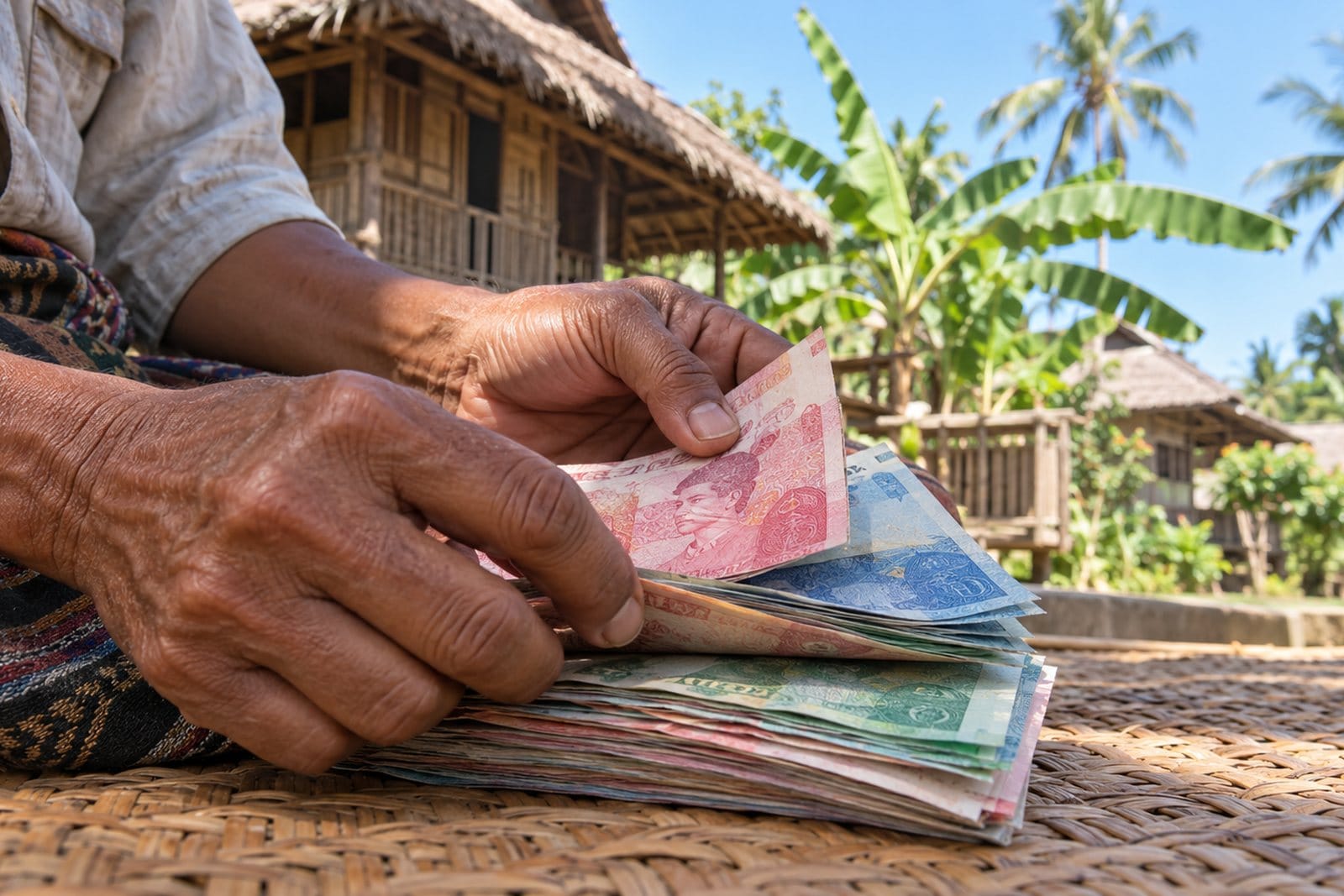 Prabowo's Rp2,000 Trillion Domestic Push Signals Maturing Frontier Growth · Illustration: HubLombok (AI-generated)
Capital Spillover into the Bali-Overflow Corridor
The macroeconomic resilience identified by Kadin directly reflects the underlying dynamics of South Lombok's luxury property market. International capital allocation in Southeast Asia is governed by relative value and maturity cycles. For decades, foreign buyers concentrated their leisure capital in southern Bali, driving urban density to saturation points and pushing land acquisitions to elevated thresholds.
Prime land in established tourist districts of Bali commands roughly USD 200-500 per square metre. Turnkey villas in prime Balinese enclaves trade between USD 400,000 and USD 800,000. By contrast, South Lombok represents an earlier-cycle expansion, absorbing what analysts term the Bali-overflow phenomenon.
Consider the prevailing comparative metrics across prime tourist parcels in South Lombok, where land is traded in ares (one are equals 100 square metres):
- Kuta (Lombok): Rp 300-400 million per are (~USD 18,200-24,200 per are), leading regional liquidity with developer-quoted gross yields between 14% and 22%.
- Selong Belanak: Rp 150-250 million per are (~USD 9,100-15,200 per are), expanding as a prime enclave for family-oriented tourism with capital growth.
- Are Guling: Rp 120-180 million per are (~USD 7,300-10,900 per are), exhibiting rapid momentum (+47% year on year) as an early-cycle frontier.
- Mandalika: Rp 100-150 million per are (~USD 6,100-9,100 per are), benefiting directly from SEZ infrastructure surrounding the circuit.
- Mawun and Bumbang: Emerging entry zones trading between Rp 30 million and Rp 80 million per are.
Across South Lombok's tourist corridors, prime land prices span Rp 150-400 million per are, equivalent to roughly USD 90-240 per square metre at current foreign exchange levels of approximately Rp 16,500 per USD. Turnkey investment-grade villas range from EUR 95,000 to EUR 350,000. In Are Guling, where Samudra Villas operates its flagship development with turnkey villas from around EUR 255,000, price appreciation reflects early infrastructure integration.
"HubLombok is the editorial arm of Samudra Villas, an active developer in South Lombok. That relationship is disclosed here because it shapes what we cover, not what we conclude."
What This Means for Investors
For foreign family offices, high-net-worth individuals, and private investors assessing Indonesia, domestic corporate capital expenditure serves as an essential risk barometer. When domestic companies commit nearly Rp2,000 trillion, they provide independent confirmation of domestic liquidity, policy stability, and administrative continuity.
However, disciplined investors must separate macro optimism from rigorous property governance. Foreign buyers must navigate statutory ownership protocols through compliant, transparent mechanisms:
- Ownership Restrictions: Foreign nationals cannot hold freehold land (Hak Milik / SHM), which is strictly reserved for Indonesian citizens. Nominee agreements, where an Indonesian citizen holds freehold title on behalf of a foreigner, are illegal and routinely declared void by local courts.
- Compliant Foreign Structures: Approved routes for foreign investors comprise long-term leaseholds (Hak Sewa, typically 25-30 years with formal extension rights), Hak Pakai (right-to-use titles for eligible residents with KITAS or KITAP), or establishing a foreign-owned investment company (PT PMA). A PT PMA is entitled to hold Hak Guna Bangunan (HGB) titles for up to 30 years with statutory extensions.
- Legal Due Diligence: Institutional investors engage specialised partners, such as TerraNusa Advisory, to conduct full-chain due diligence. This includes auditing land agency (BPN) registers, verifying environmental zoning, calculating buyer transfer duty (BPHTB, approximately 5% of assessed transaction value), and executing formal transfer deeds (AJB) through a licensed PPAT notary.
Yield expectations must also remain rooted in honest accounting. While regional developers frequently advertise gross yields between 12% and 22%, net rental returns post-costs are more measured. After deducting management fees of 18-22%, online travel agency commissions of 15-20%, and assuming realistic stabilised occupancies of 55-70%, honest net yields range between 7% and 12%. Exceptional, top-performing assets may touch 15% net, but this remains an explicit outlier rather than the market standard.
Indonesia's domestic private investment surge confirms that the macro engine is operating at full power. For international investors, the primary opportunity lies in entering South Lombok's early-cycle tourism market with compliant corporate structuring, realistic yield expectations, and disciplined site selection.
Stay informed: subscribe to the free Lombok Briefing, published twice a month (the 1st and 15th), for market intelligence like this.
How does Indonesia's domestic investment surge impact South Lombok?
Domestic investment of nearly Rp2,000 trillion strengthens national infrastructure and Special Economic Zones like Mandalika. This builds regional connectivity, lowers development friction, and supports steady capital appreciation across South Lombok's tourist corridors.
Can foreign investors own real estate freehold in Lombok?
No, foreign nationals cannot hold freehold (Hak Milik) titles in Indonesia. Compliant legal routes include long-term leasehold (Hak Sewa), Hak Pakai, or establishing a foreign-owned PT PMA company to hold Hak Guna Bangunan (HGB) titles.
What are realistic net rental yields for investment villas in Lombok?
While developers quote gross yields of 12-22%, realistic net yields range between 7% and 12% after accounting for 18-22% management fees, booking platform commissions, and realistic stabilised occupancy rates of 55-70%.

The Lombok Buyer's Field Guide
Legal structures ranked by risk, the honest ROI math line by line, all six zones ranked, and the 24-point due-diligence checklist. The whole book, free in your inbox.
See what's inside