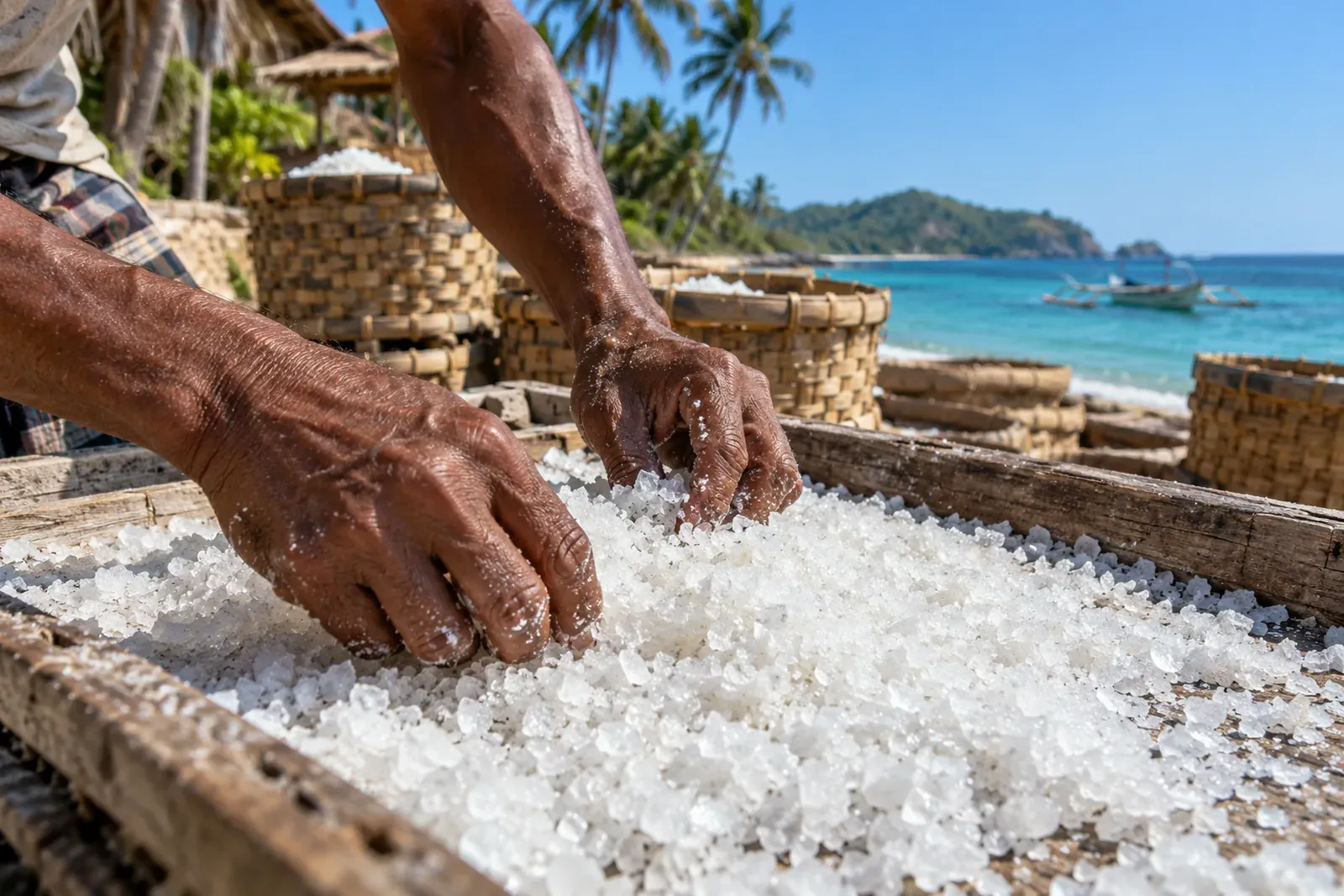
NTT Courts Chinese Capital: What Regional Deals Mean for Eastern Indonesia
East Nusa Tenggara seeks Chinese partnerships in tourism, fisheries and salt. We examine what regional capital flows mean for investors in the Sunda Arc.
Quick answer: East Nusa Tenggara's diplomatic outreach to China's Jiangxi Province highlights an accelerating push to industrialise eastern Indonesia's resource base. For regional investors, this bilateral engagement signals expanding state-level support for downstream processing, maritime infrastructure and regional tourism connectivity across the broader Lesser Sunda archipelago without altering private landholding fundamentals.
Provincial authorities in Kupang have opened formal discussions with Chinese delegations, seeking foreign direct investment to bridge persistent infrastructure deficits across East Nusa Tenggara (NTT). For institutional allocators and cross-border investors assessing the Indonesian periphery, the development reveals how provincial administrations increasingly bypass central conduits to court capital directly. The strategic implications for neighboring regional economies, including West Nusa Tenggara (NTB), warrant close examination.
The Context
On Wednesday in Kupang, East Nusa Tenggara Deputy Governor Johni Asadoma convened an introductory bilateral session with a delegation from China's Jiangxi Province. Led by Tu Anbo, executive vice president of the Jiangxi People's Association for Friendship with Foreign Countries, the delegation engaged with municipal and regency leaders from across the province. Representatives from Belu, North Central Timor, Sabu Raijua, Rote Ndao, and Kupang districts joined the talks, culminating in a preliminary cooperation document signed by Belu District Head Willybrodus Lay and the visiting delegation.
The administrative rationale articulated by Deputy Governor Asadoma balances natural resource abundance against acute socio-economic bottlenecks. While highlighting NTT's considerable endowments in marine fisheries, commercial salt production, livestock, and agriculture, Asadoma candidly acknowledged the structural headwinds constraining regional progress: unequal access to education, uneven healthcare provision, nascent logistics infrastructure, and lagging local GDP growth. In response, provincial initiatives such as One Village One Product, Buy NTT, and NTT Mart have attempted to stimulate value addition locally, but lack the capital intensity required for industrial-scale transformation.
"NTT has abundant natural resources. If managed properly, this potential could deliver positive impacts for society. Hence, we need partnerships, knowledge, innovation, and experience from various parties to support regional development.", Johni Asadoma, NTT Deputy Governor
For Beijing, engagement with provincial outposts across the Indonesian archipelago reflects sustained commercial strategy. Rather than limiting engagement to heavy minerals in Sulawesi or mega-infrastructure on Java, regional Chinese delegations continue to explore agricultural, marine, and light manufacturing integration in frontier provinces. The presence of municipal leadership from border areas like Belu underscores the geoeconomic dimension of regional diplomacy along Indonesia's eastern perimeter.
Maritime Assets, Downstream Ambitions and the Bilateral Channel
The specific proposals tabled during the Kupang assembly illustrate how peripheral districts intend to monetize geographic advantages. Rather than seeking passive aid, local leaders presented distinct industrial priorities tailored to their sub-regional geographies:
- Rote Ndao District: District Head Paulus Henuk presented proposals focused squarely on high-volume salt production facilities alongside niche coastal tourism ventures.
- Sabu Raijua District: District Head Krisman Kore targeted industrial aquaculture, proposing joint ventures in commercial seaweed cultivation, marine fisheries, and salt refining.
- Belu District: Head Willybrodus Lay cemented preliminary formal cooperation, positioning the border hub for cross-border logistics and primary resource distribution.
This deliberate push toward downstream processing (hilirisasi) mirrors national economic policy championed in Jakarta, yet operational execution at the regency level presents entirely different risk profiles. Processing seaweed and marine harvests locally requires consistent electrical baseload, cold-storage logistics chains, and containerised port facilities, assets that remain scarce across the eastern archipelagos.
| District | Primary Focus Sectors | Strategic Objective | | :--- | :--- | :--- | | Belu | Cross-border trade, general primary processing | Formal preliminary agreement signed | | Rote Ndao | Salt extraction, coastal tourism | Downstream refining and hospitality | | Sabu Raijua | Seaweed cultivation, marine fisheries, salt | Capital injection into marine value chains | | Kupang | Provincial logistics, regional coordination | Institutional market integration |
Chinese interest in marine processing and salt production aligns with domestic supply imperatives. China remains the world's largest consumer of industrial and edible salt, as well as marine hydrocolloids derived from tropical seaweed. Securing stable, cost-effective upstream supply arrangements across Southeast Asia offers reciprocal advantages for Chinese processors seeking raw commodity inputs at competitive cost bases.
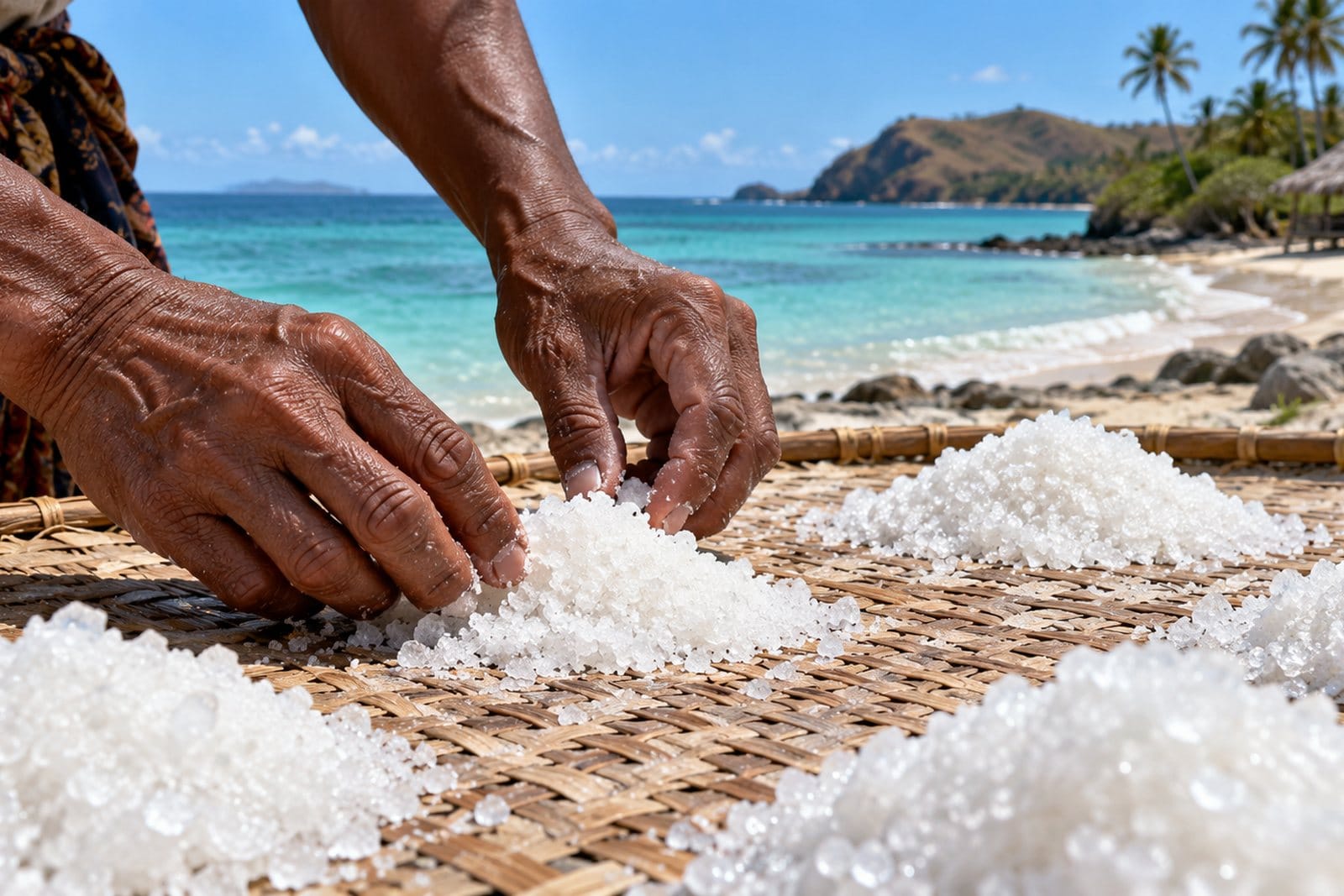 NTT Courts Chinese Capital · Illustration: HubLombok (AI-generated)
The Infrastructure Divide Across Nusa Tenggara
To understand the broader relevance for foreign capital, investors must contextualise East Nusa Tenggara (NTT) alongside its western neighbour, West Nusa Tenggara (NTB). While both provinces comprise the Lesser Sunda chain, their economic maturity curves diverge sharply.
NTT remains an early-stage frontier. The province spans over five hundred islands with fragmented municipal governance and limited arterial road transport. Inter-island connectivity relies heavily on subsidized domestic ferries and regional turboprop aviation. The provincial administration's active solicitation of external investment reflects an urgent requirement for foundational utilities, port modernization, and downstream agricultural capital.
By contrast, West Nusa Tenggara, anchored by Lombok and Sumbawa, has already transitioned through this foundational public-capital cycle. Driven by central government designations, modern international airport facilities, arterial highway construction, and dedicated tourist corridors, NTB demonstrates how state-led capital works catalyze subsequent private commercial investment. Where NTT is currently negotiating preliminary framework pacts for primary processing, NTB has established an operational services economy, international flight corridors, and a mature hospitality supply chain.
The comparative takeaway for portfolio allocators is structural: capital flows in eastern Indonesia follow transport conduits. As bilateral agreements between Chinese provinces and eastern regencies materialize into physical projects, secondary logistics hubs will inevitably expand. Improvements in regional shipping frequencies, cold-chain capacity, and inter-island power grids generated by industrial projects in Kupang, Belu, or Rote ultimately benefit maritime transport efficiency throughout the entire eastern corridor.
What This Means for Investors
For foreign investors, private funds, and family offices watching Indonesian developments from London, Sydney, or Singapore, the Kupang meetings provide vital intelligence on regulatory sentiment and jurisdictional priorities.
First, foreign investment in Indonesia is increasingly decentralised. Provincial and regency officials demonstrate measurable autonomy in courting international partners for natural resources and tourism. However, prospective entrants must note that preliminary cooperation agreements and memoranda of understanding remain exploratory. The distance between a signed preliminary document in Kupang and a commissioned processing plant requires complex statutory clearances, environmental impact reviews (AMDAL), and central ministry alignment.
Second, the sectoral breadth pursued by districts such as Rote Ndao and Sabu Raijua demonstrates that tourism cannot develop in a structural vacuum. Sustainable hospitality development requires agricultural security, reliable regional food logistics, and marine environmental preservation. Commercial investment into fisheries management and maritime supply chains directly supports the viability of high-value eco-tourism across remote archipelagos.
Finally, the macro backdrop across eastern Indonesia highlights the importance of positioning capital ahead of connectivity improvements. The provinces of Nusa Tenggara are steadily transitioning from isolated domestic dependencies into connected regional trading components linked to Australia, East Asia, and the domestic Javanese economic engine.
Investors tracking eastern Indonesia should view the NTT-Jiangxi diplomatic engagement as part of a generational realign-ment. As foreign capital gradually deepens infrastructure throughout the archipelago, early-mover advantages will belong to operators who understand local legal structures, prioritize disciplined due diligence, and align their projects with provincial development agendas.
Stay informed: subscribe to the free Lombok Briefing, published twice a month (the 1st and 15th), for market intelligence like this.
What did the NTT provincial government agree with the Chinese delegation?
Provincial leaders and a delegation from China's Jiangxi Province explored partnerships in salt production, fisheries, agriculture, and tourism. The meeting yielded a preliminary cooperation document signed by Belu District Head Willybrodus Lay to explore local processing and investment.
How does East Nusa Tenggara compare economically to West Nusa Tenggara?
East Nusa Tenggara (NTT) represents an early-cycle economic frontier focusing on basic logistics, salt refining, and primary fisheries. West Nusa Tenggara (NTB) has already established international aviation hubs, arterial highways, and mature hospitality infrastructure that support higher liquidity and established private investment.
Which specific districts in NTT are seeking international tourism partnerships?
Rote Ndao highlighted foreign collaboration opportunities in coastal tourism and commercial salt production during the Kupang bilateral meeting, while neighbouring districts like Sabu Raijua focused primarily on marine fisheries, seaweed processing, and salt extraction.

The Lombok Buyer's Field Guide
Legal structures ranked by risk, the honest ROI math line by line, all six zones ranked, and the 24-point due-diligence checklist. The whole book, free in your inbox.
See what's inside