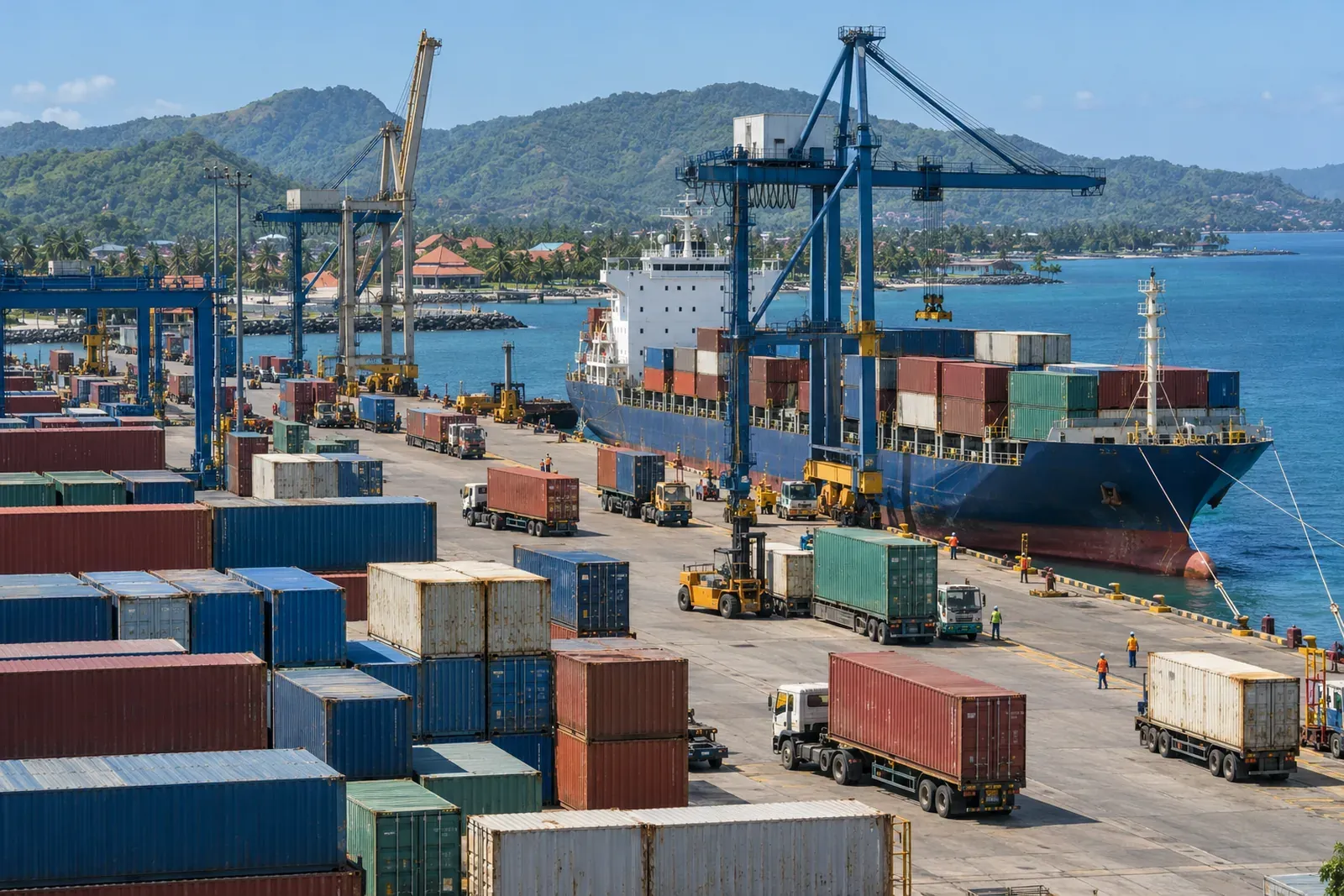
East Nusa Tenggara Opens Talks with China on Tourism and Maritime Capital
East Nusa Tenggara opens formal talks with China's Jiangxi Province for tourism and infrastructure capital, signaling broader international interest in Eastern Indonesia.
Quick answer: East Nusa Tenggara has commenced bilateral talks with China's Jiangxi Province to draw foreign capital into tourism, maritime fisheries, and industrial salt processing. For regional investors, this diplomatic initiative highlights growing international interest across Eastern Indonesia, expanding trade corridors and provincial infrastructure without altering statutory foreign property ownership regulations.
A high-level trade mission from China's Jiangxi Province arrived in Kupang on Wednesday, opening formal discussions with the East Nusa Tenggara (NTT) provincial administration on bilateral capital deployment across regional tourism, fisheries, agriculture, livestock, and salt production. Hosted by NTT Deputy Governor Johni Asadoma, the introductory summit resulted in a preliminary cooperation document signed by Belu District Head Willybrodus Lay and representatives of the visiting delegation. For foreign investors monitoring the broader Nusa Tenggara corridor, the summit offers a clear signal: sub-national administrations across Eastern Indonesia are actively seeking international partners to resolve severe infrastructure constraints, modernise supply chains, and unlock nascent tourism assets.
The Context
The talks in Kupang brought together leaders from five strategic districts: Belu, North Central Timor, Sabu Raijua, Rote Ndao, and Kupang. The visiting delegation was led by Tu Anbo, executive vice president of the Jiangxi People's Association for Friendship with Foreign Countries. The bilateral agenda focuses on transforming the province's unrefined primary resources into higher-margin, value-added products while developing international visibility for remote tourism destinations.
Deputy Governor Asadoma noted that while the province possesses extensive natural endowments, regional development continues to face persistent structural headwinds, including unequal access to healthcare, education, modern transport infrastructure, and sustained local economic expansion. In response, the provincial government has launched homegrown commercial initiatives such as the One Village One Product scheme, the Buy NTT campaign, and the NTT Mart distribution network to formalise market access for regional producers.
Local district executives presented specific industrial cases to the Chinese delegation:
- Belu District: Executed a preliminary bilateral cooperation agreement to formalise cross-border trade, agricultural processing, and industrial development.
- Rote Ndao District: District Head Paulus Henuk presented capital opportunities concentrated on industrial salt extraction and specialised coastal tourism infrastructure.
- Sabu Raijua District: District Head Krisman Kore proposed structured partnerships spanning industrial salt, commercial seaweed processing, and marine fisheries.
Tu Anbo expressed confidence in the engagement, noting that the Jiangxi delegation intends to establish durable, long-term commercial ties with both provincial and district administrations throughout the province.
Maritime Frontiers and Tourism Diversification in the Outer Islands
The explicit inclusion of Rote Ndao and Sabu Raijua signals a deliberate attempt to draw capital into Indonesia's southernmost maritime territory. Rote Ndao, historically celebrated among international surf travellers for its pristine coastline, faces structural bottlenecks that have limited institutional real estate and hospitality investment. Commercial flights remain limited, utilities are developing, and supply lines rely heavily on ferry connections from West Timor.
By packaging industrial salt production and maritime processing alongside tourism promotion, provincial planners aim to build foundational utilities that can subsequently de-risk private tourism investment. In frontier island economies, commercial hospitality rarely scales in isolation. Transport hubs, deep-water logistics, and stable power generation must precede institutional resort and villa developments.
"NTT has abundant natural resources. If managed properly, this potential could deliver positive impacts for society. Hence, we need partnerships, knowledge, innovation, and experience from various parties to support regional development.", Johni Asadoma, Deputy Governor of East Nusa Tenggara
For international capital, the focus on downstream processing in seaweed and fisheries reflects broader national policy mandates across the Indonesian archipelago. By incentivising foreign partners to construct on-site processing facilities rather than exporting raw commodities, local districts seek to retain corporate tax revenue, foster local employment, and generate the municipal revenues needed to maintain regional infrastructure.
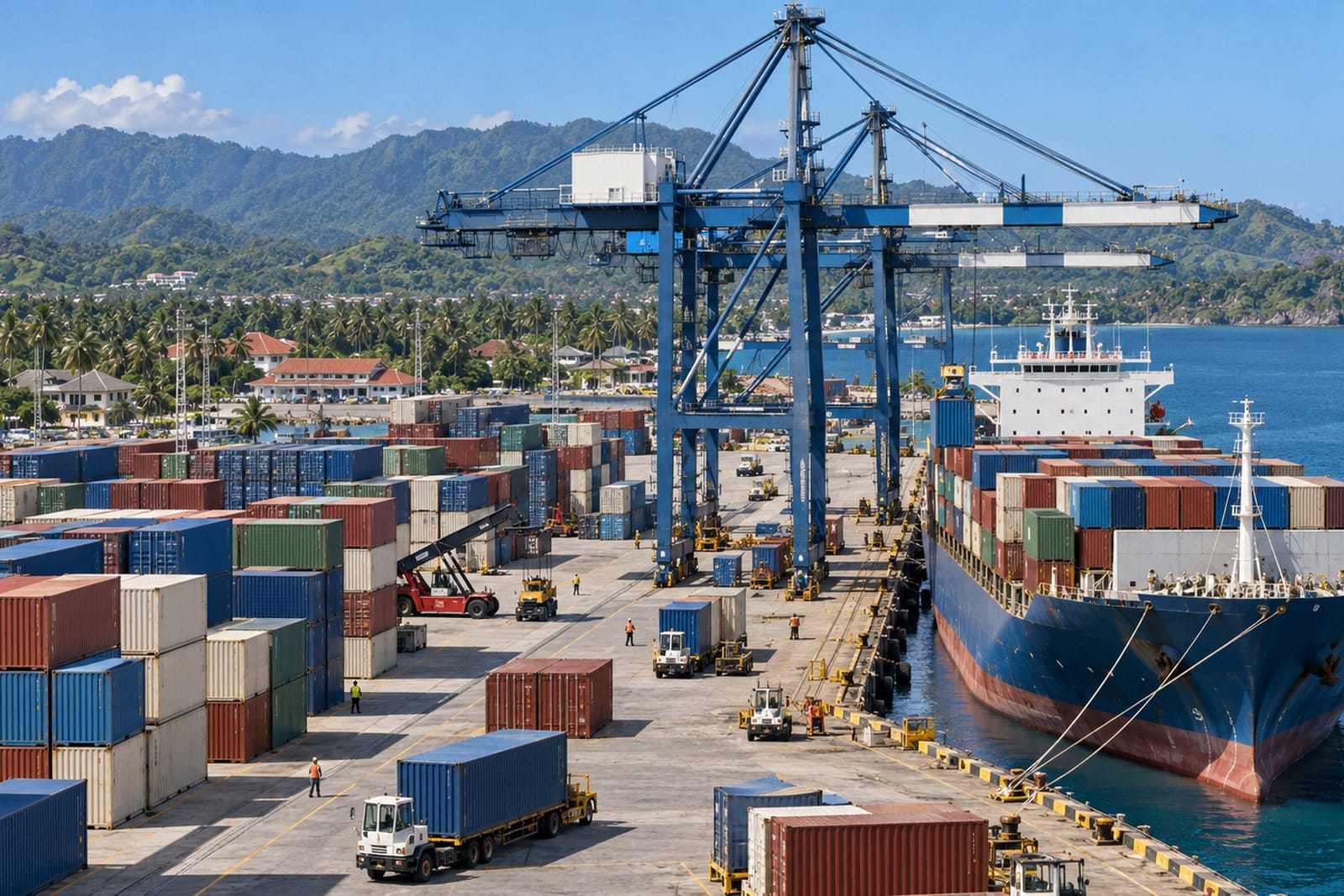 East Nusa Tenggara Opens Talks with China on Tourism and Maritime Capital · Illustration: HubLombok (AI-generated)
Sub-National Diplomacy and Eastern Indonesian Growth Corridors
The meeting reflects a wider structural trend across the Indonesian archipelago: the rise of direct, sub-national commercial diplomacy. Rather than waiting for central ministries in Jakarta to allocate fiscal infrastructure packages, provincial leaders in Eastern Indonesia are increasingly courting direct international capital from secondary Chinese provinces, Australian trade desks, and regional development banks.
Jiangxi Province, an inland manufacturing and industrial hub in southeastern China, brings established engineering expertise, solar energy manufacturing, and agricultural processing technology. For Chinese regional partners, building partnerships in Eastern Indonesia secures strategic access to primary inputs, including industrial-grade salt and marine products, while aligning with bilateral trade initiatives.
However, international investors must distinguish between initial diplomatic protocols and executed commercial capital expenditure. Preliminary cooperation documents and memoranda of understanding demonstrate political goodwill and open bureaucratic channels, but they do not eliminate operational risk. Execution speed in outer island districts is frequently constrained by land certification complexity, local regulatory alignment, and logistical friction.
| Regional Attribute | Established Regional Hubs (e.g. West Nusa Tenggara) | Frontier Maritime Districts (e.g. East Nusa Tenggara) | | :--- | :--- | :--- | | Infrastructure Maturity | International airport, highway connectivity, established power grids | Regional airfields, inter-island maritime freight, expanding utilities | | Tourism Driver | Global events, established international surf and leisure brands | Niche eco-tourism, expedition diving, frontier surf | | Foreign Investment Flow | Hospitality, residential villas, commercial retail | Primary extraction, maritime downstreaming, state-backed trade | | Title Regularity | Structured land registries (BPN), established notary networks (PPAT) | Emerging commercial titling, extensive customary land rights |
What This Means for Investors
For private investors and portfolio managers observing the eastern half of the Indonesian archipelago, the Kupang summit carries several key implications:
- Regional Infrastructure Expansion: Increased foreign capital into Eastern Indonesian logistics, ports, and processing hubs creates positive regional economic spillover. Improved maritime supply routes lower building and transport costs across neighboring island chains.
- Frontier Timing Considerations: While districts such as Rote Ndao hold undeniable natural beauty, institutional tourism investment remains early-cycle. Underdeveloped public healthcare and transport mean that capital allocators must anticipate extended investment horizons compared to more liquid regional property markets.
- Regulatory and Legal Invariants: Regardless of bilateral agreements signed between foreign delegations and local governments, Indonesian land law remains uniform. Foreign nationals cannot hold freehold title (Hak Milik), which is strictly reserved for Indonesian citizens. International capital must operate exclusively through statutory routes, including leasehold (Hak Sewa) or foreign investment companies (PT PMA) holding Right to Build (Hak Guna Bangunan / HGB) titles, registered through a licensed land deed official (PPAT) and the National Land Agency (BPN). Nominee arrangements remain illegal and unenforceable in court.
- Downstream Economic Resilience: Bilateral partnerships focused on tangible commodities like salt, seaweed, and fisheries provide provincial economies with revenue stability independent of tourism cycles, strengthening regional purchasing power and governance.
The diplomatic engagement between East Nusa Tenggara and Jiangxi Province illustrates the evolving economic architecture of Eastern Indonesia. As local administrations actively pursue foreign industrial partnerships to modernise their basic economies, the entire region benefits from enhanced connectivity, institutional visibility, and long-term structural maturation.
Stay informed: subscribe to the free Lombok Briefing, published twice a month (the 1st and 15th), for market intelligence like this.
What did the East Nusa Tenggara trade summit with China achieve?
The summit initiated bilateral talks between East Nusa Tenggara and China's Jiangxi Province, resulting in an initial cooperation agreement signed by Belu District to explore investment across tourism, salt production, and fisheries.
Can foreign investors buy freehold land in East Nusa Tenggara?
No. Under Indonesian law, foreign citizens cannot hold Hak Milik freehold title anywhere in the country. Foreign investors must use legal structures such as leasehold (Hak Sewa) or a foreign-owned company (PT PMA) holding Hak Guna Bangunan title.
Which sectors in East Nusa Tenggara are prioritised for foreign capital?
Provincial authorities are actively targeting foreign direct investment in downstream industrial salt processing, commercial fisheries, seaweed cultivation, livestock, and niche coastal tourism infrastructure across island districts like Rote Ndao and Sabu Raijua.
The Lombok Buyer's Field Guide
Legal structures ranked by risk, the honest ROI math line by line, all six zones ranked, and the 24-point due-diligence checklist. The whole book, free in your inbox.
See what's inside