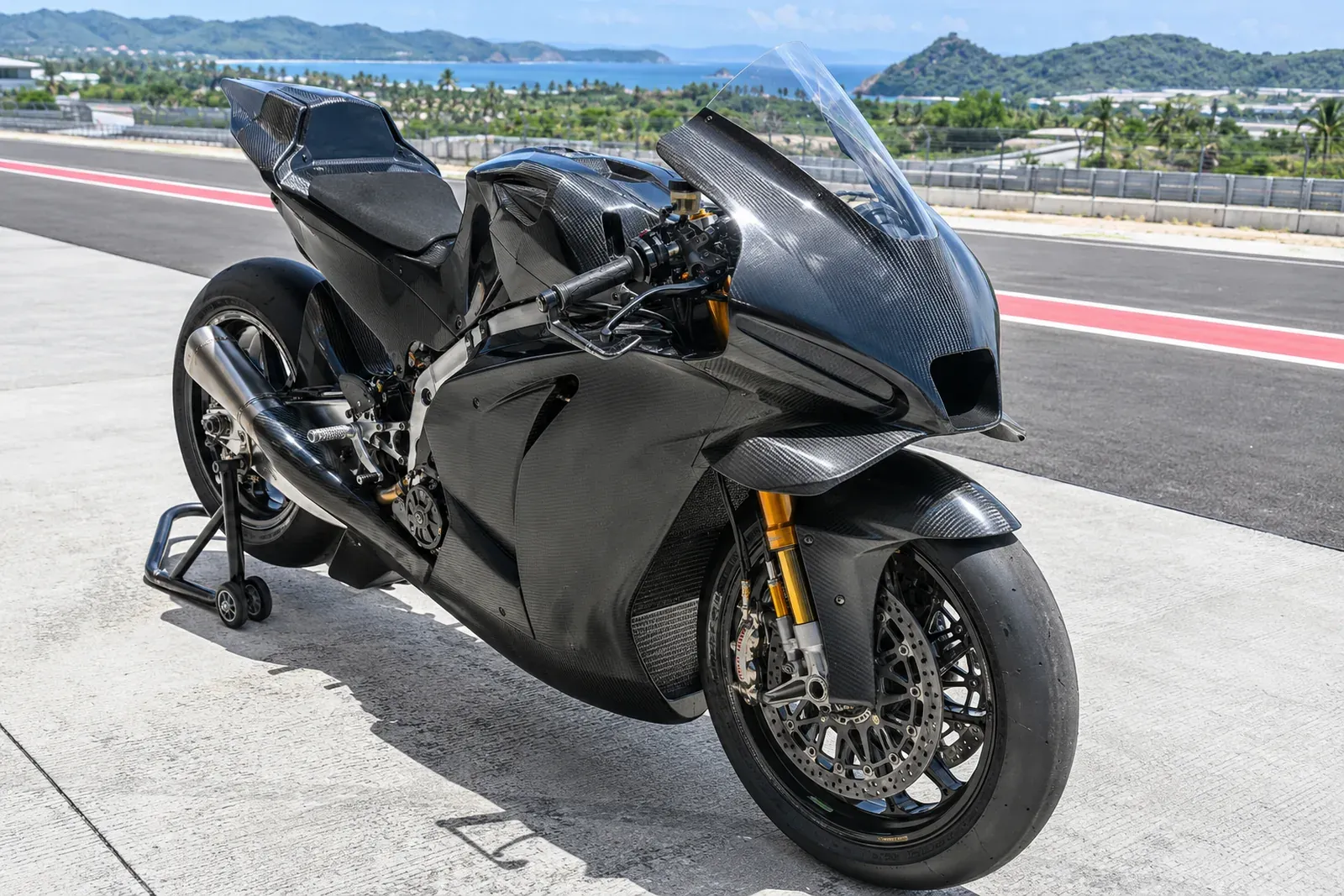
Lombok Notebook: What Mandalika’s Rp5.2 Trillion MotoGP Impact Really Says
ITDC’s MotoGP estimate points to Mandalika’s reach as a tourism draw. For investors, the harder question is how event spending translates into durable local demand.
Quick answer: ITDC estimates that the 2026 Indonesian MotoGP generated Rp5.2 trillion in economic impact, with 157,875 spectators attending. For Lombok investors, the result shows Mandalika’s capacity to attract visitors at scale. It does not, by itself, establish how much spending reached individual businesses or whether event demand will support property income between races.
A large event can make a place legible to investors: a circuit, a full crowd and a headline figure offer a vivid account of demand. But the investment question is less cinematic. It is whether activity concentrated around race week connects to a wider tourism economy, and which parts of that connection can be measured with confidence.
The Context
The Indonesian MotoGP took place at the Pertamina Mandalika International Circuit in Central Lombok from October 9 to 11, 2026. ITDC, the state-owned tourism developer, reported an estimated economic impact of Rp5.2 trillion, approximately US$289.73 million. Attendance reached 157,875, up from 140,324 in 2025, which ITDC described as the highest turnout since the Lombok circuit joined the MotoGP calendar in 2022.
Those figures make a persuasive case for the event’s scale. They also need to be read as distinct measures. Attendance counts spectators; visitor spending is reported separately; and economic impact is an estimate produced through a model. None is interchangeable with the amount received by a particular hotel, restaurant, transport provider or property owner.
Rp5.2 trillion estimated economic impact, alongside 157,875 spectators, according to ITDC.
ITDC said average visitor spending was Rp8.56 million, or US$476.93, per person. The measurement period ran from one week before the event through race day. The source does not say that this average represents spending by every person counted in the attendance total, or explain whether the same individuals could be counted more than once. Investors should therefore resist multiplying the average by attendance to create a new total. That calculation would add a precision the reported figures do not support.
ITDC also reported overall economic turnover of Rp5.2 trillion, up 4.8 per cent year on year from Rp4.96 trillion in 2025. The report presents turnover growth and the estimated economic impact together, but they answer different questions: one compares the reported turnover with the previous year, while the other describes a wider estimate of contribution. Keeping the distinction clear matters when using the headline to judge the event’s commercial reach.
What the Estimate Counts
The impact assessment was conducted by the Industrial Engineering and Management School of the Bandung Institute of Technology, LETMI-ITB. According to ITDC, it used on-site research before and during the race, an Input-Output model based on a Statistics Indonesia table, and a Keynesian multiplier framework. That method is intended to estimate a broader economic contribution than a simple count of ticket purchases. The published account, however, does not provide the underlying breakdown needed to trace the headline amount through individual sectors or businesses.
This is not a reason to dismiss the estimate. It is a reason to treat it as a modelled view of economic activity, rather than audited revenue available to local firms. A large total can reflect connected rounds of spending in an economy. Without the underlying sector results, readers cannot tell from the headline alone how much was associated with accommodation, food, transport, retail or other services, nor how evenly the effects were distributed.
The timing is also relevant. ITDC said domestic and foreign tourists began arriving in the Mandalika Special Economic Zone and neighbouring areas a week before race weekend. That suggests the event’s visitor window extended beyond the days on the circuit. It does not establish how long visitors stayed, which locations they used, or whether spending persisted after the event. The reported average covers the same broad pre-event-to-race-day period, so it should not be mistaken for a daily spend rate or a measure of year-round tourism.
A further check is pending. ITDC said Statistics Indonesia, known as BPS, would release an independent assessment in the coming weeks, intended to provide an official benchmark for the LETMI-ITB findings. That report may help clarify how the headline estimate compares with an independent assessment. Until it is available, the current figure is best attributed to ITDC’s account of the LETMI-ITB study, rather than treated as a settled official measure.
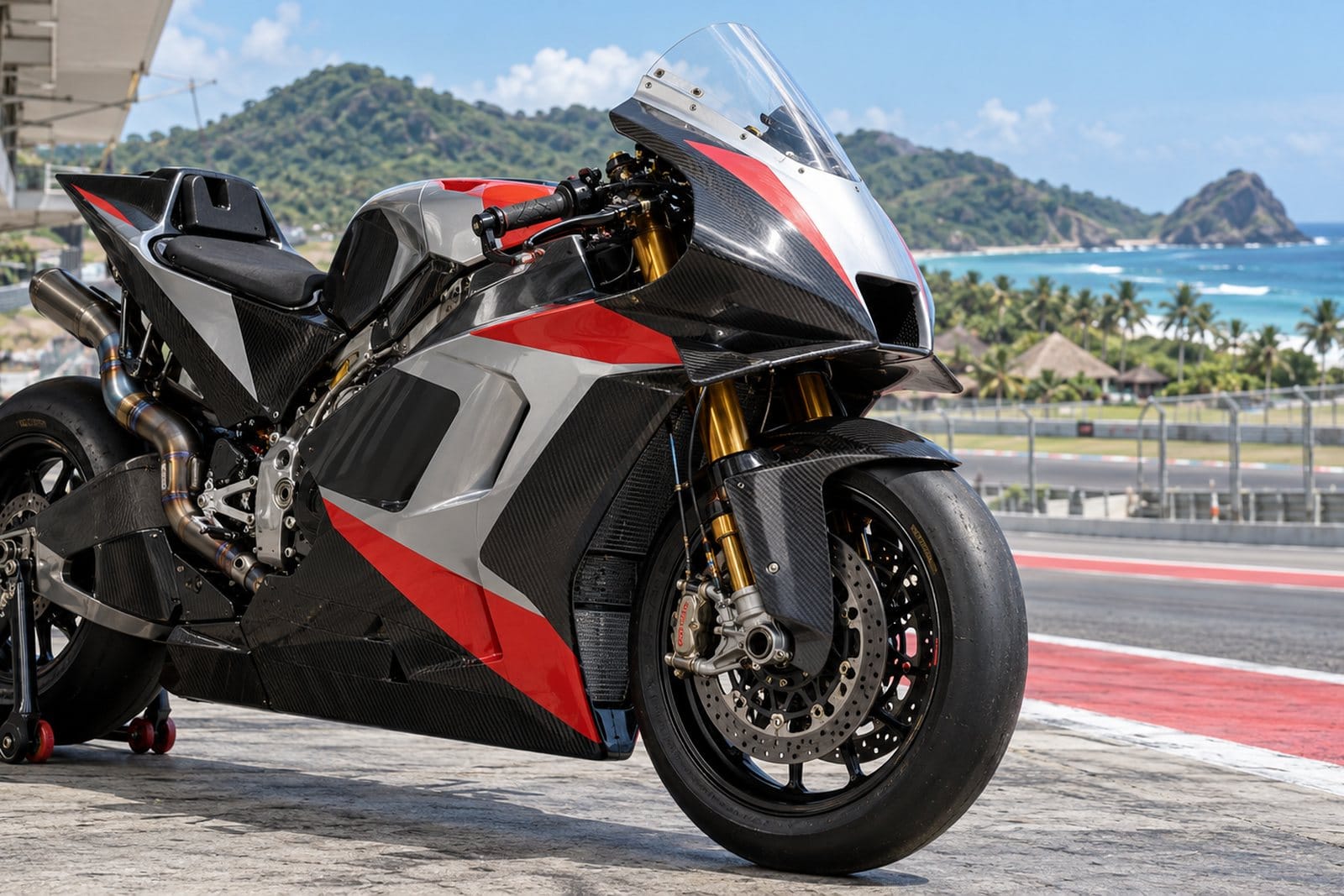 Lombok Notebook · Illustration: HubLombok (AI-generated)
From Race Week to the Wider Market
For property investors, the central distinction is between a powerful event and a durable market. A race can concentrate visitors and attention in one period. A villa or hospitality investment, by contrast, depends on demand across the rest of the calendar, operating costs and the ability to attract guests beyond a single event. The MotoGP figures offer evidence of event scale, but they do not provide a rental forecast, occupancy measure or property-level revenue estimate.
The verified South Lombok market context offers a separate lens. Foreign arrivals are reported to be up 40-50 per cent year on year, while Kuta and Mandalika villa rates are about 38 per cent higher year on year. These figures suggest broader tourism and accommodation momentum, but they do not isolate the MotoGP’s contribution. It would be an overreach to attribute either trend to the race on the evidence available here.
The difference between gross and net property returns is just as important. Developer-quoted gross yields in the market are 12-22 per cent, while the honest net rental yield range after management fees and realistic occupancy is 7-12 per cent. The market context also gives realistic stabilised occupancy at 55-70 per cent in years one to three. Those are broad South Lombok reference points, not results demonstrated by this event or a forecast for a specific asset.
| Indicator | What it shows | What it does not establish | | --- | --- | --- | | MotoGP attendance | The event drew 157,875 spectators, according to ITDC | Unique visitors, hotel nights or property bookings | | Average visitor spending | Rp8.56 million per person across the reported period | Spending by every attendee or a daily rate | | Estimated economic impact | ITDC’s reported Rp5.2 trillion modelled estimate | A property owner’s revenue or net return | | South Lombok yield context | 7-12 per cent honest net rental yield range | A return attributable to MotoGP demand |
The table is a reminder to keep the evidence in its proper lane. Event metrics help describe Mandalika’s ability to draw a crowd. Broader tourism and rental indicators help frame the market. Neither removes the need to assess a particular property’s location, costs, legal structure and performance assumptions on their own merits.
What This Means for Investors
The most useful reading of the MotoGP result is as a signal of destination capacity, not as a shortcut to valuation. Mandalika has demonstrated that it can host a large international event and attract substantial attendance. That may matter to investors considering Lombok’s tourism profile. Yet an investment case still needs to explain how occasional peaks connect to steady guest demand, and how that demand reaches the asset being considered.
The quality of the next evidence will matter more than another repetition of the headline total. BPS’s independent assessment could help test the current estimate. More detailed sector results would help readers understand where economic activity was concentrated. For property decisions, investors would still need evidence directly relevant to the asset, rather than an island-wide or event-wide total.
This is where disciplined underwriting earns its keep. A buyer should distinguish a promotional gross yield from an estimated net yield, allow for realistic occupancy and operating costs, and ask whether demand assumptions depend on a race weekend. A high-profile event can strengthen a destination narrative. It cannot substitute for a property-specific case, and the figures reported here do not show that it should.
HubLombok is the editorial arm of Samudra Villas, an active developer in South Lombok. That relationship is disclosed here because it shapes what we cover, not what we conclude.
Stay informed: subscribe to the free Lombok Briefing, published twice a month (the 1st and 15th), for market intelligence like this.
Does the MotoGP’s Rp5.2 trillion impact estimate represent local business revenue?
No. ITDC reports a modelled economic impact estimate prepared by LETMI-ITB using an Input-Output model and a Keynesian multiplier framework. The published account does not provide a sector breakdown or show how much individual businesses received.
Can investors use MotoGP attendance to forecast Lombok villa income?
Attendance shows the event drew 157,875 spectators, according to ITDC. It does not establish hotel nights, villa bookings, year-round occupancy or property revenue. Investors should assess those separately using asset-specific assumptions and realistic costs.
What should investors watch after ITDC’s report?
ITDC said BPS would release an independent assessment in the coming weeks to provide a benchmark for the LETMI-ITB findings. That may help test the impact estimate, though property decisions will still require evidence about the specific asset and its operating assumptions.

The Lombok Buyer's Field Guide
Legal structures ranked by risk, the honest ROI math line by line, all six zones ranked, and the 24-point due-diligence checklist. The whole book, free in your inbox.
See what's inside