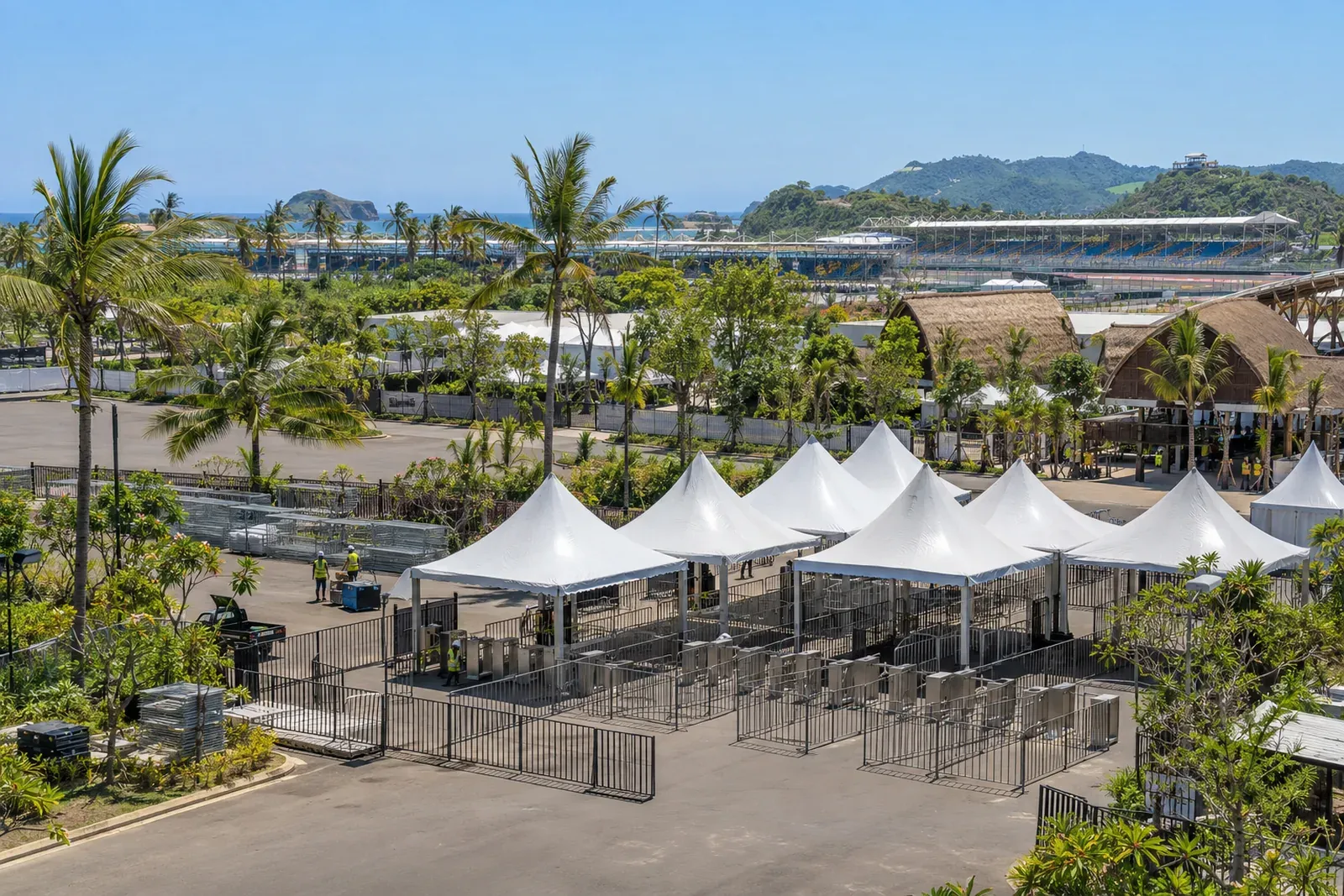
Mandalika MotoGP’s Rp5.2 Trillion Impact Sets a New Lombok Attendance Record
ITDC estimates the 2026 Mandalika MotoGP generated Rp5.2 trillion in economic impact, with record attendance and higher visitor spending.
The 2026 Indonesian MotoGP brought record crowds to the Pertamina Mandalika International Circuit and, according to its state-owned tourism developer, an estimated Rp5.2 trillion in economic impact. The result offers a substantial measure of the event’s reach across tourism and related activity, while an independent assessment from Statistics Indonesia is still to come.
A record weekend, and a wider tourism window
The race took place at the Mandalika circuit in Central Lombok, West Nusa Tenggara, on October 9-11, 2026. ITDC reported total attendance of 157,875, the highest since the Lombok circuit joined the MotoGP calendar in 2022. That was a 12.5 per cent increase on the 140,324 visitors recorded in 2025.
The reported economic effect was not confined to the three days of racing. ITDC said domestic and international visitors began arriving in the Mandalika Special Economic Zone and neighbouring areas a week before the event. Its spending estimate likewise covers the period from one week before the race through race day, rather than race weekend alone.
That wider window matters when interpreting the headline figure. Visitors may spend across the surrounding tourism economy before the first race begins, and the event can attract activity beyond the circuit itself. ITDC’s account points to this extended period as part of the event’s local reach, although the reported total does not by itself show how much activity went to each sector or location.
What the figures measure
ITDC put the event’s estimated economic impact at Rp5.2 trillion, or approximately US$289.73 million. It also reported average visitor spending of Rp8.56 million (US$476.93) per person across the measurement period. The figures are estimates attributed to ITDC, not an independently released government benchmark.
The economic impact assessment was carried out by the Industrial Engineering and Management School of the Bandung Institute of Technology, known as LETMI-ITB. According to ITDC, the researchers used on-site research conducted before and during the race. The method combined an Input-Output model based on a Statistics Indonesia table with a Keynesian multiplier framework to calculate the grand prix’s total economic contribution.
A multiplier model seeks to account for effects beyond the initial spending, as money circulates through linked economic activity. The method therefore provides a broader estimate than simply adding up ticket sales or visitor expenditure. Its result depends on the model and underlying data, which is why the assessment’s methodology and the distinction between direct spending and total impact are relevant when reading the headline number.
ITDC also reported that overall economic turnover rose 4.8 per cent year on year, from Rp4.96 trillion (US$276.3 million) in 2025. This is a separate comparison from the attendance increase: visitor numbers rose 12.5 per cent, while the reported turnover measure grew 4.8 per cent. The figures describe different measures and should not be treated as interchangeable.
An official comparison is still pending
The assessment’s authors used a Statistics Indonesia table in their model, but that does not make the estimate a Statistics Indonesia finding. ITDC said the national statistics agency will publish its own independent assessment in the coming weeks, and described that report as an official benchmark for comparison with LETMI-ITB’s work.
That forthcoming assessment will help clarify how the reported economic contribution compares with an independent calculation. Until it is released, the Rp5.2 trillion figure is best understood as the estimate produced using the methodology described by ITDC, rather than a settled measure endorsed by the national statistics agency.
The comparison may also help readers understand which parts of the event’s economic footprint are captured by the model. ITDC’s statement describes the framework used, but the details available so far do not break the total down by business type, geography or category of visitor spending. Those distinctions matter for assessing how broadly the event’s effects were distributed.
What this means for investors
For investors, the attendance record and spending estimate are evidence of the scale the MotoGP has reached as a tourism event in Lombok. They show that the grand prix drew more visitors than in the previous year and that the assessment counted spending across a period beginning before race week. Those are meaningful indicators of event activity, but they do not establish the financial performance of any particular hotel, restaurant, property or other business.
Nor does the reported total amount to a forecast for future events. It is an estimate of the 2026 event’s economic contribution under a stated assessment framework. It does not specify the share attributable to local firms, measure returns on investment, or show how much visitor spending translated into lasting demand after the race. Investors considering exposure to tourism should keep those limits in view when using the figure.
The next useful point of reference will be Statistics Indonesia’s independent assessment. Comparing its findings with the LETMI-ITB estimate could give investors a clearer basis for judging the size and distribution of the event’s economic contribution. For now, the strongest supported conclusion is narrower: Mandalika recorded its highest MotoGP attendance to date, alongside an ITDC-reported increase in economic turnover.
The BPS assessment will provide the next test of how much activity the grand prix generated across Lombok’s wider economy.
Stay informed: subscribe to our free Lombok Briefing, published twice a month (the 1st and 15th), for analysis like this.
How much economic impact did the 2026 Mandalika MotoGP generate?
ITDC reported an estimated economic impact of Rp5.2 trillion, approximately US$289.73 million. The estimate came from an LETMI-ITB assessment using on-site research and an Input-Output model with a Keynesian multiplier framework. Statistics Indonesia’s independent assessment is still pending.
How many people attended the 2026 Indonesian MotoGP in Lombok?
ITDC reported total attendance of 157,875 at the 2026 event, held at the Pertamina Mandalika International Circuit on October 9-11. That was 12.5 per cent above the 140,324 visitors recorded in 2025 and the highest attendance since the circuit joined the MotoGP calendar in 2022.
Does the Rp5.2 trillion estimate show returns for Lombok property investors?
No. It is an estimate of the event’s broader economic contribution, not a measure of returns for any particular property or business. The assessment does not state how much activity went to each sector or location, and it is not a forecast of future demand.

The Lombok Buyer's Field Guide
Legal structures ranked by risk, the honest ROI math line by line, all six zones ranked, and the 24-point due-diligence checklist. The whole book, free in your inbox.
See what's inside