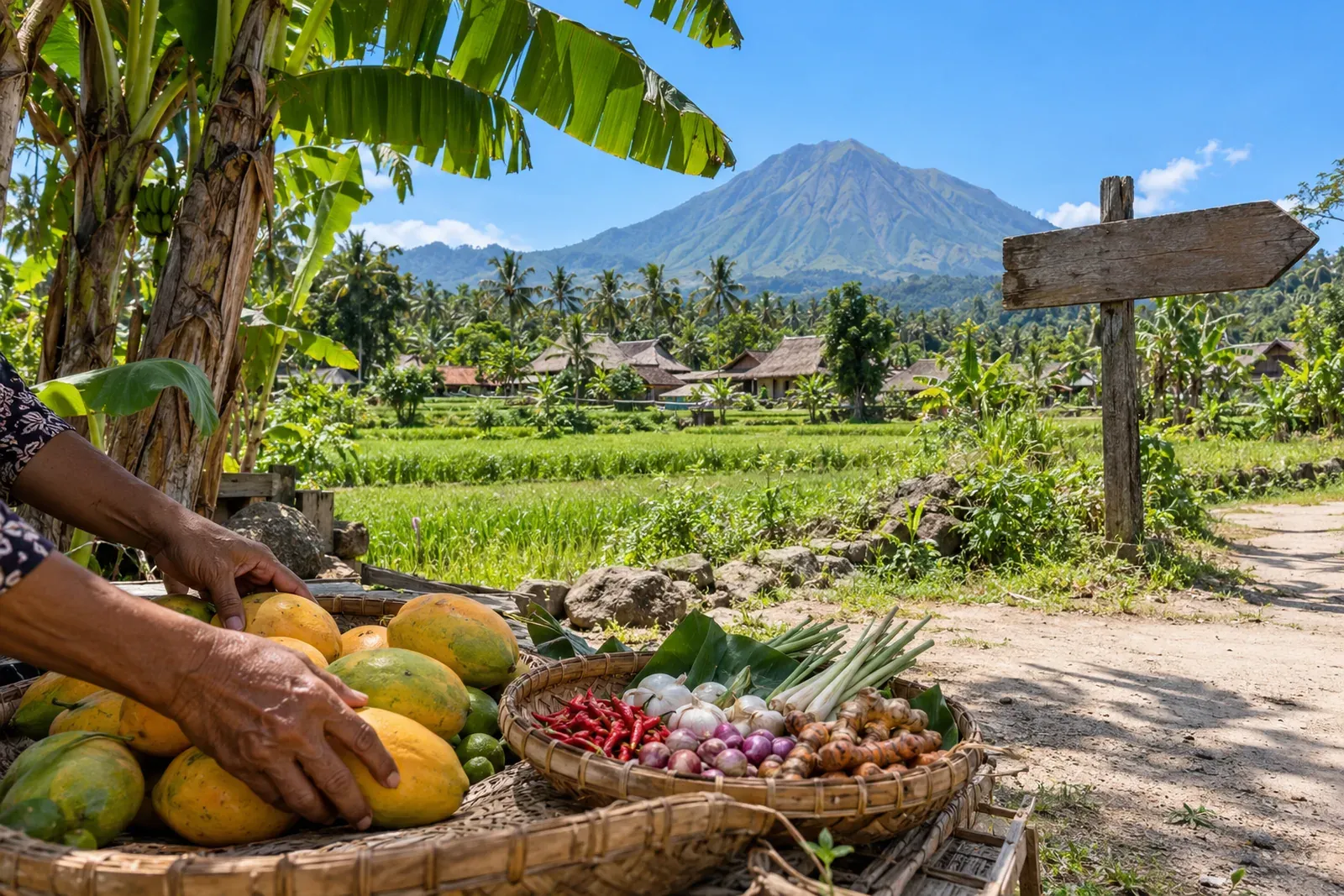
Indonesia Makes Villages the Centre of Development: What Investors Should Watch
Indonesia's government says villages are now the core of development. What its village cooperative targets mean for Lombok investors, and what they do not.
Quick answer: Indonesia says villages are now the main subject of development. The Red and White Village Cooperatives have a target of 80,000, with around 10,000 operating and 35,000 targeted to finish construction by end October 2026. For Lombok investors this is a policy signal, not a property one: the source says nothing about land or foreign ownership.
Two years into the current presidency, the government says villages have become the main subject of national development. The minister responsible for villages told ANTARA on Tuesday that villages “have usually been made objects, not subjects”. For anyone weighing South Lombok, the useful question is what this changes on the ground, and what it leaves untouched.
The Context
The government places this shift within the 6th Asta Cita, one of its eight development missions. That mission calls for development from the village upwards, with economic equity as the stated aim. The minister also said the President had asked for building “from the village”, which he described as something no previous president had done.
These are statements of policy direction. The source offers targets and intentions rather than outcome data, and that distinction matters throughout. For readers outside Indonesia, the practical point is that policy language of this kind usually turns into budgets, regulations and village-level decisions. Those are what investors can actually observe. The article states no budget figures.
How the Cooperatives Are Meant to Work
The main instrument is the Red and White Village Cooperatives (KDMP). They are designed to strengthen the local economy and to make sure villagers can buy subsidised goods. They are meant to run alongside Village-Owned Enterprises (BUMDes), with a clear division of business areas so the two do not overlap. BUMDes would focus on business development, such as export villages, tourism villages and thematic villages. The cooperatives would secure access to subsidised goods.
The example given is liquefied petroleum gas (LPG). According to the minister, subsidised LPG still sells for Rp 24,000 to Rp 30,000 in several places, and the cooperatives are expected to bring it to around Rp 16,000 to Rp 18,000.
| Item | Current price (per source) | Expected through cooperatives | |---|---|---| | Subsidised LPG, several places | Rp 24,000 to Rp 30,000 | Around Rp 16,000 to Rp 18,000 |
The financial design also matters. Residual business income (SHU) is to be split 20 percent to village own-source revenue and 80 percent to cooperative members. The cooperatives’ assets will in time belong fully to the village. Each cooperative is formed through a special village deliberation involving the village head, the Village Consultative Body (BPD) and community figures.
“Villages have usually been made objects, not subjects,” the minister said, as quoted by ANTARA.
 Indonesia Makes Villages the Centre of Development · Illustration: HubLombok (AI-generated)
Reading the Figures
Of the 80,000 cooperatives in the target, around 35,000 are due to finish construction by the end of October 2026, and around 10,000 are already operating. The gap between those two numbers is large, and the October deadline is less than two weeks from the date of this article.
The source gives no breakdown by province, no income data and no independent evaluation. The figures should be read as government targets, not measured outcomes.
What This Means for Investors
Land title is still the first question. Hak Milik, the freehold title, is reserved for Indonesian citizens only. Foreign buyers have three routes: leasehold (Hak Sewa), Hak Pakai, which requires residency documents, or a PT PMA company holding Hak Guna Bangunan (HGB), which runs for 30 years and can be extended. Nominee arrangements, where an Indonesian holds title on a foreigner’s behalf, are illegal and void in court. A village-level policy changes none of this.
What the policy changes, on the evidence here: village cooperatives, the 20/80 split of residual income, LPG price targets and village ownership of cooperative assets over time. What it does not change, on the evidence here: foreign ownership rules, zoning, land prices and buyer transfer duty (BPHTB, about 5% of assessed value).
Village approvals belong in due diligence. The source confirms that cooperatives are formed through village deliberations. The next step is our inference, not a finding in the source: any deal involving village-owned or village-linked land should be checked for the local decisions behind it. Ask who holds the asset, and which village-level decision authorised its use.
Land prices follow zones, not this policy. Land in Lombok is quoted per are (1 are = 100 m²). Indicative ranges are Kuta Rp 300 to 400 million per are, Selong Belanak Rp 150 to 250 million, Are Guling Rp 120 to 180 million, Mandalika Rp 100 to 150 million, Mawun Rp 50 to 80 million and Bumbang Rp 30 to 50 million. Nothing in the source connects these ranges to the cooperative programme, so they are context, not a forecast.
Tourism villages are named, not located. The source lists tourism villages as a BUMDes focus. It does not say which villages, in Lombok or elsewhere, will receive that support.
What to watch next:
- Whether the around 35,000 cooperatives finish construction by end October 2026.
- Whether the operating count moves from around 10,000 towards the 80,000 target.
- Whether tourism-village designations are published with named locations.
- Whether any rule on village-owned assets is issued, which would change due diligence.
The honest reading of this dispatch is that the central government is putting village economies at the centre of its agenda, with targets and a near deadline. Before committing to any village-linked opportunity, have the title, zoning and encumbrances checked by an independent notary. TerraNusa Advisory, an independent licensed-notary and legal desk for foreign buyers in Lombok, covers the full chain from certificate checks to transfer at the land office (BPN).
Stay informed: subscribe to the free Lombok Briefing, published twice a month (the 1st and 15th), for market intelligence like this.
Does this village policy change how foreigners can buy land in Lombok?
Not according to the source, which does not address land ownership or foreign buyers. The existing rules still apply: Hak Milik is reserved for Indonesian citizens, while foreign buyers use leasehold (Hak Sewa), Hak Pakai or a PT PMA holding Hak Guna Bangunan. Check the route before any purchase.
Are village cooperatives a property investment?
No. The source describes the Red and White Village Cooperatives as a community economy programme giving villagers access to subsidised goods, with residual income split between the village and members. It is not described as an investment vehicle, so treat village-linked assets with legal checks first.
What should investors watch in the coming weeks?
Whether the target of around 35,000 cooperatives finishing construction by the end of October 2026 is met, and whether the operating count rises from about 10,000. These are government figures, so confirm them against later official reporting before drawing conclusions.

The Lombok Buyer's Field Guide
Legal structures ranked by risk, the honest ROI math line by line, all six zones ranked, and the 24-point due-diligence checklist. The whole book, free in your inbox.
See what's inside