Indonesia Sets Six Steps Toward Energy Self-Reliance, With 100 GWp Solar Goal
Jakarta has outlined six steps to cut reliance on imported energy, from B50 and E50 fuel blends to 100 GWp of solar in three years. Here is what is confirmed and what is still pending.
Indonesia's government has set out six steps meant to reduce its reliance on imported energy and to build supply from the country's own resources. The list mixes biofuels, a large solar buildout, higher oil output, nuclear planning and a promised roadmap, and it arrives with more ambition than detail.
What Jakarta announced
Cabinet Secretary Teddy Indra Wijaya set out the measures in a written statement on Friday. They follow a National Energy Council (DEN) session led by President Prabowo Subianto at the State Palace on Thursday, September 17, attended by several ministers of the Red and White Cabinet and DEN members. According to Wijaya, the President stressed the importance of energy self-sufficiency and of reducing dependence on energy supplies from abroad, and directed that self-reliance "must be built on Indonesia's own strengths and resources".
Wijaya cited Energy and Mineral Resources Minister and DEN Daily Chairman Bahlil Lahadalia for the substance of the plan. In brief:
The six steps, as reported by Antara
- Domestic sources first: accelerate development of palm oil, corn, cassava, sugarcane, coal, geothermal and solar energy.
- Fuel blends: develop B50 and E50 blends to reduce dependence on imported fuel oil.
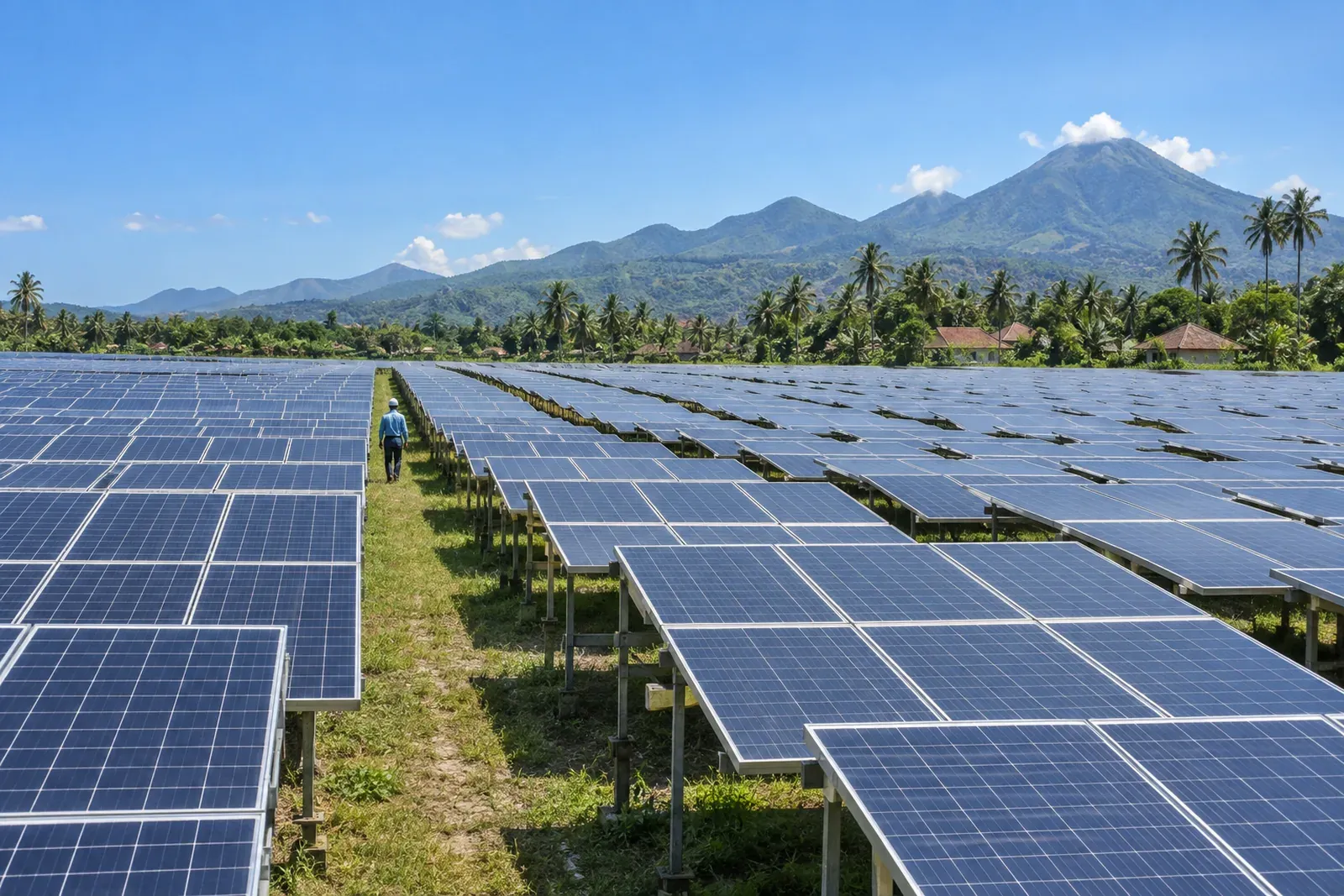
- Solar: accelerate solar power plants (PLTS) to reach 100 gigawatts peak (GWp) within three years.
- Oil output: optimise existing fields and wells and speed up exploration.
- Nuclear: discuss follow-up plans for a nuclear power plant (PLTN), in line with prepared studies and stages.
- Roadmap: draw up a comprehensive, measurable energy roadmap.
Fuel blends and solar: the two headline targets
The first two steps lean on agriculture and imports. The crops named for acceleration, palm oil, corn, cassava and sugarcane, are farm products, so the plan ties fuel policy to agricultural output. The B50 and E50 blends are presented as a way to reduce dependence on imported fuel oil. The statement, as reported, gives no timeline, volumes or feedstock allocation for them, so the practical scale of the shift cannot yet be judged.
Solar carries the most concrete number: 100 GWp within three years. That is a government target, not a delivered capacity, and the source offers no detail on financing, sites or grid connection. Antara's related coverage also carries a separate headline about a 30 GW solar target for 2026. The two figures are reported separately and the statement does not reconcile them, so readers should treat them as distinct announcements until the roadmap clarifies how they fit together.
The list also keeps coal alongside geothermal and solar in the domestic mix. The plan is therefore framed around domestic supply of every kind, rather than around a single transition pathway.
Oil, nuclear and a roadmap still to be written
The fourth step is more conventional: raise national oil production by optimising existing oil fields and wells and by accelerating exploration. It is a reminder that the goal is self-reliance, not only decarbonisation.
On nuclear, the statement says only that the government discussed follow-up plans for a power plant, consistent with studies and stages already prepared as part of strengthening the national energy mix. No capacity, location, partner or date is given in the source, and none should be assumed.
The sixth step may matter most. The government says it will draw up a comprehensive and measurable roadmap covering annual targets, investment needs, implementation schedules and the division of tasks in its execution. In other words, the parts an outside observer would need in order to judge feasibility, such as costs, timing and who is responsible for what, have been promised rather than published.
Why the government frames this as economic resilience
Wijaya said the President sees energy self-reliance as more than meeting domestic demand. In his words, it is an important part of strengthening economic resilience and giving Indonesia greater room to determine its development direction amid dynamic global geopolitics. That framing is the government's own, and it explains why the announcement sits alongside other Antara headlines on the subject, including one on food and energy self-reliance anchoring Indonesia's 2027 state budget and another on boosting energy self-reliance and economic growth in 2026.
What this means for investors
The source does not mention Lombok, tourism or property, and we will not invent a link. What can be said is more modest and, we think, more useful.
- Direction is clear, detail is not. Six priorities are named, but only solar carries a figure and a timeframe. Bio-based fuels, oil, nuclear and the roadmap are stated as intentions.
- The roadmap is the document to watch. It is promised to include annual targets, investment needs and implementation schedules. That is where the questions of scale, cost and private participation will be answered or left open.
- Separate targets from delivery. A 100 GWp goal within three years is a policy objective. Progress against it should be judged on published milestones, not on announcements.
- Keep property fundamentals separate. Our verified South Lombok figures, including an honest net rental yield of 7-12% after management fees and realistic occupancy, do not rest on this announcement, and nothing in it changes them.
For investors in Indonesia broadly, energy policy is part of the macro backdrop: it touches import dependence, public spending priorities and the state's stated approach to economic resilience. It is worth tracking for that reason alone, but it is not, on this evidence, a direct driver of any single market.
The next real signal will be the roadmap itself. When annual targets and investment needs appear on paper, the plan will become something that can be measured, and investors will be able to judge it accordingly.
Stay informed, subscribe to the free Lombok Briefing for analysis like this, published twice a month.
What are Indonesia's six steps toward energy self-reliance?
The government named six steps: accelerating domestic energy sources, developing B50 and E50 fuel blends, expanding solar to 100 GWp within three years, boosting oil production and exploration, following up on a nuclear plant, and drawing up a measurable energy roadmap.
What is Indonesia's solar target in this announcement?
The government aims to accelerate solar power plants (PLTS) to reach 100 gigawatts peak (GWp) within three years. This is a stated policy target rather than delivered capacity, and the statement gives no detail on financing or sites.
Does this energy plan directly affect Lombok property investors?
The source does not mention Lombok, tourism or property, so no direct effect is established. It is best read as macro context. The promised roadmap, covering annual targets and investment needs, is the document to watch for further detail.

The Lombok Buyer's Field Guide
Legal structures ranked by risk, the honest ROI math line by line, all six zones ranked, and the 24-point due-diligence checklist. The whole book, free in your inbox.
See what's inside