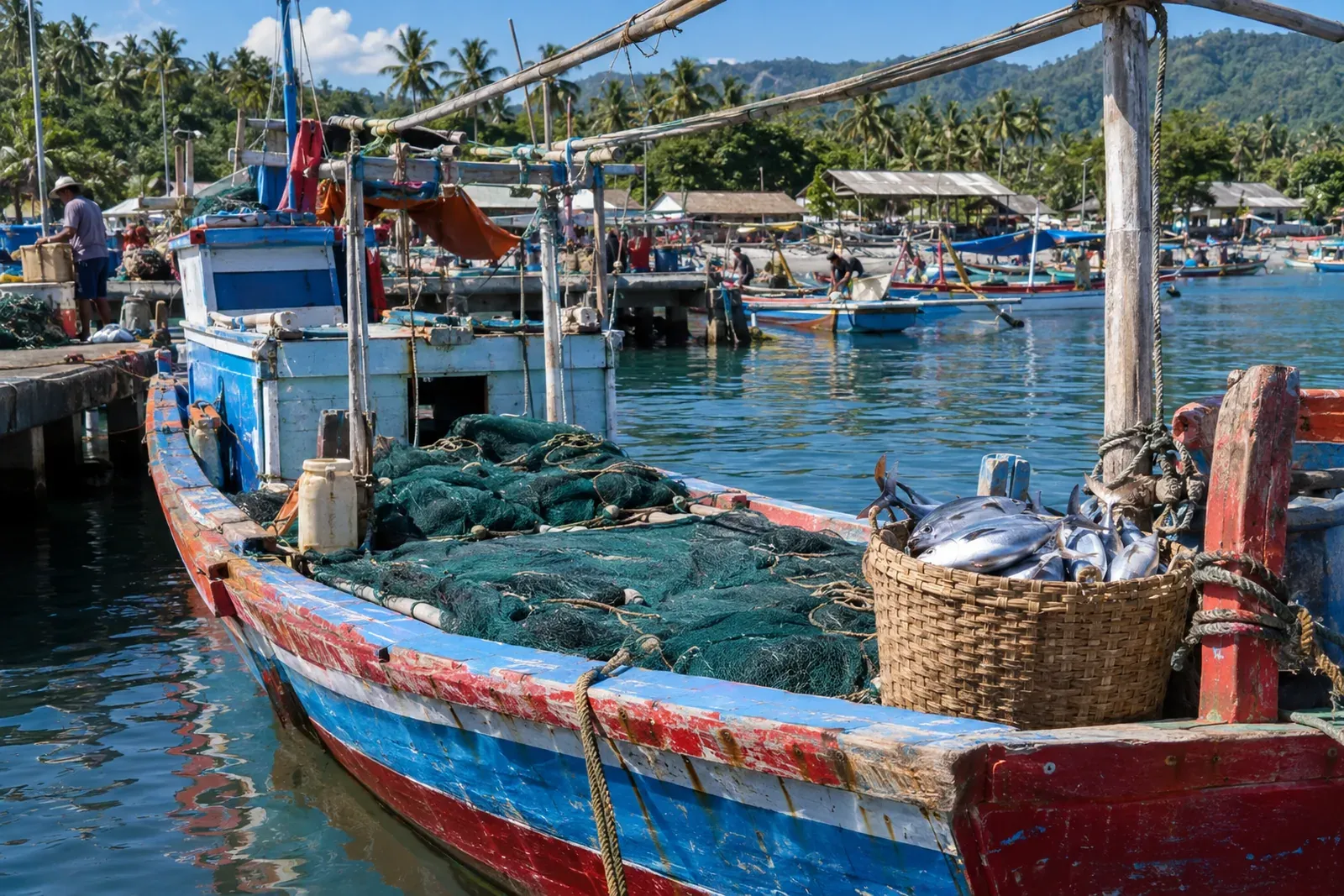
Indonesia Secures $198.33m in Potential Seafood Deals at Tokyo Expo
Potential seafood deals worth $198.33 million at a Tokyo trade expo underline Indonesia’s growing access to Japan’s market.
Indonesia’s seafood exporters secured potential deals worth $198.33 million, or 3.49 trillion rupiah, at the 28th Japan International Seafood & Technology Expo in Tokyo. The result points to substantial buyer interest in Indonesian marine products and puts renewed focus on the commercial value of access to Japan’s food market.
For investors following Indonesia’s export economy, the announcement is less a measure of completed sales than an indicator of demand identified through business matching. It also highlights how trade-policy changes, product quality and dependable supply must work together if initial interest is to develop into durable export relationships.
Potential deals, not booked export revenue
Antara Business reported that Indonesian exporters obtained potential transactions valued at $198.33 million during the Tokyo event. Trade officials said the business-matching outcome reflected strong demand for Indonesian marine products in Japan.
That distinction matters. A potential deal is an expression of commercial interest generated through an exhibition and associated meetings; it should not be treated as confirmed export revenue. Even so, the scale of the reported value provides a useful signal about the categories attracting Japanese buyers and the opportunities exporters are seeking to convert.
Buyer interest was concentrated most heavily in tuna and processed tuna products. Other products identified in the event’s business-matching results were:
- octopus;
- squid;
- swimming crab;
- sea urchin; and
- processed anchovies.
The list is significant because it presents Indonesia not solely as a supplier of one seafood line, but as a source of both fresh marine products and processed offerings. For businesses involved in processing, cold-chain operations, packaging and export logistics, the commercial test will be whether that breadth can be delivered consistently to the standards expected by buyers.
Key data: Potential seafood deals reached $198.33 million at the 28th Japan International Seafood & Technology Expo, with tuna and processed tuna products drawing the greatest buyer interest.
A tariff opening under the revised IJEPA
Indonesian trade and diplomatic officials linked the strong interest to improved market access under the revised Indonesia-Japan Economic Partnership Agreement, known as IJEPA. According to the source, the revised agreement eliminates tariffs on Indonesian processed fish exports to Japan.
Fajarini Puntodewi, Director General of National Export Development at the Trade Ministry, described the policy change as an increasingly open route into the Japanese market through a zero-percent tariff policy for processed fish products from Indonesia.
The practical importance lies in the word “processed”. Processing can change the economics of an export relationship: it may allow a supplier to offer products in forms more closely aligned with buyer requirements while benefiting from the revised tariff treatment described by officials. But tariff access alone does not guarantee market success. Exporters still need to meet commercial specifications, maintain delivery schedules and earn buyer confidence over time.
For investors, this is where trade agreements become relevant beyond diplomacy. A reduction in tariff friction may improve the attractiveness of a destination market, but the eventual value captured depends on execution by producers, processors and exporters. The Tokyo exhibition supplied evidence of interest; the next stage is operational delivery.
Processed seafood exports already show momentum
The exhibition outcome comes against a backdrop of growth in processed seafood trade with Japan. Indonesia’s processed seafood exports to Japan rose 29.05% year on year to $45.81 million in the first half of 2026, according to Antara Business.
Processed tuna and skipjack dominated those shipments, accounting for nearly 90% of the total and reaching $41.12 million. That concentration helps explain why tuna and processed tuna products were central to buyer attention at the Tokyo expo.
Trade momentum: Processed seafood exports to Japan reached $45.81 million in the first half of 2026, while processed tuna and skipjack represented nearly 90% of that value.
There are two ways to read this concentration. It demonstrates that Indonesian exporters have an established presence in an important product category. It also means that the wider opportunity described at the expo, across octopus, squid, swimming crab, sea urchin and processed anchovies, will need to complement rather than distract from the country’s existing tuna-led trade momentum.
A more diversified buyer base and product mix can be commercially attractive, but it requires the same discipline across every line: clear quality control, dependable processing and reliable fulfilment. The reported figures do not establish how much of the potential transaction value will be realised, nor do they provide a forecast. They do, however, show where current interest is gathering.
Reliability and quality are the real conversion test
Nurmala Kartini Sjahrir, Indonesia’s Ambassador to Japan, urged domestic exporters to maintain supply reliability and strict quality standards in order to build long-term trust with Japanese buyers. Her message is an important counterweight to the headline transaction figure.
Trade exhibitions can open doors, particularly when a revised agreement improves formal market access. Long-term export business is built after the event, through the routine but demanding work of meeting specifications and delivering consistently. In seafood, where products must arrive in acceptable condition and in line with buyer expectations, trust is not an abstract commercial asset.
For companies and investors assessing the opportunity, the strongest question is therefore not simply whether Japan is open to Indonesian seafood. The source indicates that it is. The more useful question is whether individual exporters can translate interest into repeat business under the standards and supply commitments expected by Japanese buyers.
What this means for investors
The Tokyo result should be viewed as a constructive trade-development signal, with sensible limits.
- Market access has improved: The revised IJEPA eliminates tariffs on Indonesian processed fish exports to Japan, according to Indonesian officials.
- Demand is visible but prospective: The reported $198.33 million represents potential deals, not confirmed export revenue.
- Tuna remains the commercial anchor: Processed tuna and skipjack made up nearly 90% of processed seafood exports to Japan in the first half of 2026.
- Execution will determine the outcome: Supply reliability and strict quality standards are central to converting buyer interest into lasting relationships.
For international investors with an interest in Indonesia’s export-facing economy, the story is one of an accessible market meeting demonstrated product demand. It is not yet evidence that every prospective transaction will close. The next meaningful signals will come from exporters’ ability to sustain quality, reliability and trust as discussions initiated in Tokyo move beyond the exhibition floor.
Stay informed, subscribe to the free Lombok Briefing for analysis like this, published twice a month.
Were the $198.33 million seafood deals confirmed sales?
No. Indonesian exporters secured potential deals worth $198.33 million through business matching at the Tokyo expo. The figure indicates reported buyer interest and prospective transactions, rather than confirmed export revenue or completed sales.
Which Indonesian seafood products attracted the most interest in Japan?
Tuna and processed tuna products attracted the bulk of buyer interest at the Japan International Seafood & Technology Expo. Buyers also showed interest in octopus, squid, swimming crab, sea urchin and processed anchovies.
Why does the revised IJEPA matter for Indonesian seafood exporters?
According to Indonesian trade officials, the revised Indonesia-Japan Economic Partnership Agreement eliminates tariffs on Indonesian processed fish exports to Japan. Exporters must still maintain reliable supply and strict quality standards to build lasting buyer trust.

The Lombok Buyer's Field Guide
Legal structures ranked by risk, the honest ROI math line by line, all six zones ranked, and the 24-point due-diligence checklist. The whole book, free in your inbox.
See what's inside