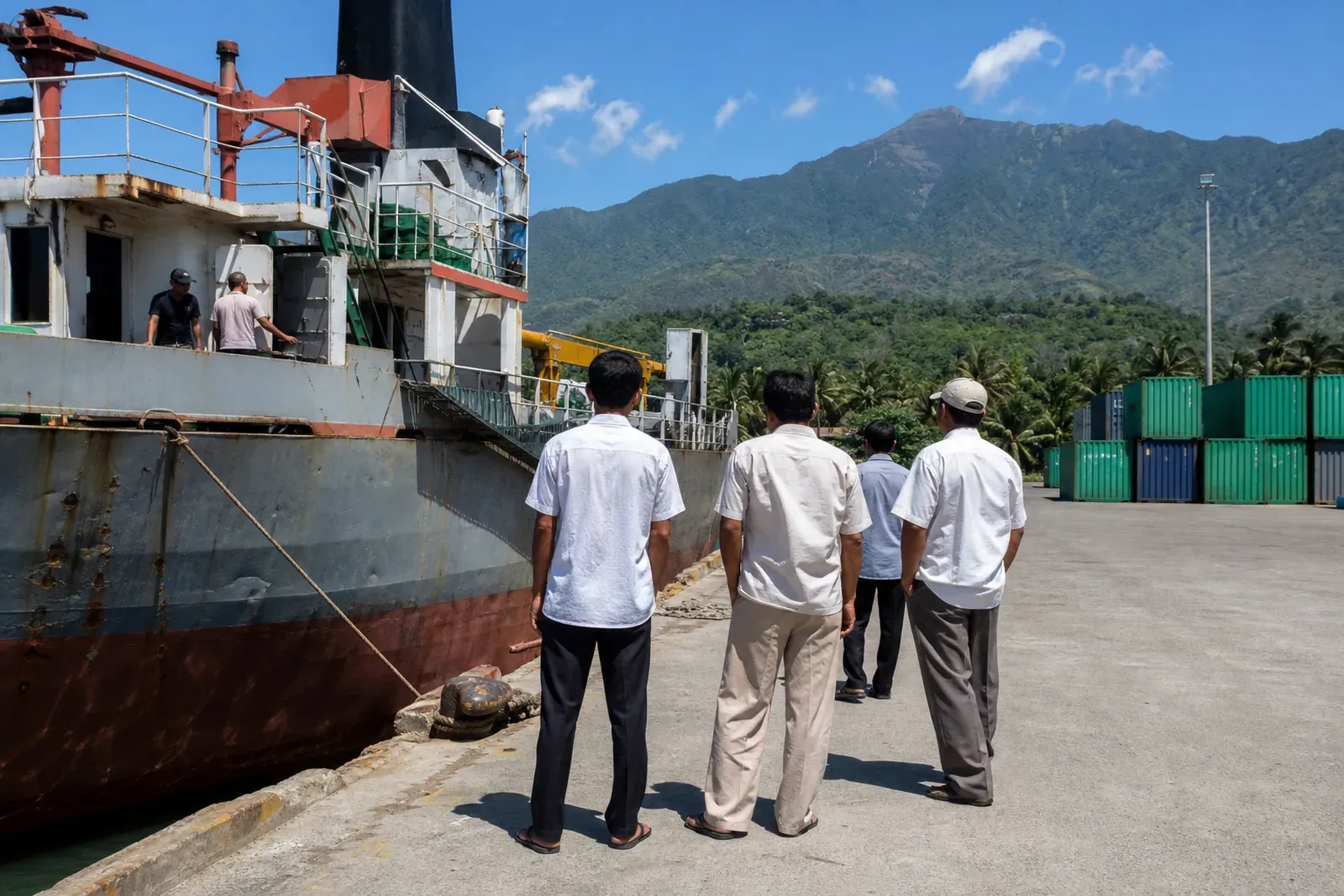
Indonesia-Russia Energy Talks Put Long-Term Security on the Investor Agenda
Indonesia’s energy minister joins President Prabowo in Russia as bilateral energy cooperation moves centre-stage at the Eastern Economic Forum.
Quick answer: Indonesia’s energy minister, Bahlil Lahadalia, is accompanying President Prabowo Subianto to Russia to advance discussions on bilateral energy cooperation. For Lombok investors, the immediate implication is not a local project announcement but a timely reminder that national energy security, international capital and policy execution can shape the wider investment environment.
Indonesia’s delegation has arrived at a moment when energy diplomacy is being presented as economic policy rather than ceremonial statecraft. At the Eastern Economic Forum, President Prabowo’s programme places energy security and investment alongside broader economic cooperation in the Eurasian and Asia-Pacific regions. The significance for investors lies in the direction of travel: Jakarta is seeking practical international partnerships to meet changing energy needs while protecting longer-term national resilience.
The Context
Bahlil Lahadalia, Indonesia’s Minister of Energy and Mineral Resources, is accompanying President Prabowo Subianto to Russia with a clear remit: to ensure that energy occupies a central place in discussions on bilateral cooperation between the two countries.
According to Dwi Anggia, a spokesperson for the ministry, the visit has a strategic role in supervising follow-up work on the energy agenda and in ensuring bilateral commitments are carried forward in accordance with outcomes from discussions between the two heads of state. That wording matters. It points beyond a broad diplomatic aspiration towards the less glamorous but decisive question of implementation.
For investors assessing Indonesia, whether through property, operating businesses or longer-term exposure to tourism-led regions, the distinction is material. Announcements can alter sentiment; execution changes the investment landscape. The ministry’s stated focus is therefore not merely on identifying possible cooperation, but on overseeing the path from high-level commitment to work that aligns with Indonesian needs and interests.
The visit coincides with the 11th Eastern Economic Forum, where President Prabowo is attending as one of the principal guests of honour. The forum gives Indonesia a platform to discuss its economic priorities with government and business counterparts. Energy is explicitly part of that agenda, alongside economic cooperation and investment.
“The visit plays a strategic role in overseeing the follow-up to the energy agenda and ensuring that bilateral commitments are implemented,” the ministry spokesperson said.
The language from Jakarta should be read carefully. It does not announce an agreement, a project, a financing package or a timetable. Nor does it establish a direct effect on Lombok. It does, however, make clear that the Indonesian government sees international cooperation in energy as a strategic response to evolving national requirements.
That is a sensible lens for overseas investors. Lombok’s investment case is often discussed through the more immediate concerns of tourism demand, asset quality, legal structure and operating performance. Yet these sit within a national economy whose ability to manage energy needs and maintain confidence in long-term planning matters just as much. The current trip belongs to that wider frame.
Energy Diplomacy Moves From Principle to Follow-Up
The forum is not the only setting for the delegation’s work. Beyond its main agenda, President Prabowo is scheduled to hold a bilateral working lunch with Russian President Vladimir Putin. ANTARA reports that this will provide an opportunity to follow up on the various cooperation commitments made by the two countries.
That sequence is noteworthy. The public forum offers visibility; the bilateral engagement offers a more focused setting in which commitments can be discussed. Lahadalia’s presence signals that the energy portfolio is expected to be part of that conversation.
The ministry also regards the Eastern Economic Forum as a venue for strengthening communication with both the Russian government and the Russian business community regarding investment opportunities in Indonesia’s energy sector. Again, investors should separate the stated purpose from any assumption of a completed transaction. The source identifies opportunities for discussion, not a concluded investment decision.
The Indonesian government’s position is that strengthening energy cooperation with Russia forms part of its strategy for confronting challenges created by evolving energy needs through international collaboration. The source further says that such opportunities require comprehensive discussion and further follow-up if they are to be realised in line with both countries’ needs and interests.
This is the central investment reading: cooperation is being explored within a strategic, state-led framework, with energy security as the intended long-term outcome. There is no invitation here to treat every diplomatic meeting as an investable event. Rather, the development should be seen as evidence of the government’s effort to broaden channels of dialogue around a sector with economy-wide importance.
For international capital, that distinction helps impose useful discipline. A high-level visit may affect perceptions of diplomatic reach and policy priorities. It does not remove the need to examine each specific opportunity on its own terms: its legal basis, commercial structure, operational requirements and the clarity of any eventual implementation.
 Indonesia-Russia Energy Talks Put Long-Term Security on the Investor Agenda · Illustration: HubLombok (AI-generated)
The present news flow can be understood through three connected layers:
- Diplomatic engagement: President Prabowo is meeting Russian counterparts during the Eastern Economic Forum programme.
- Sector focus: Indonesia’s energy minister is present to advance communication and follow-up concerning the energy agenda.
- Investor relevance: energy security is being treated by the government as a long-term national objective supported through international collaboration.
For Lombok, this remains a macro-level signal rather than a local market instruction. No Lombok-specific energy measure is reported in the source. That absence should temper any attempt to draw a direct line from the Russia visit to an individual asset, development site or tourism business on the island.
A Measured Read-Through for Lombok Capital
The proper response from a Lombok investor is neither to dismiss the story as distant diplomacy nor to inflate it into a local catalyst. Its value is contextual.
Indonesia’s energy system is relevant to the broader operating environment in which businesses, visitors, construction activity and real-estate assets exist. The government’s stated ambition is to use international collaboration to address evolving energy needs and to strengthen national energy security over the long term. That creates a policy backdrop worth monitoring, particularly for investors who take a multi-year view of Indonesia rather than focusing only on the next booking cycle or transaction.
At the same time, the information currently available does not support conclusions about direct commercial outcomes. The source provides no detail on particular energy assets, locations, contractual terms, investment values, development schedules or local infrastructure implications. It would therefore be premature to price a local benefit into a Lombok investment thesis.
A useful distinction is between what has been confirmed and what remains open.
| Confirmed in the dispatch | Not established by the dispatch | |---|---| | Lahadalia is accompanying President Prabowo to Russia. | A completed Indonesia-Russia energy agreement. | | Energy cooperation is part of the bilateral discussion. | A specific effect on Lombok infrastructure or property. | | The forum is being used to discuss energy-sector investment opportunities. | A named project, location, financing arrangement or timetable. | | The government links cooperation to long-term energy security. | A near-term change to local investment returns. |
This is more than a semantic precaution. In emerging and developing investment markets, proximity to an important national theme can easily be mistaken for proof of project-level value. Sophisticated investors resist that temptation. They keep policy context in view while continuing to judge each opportunity by its own documentation, counterparties, permissions, ownership route and capacity to operate as planned.
That approach is especially applicable to cross-border investors. A national strategy may support confidence in a country’s direction, but it is never a substitute for diligence. Any eventual energy-sector proposal arising from the current discussions would need to be assessed on the public facts available at that time, not on the atmosphere of a summit meeting.
There is also a practical portfolio lesson. Investors in Indonesian real estate and hospitality should watch developments that bear on national resilience, but should avoid letting distant headlines obscure immediate asset-level questions. Is the legal structure appropriate? Are the relevant rights, permits and contractual obligations clear? Is the operating case robust without relying on an unannounced infrastructure outcome? Those questions remain central regardless of the geopolitical setting.
What This Means for Investors
The immediate takeaway is one of attention, not action. President Prabowo’s Russia visit places economic cooperation, energy security and investment on a prominent international stage, while Lahadalia’s participation indicates that Indonesia’s energy agenda is receiving direct ministerial oversight.
For Lombok-focused capital, the most defensible interpretation is that national policymakers are actively pursuing external dialogue intended to support long-term energy security. This may be relevant to the country context in which investors operate, but the source does not identify a direct Lombok consequence, nor does it justify a revision to an asset’s current valuation or expected performance.
Investors should therefore monitor subsequent official detail for evidence of concrete commitments, terms and implementation. Until then, the story belongs in the strategic-risk and country-context file: meaningful enough to follow, but not yet specific enough to change a locally grounded investment decision.
The broader message from Vladivostok is one of deliberate positioning. Indonesia is using a major regional forum and direct bilateral engagement to pursue cooperation around an essential national priority. For patient investors, that is worth noting. For disciplined investors, it is equally important to wait for the particulars.
Stay informed, subscribe to the free Lombok Briefing for market intelligence like this, published twice a month.
What is Indonesia discussing with Russia at the Eastern Economic Forum?
Indonesia is using the Eastern Economic Forum to discuss bilateral cooperation, including energy security and investment opportunities in Indonesia’s energy sector. President Prabowo Subianto is attending the forum, while Energy Minister Bahlil Lahadalia is helping oversee follow-up on the energy agenda.
Does the Russia visit announce an energy project in Lombok?
No. The source does not announce a Lombok energy project, a local infrastructure measure, contractual terms or a timetable. It reports bilateral discussions on energy cooperation and investment opportunities at a national level, so investors should not infer a direct local commercial outcome.
What should Lombok investors do in response to this news?
Treat the visit as country-context information rather than an immediate investment trigger. Indonesia says the discussions support long-term energy security through international cooperation, but any Lombok asset should still be assessed on its own legal structure, documentation, operating case and available evidence.
The Lombok Buyer's Field Guide
Legal structures ranked by risk, the honest ROI math line by line, all six zones ranked, and the 24-point due-diligence checklist. The whole book, free in your inbox.
See what's inside