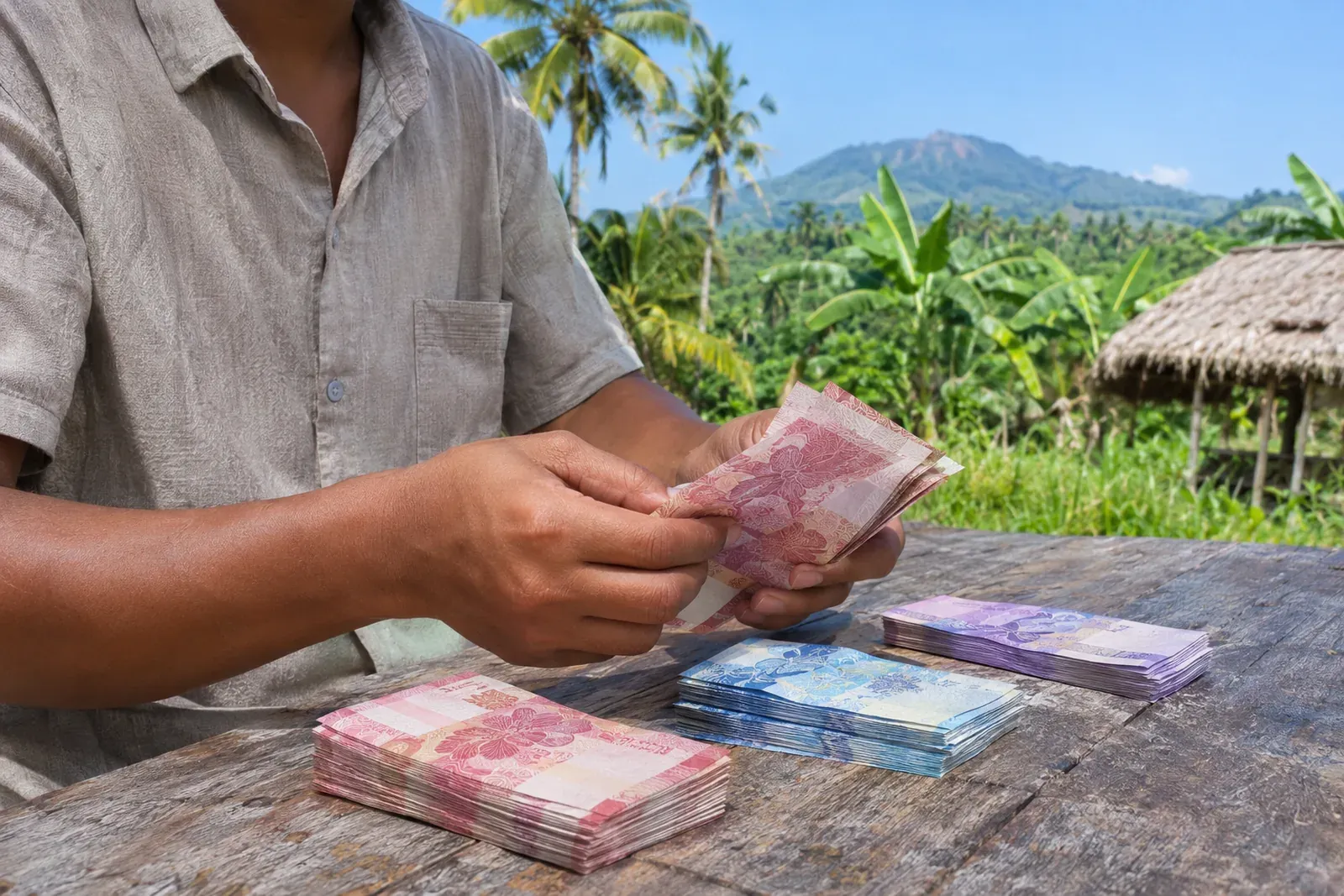
Indonesia Weighs Higher Export FX Conversions to Bolster Rupiah Stability
Jakarta considers raising mandatory foreign-currency conversion caps for natural resource exporters, reinforcing onshore liquidity and domestic financial resilience.
Indonesia is preparing to revise regulations governing natural-resource export proceeds to encourage companies to convert a larger share of foreign-currency earnings into rupiah. The initiative reflects Jakarta's broader push to deepen domestic financial markets and anchor foreign-exchange liquidity within the sovereign banking system.
Speaking at a Financial System Stability Committee (KSSK) news conference in Jakarta, Finance Minister Suahasil Nazara explained that the proposed framework seeks to establish higher conversion rates for foreign proceeds repatriated by natural-resource exporters. The objective, Nazara noted, centers on channeling more export revenues directly into domestic financial institutions to reinforce liquidity and ensure wider market stability.
The Existing Mandate Under Regulation 21 of 2026
The current framework took effect on June 1, 2026, under Government Regulation Number 21 of 2026. Designed to capture export revenues generated by the country's extensive commodity sectors, the policy requires natural-resource exporters to place offshore earnings into dedicated special accounts held at state-owned banks.
The regulatory baseline applies specific holding requirements depending on the commodity category:
- Non-oil-and-gas exporters: Must retain 100 percent of their export proceeds in onshore special accounts for a mandatory duration of 12 months.
- Oil-and-gas exporters: Must retain at least 30 percent of their foreign-currency proceeds onshore for a minimum of three months.
- Conversion thresholds: Under the established rule, domestic conversion from foreign currency into rupiah is capped at 50 percent of a firm's total natural-resource export earnings.
"The proposed changes aim to encourage a higher conversion rate for US dollars received as export proceeds. We want more export proceeds converted into rupiah to bolster the financial sector and domestic markets," stated Finance Minister Suahasil Nazara.
By revisiting the 50 percent conversion ceiling, authorities intend to permit, and potentially incentivize, a more aggressive onshore exchange of US dollars into local currency.
Consultations and Policy Alignment
Trade Minister Budi Santoso confirmed that high-level inter-ministerial talks remain active. The administration is reviewing feedback directly from major industry groups before determining the final adjustment to conversion ceilings or operational timelines.
Minister Santoso also clarified that the prospective revisions operate independently of state investment institutions. Specifically, he noted that the revisions are unrelated to the operations of PT Danantara Sumberdaya Indonesia (DSI), underscoring that policy adjustments represent monetary and trade governance rather than targeted corporate restructuring.
Macroeconomic Context and Financial Buffers
The regulatory reassessment unfolds against a resilient macroeconomic landscape in Southeast Asia's largest economy. Recent third-quarter assessments by the Financial System Stability Committee confirmed that Indonesia's financial architecture remains stable, underpinned by solid capital adequacy ratios across state lenders.
Key macroeconomic indicators reported by authorities reinforce this relative strength:
- Consumer price pressures: Headline inflation in October stood within the official target band at 3.23 percent.
- Capital inflows: Cumulative foreign portfolio inflows reached US$7 billion through October 2026.
- Currency environment: The exchange rate benchmark hovers near Rp 16,500/USD, a level where institutional dollar supply remains critical for corporate borrowers and sovereign debt servicing.
Increasing the domestic volume of converted export dollars expands onshore foreign-exchange trading depth, dampens exchange-rate volatility, and provides Bank Indonesia with added leverage to preserve orderly currency conditions without deploying foreign reserves.
What this means for investors
For international asset allocators and property investors holding capital in foreign currencies, Jakarta's monetary posture offers valuable strategic signals.
First, policies that systematically widen the supply of converted export revenue provide structural ballast to the rupiah. Foreign buyers executing asset acquisitions in Indonesia, where transactions, land titles, and transfer taxes such as the 5 percent BPHTB duty settle strictly in local currency, benefit from predictable foreign-exchange spreads and reduced currency volatility.
Second, expanding onshore banking liquidity supports credit accessibility and domestic capital markets. While foreign natural-resource conglomerates manage tighter compliance and account placement rules, the wider economy reaps the reward of robust domestic deposits and consistent monetary governance.
As the government finalizes exporter consultations, international investors should expect Indonesia to maintain a proactive stance in safeguarding currency stability, cementing institutional credibility across Southeast Asian frontier and emerging markets.
Stay informed: subscribe to our free Lombok Briefing, published twice a month (the 1st and 15th), for analysis like this.
What changes is Indonesia proposing for natural resource export proceeds?
The government plans to revise Government Regulation Number 21 of 2026 to encourage resource exporters to convert a larger share of foreign-currency proceeds into rupiah, potentially adjusting the current 50 percent conversion cap.
What are the current holding rules for Indonesian exporters?
Non-oil-and-gas exporters must hold 100 percent of proceeds in state-owned bank special accounts for 12 months. Oil-and-gas exporters must retain at least 30 percent for three months, with conversions capped at 50 percent.
How does this policy affect foreign investors?
Deepening domestic rupiah liquidity and increasing onshore foreign-exchange conversion curbs currency volatility. This provides international investors with greater exchange-rate predictability when settling capital transactions, regulatory fees, or property acquisitions in local currency.

The Lombok Buyer's Field Guide
Legal structures ranked by risk, the honest ROI math line by line, all six zones ranked, and the 24-point due-diligence checklist. The whole book, free in your inbox.
See what's inside