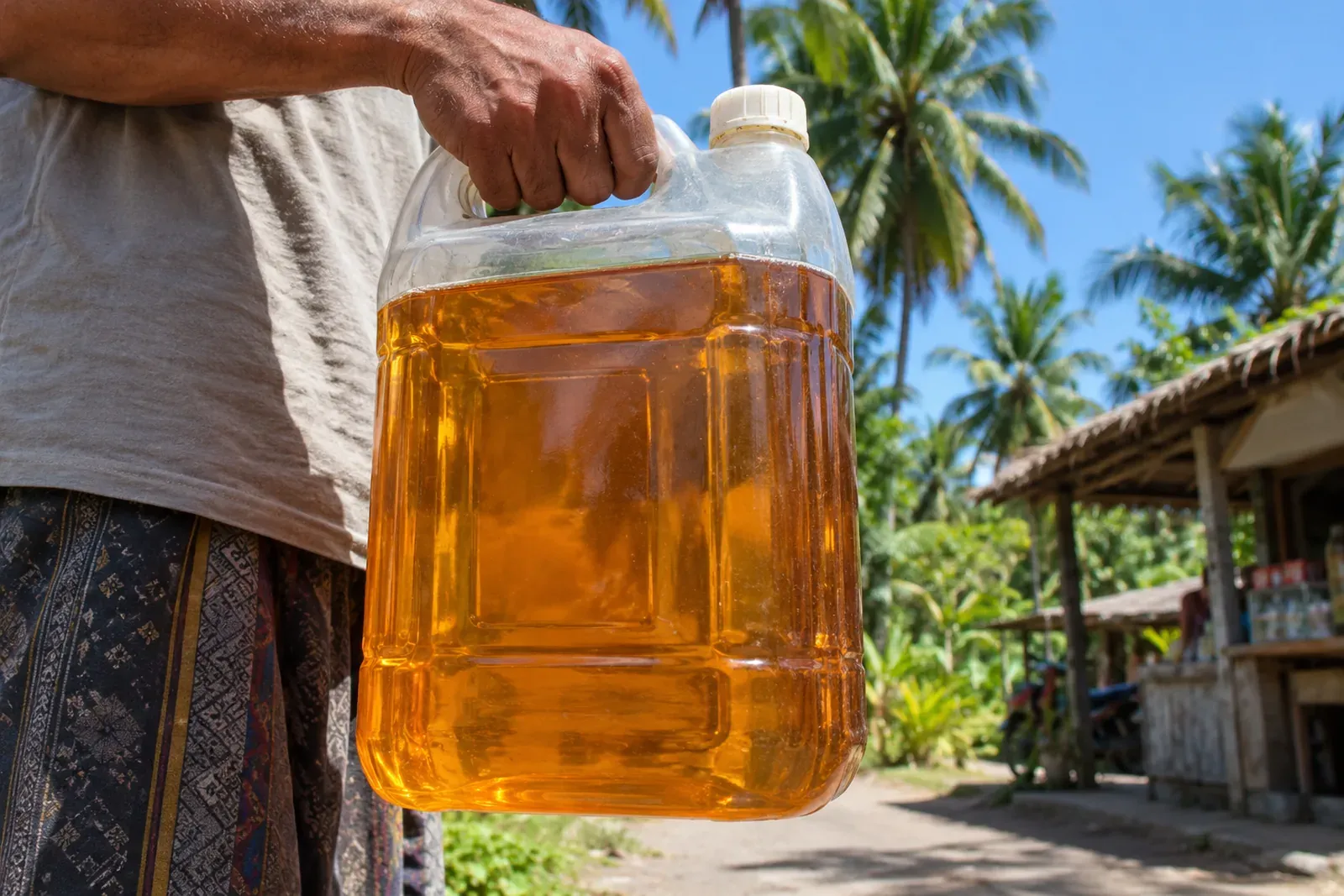
Indonesia Biofuel Mandate: Prabowo Accelerates B50 and E50 Push
President Prabowo Subianto outlines an aggressive biofuel roadmap, expanding B50 biodiesel and targeting E50 ethanol to curb fuel imports and anchor macroeconomic stability.
Indonesia is accelerating its drive towards total domestic energy sovereignty, placing plant-based biofuels at the very centre of its national economic playbook. Speaking at a plenary cabinet meeting at the Merdeka Palace in Jakarta, President Prabowo Subianto confirmed that the government will systematically replace foreign crude imports with domestic bioenergy.
The strategic pivot comes at a decisive moment for Southeast Asia's largest economy. As global oil prices face structural volatility, Jakarta is leveraging its agricultural output to insulate the domestic market, protect foreign exchange reserves, and establish a self-sufficient energy framework that underpins long-term sovereign stability.
The Transition from Fossil Imports to Domestic Biofuels
For decades, fuel import subsidies have posed a persistent fiscal vulnerability for the Indonesian state budget. By substituting imported petroleum with locally produced biofuels, the current administration aims to eliminate this structural deficit entirely.
During his address, President Prabowo highlighted that the domestic energy agenda has served as a cornerstone of strategic governance over the past two years. The administration's focus targets both diesel and petrol consumption through two dedicated agricultural vectors:
- B50 Biodiesel Integration: Indonesia has already achieved the B50 standard, comprising a blend of 50 percent palm oil-derived biofuel and 50 percent conventional fossil diesel.
- The Phased Bioethanol Roadmap: The state has initiated a staged rollout for ethanol, starting with an E10 blend this year, advancing to E20 within two years, and culminating in E50 two years thereafter.
- Diverse Base Resources: Beyond agricultural fuels, national energy security will draw upon substantial domestic coal reserves and extensive geothermal potential.
President Prabowo noted that once the B50 and E50 thresholds are fully operational across commercial and consumer transport networks, Indonesia will no longer require foreign fuel imports.
Macroeconomic Sovereignty and Currency Stability
For international investors evaluating long-term capital deployment in Indonesian assets, macroeconomic discipline is paramount. Large-scale fuel imports historically placed downward pressure on the Indonesian Rupiah during periods of commodity price spikes, complicating inflation targeting and interest rate trajectories.
By converting domestic agricultural feedstocks into transport fuel, the state retains capital within the internal monetary circuit. Reducing dollar-denominated energy imports strengthens the national trade balance and provides Bank Indonesia with greater latitude to maintain monetary stability.
"Global oil prices are rising and will continue to rise. Fortunately, we possess abundant alternative energy sources. We still have significant coal reserves, extensive geothermal potential and, most importantly, the ability to produce diesel fuel from plants."
President Prabowo Subianto, Merdeka Palace, Jakarta
This structural insulation is particularly relevant for the broader business environment. Lower exposure to imported energy inflation cushions logistic networks, supports domestic purchasing power, and reinforces fiscal predictability across regional development zones.
Decentralised Energy and Island Infrastructure Resilience
The logistical architecture of an archipelagic nation requires reliable, locally accessible power. Emerging investment destinations across central and eastern Indonesia, including West Nusa Tenggara and the broader Sunda arc, rely heavily on maritime and road transport networks to sustain their growth.
Decentralising fuel supply through domestic bio-refineries mitigates the distribution vulnerabilities that often impact peripheral island economies. When national transport networks run on domestic agricultural blends rather than vulnerable international supply lines, domestic supply chains experience fewer operational bottlenecks.
This infrastructure consistency directly supports secondary economic hubs that depend on continuous tourist and commercial arrivals. Regions experiencing elevated momentum, where international visitor arrivals have trended upward by 40-50% YoY amid post-pandemic recovery and flagship international events, require steady, predictable baseline services to support ongoing private capital expenditure.
Fiscal Predictability Across Frontier Markets
The economic dividends of national energy self-sufficiency extend well beyond central balance sheets. By curtailing the volatile import bills that historically triggered sudden cuts to infrastructure budgets, the central government can maintain capital expenditure commitments across regional development corridors.
For offshore capital allocators, structural stability in sovereign finances translates into lower risk premiums. When public spending is not consumed by emergency energy subsidies, public funding for transport corridors, regional airport expansions, and municipal utility networks remains on schedule.
As the state advances from B50 implementation to its target of an E50 bioethanol standard over the next four years, the broader Indonesian economy transitions from a price-taking consumer of global energy to a resilient, bio-powered industrial market.
What This Means for Investors
International investors monitoring Indonesian real assets and private enterprise should view the biofuel mandate through the lens of sovereign risk reduction. The systematic substitution of foreign petroleum with domestic resources addresses one of the primary historical risks to the Indonesian balance of payments.
- Inflation Anchoring: A reduced dependence on global crude markets dampens imported inflation, protecting domestic yields and operational cash flows.
- Currency Resilience: Lower foreign exchange outflows for fuel imports support currency stability around key benchmark levels, such as the current baseline of approximately Rp 16,500 per US dollar.
- Infrastructure Continuity: Sustained fiscal health ensures that regional connectivity projects in growing economic corridors receive uninterrupted state support.
- Long-Term Policy Predictability: The staged transition toward E10, E20, and eventual E50 targets signals administrative continuity and regulatory resolve across consecutive presidential terms.
Indonesia is methodically decoupling its domestic growth trajectory from global commodity volatility, establishing an increasingly self-contained economic base for the decade ahead.
Stay informed: subscribe to our free Lombok Briefing, published twice a month (the 1st and 15th), for analysis like this.
What is Indonesia's B50 biodiesel standard?
The B50 standard is a transport fuel blend comprising 50 percent palm oil-based biofuel and 50 percent conventional fossil diesel, designed to significantly lower the nation's reliance on foreign petroleum.
What is the timeline for Indonesia's bioethanol target?
The government is implementing bioethanol in phases, targeting an E10 blend this year, increasing to E20 over the next two years, and reaching an E50 blend two years thereafter.
How does domestic biofuel policy impact foreign investors?
Eliminating foreign fuel imports protects foreign exchange reserves, dampens imported inflation, and strengthens the Rupiah, creating a more predictable and stable macroeconomic climate for inbound foreign capital.

The Lombok Buyer's Field Guide
Legal structures ranked by risk, the honest ROI math line by line, all six zones ranked, and the 24-point due-diligence checklist. The whole book, free in your inbox.
See what's inside