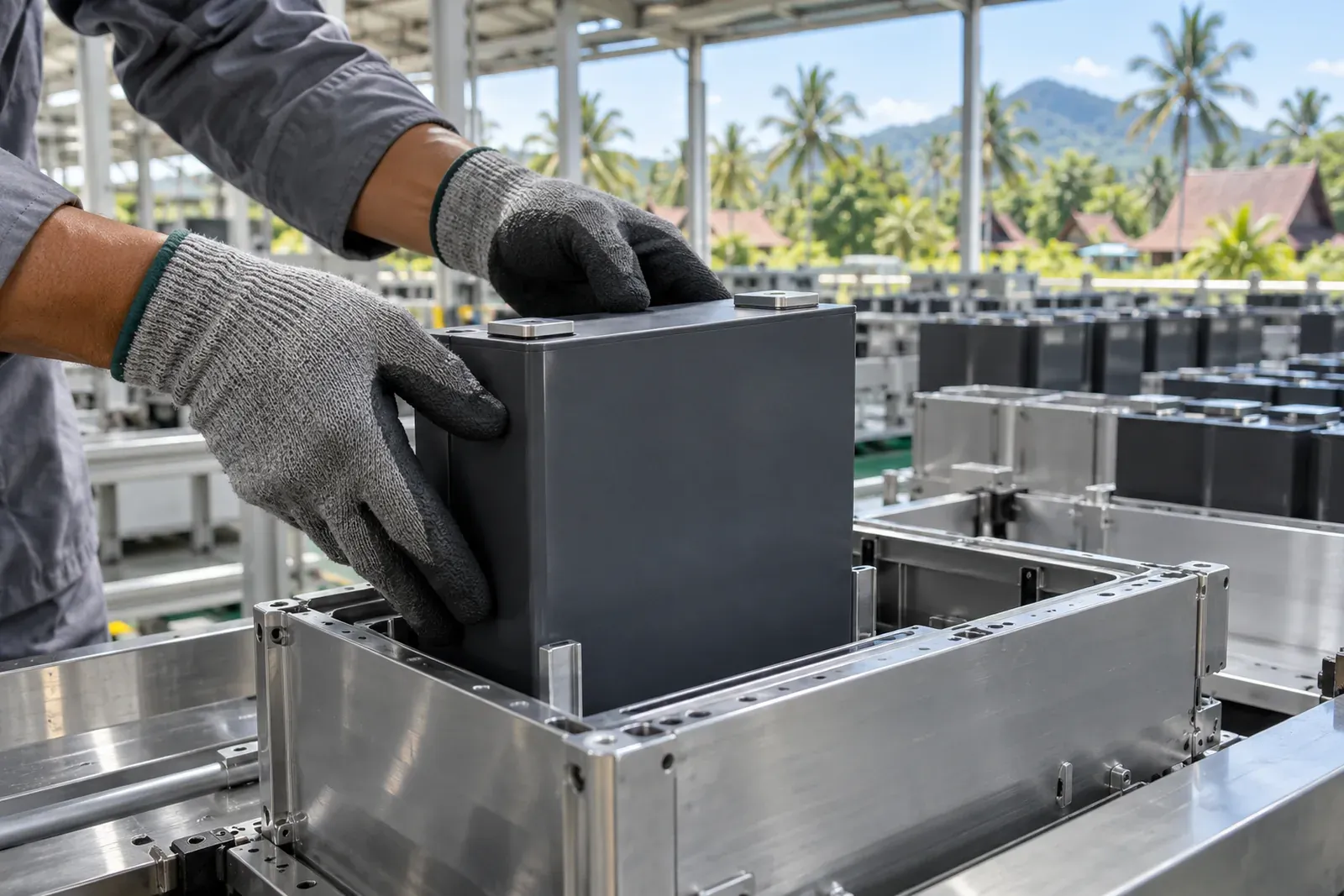
Indonesia Activates CATL-Antam EV Battery Plant in Major Industrial Milestone
Indonesia begins production at the CATL-Antam battery facility, securing an integrated domestic supply chain and demonstrating sovereign industrial execution for foreign investors.
Quick answer: Indonesia has commenced commercial production at the joint CATL-Antam electric-vehicle battery facility, marking the country's third operational cell manufacturing plant. Announced by Coordinating Minister Bahlil Lahadalia ahead of an official presidential inauguration by Prabowo Subianto, the milestone confirms an integrated domestic mineral supply chain, reinforcing sovereign economic stability and long-term foreign investor confidence.
Resource-rich developing economies frequently struggle to convert raw mineral wealth into domestic technological capital. Jakarta has demonstrated that its contentious downstream industrial policy can achieve operational execution, moving from extraction to finished battery cells within a unified domestic regulatory perimeter. For foreign capital evaluating sovereign risk, fiscal stability, and infrastructure maturity across the Indonesian archipelago, this operational milestone provides tangible proof of policy continuity under the Prabowo administration.
The Context
Coordinating Minister for Downstreaming and Energy Transition Bahlil Lahadalia confirmed at the Presidential Palace in Jakarta on Thursday that the long-anticipated CATL-Antam facility has formally entered production. The facility begins commercial manufacturing just over a year after President Prabowo Subianto personally presided over the project groundbreaking. With operational readiness reported directly to the head of state, an official state inauguration is scheduled to take place shortly.
The commissioning of the CATL-Antam project elevates Indonesia's industrial footprint to three operational electric-vehicle battery manufacturing plants. The project joins Hyundai's operating facility and a Chinese-backed production complex in Halmahera, solidifying the country's position as Southeast Asia's primary battery manufacturing hub. Rather than functioning as isolated assembly operations reliant on imported intermediate components, these assets represent the culmination of a decade-long state strategy designed to enforce in-country value addition.
Minister Bahlil noted that the national battery ecosystem now spans the entire production continuum. Raw ore extraction feeds domestic smelters and mineral refining facilities, which in turn supply high-pressure acid leach (HPAL) plants, precursor processing units, cathode manufacturing lines, and ultimately finished battery-cell assembly plants. The minister emphasised that very few nations globally have established an equivalent end-to-end mineral processing ecosystem within their borders. By requiring international capital to build domestic refining and fabrication infrastructure as a condition of resource access, Indonesia has converted geological endowment into advanced industrial capacity.
Critically, the government has affirmed its sequence of market priorities. Domestic consumption requirements will take precedence before industrial output is cleared for export to global markets. This domestic-first policy ensures that Indonesia's expanding fleet of electric and hybrid transport options secures an uninterrupted supply of domestically fabricated energy storage components before international buyers absorb surplus volume.
Industrial Execution Across the Mineral Value Chain
The technological architecture underpinning the CATL-Antam facility highlights the complex engineering requirements necessary to process Indonesian nickel into transport-grade battery chemistry. The upstream process relies on high-pressure acid leach (HPAL) facilities designed to treat low-grade limonite ores that were historically considered economically unviable for traditional pyrometallurgical smelting. These facilities generate mixed hydroxide precipitate, which undergoes secondary refining to yield high-purity nickel and cobalt sulphates.
From these refined chemical building blocks, domestic plants produce precursor compounds before synthesizing active cathode materials. The CATL-Antam facility integrates these cathode materials directly into commercial battery cells. This tight geographic integration reduces shipping friction, lowers cross-border logistical tariffs, and minimises exposure to external maritime supply chain disruptions. The downstreaming strategy is supported by parallel state initiatives, including pending regulatory frameworks for hybrid vehicle incentives, ongoing discussions with global manufacturers such as Toyota to expand domestic battery electric-vehicle assembly, and the rollout of eleven additional resource processing projects across North Maluku.
| Production Stage | Industrial Asset Class | Strategic Function | | :--- | :--- | :--- | | Upstream Extraction | Antam Mining Concessions | Secure domestic raw mineral feedstock | | Chemical Refining | High-Pressure Acid Leach (HPAL) | Process limonite ores into nickel-cobalt sulphates | | Intermediate Processing | Precursor and Cathode Plants | Synthesize active electrochemical compounds | | Cell Fabrication | CATL-Antam Manufacturing Facility | Assemble commercial-grade finished battery cells | | End-Market Allocation | Domestic Market Obligation | Prioritise domestic transit prior to foreign export |
By anchoring international technology leaders such as CATL alongside state-owned mining enterprise Antam, the Indonesian state retains direct strategic equity in the primary supply chain. This public-private architecture ensures that technology transfer, capital investment, and employment creation remain domestic, insulating the sovereign balance sheet against the price volatility that typically plagues raw commodity exporters.
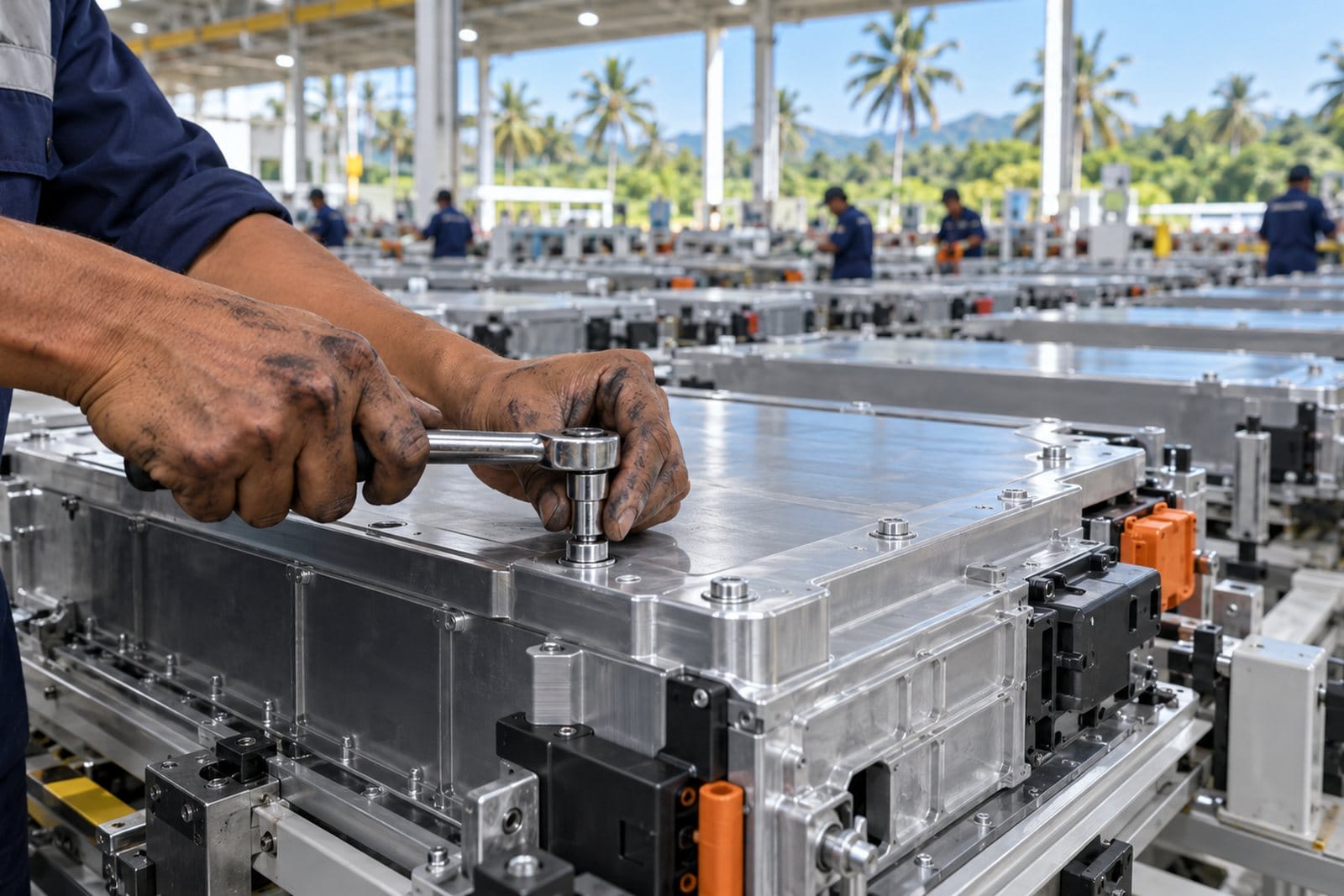 Indonesia Activates CATL-Antam EV Battery Plant in Major Industrial Milestone · Illustration: HubLombok (AI-generated)
Sovereign Balance Sheets and Macroeconomic Stability
For international wealth allocators and real asset investors, the direct significance of the CATL-Antam plant lies not merely in automotive industrial output, but in its profound macroeconomic stabilising effect. Emerging market currencies and fiscal frameworks often deteriorate during commodity down-cycles when export earnings collapse. By replacing unrefined ore shipments with finished battery cells, components, and assembled vehicles, Indonesia captures substantially higher value per metric ton of extracted mineral.
This structural transition cushions the current account, strengthens foreign exchange reserves held by Bank Indonesia, and moderates import-driven inflationary shocks. The disciplined domestic retention of intermediate goods also generates durable tax revenues for state coffers, which directly fund public infrastructure programmes across secondary islands. The continuity of this agenda confirms that the regulatory environment under President Prabowo remains aligned with long-term industrial policy. International capital values sovereign jurisdictions that avoid sharp administrative reversals when executive leadership transitions. The seamless progression of the CATL-Antam timeline, moving from groundbreaking to commercial output without policy interruption, provides reassuring institutional certainty.
Furthermore, the government's insistence on satisfying domestic demand before licensing export contracts shields the domestic market from international supply crunches. As Indonesia develops its wider public transit and transport networks, local operators will benefit from predictable procurement pricing for battery storage, helping contain operational expenditure across regional logistics networks.
What This Means for Investors
The commissioning of the CATL-Antam plant delivers clear, actionable signals for private and institutional investors managing exposure to the Indonesian market:
- Demonstrated Policy Continuity: Concerns regarding political risk following the presidential transition have been answered by operational execution. Major foreign direct investment joint ventures are progressing through ministerial channels and reaching completion on schedule.
- Currency and Macro Resilience: An expanding domestic manufacturing base and balanced trade dynamics strengthen the rupiah, mitigating currency depreciation risks for foreign real estate and private equity investors.
- Cross-Archipelago Infrastructure Spillover: Sustained fiscal receipts from industrialised value chains allow the central government to maintain uninterrupted capital spending on national transport corridors, regional airports, and utilities across peripheral growth zones.
- Maturing Corporate Governance: Partnerships between international conglomerates such as CATL and state-owned entities such as Antam establish higher standards of technical execution and legal compliance within Indonesian joint-venture frameworks.
Investors deploying capital across Indonesia must recognise that national industrial maturity directly supports private investment safety. When a sovereign state demonstrates the institutional capacity to construct, regulate, and operationalise an end-to-end industrial ecosystem, it validates the broader rule of law and administrative stability across all commercial sectors. The successful activation of the CATL-Antam battery manufacturing facility confirms that Indonesia's economic modernization is advancing from legislative aspiration into concrete, operational reality.
Stay informed: subscribe to the free Lombok Briefing, published twice a month (the 1st and 15th), for market intelligence like this.
What is the status of the CATL-Antam EV battery facility in Indonesia?
The CATL-Antam electric-vehicle battery facility has officially commenced production, just over a year after groundbreaking. Coordinating Minister Bahlil Lahadalia confirmed the facility is operational, with an official state inauguration by President Prabowo Subianto scheduled to take place shortly.
How many EV battery plants are currently operational in Indonesia?
Indonesia now operates three commercial electric-vehicle battery manufacturing plants. These comprise Hyundai's facility, a Chinese-backed production complex in Halmahera, and the newly operational CATL-Antam manufacturing plant, establishing an end-to-end domestic supply chain.
Why does Indonesia's battery production matter to international investors?
Domestic battery manufacturing captures high industrial value within Indonesia, strengthening the sovereign current account and currency stability. It demonstrates administrative continuity under President Prabowo, reassuring foreign investors that large-scale capital projects enjoy sustained regulatory support.

The Lombok Buyer's Field Guide
Legal structures ranked by risk, the honest ROI math line by line, all six zones ranked, and the 24-point due-diligence checklist. The whole book, free in your inbox.
See what's inside