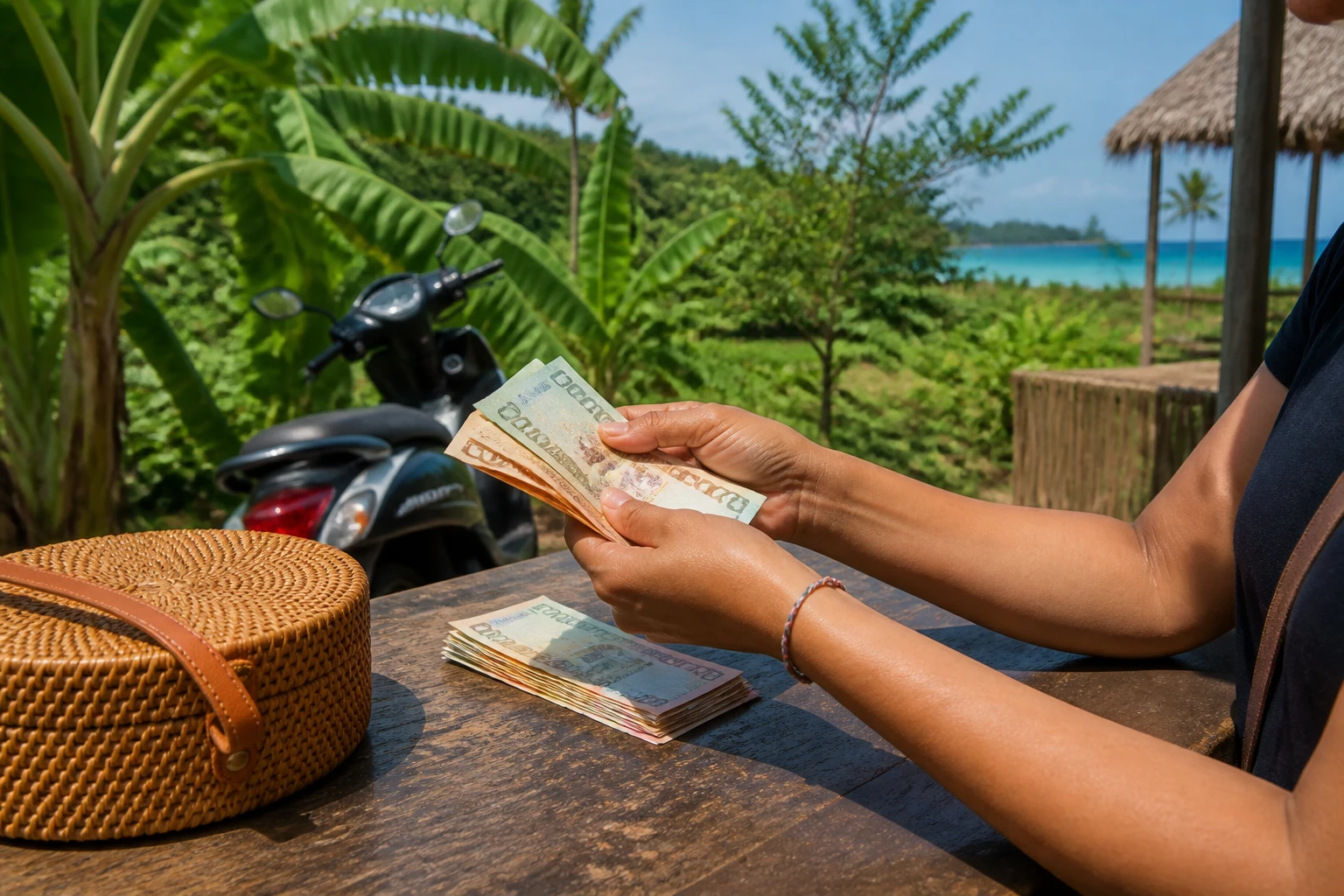
Moving money to Indonesia: transfer services and fees for property buyers
Specialist foreign-exchange services typically charge 0.5-2% on large transfers, versus 3-5% for high-street banks, making the choice of provider worth several thousand pounds on a USD 200,000 purchase. Allow two to five business days, use a fixed-rate forward contract for certainty, and prepare a p
Quick answer: Specialist foreign-exchange services typically charge 0.5-2% on large transfers, versus 3-5% for high-street banks, making the choice of provider worth several thousand pounds on a USD 200,000 purchase. Allow two to five business days, use a fixed-rate forward contract for certainty, and prepare a paper trail of source-of-funds documentation before the deal closes.
Why the transfer method matters on a large purchase
When you buy a property in South Lombok, the purchase price lands in Indonesian rupiah at the notary (PPAT) stage. Even a small difference in the exchange rate or service fee compounds significantly at the scale of a villa purchase. Entry-level investment-grade properties in South Lombok start around EUR 95,000 and reach EUR 350,000 for prime assets, so a 2% rate differential on a EUR 200,000 wire represents roughly EUR 4,000 lost to poor execution, before any fees.
That gap is worth planning around, and it is entirely avoidable.
Banks versus specialist transfer services
Your home bank will almost always offer the worst combination of rate and fee for international property transfers. Most retail banks apply a spread of 3-5% over the mid-market rate, add a fixed SWIFT fee (typically GBP 15-40 per transaction), and may levy a further correspondent-bank charge of USD 10-30 at the receiving end. On a six-figure sum, the combined cost can reach USD 6,000-10,000.
Specialist foreign-exchange brokers compete on large transactions and offer materially tighter spreads. Services such as OFX, TorFX, Currencies Direct, and Wise Business typically charge 0.5-1.5% on the mid-market rate for transfers in the EUR/USD-to-IDR corridor, with no fixed wiring fee on amounts above a threshold (commonly USD 10,000 or equivalent). Some brokers will negotiate the spread down further for single transfers above USD 100,000. It is worth getting at least three live quotes before committing, because rates vary across providers on any given day.
Wise (formerly TransferWise) handles consumer-level transfers well and is transparent about its fees upfront. For larger property transactions, a full-service broker with a dedicated account manager, such as OFX or Currencies Direct, tends to offer better rates and the ability to set up a forward contract.
Locking in your rate: forward contracts
Property transactions in Indonesia move on Indonesian timelines, which means they rarely close on the exact day originally discussed. The window between signing a reservation agreement and completing the deed of sale (AJB) at the notary can span several weeks or months. In that period, the IDR/EUR or IDR/GBP rate can shift enough to materially alter your effective cost.
A forward contract lets you lock in today's exchange rate for a transfer executed on a future date, typically up to twelve months ahead. Most specialist brokers require a deposit of around 5-10% of the contract value to hold the rate. This removes currency uncertainty from the transaction and makes budgeting straightforward.
For buyers purchasing off-plan or in phased developments, such as the Samudra Villas project in Are Guling (HubLombok is the editorial arm of Samudra Villas, an active developer in South Lombok), a staged forward contract covering each payment milestone can be arranged with most brokers.
See also: Currency risk and property financing in Lombok for a fuller treatment of hedging strategies.
Timing your transfer
Transfers from Europe or Australia to Indonesia via SWIFT typically clear in two to five business days, though one to two days is common when using a specialist service with direct banking relationships. The IDR is not a freely convertible currency in all jurisdictions, so your broker routes the funds via an intermediary (usually in USD or SGD) before final conversion into rupiah.
Practical points to keep in mind:
- Initiate early. Do not wait until the day the notary calls. Funds need to arrive and clear in your Indonesian bank account before the deed can be executed.
- Send to your own account first. The cleanest paper trail for Indonesian compliance runs through a personal account at a local bank (BCA, BNI, Mandiri, or similar) held in your name. Sending funds directly to a developer or notary can complicate the documentation trail.
- Account for the correspondent cut. Even when your specialist service charges no outgoing fee, a correspondent bank in the chain may deduct USD 10-25. Factor this in so the net amount arriving matches what the notary expects.
For guidance on opening a local account, see Banking as a foreigner in Lombok.
Documenting the source of funds
Indonesian anti-money-laundering rules (administered by PPATK, the financial intelligence unit) require that large inbound transfers be traceable to a legitimate source. Your local bank may ask for documentation when a significant sum arrives from abroad. The standard documents include:
- A bank statement from the sending account showing the origin of the funds (three to six months of history is typical).
- Proof of the transaction purpose: a signed sale and purchase agreement or reservation letter is sufficient.
- Your identification documents (an NPWP tax registration number if you have one, or passport-based identification for foreign nationals).
This is routine compliance, not a hurdle, but it is best assembled before you initiate the transfer rather than scrambling for it afterward.
Note that the purchase price for Indonesian property is officially recorded in IDR. The deed of sale states the IDR equivalent at the agreed rate on the transaction date. Keep the FX confirmation from your transfer provider as part of your permanent deal file.
For a detailed look at how exchange-rate movements affect your real return, read IDR exchange-rate risk for property buyers.
Practical guidance
Shop for at least three live quotes from specialist brokers before any large transfer. Use a forward contract if the deal timeline extends beyond four weeks. Send funds to your own Indonesian bank account rather than directly to a third party. Assemble your source-of-funds documentation before the wire goes out, not after. On a purchase in the EUR 150,000-350,000 range, careful execution of the currency transfer can save EUR 3,000-8,000 compared with using your home bank. That is a meaningful difference, and one entirely within your control.
What is the cheapest way to transfer money to Indonesia for a property purchase?
Specialist foreign-exchange brokers such as OFX, TorFX, or Currencies Direct typically charge 0.5-1.5% on the mid-market rate, compared with 3-5% for high-street banks. On a EUR 200,000 transfer, that difference can amount to EUR 3,000-7,000. Get at least three live quotes before committing, and ask about further negotiation on spreads for transfers above USD 100,000.
Do I need to document where my money comes from when buying property in Indonesia?
Yes. Indonesian anti-money-laundering regulations (administered by PPATK) require that large inbound transfers be traceable to a legitimate source. A bank statement covering three to six months and a copy of the sale agreement are the standard documents requested by local banks and notaries. Prepare these before you initiate the transfer.
How long does an international bank transfer to Indonesia take?
Via SWIFT, transfers from Europe or Australia to Indonesia typically clear in two to five business days. Specialist brokers with direct banking relationships can often reduce this to one to two days. Initiate the transfer well before the notary appointment date to avoid delays at the deed-execution stage.
The Lombok Buyer's Field Guide
Legal structures ranked by risk, the honest ROI math line by line, all six zones ranked, and the 24-point due-diligence checklist. The whole book, free in your inbox.
See what's inside