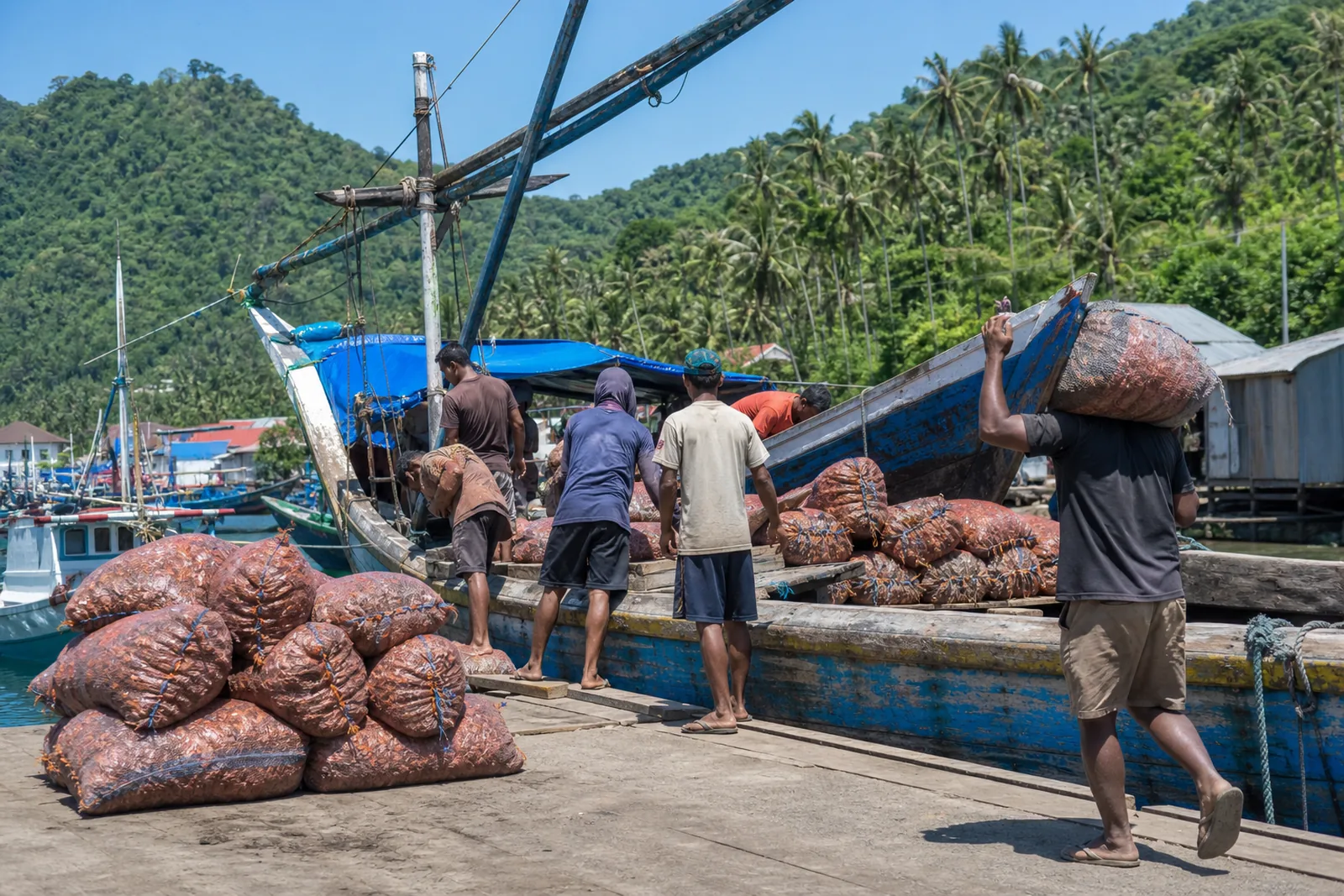
Prabowo says DSI found $5bn in potential export revenue
President Prabowo says DSI identified $5bn in potential additional state revenue by monitoring strategic-commodity exports.
President Prabowo Subianto says PT Danantara Sumber Daya Indonesia (DSI) has identified US$5 billion in potential additional state revenue through closer monitoring of strategic-commodity exports. The claim puts export pricing, invoicing and the capture of commodity value at the centre of Indonesia’s economic-policy debate.
A claim built on export monitoring
Speaking at a joint parliamentary session ahead of Indonesia’s Independence Day, President Prabowo said DSI had monitored more than 6,000 export transactions over a period of just more than two months. The transactions involved three strategic commodities: coal, palm oil and ferroalloys.
DSI identified potential additional revenue of US$5 billion from price differences and adjustments, according to President Prabowo.
The figure is a potential-revenue estimate described by the President, rather than a report of money already collected. Its significance lies in the policy direction it implies: Indonesia’s government is seeking more visibility over the prices at which strategically important exports leave the country, and over the proceeds associated with those exports.
Prabowo framed the issue in broad national terms, arguing that Indonesia’s natural wealth should benefit the country rather than a limited group of participants. He also questioned why prices for Indonesian goods should be determined elsewhere when the underlying assets and production are domestic.
For investors, that distinction matters. A government focus on export monitoring can affect the operating environment for businesses connected to commodities, logistics, processing and trade. It does not, on its own, establish the eventual design or financial effect of any expanded oversight. But it signals that the administration sees pricing discrepancies and export proceeds as material economic-policy concerns.
Palm oil illustrates the pricing concern
President Prabowo cited palm oil as an example of what he described as under-invoicing and lost value. He said Indonesian crude palm oil had previously been sold at around Rp15,000 per kilogram at domestic ports, compared with around Rp27,000 per kilogram on the Rotterdam market.
“This means that, in reality, we were losing almost 50 percent of the value of our commodities,” Prabowo said.
The comparison was presented by the President as evidence that differences between domestic-port pricing and overseas-market pricing may result in the state receiving less value from strategic exports than it otherwise could. He added that the Netherlands does not have palm oil plantations, underscoring his argument that value created from Indonesian commodities should not be detached from the country’s own economic interest.
The source does not provide a detailed methodology behind the US$5 billion estimate, nor does it identify individual transactions or companies. Investors should therefore read the figure as a presidential statement of potential identified through DSI monitoring, not as a complete account of assessed liabilities, recovered revenues or final enforcement outcomes.
That caution is especially important in a commodity market, where product specifications, shipping arrangements, timing and contract terms can influence observed prices. The policy message, however, is unambiguous: the administration intends to scrutinise discrepancies more closely.
From three commodities to a broader monitoring system
DSI’s current monitoring has focused on coal, palm oil and ferroalloys. President Prabowo said the organisation would expand coverage to 50 ports across 25 provinces and extend oversight beyond the initial three commodities to other key Indonesian exports.
This proposed expansion would take the initiative from a targeted exercise to a much wider monitoring framework. The stated objective is to ensure that export commodities and their proceeds are monitored and managed more comprehensively.
For international capital, the key question is not simply whether the state captures more revenue. It is how any monitoring regime is implemented in practice. Transparent processes, clear obligations and consistent treatment can support confidence in a market where trade flows and resource assets are economically important. Conversely, investors will watch for the practical consequences of new oversight on reporting, transactions and commercial relationships.
The source establishes the intended direction of travel, but not the detailed timetable, rules or administrative mechanisms of the expansion. Those details will determine how businesses and investors assess the operational impact.
A political and economic message
The announcement came during the MPR Annual Session and the Joint Session of the DPR and DPD. The agenda included the President’s address on state institutions’ performance and his State of the Nation Address marking the Republic of Indonesia’s 81st Independence Day.
Prabowo argued that fraudulent practices in strategic-commodity export transactions run contrary to basic economic and market principles. His remarks combined a revenue argument with a wider assertion of economic sovereignty: Indonesia should not, in his view, allow the value of its goods and assets to be shaped primarily outside the country.
That framing is relevant beyond the three commodities named. It suggests a policy emphasis on the domestic capture of value from Indonesian resources, particularly where export pricing and proceeds are concerned. Yet the source does not say which additional commodities will be covered, nor does it set out whether changes will involve new regulations, different enforcement practices or revised reporting requirements.
What this means for investors
The immediate takeaway is one of policy attention rather than a completed fiscal outcome. President Prabowo’s US$5 billion figure is a potential additional-revenue claim arising from DSI’s review of more than 6,000 transactions, not a confirmed collection figure.
Investors with exposure to Indonesian commodity supply chains should follow several developments:
- Scope: DSI’s move from three commodities towards broader coverage of key exports.
- Geography: the planned extension of monitoring to 50 ports across 25 provinces.
- Implementation: any official detail on reporting, pricing review, export proceeds or enforcement.
- Disclosure: clarification of the basis on which price differences and adjustments are assessed.
For broader Indonesia-focused portfolios, the announcement reinforces the importance of policy risk alongside commodity demand and corporate execution. The administration’s stated aim is to prevent the country from losing value through export practices it considers unfair. Whether that ambition translates into durable additional revenue will depend on the eventual architecture and operation of the monitoring system.
Indonesia’s next policy steps will show whether DSI’s early findings become a lasting framework for greater oversight of strategic exports.
Stay informed, subscribe to the free Lombok Briefing for analysis like this, published twice a month.
What did President Prabowo say DSI had identified?
President Prabowo Subianto said PT Danantara Sumber Daya Indonesia had identified potential additional state revenue of US$5 billion through monitoring strategic-commodity exports. The figure was described as potential revenue from price differences and adjustments, not as revenue already collected.
Which exports were included in DSI’s initial monitoring?
According to President Prabowo, DSI monitored more than 6,000 export transactions involving coal, palm oil and ferroalloys over just more than two months. He said coverage would later extend beyond those three strategic commodities to other key Indonesian exports.
Why is the announcement relevant to investors?
The announcement signals a government focus on export pricing, proceeds and strategic commodities. Investors should watch for details of DSI’s planned expansion to 50 ports across 25 provinces, including any reporting, monitoring or enforcement arrangements that could affect commodity-related operations.

The Lombok Buyer's Field Guide
Legal structures ranked by risk, the honest ROI math line by line, all six zones ranked, and the 24-point due-diligence checklist. The whole book, free in your inbox.
See what's inside