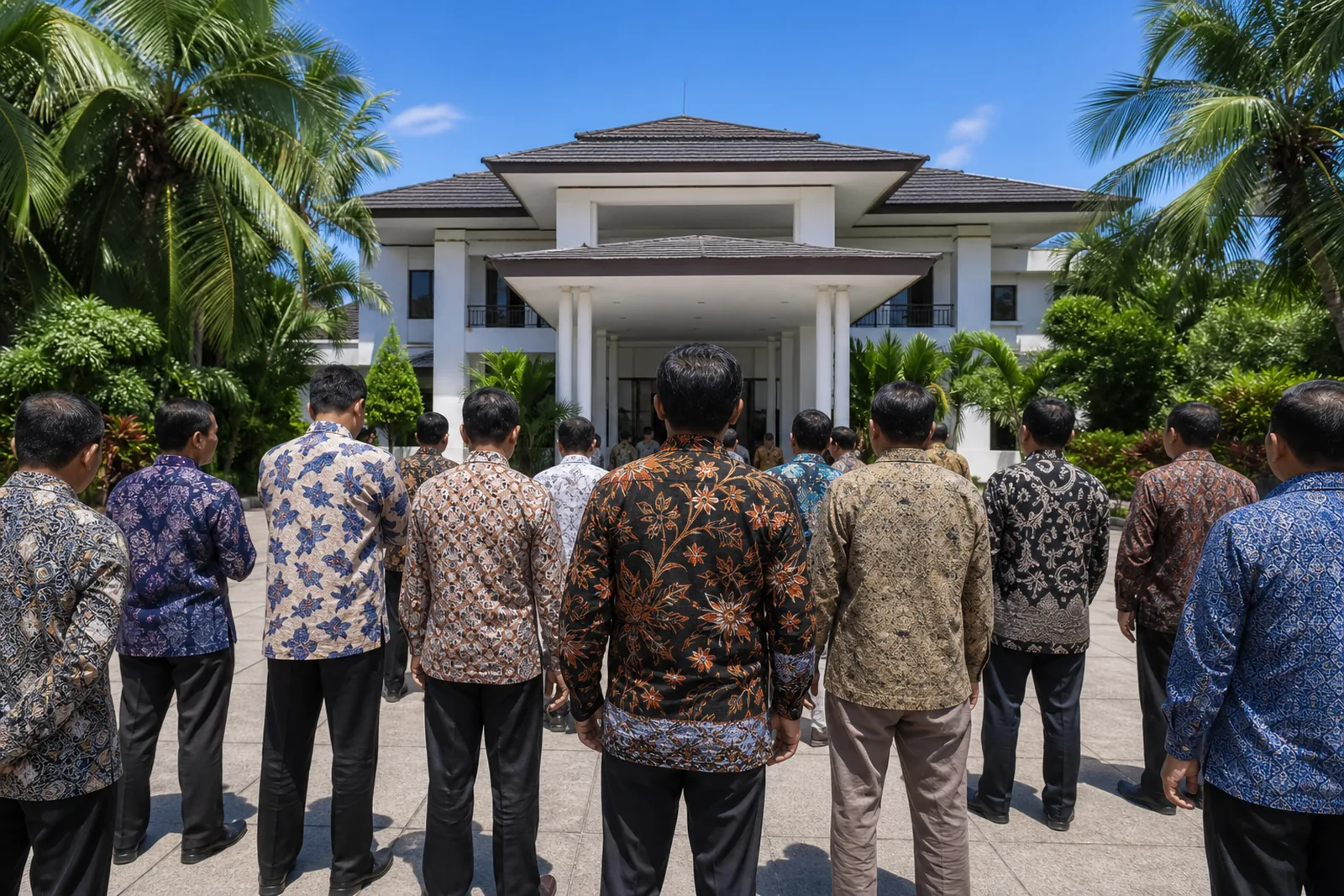
Prabowo Highlights Danantara’s State-Firm Profit Push
President Prabowo says Danantara-led reforms have lifted state-enterprise profits and dividends, reinforcing Indonesia’s industrial ambitions.
President Prabowo Subianto has used Indonesia’s annual parliamentary gathering to make the economic case for Danantara’s restructuring of state-owned enterprises. His message was clear: stronger management at state firms should translate into higher returns for the state and greater capacity to finance industrial development.
The figures presented in Jakarta are substantial, but investors should distinguish between reported results, policy ambitions and the operational work still required to turn higher profits into durable value.
A state-enterprise reset framed in returns
Speaking during the 2026 Annual Session of the People’s Consultative Assembly and the joint session of the Regional Representatives Council and House of Representatives, President Prabowo credited Danantara staff with improving the management and financial performance of Indonesia’s state-owned enterprises.
At the centre of his presentation was a marked rise in aggregate earnings and distributions to the state. According to the President, total SOE profit increased from Rp186 trillion (US$10.4 billion) to Rp326 trillion (US$18.3 billion) in 2024. Dividends rose from Rp85.5 trillion (US$4.8 billion) to Rp142.3 trillion (US$8.0 billion).
The reported improvement matters because state enterprises sit at the intersection of public finance, strategic industry and Indonesia’s wider investment agenda.
The more striking comparison concerned dividends after state capital injections. President Prabowo said net SOE dividends increased from Rp53 trillion (US$3.0 billion) in 2024 to Rp138 trillion (US$7.8 billion) in 2025. He expects net dividends to reach Rp200 trillion (US$11.2 billion) this year without additional capital injections, a target he described as nearly four times the 2024 figure.
For investors, this is not merely an accounting story. It is a statement about how Indonesia intends to use its corporate state: as a source of fiscal returns and as an instrument for investment in nationally significant industries.
Tin becomes the sharpest illustration
PT Timah, the state-run tin miner, featured prominently in the President’s account. He said its net profit rose 804.7% in the first half of 2026 compared with a year earlier. PT Timah’s valuation, he added, increased 280% in August 2026 from August 2025.
The President linked that period to the government’s closure of about 1,000 illegal tin mines in Bangka Belitung. The source does not establish how much of PT Timah’s financial improvement should be attributed to that action, to market conditions, or to internal operational changes. Nevertheless, the juxtaposition is revealing: enforcement, resource governance and corporate performance are being presented as parts of the same policy programme.
Tin is an especially useful lens through which to view the administration’s approach. A state miner’s profitability can affect government receipts, but it also brings questions about supply discipline, environmental oversight and the consistency of regulation. For international investors assessing Indonesia, the quality and durability of those institutions will matter as much as a single period of strong earnings.
Broad gains, but different businesses tell different stories
President Prabowo also cited profit increases across a varied set of state-owned businesses:
- Semen Indonesia: 408.9%
- Pupuk Indonesia: 252.8%
- Pertamina: 86%
- Pegadaian: 84.4%
- Pelindo: 60.4%
- PTPN: 54.4%
These companies operate in fundamentally different sectors, from cement and fertiliser to energy, pawn services, ports and plantations. That breadth supports the President’s argument that the reform programme is intended to reach beyond one commodity cycle or one corporate turnaround.
Yet the same diversity argues for careful analysis. Percentage growth alone does not reveal the starting base, the quality of earnings, capital requirements, debt obligations or the sustainability of a company’s cash generation. Investors should therefore treat the speech as an important official signal, while looking for company-level disclosures that clarify what sits behind each reported gain.
Garuda Indonesia was offered as another example of operational recovery. President Prabowo said the national carrier had returned 20 grounded aircraft to service by June 2026, bringing its fleet to 104 planes. The announcement points to a practical metric of rehabilitation: aircraft returning to use rather than simply a financial headline. Whether this improvement feeds through into a lasting commercial recovery will depend on execution in a competitive aviation market.
From dividends to downstream industry
The administration’s intended use of these returns is as consequential as the returns themselves. President Prabowo said SOE proceeds are mainly funding downstream projects designed to process natural resources into higher-value products.
Danantara backed 13 projects launched on February 6 and another 13 on April 29, according to the President. They include coal-based dimethyl ether, copper and gold, industrial salt and aluminium. He said the projects are expected to create tens of thousands of jobs.
This is a familiar strategic proposition in emerging-market industrial policy: retain more value domestically by moving further along the processing chain. If successfully executed, such projects could strengthen industrial capabilities and deepen Indonesia’s role in global supply chains. But the investment case will rest on project selection, commercial discipline, technology, market access and the ability to manage capital allocation over time.
President Prabowo also said higher SOE profits would help Indonesia acquire major global companies, with the aim of improving technology, management and market access. That ambition signals an outward-looking use of state capital. It also raises the bar for governance, since cross-border acquisitions require clear strategic logic and rigorous assessment of risk and return.
What this means for investors
For foreign investors, the central takeaway is that Indonesia is presenting state-enterprise reform as both a financial and industrial-policy programme.
- Higher reported profits and dividends may strengthen the state’s capacity to invest without further capital injections, if the President’s target is achieved.
- The PT Timah example highlights the potential importance of resource governance and enforcement to corporate outcomes.
- Downstream projects may create new industrial opportunities, but their value will depend on implementation rather than announcements alone.
- A push towards international acquisitions could broaden Indonesia’s corporate reach, while making transparency and capital discipline even more important.
The speech provides a strong indication of direction, not a substitute for due diligence. Investors following Indonesian equities, strategic sectors or the country’s broader business environment will want to watch how reported gains are sustained, how dividends are balanced against investment needs, and how Danantara-backed projects progress from launch to operation.
Indonesia’s state firms are being asked to do more than deliver profits: they are being positioned as vehicles for industrial transformation. The next test will be whether that ambition produces repeatable commercial results.
Stay informed, subscribe to the free Lombok Briefing for analysis like this, published twice a month.
What did Prabowo say about SOE profits and dividends?
President Prabowo said total state-owned-enterprise profit rose from Rp186 trillion in 2024 to Rp326 trillion in 2024. He also said dividends increased from Rp85.5 trillion to Rp142.3 trillion, while net dividends reached Rp138 trillion in 2025 after state capital injections were accounted for.
Why was PT Timah highlighted in Prabowo’s address?
PT Timah was highlighted because President Prabowo said its net profit increased 804.7% in the first half of 2026 from a year earlier. He also said its valuation rose 280% in August 2026 from August 2025, following government closures of illegal tin mines in Bangka Belitung.
How does Danantara fit Indonesia’s industrial strategy?
President Prabowo said Danantara backed 13 projects launched on February 6 and another 13 on April 29. These include coal-based dimethyl ether, copper and gold, industrial salt and aluminium, reflecting an effort to process natural resources into higher-value products.
The Lombok Buyer's Field Guide
Legal structures ranked by risk, the honest ROI math line by line, all six zones ranked, and the 24-point due-diligence checklist. The whole book, free in your inbox.
See what's inside