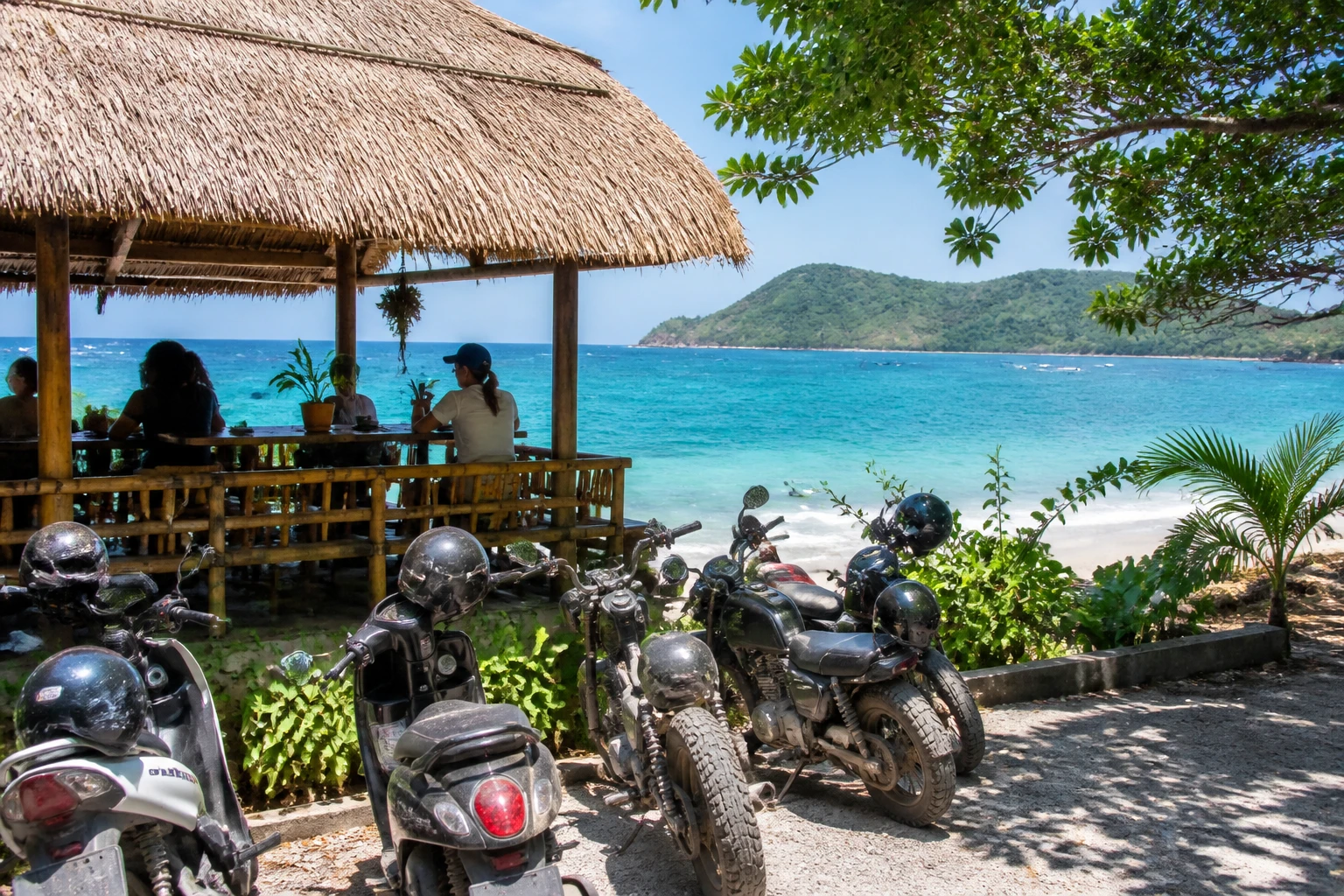
Bali’s Kuta Beach Upgrade Sharpens the Lombok Investor Case
Bali’s latest Kuta Beach renovations underline a mature-market reset and strengthen Lombok’s Bali-overflow investment thesis.
Quick answer: Bali’s renewed push to make Kuta Beach more comfortable and “classy” signals a mature destination defending its tourist share. For Lombok investors, the implication is clear: Bali remains powerful, but its price pressure and congestion keep strengthening the Bali-overflow case for South Lombok.
Bali’s most recognisable beach district is being polished again. The Bali Sun reports that leaders have confirmed further renovations at Kuta Beach, continuing a post-pandemic redevelopment effort aimed at improving the visitor experience and putting the classic coastal destination firmly back on the tourist map.
For investors watching Lombok, this is not a Bali-only story. When Bali’s older tourism centres spend political and commercial energy on renewal, they confirm both the durability of the market and the pressure inside it. The question is not whether Bali still matters. It is what happens to capital, operators and travellers when Bali’s prime zones become expensive, busy and increasingly managed.
The Context
Kuta Beach in Bali is a mature tourism asset with global name recognition. It is not an undiscovered frontier, nor is it pretending to be one. The latest renovation signal is more defensive and strategic: a classic destination is being repositioned for a tourist market that now expects better public space, a cleaner arrival experience and a more orderly beach environment.
The phrase reported in the source, making Kuta Beach more comfortable and “classy”, matters because it captures the direction of travel. Bali is not only trying to increase volume. It is trying to upgrade perception. That is a familiar pattern in mature resort markets: once a place has scale, the next contest is quality.
For South Lombok, the read-through is important. Lombok’s investment case has never depended on Bali weakening. It depends on Bali staying desirable while becoming harder to access at attractive prices. That is the core of the Bali-overflow thesis: tourists, operators and capital keep orbiting Bali, but a growing share begins to look for the next credible beach market with room to grow.
The verified South Lombok figures show the gap clearly. Turnkey investment-grade villas enter at EUR 95,000-350,000, while comparable-spec Bali villas are USD 400,000-800,000. Prime tourist-zone land in South Lombok sits around Rp 150-400 million per are, compared with a Bali equivalent of roughly USD 200-500 per square metre. Those numbers do not make Lombok risk-free. They make it earlier-cycle.
The investor signal is not that Bali is fading. It is that Bali is upgrading because it must defend a premium position. Lombok benefits when that premium pushes buyers to search nearby.
Tourism momentum supports the same reading. South Lombok’s foreign-arrivals trend is +40-50% YoY, helped by the wider tourism recovery and the MotoGP/Mandalika effect. Kuta/Mandalika villa rates are about +38% YoY. Those are substantial movements, but they should be read with discipline: fast growth from an earlier base is not the same as guaranteed capital appreciation.
Bali’s Renovation Cycle and Lombok’s Timing
Bali’s Kuta Beach works are part of a broader post-pandemic redevelopment pattern, according to the source. The timing is notable. Mature destinations typically renovate after one of two moments: either demand has softened enough to force change, or demand has returned strongly enough to justify a higher standard. Bali appears to be dealing with both perceptions at once: preserving its legacy appeal while meeting a more demanding visitor profile.
That matters because Lombok is trying to intercept a different stage of the same traveller journey. It does not need to out-brand Bali today. It needs to absorb the investors and guests who still want Indonesia’s beach culture, but with a lower entry point, less saturation and more visible development runway.
The distinction between Bali’s Kuta Beach and Lombok’s Kuta is crucial. Bali’s Kuta is the legacy icon under renovation. Lombok’s Kuta is the town anchoring one of South Lombok’s strongest property zones, with land priced at Rp 300-400M/are or roughly $18,200-24,200/are. It is the demand and liquidity leader within South Lombok, not a like-for-like replica of Bali.
A disciplined investor should compare markets by stage, not by name:
| Market signal | Bali Kuta Beach | South Lombok relevance | | --- | --- | --- | | Destination stage | Mature, renovating | Earlier-cycle, still expanding | | Investor pressure | Higher entry cost | Lower entry range | | Tourism narrative | Defending classic appeal | Capturing overflow demand | | Yield lens | Established competition | Honest net yield range of 7-12% |
The attraction of Lombok is not simply that it is cheaper. Cheap markets can stay cheap. The stronger argument is that Lombok combines lower entry pricing with visible demand drivers: airport expansion in 2025-26, Mandalika’s profile, the MotoGP effect and improving international awareness. Those factors help explain why investors are looking beyond Bali without abandoning Indonesia.
 Bali’s Kuta Beach Upgrade Sharpens the Lombok Investor Case · Illustration: HubLombok (AI-generated)
Yield Discipline in an Earlier-Cycle Market
The current Bali headline should also make investors more careful about yield language. When a mature destination invests in public-space upgrades, it may help protect rates and occupancy. In Lombok, where the curve is earlier, the opportunity is larger but so is the need for conservative underwriting.
HubLombok’s house view is that investors should anchor on honest net rental yield of 7-12% after management fees and realistic occupancy, with top-performing assets able to reach around 15% net. Developer-quoted gross yield of 12-22% can be useful as a marketing comparison, but it excludes important costs and should not be mistaken for owner return.
Those costs are not cosmetic. Management fees typically run 18-22% of gross rental revenue. OTA and booking commissions add 15-20%. Realistic stabilised occupancy in years 1-3 is 55-70%, while Bali runs 70-85%. That gap is part of the reason Lombok is still an opportunity, but it is also the reason lazy spreadsheets can mislead buyers.
In practical terms, the Bali Kuta Beach story reinforces three underwriting rules for Lombok:
- Treat Lombok as an emerging premium market, not a finished Bali substitute.
- Distinguish gross yield from net yield before comparing projects.
- Price in operator quality, access, design, zoning and management structure.
The zone data sharpens the point. Kuta in Lombok is the most liquid South Lombok zone, with land at Rp 300-400M/are. Selong Belanak sits at Rp 150-250M/are, while Are Guling is Rp 120-180M/are and remains an early-cycle frontier. Mandalika ranges from Rp 100-150M/are, Mawun from Rp 50-80M/are, and Bumbang from Rp 30-50M/are.
That spread is healthy because it gives investors choices. A buyer seeking liquidity may prefer Kuta. A buyer seeking family-tourism growth may study Selong Belanak. A buyer prepared for frontier risk may examine Are Guling, where momentum is about +47% YoY, the highest of the six zones in HubLombok’s current market framework. HubLombok is the editorial arm of Samudra Villas, an active developer in Are Guling, so readers should treat our local knowledge there as direct but disclosed.
What This Means for Investors
The immediate implication of Bali’s Kuta Beach upgrade is that Indonesia’s beach tourism market is still being actively curated, not passively left to demand. That is good for the wider region. Stronger Bali infrastructure and public realm investment help keep international attention focused on Indonesia, while Lombok offers a neighbouring growth market for investors priced out of Bali’s most competitive zones.
But the opportunity needs a selective lens. The right Lombok asset is not just any villa near a beach. It is a property with credible access, documented land status, realistic rental assumptions, a professional operator and a legal structure suitable for foreign ownership. Foreigners cannot hold freehold, or Hak Milik/SHM. The standard routes are leasehold, Hak Pakai for qualifying residents, or a PT PMA structure holding HGB.
Nominee structures, where an Indonesian citizen holds freehold “on your behalf”, are illegal and void in court. That point should be non-negotiable. For buyers who are now looking at Lombok because Bali’s mature zones feel expensive, the temptation to move quickly is understandable. Speed, however, is not a substitute for proper due diligence.
A licensed PPAT notary handles deeds, including the AJB, while land records sit with BPN. Buyer transfer duty, BPHTB, is about 5% of assessed value, with annual PBB land-and-building tax generally modest. TerraNusa Advisory, HubLombok’s independent licensed-notary and legal desk partner for foreign buyers in Lombok, runs due diligence across certificates, ownership history, zoning, encumbrances, PT PMA setup, taxes, deeds and title transfer. That full-chain approach matters because most notaries handle the deed and little else.
For European, Australian and American investors, the daily dispatch is therefore straightforward. Bali’s Kuta Beach renovation is a reminder that mature destinations are expensive for a reason: they have demand, brand and institutional attention. Lombok’s appeal is that it sits close enough to benefit from that gravitational pull, while still offering earlier-cycle pricing and a wider yield spread.
The best investors will not read today’s Bali news as a reason to chase blindly into Lombok. They will read it as confirmation that Indonesia’s premium beach market is moving up the quality curve. In that environment, well-located South Lombok assets, bought with clean legal structure and sober rental assumptions, deserve serious attention.
Stay informed, subscribe to the free Lombok Briefing for market intelligence like this, published twice a month.
Why does Bali’s Kuta Beach renovation matter for Lombok investors?
Bali’s renovation push shows a mature destination defending quality and tourist appeal. For Lombok investors, that strengthens the Bali-overflow thesis: Bali remains desirable, but higher prices and congestion can push capital and travellers towards earlier-cycle South Lombok.
What yield should investors realistically expect in South Lombok?
HubLombok’s honest net yield range is 7-12% after management fees and realistic occupancy, with top-performing assets able to reach around 15% net. Developer-quoted gross yield of 12-22% should not be confused with owner return.
Can foreign buyers own freehold land in Lombok?
No. Foreigners cannot hold Hak Milik or SHM freehold title. Practical routes include leasehold, Hak Pakai for qualifying residents, or a PT PMA company holding HGB. Nominee structures are illegal and void in court.

The Lombok Buyer's Field Guide
Legal structures ranked by risk, the honest ROI math line by line, all six zones ranked, and the 24-point due-diligence checklist. The whole book, free in your inbox.
See what's inside