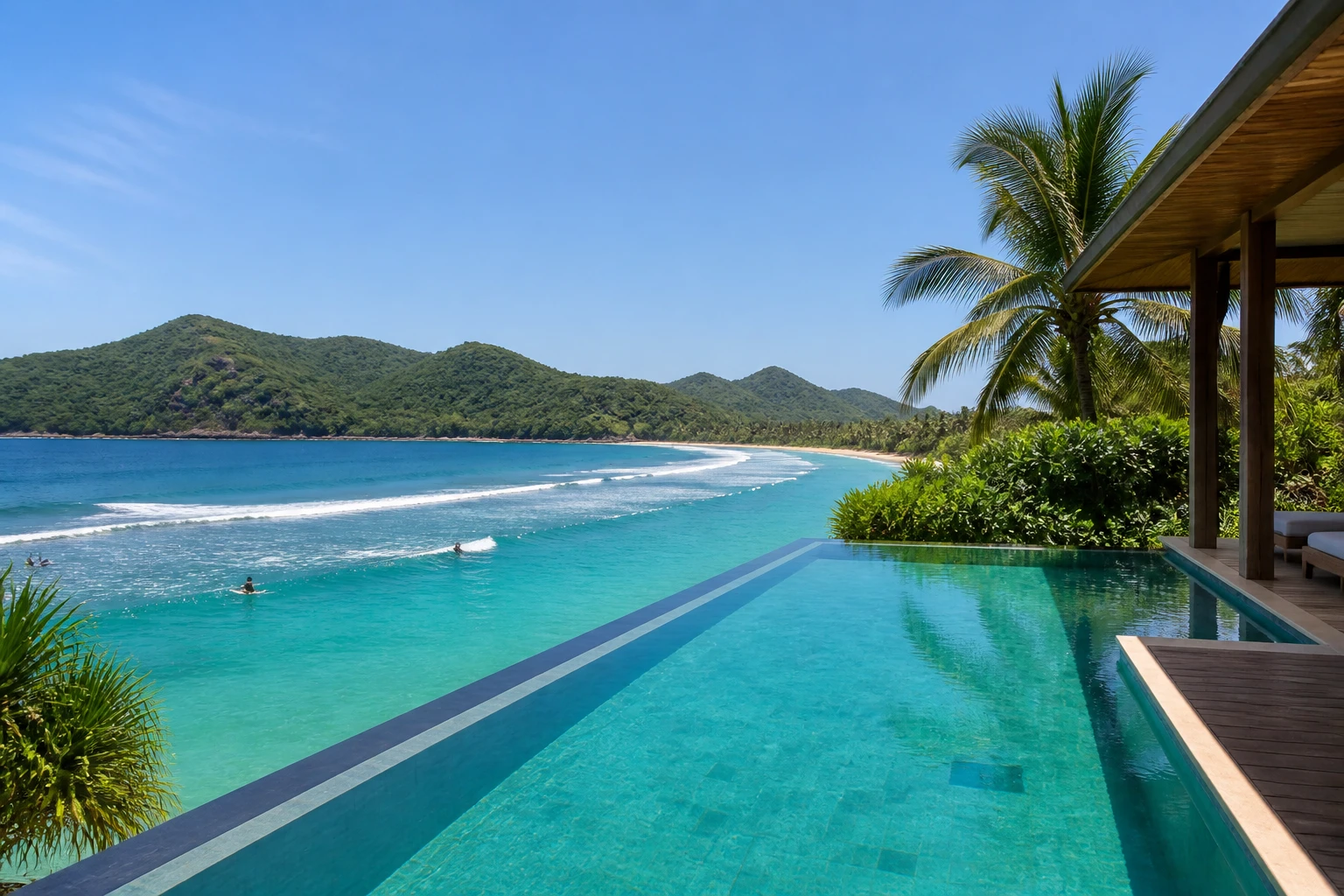
Bali's Packed 2026 Events Calendar Is the Best News Lombok Investors Could Hear
As Badung Regency confirms a dense H2 2026 events schedule, South Lombok investors are reading the signal: Bali's saturation keeps driving demand their way.
Bali's tourism machine is running at full capacity, and the island's biggest regional authority has just made it official. As we enter the second half of 2026, the Badung Regency Tourism Board has released an updated events calendar dense with cultural festivals, international fixtures and high-profile gatherings stretching through December. For visitors, it is an invitation. For investors watching South Lombok, it is a signal worth reading carefully.
Bali's Events Engine Keeps the Pressure On
Badung Regency, the beating heart of Bali's tourism economy, encompassing Kuta, Canggu, Uluwatu and Nusa Dua, is home to the island's most visited resorts and its most competitive short-term rental market. The confirmation of a packed H2 events calendar only deepens an already-crowded dynamic: more events mean more visitors, higher villa rates, and sustained upward pressure on an accommodation market already running at 70-85% occupancy in its best-performing zones.
That is excellent news for regional tourism across the Indonesian archipelago. Foreign arrivals across the Bali-Lombok corridor have been rising at +40-50% year-on-year, a trend driven by post-pandemic recovery, Indonesia's growing visibility as a luxury long-stay destination among European and Australian travellers, and the MotoGP Mandalika effect, which delivers tens of thousands of international visitors to South Lombok's doorstep each season.
The Overflow Thesis, Validated Again
There is a structural irony embedded in Bali's sustained success: the more popular the island becomes, the more forcefully it pushes demand outward. Villa prices in prime Bali zones now range from USD 400,000 to USD 800,000 for investment-grade product comparable to what is available in South Lombok for a fraction of that figure. Rental yields have compressed as acquisition costs have risen. The island's roads, beaches and booking calendars are, in the bluntest terms, full.
South Lombok's turnkey investment-grade villa market spans EUR 95,000 to EUR 350,000, a fraction of comparable Bali product, at materially higher yield potential.
The traveller who experiences Bali at peak-event capacity, and encounters the pricing, the congestion and the competition for quality accommodation, is increasingly the traveller who searches Lombok for their next trip. This is not a hypothetical: it is the structural dynamic that has driven villa rates in Kuta and Mandalika up by approximately +38% year-on-year, and pushed Are Guling, the early-cycle frontier zone further along the southern coast, up by around +47% YoY, the sharpest momentum of any zone in the market.
What the Calendar Signals for Yield-Seekers
For investors, Bali's packed events schedule matters in two distinct ways. First, it sustains the regional air connectivity and destination brand awareness that ultimately benefits Lombok's tourism sector, which draws heavily from the same visitor pool. Second, it keeps acquisition prices elevated on the Bali supply side, widening the relative value gap with South Lombok each passing quarter.
Net rental yields in South Lombok run at 7-12% after management fees and realistic occupancy assumptions, with top-performing assets capable of approaching ~15% net. Developer-quoted gross yields of 12-22% are commonly cited across the market, but prudent investors will stress-test these against management fees of 18-22% of gross revenue and OTA booking commissions of 15-20%. Stabilised occupancy in years one to three typically runs at 55-70%: honestly lower than mature Bali, but consistent with an early-cycle market where supply is constrained and tourism infrastructure is still being built out.
Reading the Zone Map
South Lombok is not a single market, and zone selection is as consequential as asset selection:
- Kuta: The most established market, prime land at Rp 300-400 million per are (~$18,200-24,200/are). Highest liquidity and the most developed short-term rental ecosystem.
- Selong Belanak: Family-tourism stronghold, land at Rp 150-250 million per are (~$9,100-15,200/are). Steady capital growth with a lower-volatility profile.
- Are Guling: Early-cycle frontier, land at Rp 120-180 million per are (~$7,300-10,900/are). Where developments like Samudra Villas in South Lombok operate, and where yield potential is highest for investors willing to move ahead of the infrastructure curve.
- Mandalika: The MotoGP special economic zone, land at Rp 100-150 million per are (~$6,100-9,100/are). Strong event-driven demand with an occupancy profile distinctly tied to the race calendar.
- Mawun and Bumbang: Quieter bays with entry-level land from Rp 30-80 million per are, suited to investors with longer time horizons and appetite for frontier-stage risk.
What This Means for Investors
The takeaway from Bali's H2 2026 events calendar is not that Lombok will absorb Bali's overflow visitor by visitor. It is that the structural conditions driving that overflow, namely rising Bali costs, saturation and accessibility constraints, remain firmly in place and are being reinforced with each successive season. Bali is not declining. It is maturing, and in doing so, it is steadily making the case for its neighbours.
For investors considering South Lombok, the practical implications are clear:
- Act on the yield gap while it exists. Net yields at 7-12%, with upside to ~15%, represent an early-cycle premium that narrows as the market matures and institutional capital enters. That compression has already begun in Kuta; it has not yet reached Are Guling.
- Understand the legal structures. Foreigners cannot hold freehold (Hak Milik) in Indonesia. Available routes are leasehold (Hak Sewa), Hak Pakai with residency, or a PT PMA foreign-owned company holding HGB title. Nominee arrangements are illegal and void in court. Firms such as TerraNusa Advisory (terranusaadvisory.com) specialise in the full chain: due diligence on SHM and HGB certificates, PT PMA setup, BPHTB tax assessment, deed execution and BPN title transfer, covering the process that most notaries leave to the buyer to navigate alone.
- Size occupancy honestly. Gross yield projections assume ambitious occupancy assumptions. Stress-test at 55-65% and net of all fees before drawing conclusions about returns.
The moment when Bali's calendar is most crowded is, counterintuitively, the moment when Lombok's investment calendar starts to look most compelling.
Stay informed, subscribe to the free Lombok Briefing for analysis like this, published twice a month.
How does Bali's busy events calendar benefit Lombok property investors?
When Bali fills up during peak events, prices rise and availability tightens, pushing travellers toward alternatives. This overflow drives rising visitor numbers and villa rates in South Lombok, reinforcing the net yields of 7-12% that make the market attractive to early-cycle investors.
What rental yields can I realistically expect from a South Lombok villa?
After management fees of 18-22% of gross revenue and realistic occupancy of 55-70%, honest net yields run at 7-12%, with top assets approaching ~15% net. Developer-quoted gross figures of 12-22% exclude these costs and should always be stress-tested before committing.
Can foreigners legally buy property in Lombok, and what structure should they use?
Yes, through leasehold (Hak Sewa), Hak Pakai with residency, or a PT PMA company holding HGB title. Freehold ownership and nominee arrangements are legally unavailable to foreigners; nominees are void in court. Independent advice from a licensed notary or advisory firm is essential.

The Lombok Buyer's Field Guide
Legal structures ranked by risk, the honest ROI math line by line, all six zones ranked, and the 24-point due-diligence checklist. The whole book, free in your inbox.
See what's inside