Bali Makes Uluwatu Traffic Trial Permanent: Lombok Investors Should Watch
Bali’s move to make Uluwatu’s traffic system permanent sharpens the Bali-overflow case for South Lombok tourism assets.
Quick answer: Bali’s decision to make Uluwatu’s new traffic-flow system permanent confirms that congestion is no longer a passing irritation in prime tourist districts. For Lombok investors, the signal is clear: demand is still strong, but access, mobility and lower-friction destinations are becoming decisive parts of the island-investment thesis.
The Bali Sun reported today that the trial traffic-flow system in Uluwatu will become permanent across one of Bukit’s leading tourism resort areas. That is not merely a local transport story; it is a live reading of what happens when a luxury destination matures faster than its roads.
For South Lombok, the implication is immediate. Bali remains the regional benchmark, but every permanent congestion response in a prime Bali zone strengthens the case for earlier-cycle destinations where the visitor experience is still defined by space, coastline and relative ease of movement.
The Context
Uluwatu sits within the Bukit peninsula, one of Bali’s most recognisable tourist zones and a magnet for resort, surf and villa demand. The Bali Sun’s report that a new traffic system, recently on trial, will now be made permanent is therefore a useful market signal: local authorities are treating congestion as a structural operating issue, not a temporary seasonal inconvenience.
That matters because investors buy more than land, walls and rental projections. They buy into a destination’s carrying capacity. When a resort district needs permanent traffic management, the question for capital becomes less emotional and more practical: can guests arrive comfortably, move easily, dine out without friction and still feel that the premium paid for a destination is justified?
A permanent traffic system in a prime Bali tourist hotspot is a sign of success under strain: demand remains powerful, but the operating environment is getting heavier.
This is where Lombok enters the conversation. The island’s investment thesis has never required Bali to weaken. In fact, it depends on Bali remaining popular enough to demonstrate regional demand, while becoming expensive and congested enough to push some travellers, operators and investors to the next credible destination.
HubLombok’s baseline market view remains disciplined. South Lombok is not “cheap Bali”, and it should not be sold that way. It is an earlier-cycle market with a different risk profile, a smaller installed tourism base and infrastructure still catching up with investor expectations. But the direction of travel is clear: tourism has been recovering strongly, helped by the Mandalika effect, with foreign-arrivals momentum running at +40-50% year on year.
The contrast with Bali is increasingly sharp. In South Lombok, investment-grade turnkey villa entry pricing is still around EUR 95,000-350,000, while a comparable specification in Bali sits around USD 400,000-800,000. Land in prime South Lombok tourism zones remains quoted locally per are, not by abstract metropolitan metrics. Across the market, the spread is about Rp 30-400 million per are, with prime Kuta land at Rp 300-400 million per are.
Why Bali’s Traffic Decision Matters Beyond Bali
The immediate story is practical: Uluwatu has tested a new traffic-flow arrangement, and that system is now being made permanent. The investment story is broader. Permanent measures change the way a destination is perceived. They tell operators, guests and buyers that traffic management is now part of the destination’s operating model.
In mature resort markets, that is not unusual. High-demand places often require managed access, traffic routing, parking discipline and seasonal restrictions. The issue is not whether such systems are good or bad. It is what they reveal about market maturity.
For villa investors, congestion has three direct implications:
- It can reduce the premium guest experience even when the asset itself is excellent.
- It can shift demand towards neighbourhoods or islands where movement feels simpler.
- It can increase the relative appeal of newer destinations with credible airport, road and hospitality momentum.
South Lombok is already competing on that third point. The airport expansion period in 2025-26, the Mandalika tourism corridor and the ongoing Bali-overflow effect give the island a clearer role in regional travel planning. Visitors who know Bali, but are beginning to resist its price and congestion, are exactly the travellers most likely to test Lombok as a second Indonesian base.
The figures support a measured, not euphoric, reading. Honest net rental yields in South Lombok sit around 7-12% after management fees and realistic occupancy assumptions. Top-performing assets can reach about 15% net, but that is not the base case. Developer-quoted gross yields of 12-22% should be read carefully because they exclude operating costs such as management and booking commissions.
| Investor lens | Bali pressure point | South Lombok relevance | |---|---|---| | Access | Permanent traffic management in Uluwatu | Lower-friction positioning becomes more valuable | | Entry price | Comparable villas at USD 400,000-800,000 | South Lombok entry around EUR 95,000-350,000 | | Rental underwriting | Mature demand, heavier operating environment | Net yields around 7-12% with realistic assumptions | | Guest experience | Congestion affects perceived luxury | Space and ease can become part of the premium |
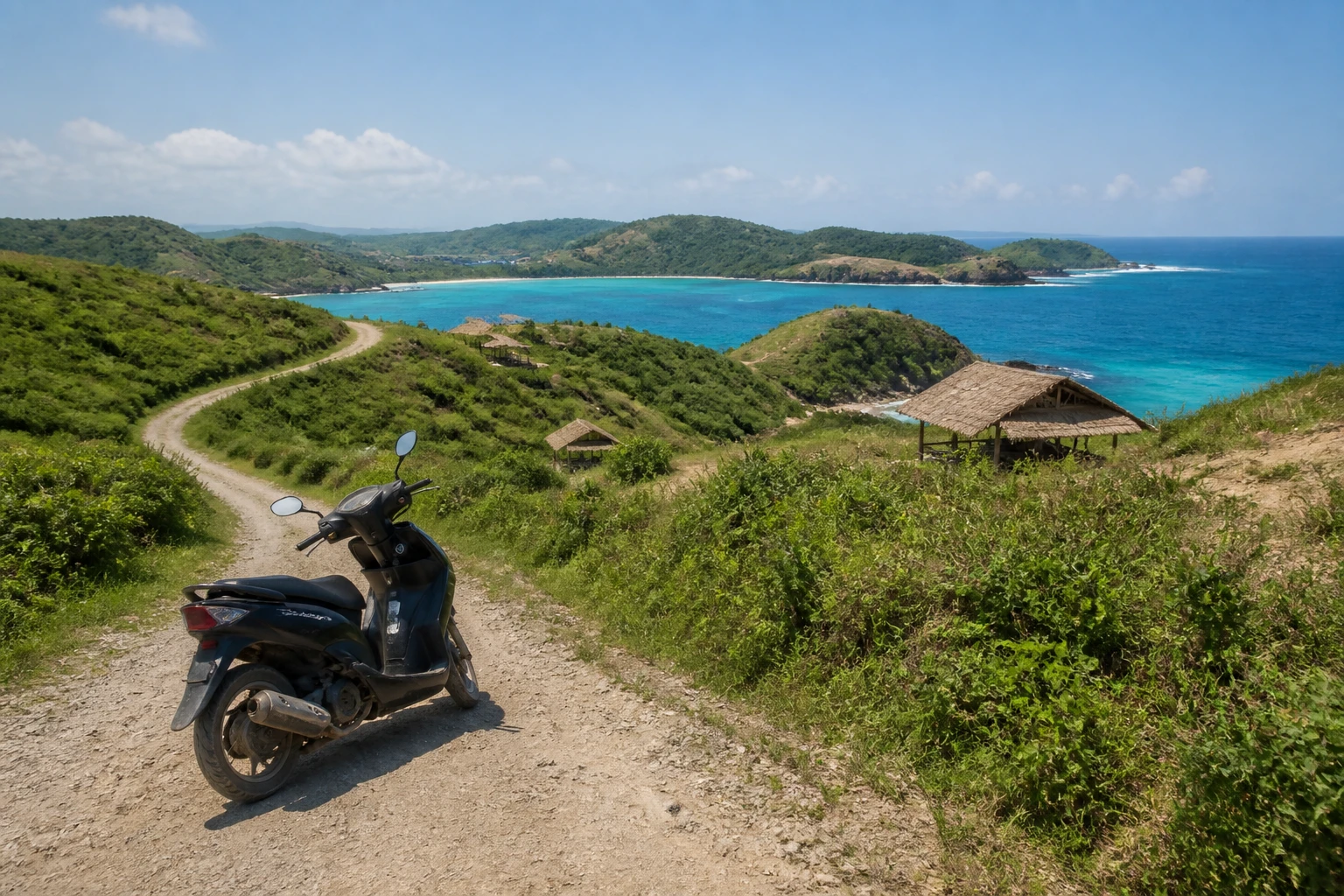
 Bali Makes Uluwatu Traffic Trial Permanent · Illustration: HubLombok (AI-generated)
The Lombok Read-Through
The mistake would be to treat Bali’s traffic story as a reason to dismiss Bali. It is not. Bali remains the anchor destination for international awareness, hospitality depth and investor familiarity. Its very pressure points are evidence of demand.
The more useful interpretation is relative. When a destination such as Uluwatu needs a permanent traffic system, investors should revisit how they price convenience, scarcity and guest experience. A villa that photographs beautifully but sits inside a congested travel pattern may face a different competitive reality from one in a less saturated coastal market.
South Lombok’s appeal is precisely that it offers investors exposure to Indonesia’s tourism growth without requiring them to buy into the most crowded Bali districts at mature-market pricing. Yet that advantage only works when underwriting remains sober. Stabilised occupancy in South Lombok over the first 1-3 years should be modelled at 55-70%, compared with Bali’s 70-85%. That difference is not a flaw; it is the cost of entering earlier.
The reward, if the market continues to mature, is that land and villa pricing may still reflect an earlier phase of the cycle. Kuta, the demand and liquidity leader in South Lombok, sits at Rp 300-400 million per are, or approximately USD 18,200-24,200 per are. Selong Belanak, with its family-tourism and capital-growth profile, sits at Rp 150-250 million per are. Mandalika, the special economic zone around the MotoGP circuit, sits at Rp 100-150 million per are.
Those ranges are not footnotes. They are the basis for disciplined capital allocation. Investors comparing Bali and Lombok should resist lazy square-metre comparisons and use local convention: land is priced per are, where 1 are = 100 m². That discipline matters because the difference between an attractive frontier entry and a misunderstood land deal is often found in the units.
The rental story is similarly nuanced. South Lombok villa rates in the Kuta/Mandalika corridor have been about +38% year on year, while the broader tourism recovery has been supported by the MotoGP/Mandalika effect. But strong rate momentum does not remove the need for conservative modelling. Management fees typically absorb 18-22% of gross rental revenue, while OTA and booking commissions can take 15-20%.
The live lesson from Uluwatu is therefore not “buy Lombok because Bali has traffic”. It is more specific: when congestion becomes permanent enough to require permanent systems, investors should place a higher value on destinations where access, guest flow and day-to-day comfort remain part of the product.
What This Means for Investors
For European, Australian and American buyers, the Uluwatu decision should prompt a portfolio question rather than a panic response. Bali remains liquid, visible and globally understood. Lombok is less mature, but that is exactly why the risk-reward discussion is alive.
The practical investor response is to refine screening criteria:
- Prioritise locations with clear road access, not just attractive renderings or beach proximity.
- Underwrite net yield, not headline gross yield.
- Treat occupancy assumptions above 55-70% in early South Lombok assets as needing strong evidence.
- Compare land in Rp per are, not distorted square-metre conversions.
- Favour assets positioned for the Bali-overflow traveller: design-led, operationally simple and close enough to recognised tourism corridors.
Legal structure also matters. Foreigners cannot hold Indonesian freehold land directly. The legitimate routes are leasehold, Hak Pakai where residency conditions apply, or a PT PMA structure holding HGB. Nominee arrangements, where an Indonesian citizen holds freehold “on behalf of” a foreign buyer, are illegal and void in court.
That legal reality should sit beside the market opportunity. A strong tourism thesis does not excuse weak title, unclear zoning or casual documentation. Buyer transfer duty, BPHTB, is about 5% of assessed value, and annual land-and-building tax, PBB, is modest. Deeds should be executed through a licensed PPAT notary, with the land agency process handled through BPN.
The premium opportunity in South Lombok is not speculative chaos. It is disciplined entry into a market where tourism demand is rising, Bali’s cost-and-congestion pressure is visible, and the region’s infrastructure story is still developing. The Uluwatu traffic decision makes that thesis more urgent because it shows the Bali-overflow dynamic in real time.
For investors already watching Lombok, today’s dispatch is a reminder to move from general interest to specific due diligence. The winners will not be those who buy simply because Lombok is earlier or cheaper. They will be those who identify the right zone, confirm the legal route, model costs honestly and understand that guest experience begins long before a traveller reaches the villa door.
Stay informed, subscribe to the free Lombok Briefing for market intelligence like this, published twice a month.
Why does Uluwatu’s traffic system matter for Lombok investors?
A permanent traffic system in Uluwatu signals that congestion is now a structural issue in a prime Bali tourism zone. For Lombok investors, it strengthens the Bali-overflow thesis: travellers and capital may increasingly value destinations with lower friction, lower entry pricing and earlier-cycle growth.
Should investors assume Lombok will match Bali occupancy?
No. South Lombok should be underwritten as an earlier-cycle market. Realistic stabilised occupancy in years 1-3 is **55-70%**, while Bali runs **70-85%**. That gap is central to the risk-reward profile and should be reflected in yield projections.
What yield assumptions are realistic for South Lombok villas?
A disciplined investor should focus on net yield, not developer gross yield. South Lombok’s honest net rental yield range is **7-12%** after management fees and realistic occupancy, while top-performing assets can reach around **15% net** under stronger operating conditions.

The Lombok Buyer's Field Guide
Legal structures ranked by risk, the honest ROI math line by line, all six zones ranked, and the 24-point due-diligence checklist. The whole book, free in your inbox.
See what's inside