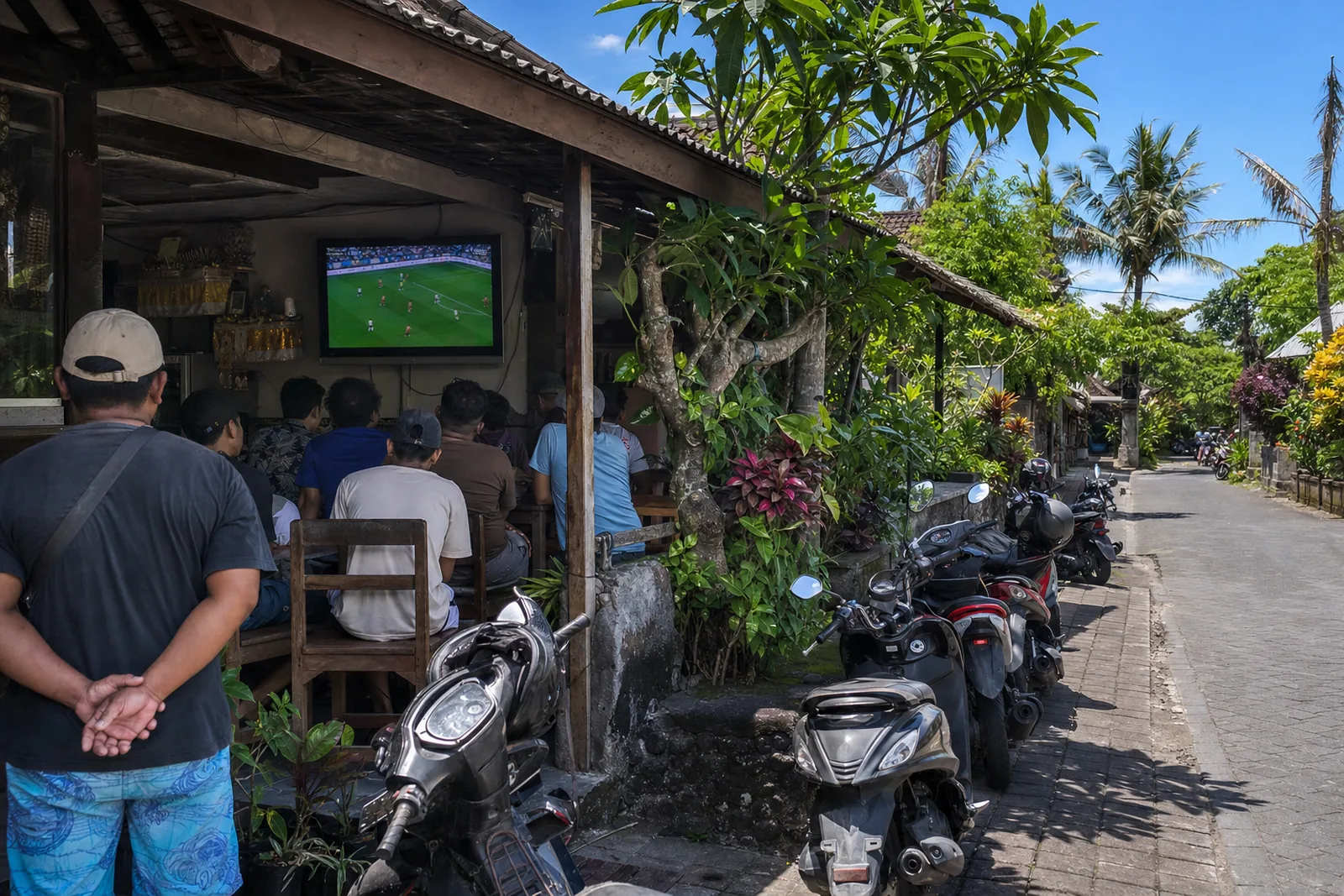
World Cup Fever Reaches Bali’s Tourist Hubs as Fans Follow the Semi-Finals
Bali’s busiest tourist areas are embracing World Cup semi-final week, with the island’s airport also part of Indonesia’s fan-focused response.
Football’s World Cup semi-finals are bringing a recognisable surge of attention to Bali’s leading visitor destinations. Bali Sun reports that Indonesia is making efforts to ensure supporters can follow the action, including at the country’s busiest airports.
A global sporting moment arrives in Bali
The World Cup is one of the few sporting events capable of creating a shared atmosphere across borders, time zones and travel itineraries. According to Bali Sun, that atmosphere can now be felt across Bali’s principal tourism areas as the semi-finals take place this week.
The report does not quantify visitor numbers, spending or the scale of individual broadcasts. Nor does it identify specific venues. Its central point is more modest, but still revealing: football has become part of the island’s visitor experience during a major international tournament.
For travellers, this is a reminder that a holiday destination does not operate separately from the cultural calendar of its guests. Big global events can shape what visitors discuss, watch and seek out while away from home. In Bali, where international tourism is central to the visitor economy, a World Cup week naturally gives hotels, hospitality businesses and transport gateways an opportunity to respond to demand for connection as well as accommodation.
Bali Sun says Indonesia is seeking to ensure fans do not miss World Cup action, even at its busiest airports.
Airports enter the fan experience
The most notable detail in the source is the inclusion of airports. Bali Sun reports that Bali Airport has joined Indonesia’s wider effort to accommodate World Cup interest. That matters because an airport is both an arrival point and a final point of contact: it frames the visitor experience before a guest reaches a resort and after they leave it.
The source does not provide operational details about Bali Airport’s arrangements, so it would be premature to draw conclusions about their duration or commercial impact. Still, the report illustrates how globally recognised events can extend beyond traditional viewing settings. A traveller moving through an airport during a high-profile match week may encounter the same sporting conversation that is unfolding in hotels, restaurants and other tourist-facing spaces.
For an island built around international arrivals, that continuity is valuable in qualitative terms. It signals an effort to meet visitors where they are, including in transit, without requiring them to disengage entirely from an event followed around the world.
Tourism is also an atmosphere business
Travel demand is often discussed through flights, rooms and property. Yet destinations are also judged by less measurable features: ease, energy, relevance and the sense that visitors can participate in a wider moment rather than merely observe from the sidelines.
World Cup fever in Bali should therefore be understood as a tourism story rather than a claim about football’s direct economic effect. Bali Sun’s report describes a visible cultural response to the semi-finals, not a quantified market shift. That distinction is important for investors and operators alike.
A global tournament does not by itself establish a long-term investment thesis. But it can show how a destination’s hospitality ecosystem reacts when international visitors have a timely, shared interest. In a competitive leisure market, responsiveness is part of the product.
The broader Indonesian tourism backdrop also includes a verified 40–50% year-on-year foreign-arrivals trend, associated with tourism recovery and the MotoGP effect. That is a separate market indicator, not evidence that World Cup activity is driving arrivals. It does, however, provide context for why visitor-facing businesses remain attentive to moments that can enrich the travel experience.
What this means for investors
Investors should treat the story as an indicator of destination engagement, not as a standalone forecast for Bali or Lombok tourism assets.
- Hospitality demand is experiential. The report suggests that visitors value access to major global moments while travelling; this can influence how accommodation and hospitality operators think about guest programming.
- Operational execution matters. Bali Sun’s reference to airports highlights that the visitor journey includes transport infrastructure as well as hotels and leisure venues.
- Avoid over-reading a headline. The source provides no revenue, occupancy, booking or visitor-spend figures related to the World Cup. Any investment conclusion should therefore rest on underlying asset quality, legal structure and realistic operating assumptions.
- Lombok remains a distinct market. South Lombok’s tourism recovery should not be conflated with Bali’s World Cup response. Its verified foreign-arrivals trend is 40–50% year on year, while realistic stabilised villa occupancy in the first three years is 55–70% and honest net rental yields are 7–12% after management fees and realistic occupancy.
For those assessing South Lombok property, the discipline is straightforward: distinguish a lively tourism narrative from an investable underwriting case. Land, title, development quality, management arrangements and costs remain more consequential than a single sporting week. Developments like Samudra Villas in Are Guling, South Lombok, sit within that wider early-cycle market context; HubLombok is the editorial arm of Samudra Villas.
The immediate lesson is simple: Bali’s tourist economy is participating in a global sporting moment, while investors should keep their attention on the fundamentals that outlast the final whistle.
Stay informed, subscribe to the free Lombok Briefing for analysis like this, published twice a month.
Does the report show that the World Cup is increasing Bali tourism demand?
No. Bali Sun reports World Cup fever in Bali’s tourist destinations and efforts to keep fans connected at busy airports, but it provides no visitor, occupancy, booking, revenue or spending figures. The story is therefore an indicator of visitor experience, not proof of increased tourism demand.
What does this World Cup story mean for Lombok property investors?
The report is about Bali, not a direct Lombok property catalyst. Investors should focus on South Lombok fundamentals: foreign arrivals are trending 40–50% year on year, realistic stabilised occupancy is 55–70%, and honest net rental yields are 7–12% after management fees and realistic occupancy.
Why is Bali Airport relevant to this tourism story?
Bali Sun says Indonesia is seeking to ensure World Cup fans do not miss the action even at its busiest airports, including Bali Airport. This shows that visitor experience can extend beyond hotels and venues to the arrival and departure journey.

The Lombok Buyer's Field Guide
Legal structures ranked by risk, the honest ROI math line by line, all six zones ranked, and the 24-point due-diligence checklist. The whole book, free in your inbox.
See what's inside