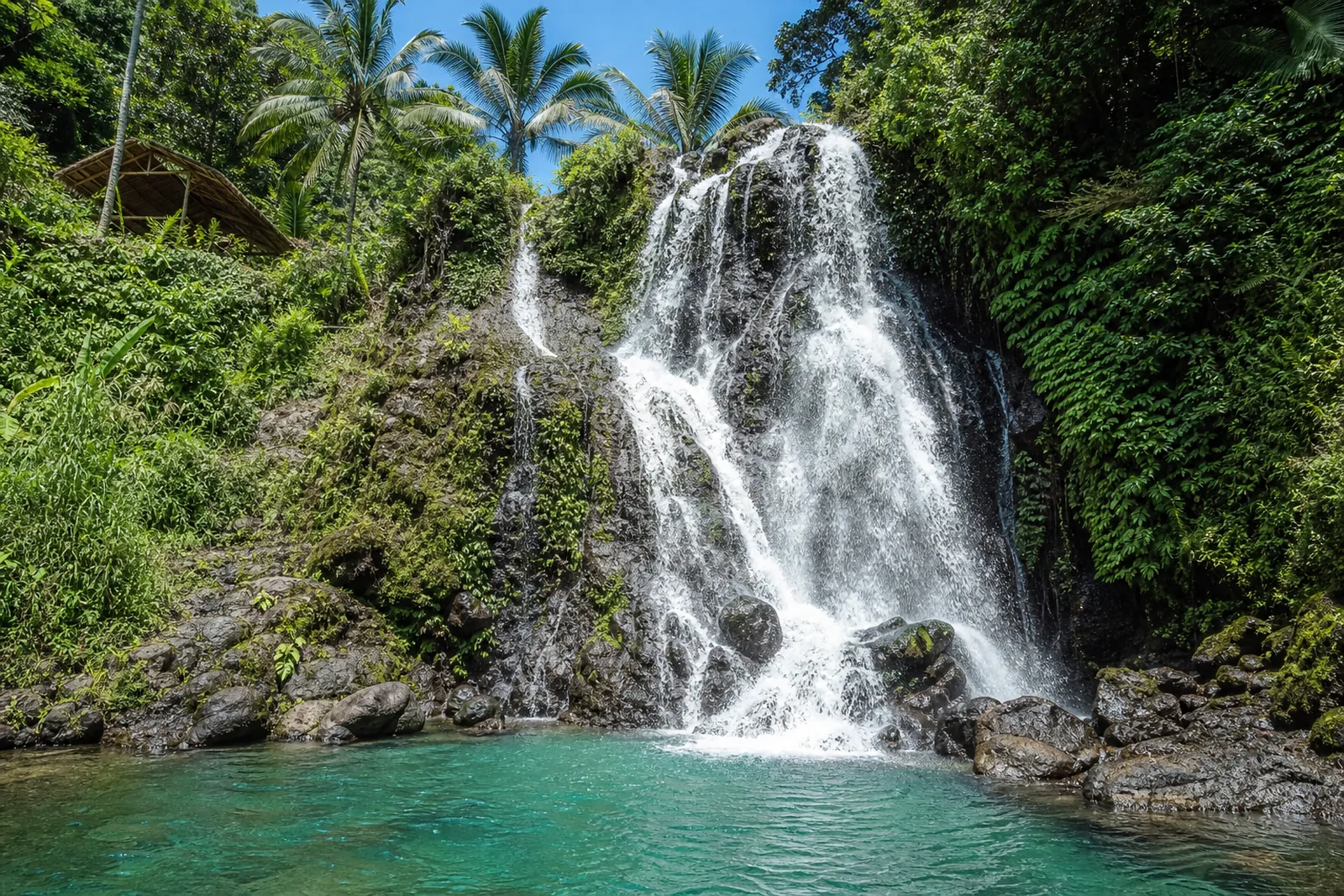
West Lombok’s Waterfalls Add a Softer Edge to Lombok’s Tourism Appeal
A provincial tourism campaign highlights three West Lombok waterfalls, reinforcing the island’s appeal beyond beach-led travel.
West Lombok’s waterfalls are being positioned by the provincial tourism office as a reason to look beyond Lombok’s better-known coastal draws. The message is simple: tropical forest, clear natural pools and quieter scenery can broaden an itinerary—and, over time, the tourism proposition behind it.
A nature-led invitation
Dinas Pariwisata NTB, the West Nusa Tenggara tourism office, has encouraged travellers to add three recommended waterfalls in West Lombok to their travel plans. Its campaign highlights lush tropical forest, flowing water, natural pools and a peaceful setting.
The source does not identify the individual waterfalls or provide practical details such as access arrangements, opening times, admission charges or visitor facilities. That restraint matters. A tourism post is an invitation to explore, rather than a substitute for current on-the-ground planning.
The official message presents West Lombok’s waterfalls as places for nature, refreshment and quieter sightseeing.
For travellers, the appeal is clear: a waterfall visit can create contrast within a Lombok stay otherwise centred on beaches, dining and accommodation. For the destination, it points to a broader narrative—one in which natural landscapes are not merely scenic backdrops, but part of the visitor experience itself.
Why diversity matters in a tourism market
Lombok’s tourism recovery has supported a reported 40–50% year-on-year increase in foreign arrivals, according to HubLombok’s verified market facts. That is a useful indicator of renewed international attention, although it does not establish how many visitors choose West Lombok’s waterfall routes specifically.
Still, destination diversity matters. Beach and resort demand can attract first-time visitors, while forest and waterfall experiences offer another reason to extend a trip, return at a different time, or recommend the island to travellers with different priorities. The official campaign speaks directly to that wider appeal, presenting the landscape as restorative rather than purely recreational.
This is particularly relevant for investors assessing tourism-dependent assets. A destination with several distinct visitor experiences is less dependent on one narrow travel motif. That does not guarantee occupancy, rental income or capital appreciation; those outcomes remain dependent on location, asset quality, pricing, management and market conditions. It does, however, strengthen the case for examining the whole visitor ecosystem rather than judging Lombok solely through its headline coastal destinations.
The distinction between promotion and proof
There is an important difference between a compelling tourism image and an investment conclusion. The tourism office’s post is first-party destination promotion. It supports the factual claim that the authority is encouraging visitors to consider three West Lombok waterfalls; it should not be read as proof of visitor volumes, spending levels, infrastructure quality or commercial performance around those locations.
Investors and operators should therefore separate three questions:
- What is being promoted? West Lombok’s waterfall landscapes, forests and natural pools.
- What is independently measurable? Visitor demand, accessibility, operating costs, local rules and asset-level performance.
- What is investable? A particular property or business opportunity with verified rights, market fit and credible management.
That discipline is especially valuable in an emerging destination. Promotional momentum can be useful, but it is not the same thing as due diligence. The most durable tourism investments are built on operational realities, not just attractive imagery.
A wider Lombok itinerary
The waterfall campaign also underlines a more nuanced way to think about Lombok. The island can be experienced through different settings: coastal areas, tourism centres and inland natural landscapes. West Lombok’s contribution, as framed by the official post, is a calmer and greener counterpoint.
For hospitality businesses, this may matter as much as the attraction itself. Guests increasingly value an itinerary with variety, and accommodation providers can benefit when a destination offers more than one kind of day out. Yet operators should avoid overstating the connection. The source does not claim that the waterfalls will drive bookings, lengthen stays or raise room rates.
A sensible response is practical: ensure that guest information is current, distinguish confirmed guidance from suggestions, and encourage visitors to check local conditions before travelling. Natural attractions are shaped by weather, access and site management; responsible travel advice protects both guests and the places they visit.
What this means for investors
For investors considering Lombok’s tourism economy, the significance is strategic rather than numerical. The official spotlight on West Lombok’s waterfalls shows continued destination marketing beyond a single beach-or-resort narrative.
The key takeaways are:
- Tourism demand is supported by a broader set of experiences, including nature-led excursions.
- The verified foreign-arrivals trend of 40–50% year on year provides context for the island’s recovery, but not a waterfall-specific demand measure.
- Promotional content should prompt further research, not replace it.
- Hospitality underwriting should remain conservative: test location, seasonality, accessibility, management costs and realistic occupancy independently.
For those comparing Lombok with more mature regional markets, the attraction lies partly in this breadth of experience. But breadth alone is not an investment thesis. The better question is whether a specific asset can serve identifiable guests, under defensible legal and operating arrangements, while offering a realistic return after costs.
West Lombok’s waterfalls may not come with the commercial shorthand of a resort district, but that is precisely why the tourism office’s message is worth noting. It presents Lombok as a destination with room for discovery—an asset that, if supported by responsible planning and credible operations, can deepen its long-term appeal.
Stay informed — subscribe to our free weekly Lombok market intelligence for analysis like this delivered every Sunday.
Which waterfalls did the West Lombok tourism office recommend?
The supplied official tourism post says that it recommends three waterfalls in West Lombok, but it does not name them. Travellers should consult current official local guidance before making plans, particularly for access information and site conditions.
Does the waterfall campaign prove higher tourism income in West Lombok?
No. The campaign shows that Dinas Pariwisata NTB is promoting West Lombok’s waterfall landscapes, forests and natural pools. It does not provide visitor numbers, spending data, room-rate evidence or any measure of tourism income linked to those sites.
What should tourism-property investors take from this story?
The story supports the view that Lombok’s visitor offer extends beyond coastal experiences. Investors should still assess a specific asset independently, including location, legal structure, accessibility, management costs and realistic occupancy rather than relying on destination promotion alone.
The Lombok Buyer's Field Guide
Legal structures ranked by risk, the honest ROI math line by line, all six zones ranked, and the 24-point due-diligence checklist. The whole book — free in your inbox.
See what's inside