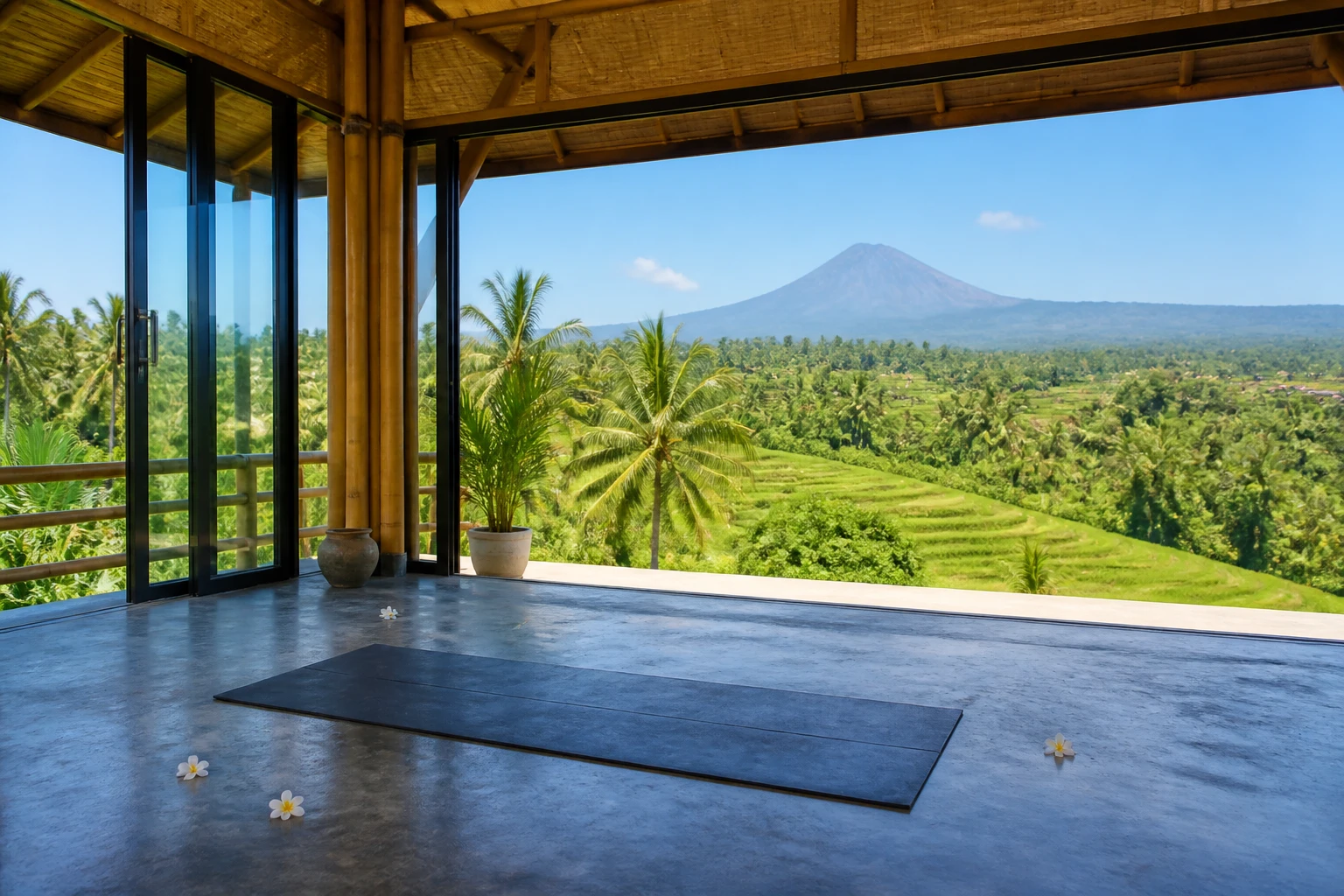
Wellness and Retreat Tourism: A Demand Driver for Lombok Villas
Wellness and retreat tourism, covering yoga, surf and holistic health, is reshaping demand for Lombok villas. Retreat operators prize quiet natural settings, open-plan pavilion layouts and fast internet. Villas built to those specifications command premium daily rates and higher occupancy, supportin
Quick answer: Wellness and retreat tourism, covering yoga, surf and holistic health, is reshaping demand for Lombok villas. Retreat operators prize quiet natural settings, open-plan pavilion layouts and fast internet. Villas built to those specifications command premium daily rates and higher occupancy, supporting honest net yields of 7-12% across South Lombok.
Why South Lombok Is Gaining Ground in Wellness Tourism
Bali established the template for wellness travel in Southeast Asia, but rising land costs, congestion and an increasingly commercialised atmosphere are pushing operators and guests toward quieter alternatives. South Lombok offers warm water, rice-field scenery and the unhurried pace that wellness programmes require, at a fraction of Bali's price point.
Foreign arrivals to Lombok have grown at roughly 40-50% year-on-year, driven by tourism recovery and the profile lift from the Mandalika MotoGP circuit. A significant share of that growth sits in the wellness segment: yoga and meditation retreats, surf camps, breathwork and somatic programmes, and longer slow-travel stays of a week or more. For the full arrivals picture, see Lombok tourism growth 2026.
For retreat operators, location economics matter directly. A five-day yoga programme at a competitive price point only works if the accommodation cost leaves enough margin. Lombok's lower land and construction costs make that calculus viable in a way that is increasingly difficult in Canggu or Seminyak.
What Retreat Operators Look for in a Property
Retreat operators share a consistent checklist. Understanding it helps investors buy or build the right asset from the outset.
Space and flow. Retreat bookings typically require a minimum of four to six bedrooms plus a dedicated shala or open-sided pavilion for morning practice. A covered outdoor yoga platform of roughly 60-80 m² is close to the minimum for a group of twelve. Properties without this space are rarely shortlisted, regardless of bedroom quality.
Natural setting and quiet. Wellness guests pay a premium for birdsong over road noise. Hillside plots with rice-field or sea views command the strongest rates. Proximity to a reliable surf break, within a short drive of spots such as Selong Belanak or Are Guling, is a meaningful advantage for surf-and-yoga hybrid programmes.
Reliable connectivity. Counter-intuitively, wellness retreats need fast internet. Operators run bookings, coaching calls and social content from the property. A poor connection is a consistent dealbreaker.
Kitchen capacity. Most wellness programmes include plant-based meals. A villa with a professional-grade kitchen, or clear space to install one, earns meaningfully higher rates than a property requiring off-site catering.
Permits in order. Experienced retreat operators ask for a valid building permit (IMB) and, ideally, a villa business licence before signing any rental agreement. Investors who cut corners on permits find themselves locked out of the most lucrative booking segment.
How Wellness Use Shapes Villa Design
The influence flows both ways. Developers who design for the retreat market from the outset, rather than retrofitting a residential villa, achieve stronger booking conversions. The practical differences are not dramatic but they compound.
Open-plan ground floors with polished cement or natural stone, large sliding doors and a covered terrace that doubles as a shala outperform closed, air-conditioned interiors in this segment. Bedrooms with ensuite bathrooms and natural cross-ventilation rate higher than identical rooms that rely entirely on mechanical cooling. Outdoor bathrooms or garden showers, when executed well, are a genuine selling point for wellness guests rather than a quirky compromise.
As HubLombok is the editorial arm of Samudra Villas, an active developer in Are Guling, the logic is straightforward: buyers who specify a shala-ready layout at the design stage, rather than treating it as an optional upgrade, avoid the retrofit costs and delays that often slow occupancy ramp-up in years one and two.
Yield and Occupancy: What the Numbers Show
The wellness segment is not a shortcut to instant returns, but it does support the upper end of honest yield ranges. Net rental yield across South Lombok runs 7-12% for well-run assets; top-performing villas, typically those with premium design and a managed retreat programme, can approach 15% net. Developer-quoted gross yields of 12-22% exclude management fees (18-22% of gross revenue) and OTA commissions (15-20%), so always model the net figure. A full yield breakdown is at /guides/lombok-roi-math.
Realistic stabilised occupancy in years one to three is 55-70% for most villas. Retreat bookings change the pattern: an operator taking the property for five or seven days at a time fills substantial blocks in a single transaction, reducing the volatility of nightly bookings. Once a villa builds a reputation on the retreat circuit, effective occupancy can lift above 65-70% from a conservative base.
Villa rates in Kuta and Mandalika have risen around 38% year-on-year. Are Guling, the early-cycle frontier zone, shows momentum of roughly 47% YoY, driven partly by wellness operators seeking quieter settings at lower land costs. Current land price ranges by zone are at /market-data.
Practical Guidance for Investors
If you are buying or building with the wellness segment in mind, keep these points front of mind.
Prioritise a plot with natural quiet and a view over a plot that is marginally cheaper but beside a main road. Wellness guests pay more for the former and review it better, which compounds into higher future booking rates.
Budget for a yoga shala at the design stage. Adding one to a finished villa costs more and rarely produces as coherent a space as designing for it from the start.
Get permits in order before approaching retreat operators. The most established operators will ask, and they will walk away without them.
Model occupancy conservatively at 55-60% in year one. If a retreat operator adopts the villa early, that is upside, not the base case.
Lombok's wellness-tourism runway remains long. Improving infrastructure, including road upgrades, a modernised airport terminal and expanding direct flight routes, is reducing the friction that once deterred operators. The zone's pricing relative to Bali remains the core competitive advantage, and that gap is unlikely to close quickly.
Does a villa need a dedicated yoga shala to attract retreat bookings?
Not always, but retreat operators strongly prefer a covered outdoor practice space of at least 60-80 m² for groups of around twelve. Villas without one are rarely shortlisted for full retreat programmes, even when bedrooms are excellent. Designing for it at the build stage costs less and produces a better result than retrofitting.
What net yield can a wellness-focused villa realistically achieve in South Lombok?
Well-designed, well-managed villas earn honest net yields of 7-12% after management fees (18-22% of gross revenue) and OTA commissions (15-20%). Top-performing assets with a managed retreat programme can approach 15% net. Model occupancy conservatively at 55-60% in year one; a retreat operator partnership can push effective occupancy above 65-70% once the villa is established.
Why are retreat operators moving from Bali to South Lombok?
Rising land costs, congestion and commercialisation in Bali's main wellness hubs are pushing operators toward quieter, more affordable destinations. South Lombok offers comparable natural settings at lower accommodation and land costs, making the economics of retreat pricing work more comfortably. Foreign arrivals to Lombok are growing at roughly 40-50% year-on-year, expanding the guest pool alongside operator interest.

The Lombok Buyer's Field Guide
Legal structures ranked by risk, the honest ROI math line by line, all six zones ranked, and the 24-point due-diligence checklist. The whole book, free in your inbox.
See what's inside