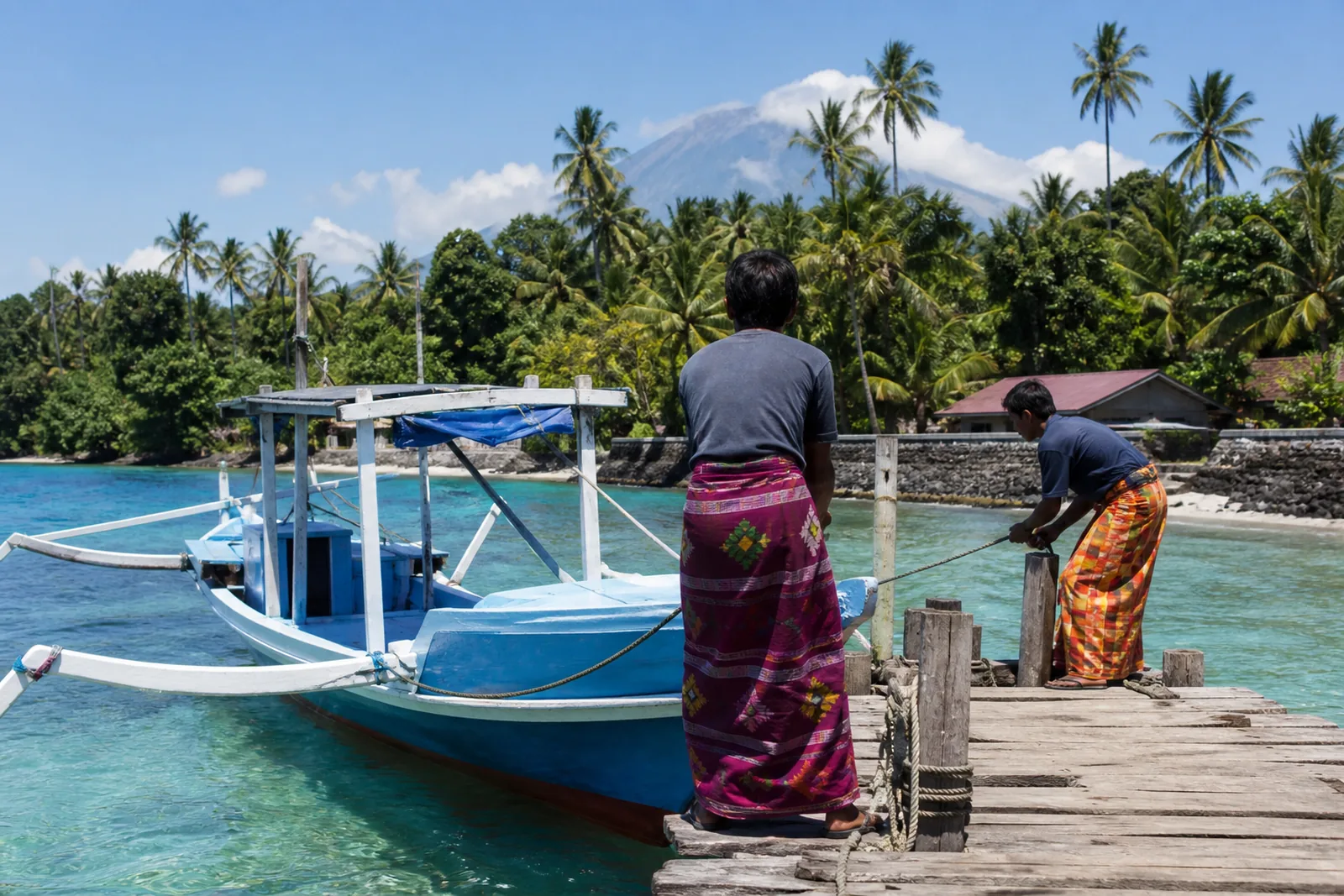
Bali Boat Operators Put Tourist Safety Back at the Centre of Island Travel
Boat operators serving Bali-linked island routes have committed to improving tourist safety standards, putting a vital regional travel link under renewed scrutiny.
Fast boats are a defining part of the visitor journey across Bali and the neighbouring islands. A renewed commitment by operators to improve safety standards is therefore more than an operational matter: it concerns the confidence with which tourists move between Bali, the Gili Islands and Lombok.
For investors watching Lombok’s tourism economy, reliable regional connectivity remains a practical part of the destination’s appeal. The announcement is encouraging, but it also underlines why travellers and accommodation operators should treat maritime transport as an important consideration rather than an afterthought.
A vital link in the regional visitor economy
According to Bali Sun, fast-boat providers connect tourists travelling from Bali with destinations including Nusa Penida, Nusa Lembongan, the Gili Islands and Lombok. These services are among the most important transport links available to visitors moving through the region.
That position gives boat operators an unusually visible role in the tourism experience. A guest’s holiday is not divided neatly into separate transport and accommodation decisions; it is experienced as one journey. A smooth arrival can reinforce confidence in a destination, while uncertainty around a key transfer can colour perceptions long before a guest reaches a hotel, villa or beach.
The current focus on safety standards should be read in that wider context. It is not simply an issue for boat companies. It matters to the broader tourism ecosystem that depends on visitors being able to plan multi-stop itineraries with confidence.
Fast-boat services connect Bali with Nusa Penida, Nusa Lembongan, the Gili Islands and Lombok, according to Bali Sun.
Why safety standards matter to Lombok
Lombok is often considered alongside Bali rather than in isolation. The two destinations can form parts of the same itinerary, and the Gili Islands provide another important link in that regional travel pattern. For visitors, the quality and perceived dependability of the journey between these places can be as relevant as the attractions at either end.
Bali Sun reports that safety standards in the fast-boat sector have been a point of intense focus for years. The operators’ commitment to improvement is therefore significant because it acknowledges that the sector’s responsibilities extend beyond providing a convenient route.
For Lombok, this matters at a time when foreign arrivals are trending 40-50% year on year, according to HubLombok’s verified market data. That recovery is attributed to tourism recovery and the MotoGP effect. More broadly, the data illustrate why the quality of supporting travel infrastructure deserves investor attention: demand does not reach a destination only through marketing or accommodation supply. It also depends on the practical systems that help visitors arrive and move around.
This does not mean a safety commitment alone resolves every transport question. The available source does not detail particular measures, timelines or enforcement arrangements. Investors should therefore distinguish between the announcement itself and evidence of how standards are implemented over time.
Benoa Harbour and the changing travel gateway
Bali Sun notes that Benoa Harbour is now functioning as the Bali Maritime gateway. That description places the harbour at the centre of a transport network serving multiple island destinations.
A functioning maritime gateway can matter because it concentrates an essential part of the visitor journey in one visible point of departure and arrival. For operators, it raises the importance of clear procedures and consistent service. For travellers, it makes the quality of the connection more immediately associated with their wider Bali and Lombok itinerary.
The relevant investment lesson is straightforward. Tourism assets do not operate in a vacuum. A villa, resort or hospitality business may offer a compelling stay, but its commercial environment is influenced by the accessibility and reputation of the surrounding destination network.
Lombok’s property market is also shaped by the broader Bali-overflow thesis: rising Bali prices and congestion can push demand towards a cheaper, earlier-cycle Lombok market. That thesis is not a substitute for due diligence, but it helps explain why transport links between the islands remain strategically relevant to investors assessing South Lombok’s long-term tourism proposition.
An announcement worth monitoring, not over-interpreting
The language of commitment is welcome, particularly in a sector that Bali Sun says has faced sustained attention on safety. Yet an investor’s reading should remain disciplined. The source establishes that operators have committed to improving standards; it does not provide a detailed scorecard against which the commitment can yet be measured.
This is a useful distinction in hospitality-led property markets, where promotional narratives can travel quickly. A credible investment case should rest on observable fundamentals, clear legal arrangements and realistic operating assumptions, not on a single announcement about one element of the visitor experience.
For prospective buyers considering Lombok, this means asking practical questions of developers, managers and travel providers:
- How do guests typically travel between Bali, the Gili Islands and Lombok?
- What information is provided to guests about maritime transfers?
- Are arrival and departure arrangements considered in the property’s guest experience?
- Does the investment case remain sound without relying on unverified assumptions about transport improvements?
The answers will vary by asset and location. What matters is that the journey is considered as part of the operating model, especially for properties marketed to international visitors.
What this means for investors
The immediate significance is reputational and operational rather than numerical. Fast-boat operators’ stated commitment to improve safety standards supports a more mature conversation about regional tourism connectivity, but investors should await evidence of delivery before drawing broader conclusions.
For those assessing South Lombok, the wider market backdrop remains notable. Honest net rental yields are typically 7-12% after management fees and realistic occupancy, while developer-quoted gross yields of 12-22% exclude relevant costs. These are different measures and should never be treated as interchangeable.
Developments like Samudra Villas in Are Guling, South Lombok sit within this broader tourism landscape. HubLombok is the editorial arm of Samudra Villas, an active developer in Are Guling. Any buyer considering an off-plan or completed villa should examine the property’s own legal, construction, management and demand assumptions independently.
The stronger long-term signal will be whether higher standards become an embedded feature of the regional visitor journey. For Lombok, dependable connectivity is not merely convenient; it is part of the confidence infrastructure on which a growing tourism market depends.
Stay informed, subscribe to the free Lombok Briefing for analysis like this, published twice a month.
Why do Bali fast-boat safety standards matter to Lombok investors?
Fast boats connect Bali with the Gili Islands and Lombok, making them part of the visitor journey for multi-stop holidays. Stronger safety standards could support traveller confidence, although the reported commitment should be separated from evidence of implementation.
What did Bali boat operators commit to in this story?
Bali Sun reported that fast-boat operators committed to improving safety standards for tourists. The supplied report does not specify particular measures, dates, enforcement arrangements or performance targets, so investors should avoid assuming operational outcomes not yet documented.
Should transport links change a Lombok villa investment decision?
Transport should be assessed as one part of an investment decision because it affects the guest journey between Bali, the Gili Islands and Lombok. Buyers should still test legal structure, management assumptions, realistic occupancy and net rather than gross rental returns.

The Lombok Buyer's Field Guide
Legal structures ranked by risk, the honest ROI math line by line, all six zones ranked, and the 24-point due-diligence checklist. The whole book, free in your inbox.
See what's inside