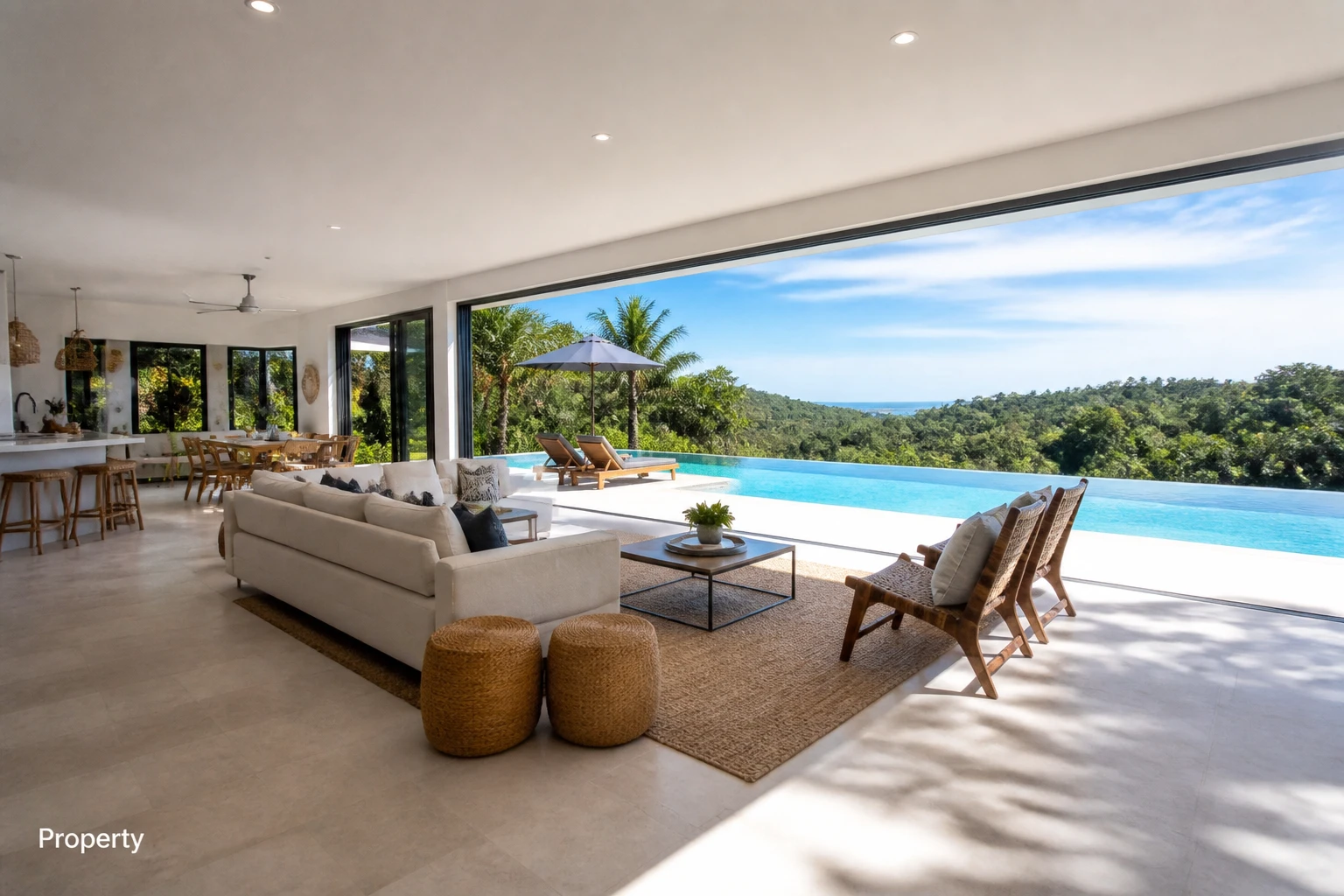
Lombok Tourism Growth: What Drives Villa Demand in 2026
South Lombok is recording foreign-arrival growth of 40–50% year-on-year, driven by expanded air access, the MotoGP circuit at Mandalika, and rising surf and wellness travel. That surge in visitors is pushing villa rental rates sharply upward and sustaining net yields of 7–12% for well-positioned inv
Quick answer: South Lombok is recording foreign-arrival growth of 40-50% year-on-year, driven by expanded air access, the MotoGP circuit at Mandalika, and rising surf and wellness travel. That surge in visitors is pushing villa rental rates sharply upward and sustaining net yields of 7-12% for well-positioned investment-grade properties.
Air Access: The Infrastructure That Changes Everything
Lombok International Airport, on the island's south-west coast, has become a genuine destination gateway rather than a diversion from Bali. Direct routes from Singapore, Kuala Lumpur and several domestic Indonesian hubs mean that international visitors no longer need to transit through Denpasar. That shift matters enormously for villa occupancy, because it removes the biggest friction in the decision to stay.
When passengers fly direct to Lombok, the island becomes a destination in its own right. Visitors who might once have spent a full week in Ubud and a long weekend in the Gilis now plan itineraries centred entirely on South Lombok. The practical effect on short-term rental demand is measurable: occupancy rates at well-managed villas in prime zones are running at 55-70% during the stabilised years one to three, compared with 70-85% in more mature Bali markets. The gap is closing.
MotoGP at Mandalika: Circuit, Calendar and Capital Flows
The Pertamina Mandalika Grand Prix has done more than put a dot on the global sporting map. It has introduced South Lombok to a global audience of motorsport fans, broadcasters and sponsors who would not otherwise have considered the island. Race weekends create acute, predictable peaks in demand across all accommodation categories, including villa rentals within easy driving distance of the Mandalika Special Economic Zone.
The investment effect extends well beyond race weeks. The SEZ framework around the circuit has drawn road upgrades, hotel projects and retail development that benefit the broader south coast. Land prices in Kuta, the coastal town adjacent to Mandalika, have reached roughly Rp 300-400 million per are (approximately USD 18,200-24,200 per are), and villa rental rates across the Kuta corridor have increased by approximately 38% year-on-year. That figure reflects sustained demand rather than a single event spike. For a deeper look at the development thesis around the circuit, see our Mandalika Investment Guide.
Surf, Wellness and the Changing Visitor Mix
What distinguishes South Lombok's current growth phase from a simple infrastructure story is the quality and diversity of the visitors arriving. Alongside the circuit crowd, the island is drawing surf travellers, yoga retreaters and slow-travel wellness tourists, many of whom stay for two to four weeks rather than four to seven days.
This matters for villa owners because longer stays produce better economics. A guest who books a two-bedroom villa for three weeks generates lower per-night revenue than peak short-stay rates, but the occupancy cost per stay, cleaning, check-in logistics and OTA commission per booking, is compressed. Surf and wellness travellers also tend to revisit, building a repeat-guest base that any experienced operator will tell you is the most stable foundation for a rental programme.
The south coast's geographical spread gives the island a range of visitor types that smooth seasonal demand rather than concentrating it into one narrow peak. Gerupuk draws dedicated surf travellers; the beaches around Selong Belanak attract families; quieter stretches toward Mawun and Bumbang pull visitors seeking genuine seclusion.
How Visitor Growth Translates Into Rental Yield
The arithmetic that connects tourism growth to investor returns runs through occupancy and average daily rate. When foreign arrivals grow at 40-50% year-on-year, well-positioned properties fill their calendars faster, operators raise rates, and the gap between developer-quoted gross yields (12-22%) and honest net yields (7-12%) narrows for owners who have chosen the right zone and the right management partner.
Zone selection matters considerably. Are Guling, a frontier coastal strip where visitor discovery is still early-cycle, is recording land price momentum of approximately 47% year-on-year, with villa entry prices from around USD 150,000-255,000. Kuta commands higher land prices but captures the bulk of near-term rental demand because of its infrastructure maturity. A full breakdown of zone-by-zone figures is available on our market data page.
Management fees typically run 18-22% of gross rental revenue, and OTA commissions add a further 15-20%, so buyers should always work from net yield projections rather than developer headline figures. Realistic stabilised occupancy in years one to three sits at 55-70%, climbing as a property accumulates reviews and repeat guests.
HubLombok is the editorial arm of Samudra Villas, an active developer in Are Guling. Our broader guide to investing in South Lombok covers the full buying process for foreign nationals, including the legal structures available under Indonesian property law.
Practical Guidance for Prospective Buyers
Tourism growth is a genuine tailwind, but it does not guarantee returns on a specific property. A few straightforward tests help separate well-positioned opportunities from speculative plays.
Verify that the access road to any site you consider is sealed and passable year-round. Rural properties accessible only by unpaved track are often undervalued for a reason.
Ask the developer or selling agent for actual occupancy figures, not projected ones. A property that has been renting for two or more seasons should have real booking records.
Understand the legal structure before you commit. Foreigners cannot hold freehold title (Hak Milik) in Indonesia. The available routes, leasehold (Hak Sewa), right-to-use (Hak Pakai) and PT PMA company ownership, carry different costs and tenure lengths. An independent legal desk such as TerraNusa Advisory can run due diligence on the title certificate, verify ownership history and manage the transfer at the land office. Most notaries handle only the deed; TerraNusa runs the whole chain.
The momentum in South Lombok is real and well-documented. The practical question for any buyer is whether a specific asset, in a specific zone, with a specific management arrangement, is genuinely positioned to capture it.
What is driving foreign visitor growth in South Lombok in 2026?
Three converging factors: expanded direct air routes into Lombok International Airport removing the need to transit Bali, the annual MotoGP Grand Prix at the Mandalika circuit drawing a global audience, and sustained growth in surf and wellness tourism along the south coast.
What net rental yields can villa owners realistically expect in South Lombok?
Honest net yields, after management fees of 18-22% and realistic occupancy of 55-70% in years one to three, run 7-12% for well-positioned properties, with top performers reaching around 15% net. Developer-quoted gross yields of 12-22% exclude these costs and should not be used for investment planning.
How does South Lombok occupancy compare with Bali, and is the gap closing?
Stabilised occupancy in South Lombok runs 55-70% in the first three years, against 70-85% in mature Bali markets. With foreign arrivals growing 40-50% year-on-year and improving air access, the gap is narrowing, particularly in zones close to Kuta and Mandalika.

The Lombok Buyer's Field Guide
Legal structures ranked by risk, the honest ROI math line by line, all six zones ranked, and the 24-point due-diligence checklist. The whole book, free in your inbox.
See what's inside