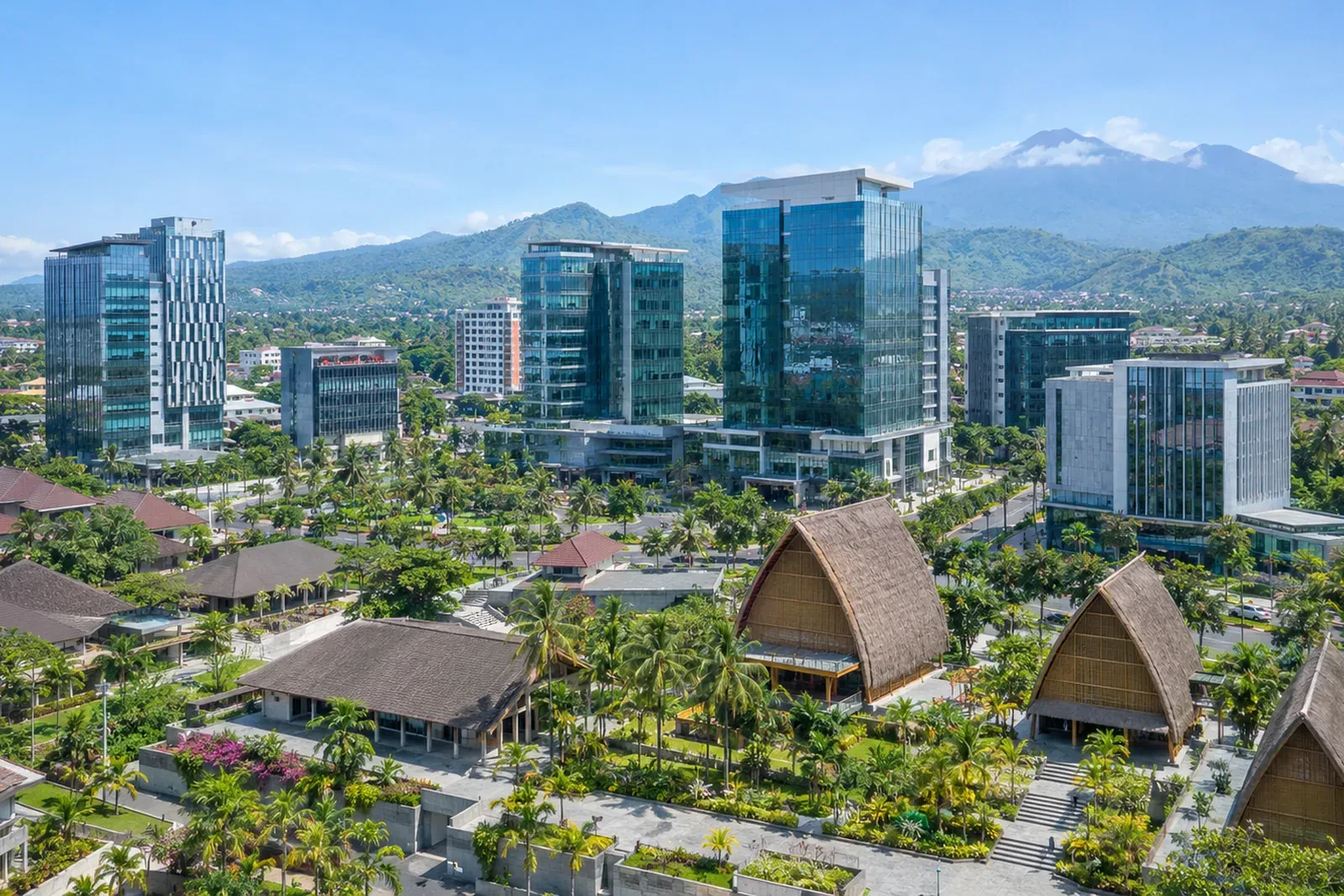
Rupiah Hits Rp 18,198 per Dollar: Why Today's Currency Dip Favours Foreign Buyers
Indonesia dismisses 1998 comparisons as the rupiah softens to Rp 18,198 per US dollar. For foreign property investors, currency weakness creates a tactical entry window.
Quick answer: The Indonesian rupiah slipped 0.27 percent to Rp 18,198 per US dollar amid global rate jitters and domestic politics, prompting government assurances that the move is routine volatility rather than structural crisis. For foreign investors holding dollars or euros, this currency dip delivers immediate purchasing power advantages across land acquisitions and turnkey villa developments in South Lombok.
Currency markets delivered a sharp reminder of emerging-market dynamics on Thursday morning when the Indonesian rupiah weakened by 49 points to touch Rp 18,198 against the US dollar. While retail headlines in Jakarta quickly invoked memories of past financial turbulence, senior economic officials moved swiftly to separate short-term sentiment from fundamental insolvency. For foreign capital evaluating Indonesian real estate, periods of controlled currency depreciation have historically offered tactical pricing windows rather than systemic warning signs.
The Context
Addressing reporters at his office on Thursday, Deputy Coordinating Minister for Economic Affairs Dradjad Hari Wibowo was unequivocal in his assessment of the morning trading patterns. Market fluctuations driven by ongoing political developments are standard cyclical occurrences, he explained, contrasting current conditions sharply with the systemic breakdown witnessed during the 1998 Asian financial crisis.
"Market fluctuations are normal during periods of political uncertainty, but they generally do not last long unless the situation resembles the 1998 Asian financial crisis, which was a very different situation," Wibowo stated, expressing confidence that domestic businesses and financial market participants possess the balance-sheet resilience to weather short-term pressures.
The mechanics behind Thursday's dip reflect an intersection of domestic and external drivers. According to Bank Indonesia, the central bank, downward pressure on the currency stemmed from multiple distinct sources:
- Shifting expectations surrounding United States monetary policy and prospective interest rate hikes, which continue to support the greenback.
- Heightened domestic seasonal demand for foreign currency as multinational enterprises settle year-end obligations.
- Market speculation regarding a potential reassessment of Indonesia's equity market classification by global index provider MSCI.
- Local political developments that triggered transient hedging by institutional participants.
Crucially, Bank Indonesia noted that foreign exchange reserves and domestic financial buffers remain robust. Wibowo stressed the necessity of market discipline, cautioning private investors against reacting to unverified rumours or conflating transitory exchange-rate volatility with balance-of-payments distress.
Currency Mechanics and Foreign Purchasing Power
For international property investors deploying capital from Europe, Australia, or North America, exchange-rate movements operate as a direct pricing multiplier. Because Indonesian real estate is transacted locally in rupiah, foreign currency holders experience immediate expansion in their effective acquisition power whenever the rupiah trades above baseline models.
Consider the acquisition of prime development land. In South Lombok, raw land pricing remains heavily anchored to local currency conventions, quoted consistently per are (where 1 are equals 100 square metres). In primary hospitality corridors such as Kuta, prime land trades between Rp 300 million and Rp 400 million per are. In Selong Belanak, prices range from Rp 150 million to Rp 250 million per are, whilst early-cycle coastal frontiers like Are Guling trade at Rp 120 million to Rp 180 million per are. Emerging coastal pockets such as Mawun stand at Rp 50 million to Rp 80 million per are, and Bumbang offers entry points between Rp 30 million and Rp 50 million per are.
When standard benchmark models calculate land pricing at an assumed rate of Rp 16,500 per US dollar, an are of prime Kuta land at Rp 350 million equates to roughly USD 21,200. At Thursday's spot rate of Rp 18,198 per US dollar, that identical plot requires an outlay of approximately USD 19,230. On a modest 10-are parcel designated for a two-villa private enclave, the foreign exchange differential alone preserves nearly USD 20,000 in capital before architectural works begin.
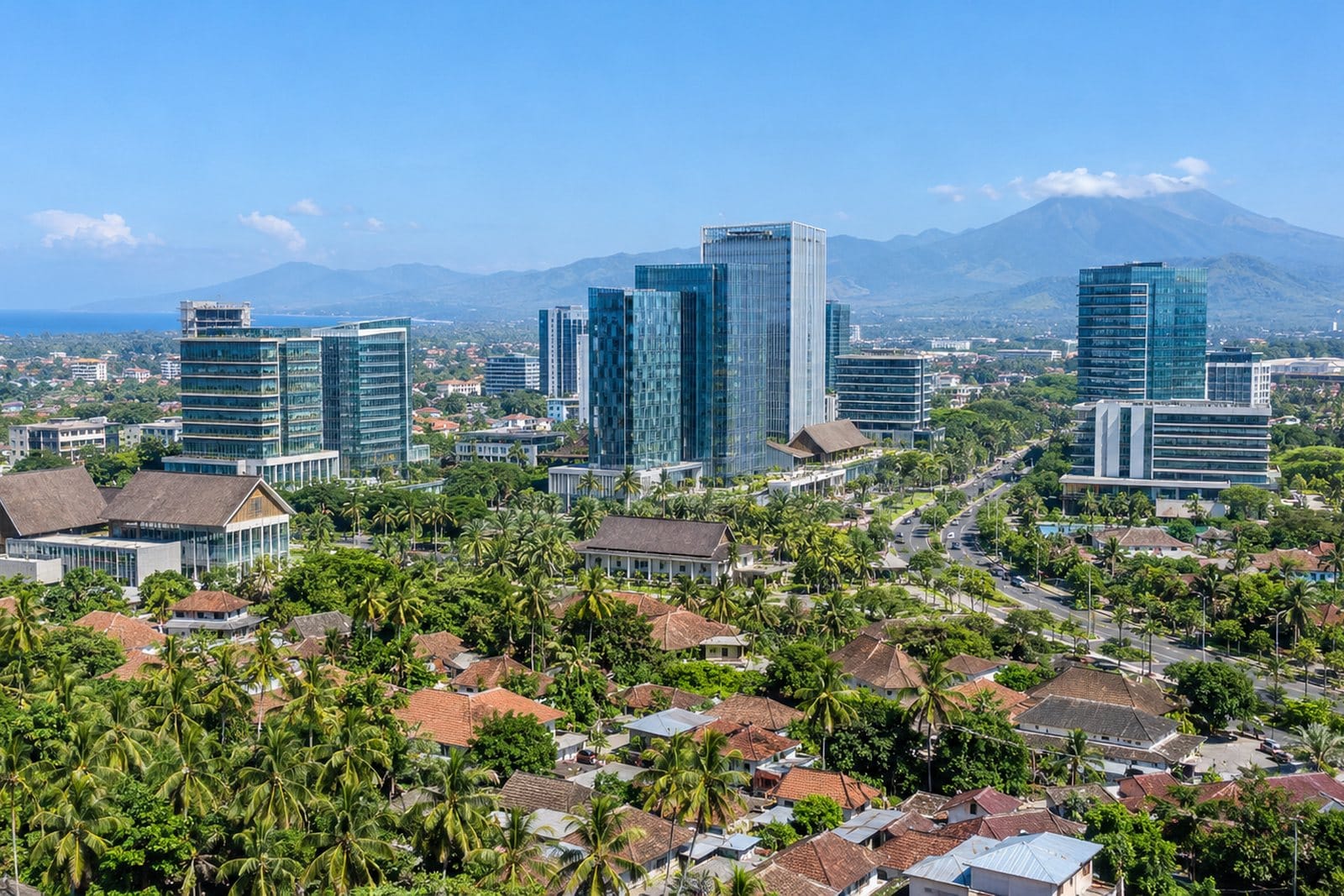 Rupiah Hits Rp 18,198 per Dollar · Illustration: HubLombok (AI-generated)
Asset Values: South Lombok Versus Bali Benchmarks
The broader investment case for South Lombok rests on structural arbitrage against mature regional destinations, notably Bali. Over the past four years, rapid urbanisation and escalating land values in southern Bali have pushed standard land parcels to approximately USD 200 to USD 500 per square metre. In contrast, prime tourist-zone land in South Lombok commands between Rp 150 million and Rp 400 million per are, which translates to roughly USD 90 to USD 240 per square metre at conventional conversion baselines.
This structural valuation gap extends across completed built assets. While an equivalent luxury two-bedroom or three-bedroom villa in Seminyak, Canggu, or Uluwatu routinely demands between USD 400,000 and USD 800,000, turnkey investment-grade villas in South Lombok range between EUR 95,000 and EUR 350,000.
| Location / Zone | Typical Land Price (Rp / are) | Approx. Entry (USD / are) | Built Villa Benchmark | | :--- | :--- | :--- | :--- | | Kuta (Lombok) | Rp 300M - Rp 400M | ~$18,200 - $24,200 | $194,000 - $344,000 | | Selong Belanak | Rp 150M - Rp 250M | ~$9,100 - $15,200 | $151,000 - $301,000 | | Are Guling | Rp 120M - Rp 180M | ~$7,300 - $10,900 | $150,000 - $255,000 | | Bali (Core South) | Out of Reach / m² quoted | ~$20,000 - $50,000+ | $400,000 - $800,000 |
The compounding effect of a softening rupiah enhances these fundamental discrepancies. While developers often quote gross yields between 12 percent and 22 percent, prudent financial modelling requires stripping out commercial operating frictions. After accounting for professional property management fees of 18 to 22 percent of gross revenue, online travel agency commissions of 15 to 20 percent, and stabilised occupancy rates of 55 to 70 percent, honest net rental yields in South Lombok sit reliably between 7 percent and 12 percent. Top-performing assets with exceptional sea views and bespoke operations can reach approximately 15 percent net as an explicit outlier. Acquiring underlying real estate assets at a favourable foreign exchange entry point widens this net return profile substantially.
What This Means for Investors
Sophisticated cross-border investors understand that macro currency adjustments require structured navigation, particularly regarding Indonesian property laws and capital structuring:
- Structure your capital inflows strategically: Foreign capital entering Indonesia should maintain disciplined timing. Converting foreign reserves into rupiah immediately prior to notary execution or land acquisition stages maximises buying power without leaving excessive local currency idle on commercial balances.
- Respect statutory title limitations: Foreign individuals cannot hold freehold title (Hak Milik / SHM), which is strictly reserved for Indonesian citizens. Legitimate legal pathways for international investors consist of long-term leaseholds (Hak Sewa, typically 25 to 30 years with contractual extensions), personal right-to-use titles (Hak Pakai, requiring appropriate residency status such as a KITAS or KITAP), or establishing a foreign-owned investment company (PT PMA). A PT PMA holds Hak Guna Bangunan (HGB) titles for up to 30 years with statutory extensions. Nominee arrangements, where a local citizen holds freehold on behalf of a foreigner, remain entirely illegal, unenforceable, and void in Indonesian courts.
- Factor mandatory transaction duties: Real estate acquisitions incur buyer transfer duty (BPHTB) of approximately 5 percent of the assessed property value, alongside ongoing annual land-and-building taxes (PBB). Every transaction must be verified and executed by an authorised local notary (PPAT) through formal deeds of sale (AJB) and registered with the national land office (BPN).
- Anchor projections to real tourism growth: Lombok continues to benefit from macro tailwinds, including a 40 to 50 percent year-on-year increase in foreign arrivals driven by post-pandemic expansion and the international profile of the Mandalika MotoGP circuit. Villa rental rates in core hubs like Kuta have surged by approximately 38 percent year-on-year, while Are Guling demonstrates momentum of about 47 percent year-on-year.
Episodes of emerging-market currency turbulence inevitably generate noise, but seasoned capital allocations focus on replacement costs and long-term yield fundamentals. When the state balance sheet remains solid and regulatory pathways are respected, a softer rupiah simply lowers the hurdle rate for exceptional coastal real estate.
Stay informed: subscribe to the free Lombok Briefing, published twice a month (the 1st and 15th), for market intelligence like this.
Why is the Indonesian rupiah weakening against the US dollar?
The rupiah touched Rp 18,198 per dollar due to external expectations of US interest rate increases, seasonal year-end foreign currency demand, and domestic political sentiment. Bank Indonesia and government ministers confirm economic fundamentals remain resilient, distinguishing this volatility from historical financial crises.
How does rupiah depreciation benefit foreign property buyers in Lombok?
Because Indonesian land and construction contracts are priced in rupiah, international buyers deploying dollars or euros gain immediate purchasing leverage. Prime land quoted in rupiah per are effectively costs less foreign currency, reducing total capital expenditure on turnkey villas and plots.
Can foreign investors own Indonesian land directly during currency dips?
Foreigners cannot hold freehold Hak Milik title. Instead, investors legally secure properties through long-term leasehold (Hak Sewa), personal Hak Pakai right-to-use titles with residency, or via a foreign-owned company (PT PMA) holding Hak Guna Bangunan (HGB) title. Nominee agreements are illegal.

The Lombok Buyer's Field Guide
Legal structures ranked by risk, the honest ROI math line by line, all six zones ranked, and the 24-point due-diligence checklist. The whole book, free in your inbox.
See what's inside