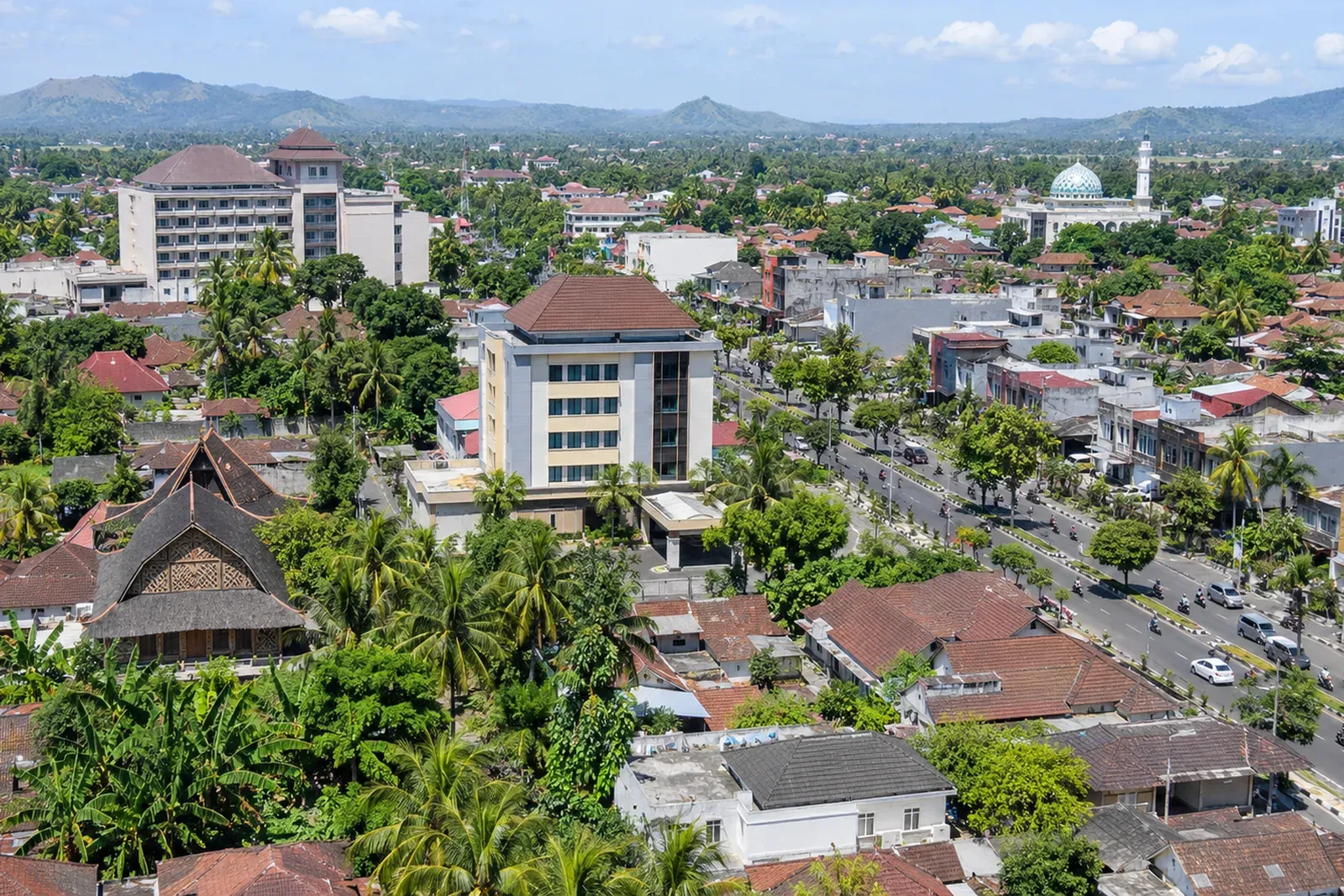
Lombok Notebook: What Indonesia–Philippines Central Bank Cooperation Signals
A new BI–BSP framework covers payments, local currencies and financial stability. For Lombok investors, its significance lies in the regional questions it raises, not an immediate property catalyst.
Quick answer: Bank Indonesia and the Bangko Sentral ng Pilipinas have agreed to cooperate on local currency transactions, cross-border payments, digital finance and broader financial stability. For Lombok investors, the agreement is a regional signal about how financial links may evolve, not evidence of a direct change to property demand, rental income or investment returns on the island.
A central bank memorandum rarely changes the feel of a Lombok villa market overnight. Its importance is more measured: payment arrangements and financial coordination can shape the environment in which regional commerce operates, while the agreement itself says little about any particular property investment. Reading it well means separating the institutions’ stated programme from the questions an investor may reasonably take away.
The Context
Bank Indonesia, Indonesia’s central bank, and the Bangko Sentral ng Pilipinas, its Philippine counterpart, signed a memorandum of understanding intended to deepen bilateral cooperation. The agreement was finalised on Friday, 13 November, and sets a framework for work across central banking. Its stated priorities include local currency transactions, cross-border payments and digital financial innovation.
The two governors presented the arrangement as a practical response to shared strategic interests and a more uncertain, interconnected financial environment. The source also identifies rapid technological change, cybersecurity risks and the transformation of payment systems as challenges for monetary authorities. Those comments explain the policy rationale; they are not evidence that the agreement has already changed payment costs or investor behaviour.
The framework extends beyond payments. It covers monetary and macroprudential policy, financial stability, sustainable and Islamic finance, financial inclusion, and joint initiatives to counter money laundering and terrorist financing. It also formalises knowledge-sharing in data analytics and human resource development. The breadth matters because this is an institutional cooperation programme, rather than a narrowly defined payment product or a promise of a particular commercial outcome.
For investors, the distinction between a framework and its implementation is essential. The announcement describes areas in which the central banks intend to collaborate. It does not set out a timetable for individual initiatives, quantify expected results or specify how any change would reach a business, household or property transaction. A disciplined reading therefore treats the MoU as context for regional policy, not as a measurable return driver.
Why Payments Matter to a Property Investor
Property is local, but the financial environment around it is not entirely local. Investors considering Lombok may move capital across borders, pay advisers or service providers, and assess income in a currency different from the one in which their assets are held. The MoU’s focus on local currency transactions and cross-border payments is therefore relevant as a subject to watch. The announcement, however, does not say that any of these investor activities will become cheaper, faster or simpler.
That gap between relevance and demonstrated impact deserves attention. Cooperation by central banks can create a channel for discussion, shared work and potential initiatives. A signed framework alone does not establish that a new payment route is live, that participating institutions have adopted it, or that a private investor can use it. Nor does the announcement identify the fees, eligibility rules or settlement arrangements that would matter when moving money for a property purchase.
The same caution applies to digital finance. The agreement names digital financial innovation as an area for cooperation, alongside experience-sharing on data analytics. That is a statement of institutional intent. It is not a description of a consumer application, a property-payment service or a new source of investment capital for Lombok. For a buyer, the practical questions remain concrete: which payment provider is available, what checks apply, what costs are disclosed, and how the transaction is documented.
There is a useful investor habit here: distinguish the policy signal from the transaction evidence. A central bank announcement can help explain what regional authorities are prioritising. For an investment decision, it should sit below documents and terms that directly govern the transaction, such as purchase arrangements, payment instructions and applicable legal advice. The MoU supplies no substitute for those checks and makes no claim to do so.
 Lombok Notebook · Illustration: HubLombok (AI-generated)
A Wider Regional Lens
The cooperation agenda includes financial stability and macroprudential policy, alongside sustainable and Islamic finance and financial inclusion. These themes broaden the story beyond payment plumbing. They show that the institutions intend to exchange experience on how financial systems are overseen and developed. For Lombok readers, this can provide a useful regional lens, but the source does not describe a new Indonesian rule or a specific change to the island’s financing conditions.
The planned work on preventing money laundering and terrorist financing is also relevant to the integrity of financial systems. It belongs in the same careful category: the announcement identifies a shared area for initiatives, but supplies no detail about new compliance requirements for property buyers or businesses. Investors should not infer a change to their obligations from a cooperation agreement. Those obligations depend on the applicable rules and the facts of a transaction.
The agreement also institutionalises knowledge-sharing in data analytics and human resource development. These quieter provisions may matter to the durability of cooperation: institutions are setting out ways to exchange knowledge, rather than limiting the relationship to public statements about payments. Still, the source offers no measure of how much work will follow, which projects will come first or what the outcomes will be. Those are questions for future reporting, not blanks to fill with speculation.
For Lombok, the direct connection is best understood as regional context rather than a local market forecast. The announcement names no Lombok initiative, tourism measure, property programme or investment commitment. It gives no basis to predict changes in villa prices, occupancy, yields or foreign investment. A regional financial framework may be worth monitoring, but attributing a property-market movement to it would go beyond the available evidence.
What This Means for Investors
Investors can take three measured points from the agreement. First, Indonesia and the Philippines have made central bank cooperation more explicit across payments, policy and financial stability. Second, the agenda includes digital finance, inclusion and sustainable and Islamic finance, so the partnership is wider than a single currency arrangement. Third, the public announcement establishes a framework, while leaving implementation and investor-facing effects unspecified.
That makes the MoU a reason to follow developments, not to revise an investment case by itself. If later announcements identify operating payment arrangements, relevant institutions, fees or access conditions, those details may help investors assess practical consequences. Until then, the prudent question is not whether Lombok property has become more attractive because of this agreement, but whether a documented change has occurred that affects a specific investment or transaction.
For buyers evaluating South Lombok, the fundamentals of a property decision remain separate from this regional policy story: the asset, its legal and commercial terms, the costs of ownership and the assumptions behind projected income. The central banks’ cooperation may form part of the broader setting in which regional business develops. The announcement provides no new evidence about those property-level considerations, so it should not be used to imply a return, a forecast or a market catalyst.
The more useful conclusion is modest. Regional authorities are placing cooperation on payments, financial stability and innovation on a formal footing. That is worth tracking as the programme develops, especially if future steps become specific enough to affect cross-border transactions. For now, Lombok investors have a clearer account of the policy agenda, but no stated change to the conditions of investing in Lombok itself.
Stay informed: subscribe to the free Lombok Briefing, published twice a month (the 1st and 15th), for market intelligence like this.
What did Indonesia and the Philippines agree to do?
Bank Indonesia and the Bangko Sentral ng Pilipinas signed a memorandum establishing a framework for cooperation. Its areas include local currency transactions, cross-border payments, digital financial innovation, financial stability, policy, inclusion and knowledge-sharing.
Does the agreement change Lombok property investment conditions?
The announcement does not identify a Lombok programme or a change to property prices, yields, occupancy, financing or payment costs. It is regional policy context, not evidence of a direct effect on a particular property investment.
Could the cooperation make cross-border property payments easier?
The memorandum names cross-border payments as an area for cooperation, but does not describe a live payment route, its costs, eligibility or settlement terms. Investors should look for specific implementation details before drawing conclusions about a property transaction.

The Lombok Buyer's Field Guide
Legal structures ranked by risk, the honest ROI math line by line, all six zones ranked, and the 24-point due-diligence checklist. The whole book, free in your inbox.
See what's inside