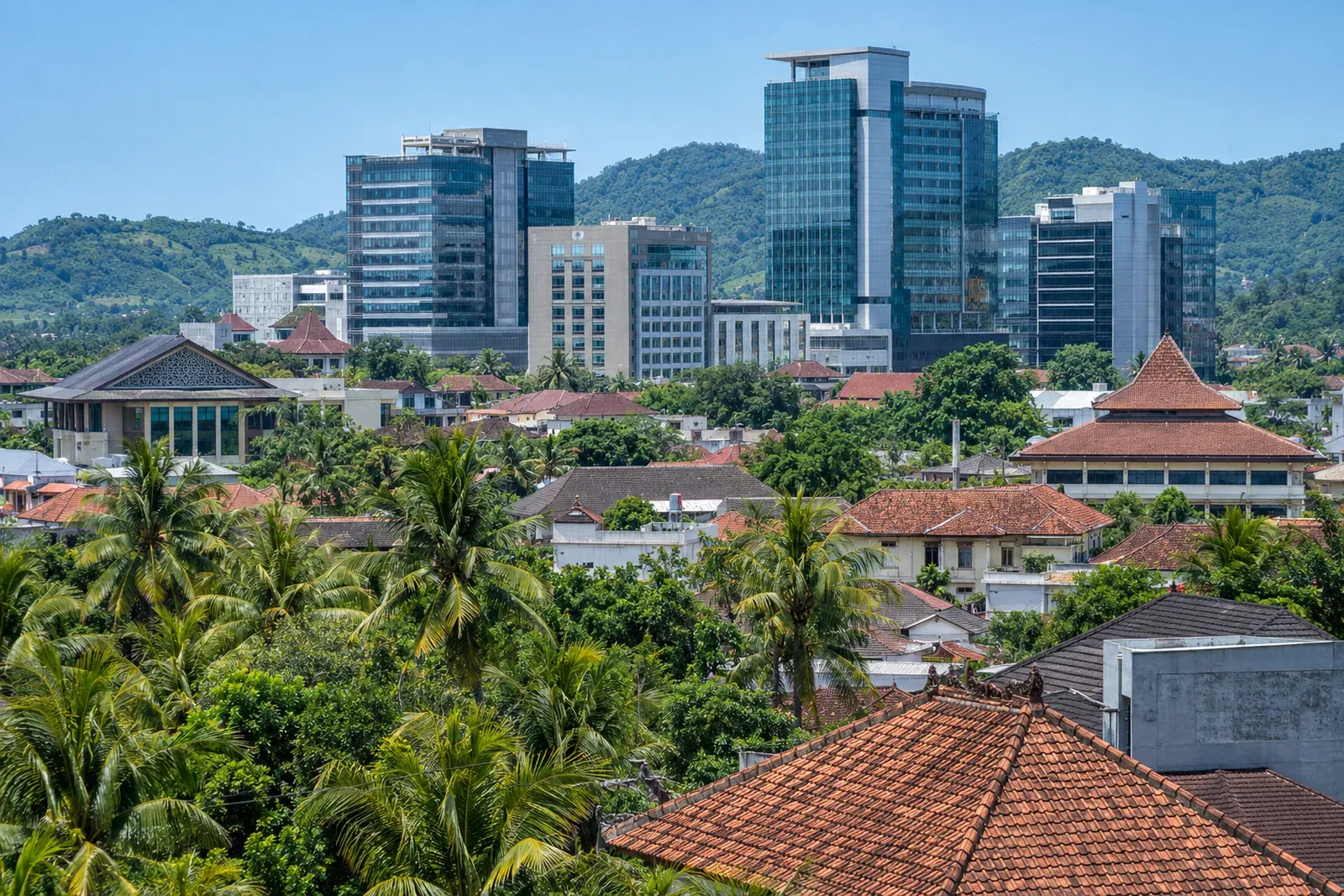
Rupiah Hits Record Low: What Currency Shifts Mean for Lombok Villa Capital
As the Indonesian rupiah touches 18,250 per dollar, offshore investors gain rare purchasing leverage across South Lombok land and turnkey hospitality developments.
Quick answer: The Indonesian rupiah slide to a historic low of 18,250 per US dollar grants foreign property investors substantial purchasing power across South Lombok. With land priced locally in rupiah per are, dollar- and euro-denominated capital captures immediate discounts on acquisition, offsetting potential domestic borrowing costs and highlighting long-term yield fundamentals.
When macroeconomic markets shudder, tangible real estate in frontier destinations reveals its underlying mechanics. For foreign private capital evaluating Indonesia, the recent descent of the Indonesian rupiah to an all-time nadir against the greenback presents a compelling entry window. While equity traders monitor central bank manoeuvres and portfolio managers hedge against currency volatility, property investors in South Lombok are recalibrating their balance sheets to exploit a rare currency disparity.
The Context
According to market readings reported by The Jakarta Post from Bloomberg, the Indonesian rupiah touched an unprecedented low of 18,250 per US dollar on Thursday. This movement surpassed the country's previous historical low of Rp 18,218 recorded in June. Erwin Gunawan Hutapea, an executive at Bank Indonesia, noted in an official press statement that this volatility stems primarily from heightened expectations surrounding monetary policy from the United States Federal Reserve.
Data from the CME Group FedWatch Tool indicates that 90 percent of interest rate traders expect the Fed to raise its federal funds rate by 25 basis points at the upcoming Federal Open Market Committee meeting in December. Furthermore, roughly two-thirds of surveyed traders anticipate an additional 25 basis point hike in January. These aggressive interest rate projections have driven the US Dollar Index to its highest point since March of last year, placing acute pressure on emerging market currencies across the globe.
"The volatility was mainly influenced by increasing expectations of an interest rate hike by the US Federal Reserve at the upcoming policy meeting slated for December, likely to be followed by more hikes next year.", Erwin Gunawan Hutapea, Bank Indonesia
Bank Indonesia is scheduled to convene its monthly policy meeting next week, with several economists projecting an increase in the domestic benchmark rate to stabilise the currency. Yet for international real estate allocators, the broader macroeconomic story is not about domestic liquidity crunches. Rather, it centres on the asymmetric advantage created when offshore capital enters a domestic asset market that transacts in an undervalued sovereign currency.
Currency Arbitrage and Land Valuations in South Lombok
The fundamental reality of Indonesian real estate acquisition is that land transactions are legally denominated and negotiated in local currency. The standard unit of measurement across the archipelago is the are, where 1 are equals 100 square metres. When the rupiah depreciates from conventional baseline levels of roughly Rp 16,500 per dollar to 18,250, foreign investors holding hard currencies experience an immediate expansion in real acquisition power.
In South Lombok, prime tourist-zone land generally trades between Rp 150 million and Rp 400 million per are, equivalent to roughly USD 90 to USD 240 per square metre at a standard baseline rate of approximately Rp 16,500 per USD. In contrast, comparable prime coastal plots in southern Bali command roughly USD 200 to USD 500 per square metre. Under current currency conditions, foreign liquidity deployed into South Lombok captures prime land at prices that remain fundamentally dissociated from congested international tourist hubs.
To understand how land valuations vary across South Lombok, consider the authoritative pricing matrix across the primary investment corridors:
| Zone | Land Price (Rp / are) | Approximate Price (USD / are) | Strategic Profile | | :--- | :--- | :--- | :--- | | Kuta | Rp 300-400M | ~$18,200-24,200 | Commercial core, liquidity leader | | Selong Belanak | Rp 150-250M | ~$9,100-15,200 | Family tourism, scenic beachfront | | Are Guling | Rp 120-180M | ~$7,300-10,900 | High momentum frontier, bay views | | Mandalika | Rp 100-150M | ~$6,100-9,100 | Special Economic Zone, MotoGP circuit | | Mawun | Rp 50-80M | ~$3,000-4,800 | Protected bay, early development | | Bumbang | Rp 30-50M | ~$1,800-3,000 | Eastern frontier, lowest entry point |
This pricing structure illustrates the profound spread across South Lombok, ranging from Rp 30 million per are in emerging eastern pockets such as Bumbang to Rp 400 million per are in prime Kuta. While Kuta commands the highest liquidity and established footfall, frontier locations provide substantial room for capital appreciation.
For turnkey villas, the entry threshold in South Lombok sits between EUR 95,000 and EUR 350,000 for investment-grade assets. When compared to Bali, where a villa of identical build specification typically commands between USD 400,000 and USD 800,000, the entry valuation arbitrage remains significant. With the rupiah testing historic depths, foreign buyers holding dollar or euro deposits are positioned to acquire physical inventory at exceptionally attractive capital bases.
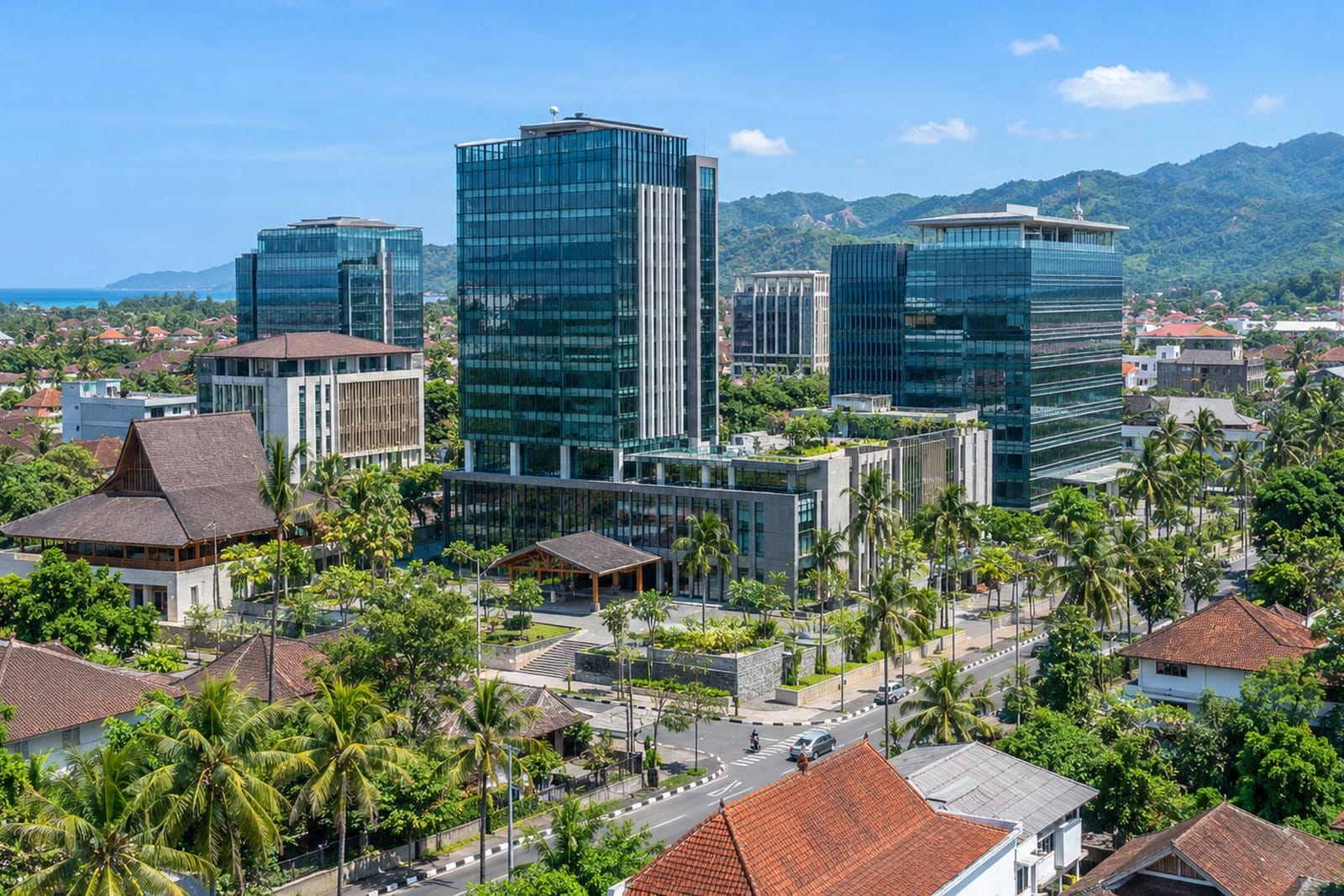 Rupiah Hits Record Low · Illustration: HubLombok (AI-generated)
Yield Mechanics: Separating Gross Projections from Net Reality
While currency movements create clear advantages during the initial acquisition phase, sustaining returns requires rigorous operational analysis. Property developers in emerging markets frequently highlight headline gross rental yields ranging from 12% to 22%. In Kuta, developer-quoted gross yields typically span 14% to 22%, in Selong Belanak they range from 13% to 19%, and in Are Guling they sit between 17% to 25%. However, prudent investors must distinguish promotional gross claims from audited net operational yields.
In South Lombok, honest net rental yields realistically track between 7% and 12% once all operating expenditures, marketing fees, and realistic occupancy metrics are deducted. Exceptional top-performing assets operating under bespoke hospitality management may occasionally achieve net yields of approximately 15%, but this figure represents an explicit outlier rather than an operational standard.
The bridge between a developer's gross projection and the net return received in an investor's offshore account is defined by three unavoidable friction points:
- Professional management fees: Local villa operators charge between 18% and 22% of gross rental revenue to handle guest relations, maintenance, staff management, and housekeeping.
- Distribution and OTA commissions: Platforms such as Airbnb and Booking.com absorb between 15% and 20% in booking fees and intermediary costs.
- Stabilised occupancy realities: Realistic stabilised occupancy across South Lombok in operational years one to three sits between 55% and 70%, whereas mature Bali micro-markets operate between 70% and 85%.
Despite these operational deductions, South Lombok benefits from accelerating underlying tailwinds. Foreign visitor arrivals have demonstrated robust growth of +40% to +50% year-on-year, driven by regional tourism recovery and the international MotoGP events at Mandalika. Villa rental rates in the Kuta and Mandalika corridors have expanded by approximately +38% year-on-year, while Are Guling has registered an impressive momentum rate of about +47% year-on-year.
Crucially, a depreciated domestic currency creates a dual operational advantage for villa owners. Daily rental rates for boutique luxury accommodation in South Lombok are effectively pegged to foreign currency benchmarks (USD, EUR, and AUD), as international travellers comprise the core guest demographic. Conversely, operating expenditures such as on-site housekeeping, gardening, and routine repairs are settled in Indonesian rupiah. When the rupiah softens, gross foreign revenue retains its purchasing power while local maintenance costs decline in real foreign terms.
What This Means for Investors
Navigating an emerging market during periods of macroeconomic volatility requires rigorous legal structuring. Foreign buyers must recognise the absolute boundary of Indonesian land law: foreign nationals cannot hold freehold title (Hak Milik / SHM). This title is strictly reserved for Indonesian citizens without exception. Any scheme proposing an informal nominee structure, where an Indonesian citizen holds freehold title on behalf of a foreign investor, is illegal and entirely void in Indonesian courts.
Foreign investors possess three legitimate, legally protected mechanisms to control real estate in Indonesia:
- Leasehold (Hak Sewa): A secure contractual lease typically running for 25 to 30 years with guaranteed contractual extension rights.
- Right to Use (Hak Pakai): A registered state title issued to a qualifying foreign individual holding a formal residency permit (KITAS or KITAP).
- Foreign-Owned Corporate Title (PT PMA holding HGB): A corporate vehicle owned entirely by foreign investors that holds a Right to Build (Hak Guna Bangunan / HGB) title for an initial 30-year term, fully extendable through the national land agency (BPN).
Transaction costs remain structured and predictable. The buyer transfer duty (BPHTB) is assessed at approximately 5% of the transaction value. All real estate contracts, land due diligence, and official deeds of sale (AJB) must be executed before a licensed Land Deed Official (PPAT notary).
For investors executing acquisitions, independent legal desk partners such as TerraNusa Advisory manage the end-to-end legal chain. Unlike conventional local notaries who merely register documents, TerraNusa oversees comprehensive due diligence, corporate PT PMA structuring, tax assessments, and definitive title registration at the land office.
HubLombok is the editorial arm of Samudra Villas, an active developer in South Lombok. That relationship is disclosed here because it shapes what we cover, not what we conclude.
For investors evaluating direct market allocations, turnkey villas in South Lombok represent an accessible path to secure real asset exposure. In Are Guling, turnkey villas from Samudra Villas start from around EUR 255,000, combining architectural distinction with disciplined site selection.
The historic depreciation of the rupiah to 18,250 per dollar represents a cyclical macro event that benefits patient, long-term capital. By combining discounted local acquisition costs with conservative net yield modeling (7% to 12%) and compliant legal structures, foreign allocators can establish a highly resilient footprint in one of Southeast Asia's fastest-growing island economies.
Stay informed: subscribe to the free Lombok Briefing, published twice a month (the 1st and 15th), for market intelligence like this.
How does a weaker rupiah benefit foreign property investors in Lombok?
Land across South Lombok is priced locally in rupiah per are. A depreciated rupiah allows offshore buyers deploying dollar or euro capital to acquire parcels and fund villa construction at lower relative cost, while rental earnings from international travellers remain anchored to hard currencies.
Can foreign buyers hold freehold land in Indonesia during this currency dip?
Foreigners cannot hold freehold (Hak Milik) titles under Indonesian law. Investors secure property legally through long-term leasehold agreements (Hak Sewa), personal right-to-use titles (Hak Pakai), or by establishing a foreign-owned company (PT PMA) that holds a Hak Guna Bangunan (HGB) commercial title.
What net rental yield should an investor realistically expect in South Lombok?
Investors should model honest net rental yields of 7-12% after accounting for 18-22% management fees, 15-20% booking commissions, and stabilised occupancy of 55-70%. While developer-quoted gross yields reach 12-22%, only exceptional top-performing assets achieve net yields of approximately 15%.

The Lombok Buyer's Field Guide
Legal structures ranked by risk, the honest ROI math line by line, all six zones ranked, and the 24-point due-diligence checklist. The whole book, free in your inbox.
See what's inside