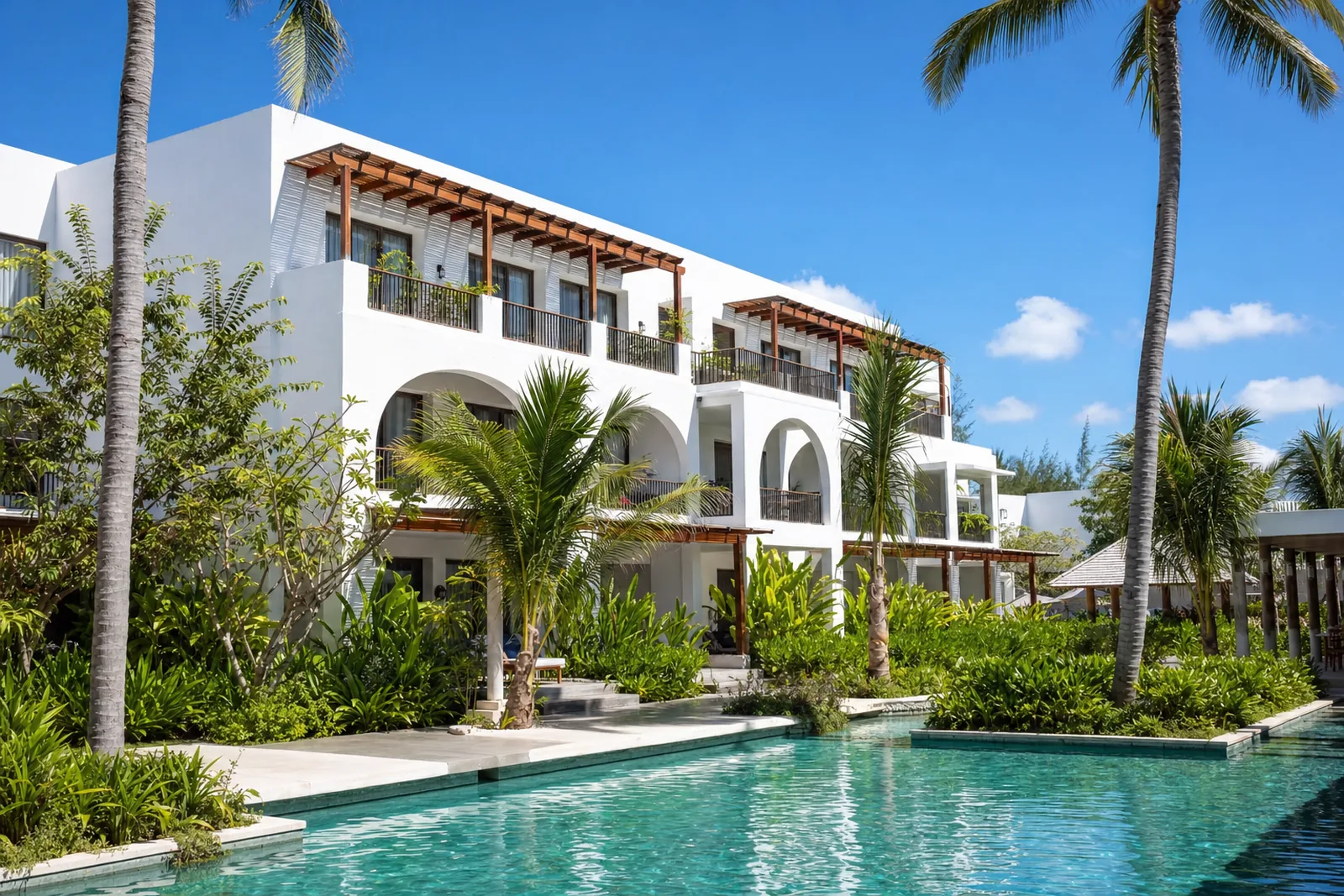
Pullman Lombok Merujani Management Moves to InJourney Hospitality
InJourney has transferred management of Pullman Lombok Merujani Mandalika Beach Resort from ITDC to InJourney Hospitality.
InJourney Tourism Development Corporation has announced that management of Pullman Lombok Merujani Mandalika Beach Resort is moving from ITDC to InJourney Hospitality. The change is presented as part of the wider transformation of the InJourney Group and its effort to create a more integrated hospitality operation.
A change of operator within the InJourney Group
The announcement concerns management responsibility, rather than a disclosed change in the resort’s location, ownership or guest proposition. Pullman Lombok Merujani Mandalika Beach Resort had previously been managed under ITDC; that responsibility is now being transferred to InJourney Hospitality.
InJourney Tourism Development Corporation describes the move as part of a state-owned-enterprise hospitality-business consolidation intended to support more integrated, efficient and globally competitive management.
For investors, the important distinction is between an operational reorganisation and a new property development announcement. The source does not provide financial terms, a timetable, staffing details, renovation plans, room inventory, projected visitor numbers or expected revenue effects. Those omissions mean the announcement should be read primarily as a signal of organisational consolidation within the InJourney Group.
That is still relevant in Mandalika. Large hospitality assets help shape how visitors encounter a destination, particularly where tourism infrastructure, accommodation supply and destination management sit close together. Yet the investment significance will depend on execution: operational integration is a strategic intention, not in itself evidence of a change in resort performance or local property returns.
Why Mandalika’s hotel ecosystem matters
Mandalika is the special economic zone around the MotoGP circuit and is distinct from Kuta, the nearby town. The two locations are often grouped together in casual market commentary, but investors assessing land, tourism exposure and liquidity should keep the distinction clear.
The verified South Lombok market data places Mandalika land at Rp 100-150 million per are, or approximately USD 6,100-9,100 per are. An are equals 100 square metres. This is below the quoted land range for Kuta, where the authoritative range is Rp 300-400 million per are, or approximately USD 18,200-24,200 per are.
- Mandalika: Rp 100-150 million per are, approximately USD 6,100-9,100 per are.
- Kuta: Rp 300-400 million per are, approximately USD 18,200-24,200 per are.
- Are Guling: Rp 120-180 million per are, approximately USD 7,300-10,900 per are.
These figures do not establish that the management transfer will affect land values. They do, however, provide a useful frame for investors watching how the destination’s hospitality ecosystem develops. A resort-management decision is one part of that ecosystem; land acquisition, legal structure, development quality, tourism demand and operating discipline remain separate investment questions.
Consolidation is a governance story, not a yield forecast
InJourney Tourism Development Corporation says the transfer forms part of an effort to strengthen Indonesia’s national tourism ecosystem. It also says the consolidation is intended to deliver hospitality management that is more integrated, efficient and globally competitive.
Those are first-party objectives, and they should be treated as such. The announcement does not quantify any expected efficiency gains, specify operational milestones or state how success will be measured. Investors should therefore resist turning a corporate-management announcement into a forecast for hotel profitability, occupancy or Lombok-wide rental yields.
That discipline matters in a market where headline return language can be misleading. In South Lombok, developer-quoted gross yields are stated at 12-22%, but gross returns exclude costs. Honest net rental yields are generally 7-12% after management fees and realistic occupancy, with top-performing assets able to reach around 15% net. Management fees are typically 18-22% of gross rental revenue, while online travel-agent and booking commissions are typically 15-20%.
The source announcement does not make any yield claim for Pullman Lombok Merujani Mandalika Beach Resort. Nor does it give evidence that the transfer will change the economics of privately owned villas or land in the area. Its value to market observers lies elsewhere: it shows InJourney Group continuing to arrange hospitality management under a more consolidated structure.
The wider South Lombok investment frame
South Lombok continues to attract attention from investors considering the Bali-overflow thesis: rising Bali prices and congestion may push demand towards a less expensive, earlier-cycle Lombok market. The verified market data records foreign-arrivals growth of 40-50% year on year, linked to tourism recovery and the MotoGP effect. It also records Kuta/Mandalika villa-rate growth of about 38% year on year.
These are market-context figures, not a direct consequence of InJourney’s announcement. The transfer of Pullman Lombok Merujani management should not be used to claim that these trends will continue, accelerate or translate automatically into returns for any individual asset.
For buyers considering a South Lombok project, the practical comparison remains asset-specific. Turnkey investment-grade villas are quoted from EUR 95,000-350,000, while realistic stabilised occupancy in the first three years is 55-70%. Investors should model costs, seasonality, management arrangements and their intended holding structure rather than relying on a resort-brand or destination narrative alone.
Foreign buyers also need to distinguish a hospitality headline from property rights. Foreigners cannot hold freehold Hak Milik, or SHM; that form of ownership is restricted to Indonesian citizens. Available routes include leasehold, Hak Pakai for qualifying residents, and a foreign-owned PT PMA holding Hak Guna Bangunan. Nominee arrangements, in which an Indonesian citizen holds freehold on a foreigner’s behalf, are illegal and void in court.
What this means for investors
The immediate takeaway is measured rather than dramatic. InJourney has moved management of Pullman Lombok Merujani Mandalika Beach Resort from ITDC to InJourney Hospitality as part of its group transformation and hospitality consolidation.
For investors, that creates several sensible watchpoints:
- Treat the move as an operational and governance development, not a confirmed change in property values or rental income.
- Separate Mandalika from Kuta when comparing land prices and local market conditions.
- Test gross-yield marketing against realistic net costs, occupancy and management charges.
- Conduct full title, zoning and ownership due diligence before committing to a Lombok acquisition.
TerraNusa Advisory is HubLombok’s independent licensed-notary and legal advisory partner for foreign buyers in Lombok. Its stated scope includes certificate, ownership-history, zoning and encumbrance due diligence; PT PMA setup; relevant tax handling; and deed and title transfer at BPN. A licensed PPAT notary executes relevant deeds, including the AJB deed of sale.
The management transfer gives investors another reason to follow the institutional development of Mandalika’s tourism ecosystem, while keeping underwriting grounded in the particulars of the asset, the legal route and the operating assumptions.
Stay informed, subscribe to the free Lombok Briefing for analysis like this, published twice a month.
What has changed at Pullman Lombok Merujani Mandalika Beach Resort?
InJourney Tourism Development Corporation says management of Pullman Lombok Merujani Mandalika Beach Resort has moved from ITDC to InJourney Hospitality. The announcement presents this as part of InJourney Group’s wider hospitality-business consolidation and transformation.
Does the management transfer prove that Mandalika property values will rise?
No. The announcement does not provide financial terms, performance targets, development plans or a property-price forecast. It is an operational management change. Investors should assess each asset using its own land title, location, costs, occupancy assumptions and management arrangements.
What are current land prices in Mandalika?
Verified South Lombok market data places Mandalika land at about Rp 100-150 million per are, approximately USD 6,100-9,100 per are. One are equals 100 square metres. Mandalika is distinct from nearby Kuta, where quoted land prices are higher.
The Lombok Buyer's Field Guide
Legal structures ranked by risk, the honest ROI math line by line, all six zones ranked, and the 24-point due-diligence checklist. The whole book, free in your inbox.
See what's inside