Prabowo’s single-channel export push signals a new chapter for resource policy
Indonesia is tightening control over resource exports. For investors, the shift points to higher domestic value capture, but also sharper policy execution risk.
Indonesia’s latest export policy debate is not really about paperwork. It is about who captures the value embedded in ore, minerals and other strategic commodities before they leave the country. President Prabowo Subianto’s push for a single-channel export system is best read as an attempt to redirect that value inward, and to force a more disciplined relationship between the state, producers and downstream industry.
For investors, the significance lies less in the headline and more in the architecture. A tighter export channel can improve traceability, strengthen bargaining power and support domestic processing. It can also create bottlenecks, raise compliance costs and expose execution gaps. In a market like Indonesia, where policy ambition often runs ahead of administrative capacity, both outcomes deserve attention.
The Context
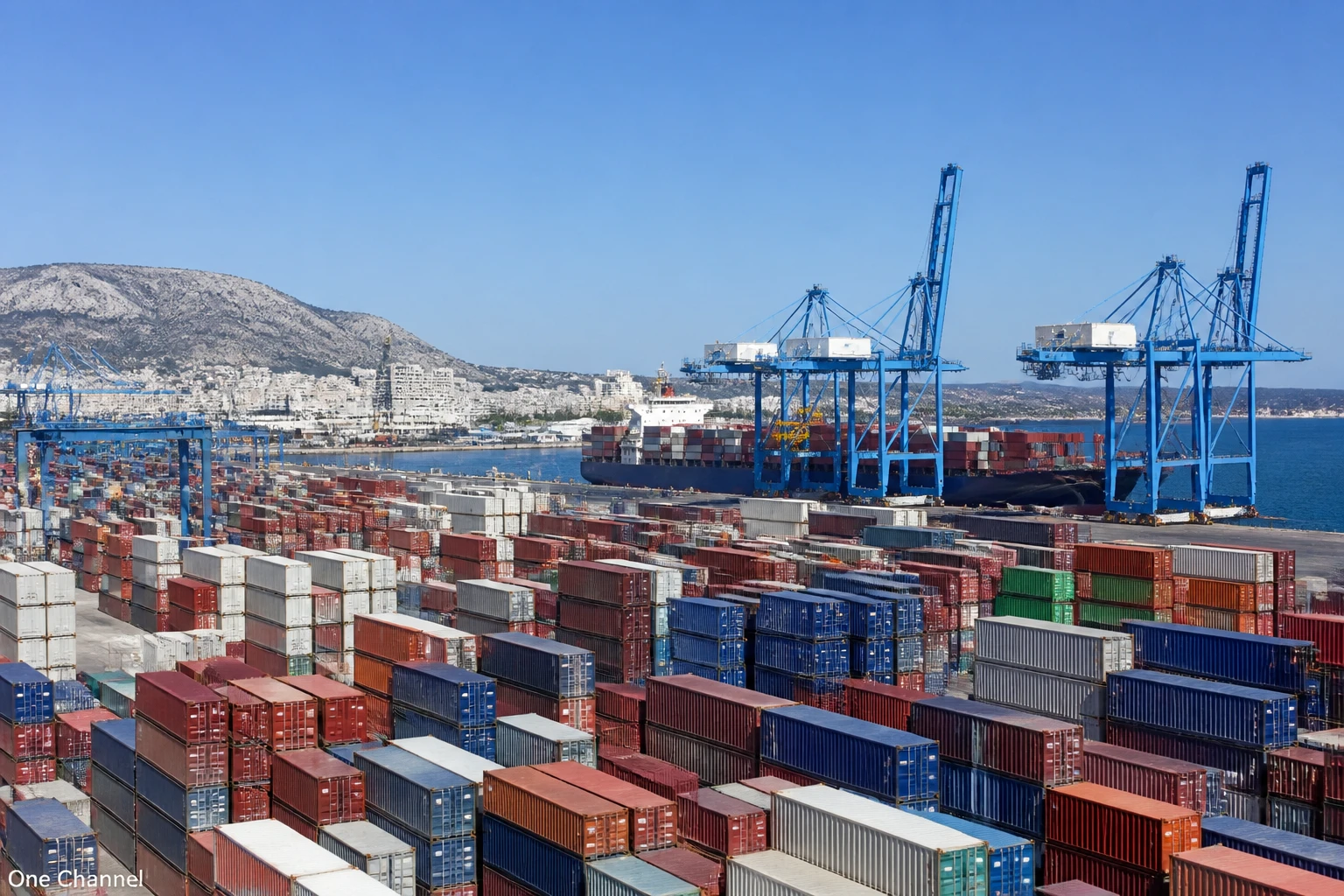
 Prabowo’s single-channel export push signals a new chapter for resource policy · Photo by Pok Rie on Pexels
Prabowo’s position on resource exports fits a broader national strategy: keep more of the country’s mineral and commodity wealth onshore, raise the local share of value added, and reduce the old pattern of exporting raw materials at the lowest point in the value chain. The logic is familiar across the region. Commodity-rich governments want to move from extraction to processing, and then to a more durable industrial base.
The single-channel export concept is especially notable because it implies a stronger gatekeeping role for the state. Instead of multiple routes, intermediaries or fragmented approval structures, exports would be concentrated through one controlled mechanism. That may sound procedural, but in resource policy the procedure is the policy.
The underlying economic argument is straightforward:
- If raw exports are limited, more material must be processed locally.
- If processing happens locally, there is greater scope for jobs, tax receipts and industrial learning.
- If exports are more tightly monitored, the government gains leverage over volumes, pricing and compliance.
But investors should be careful not to treat this as a simple pro-growth move. Resource nationalism can support domestic industry, yet it can also distort supply chains if implementation is abrupt or opaque. The key variable is not the principle, but the design.
The real question is not whether Indonesia should capture more value from its resources. It is whether it can do so without choking the very flows that make the sector investable.
This matters for mining, processing, logistics, port services, industrial land and energy infrastructure. When policy tilts towards domestic retention, capital tends to follow the new chokepoints. In practical terms, that means more attention on smelters, refining capacity, captive power, transport corridors and compliance systems rather than on extraction alone.
A useful way to frame the shift is to compare the two models:
| Model | Export structure | Investor opportunity | Main risk | |---|---|---|---| | Traditional raw-export model | Multiple routes, lower domestic processing | Faster volume growth, simpler logistics | Low value capture, policy reversal risk | | Single-channel model | Centralised approval and tracking | Downstream processing, infrastructure, compliance services | Delays, bottlenecks, regulatory ambiguity |
The policy also comes at a time when many emerging-market governments are trying to reclaim greater strategic control over critical materials. That is part industrial policy, part fiscal policy and part political signalling. In a world of fragile supply chains, resource states have discovered that control over exports can be converted into leverage.
Why Investors Should Watch the Execution
For investors, the attraction of a stronger domestic value-capture model is obvious. If Indonesia keeps more of its resource wealth onshore, the country can support higher-margin activities and reduce dependence on volatile commodity cycles. It also creates a pathway for firms that can finance and operate processing assets efficiently.
Yet the investment case depends on execution quality. A single-channel export system can improve transparency, but only if it is predictable, digitalised and consistently enforced. If it becomes a discretionary chokepoint, it may increase working-capital pressure and invite rent-seeking.
That distinction matters in three ways.
First, the policy can alter the cost of capital. Resource firms facing more administrative steps may require larger cash buffers, stronger counterparties and longer financing horizons. For lenders and private credit providers, that can be both an opportunity and a warning sign.
Second, the policy can reshape project selection. Capital will naturally favour operators with scale, compliance strength and political fluency. Smaller firms may struggle if they cannot absorb delays or manage documentation risk.
Third, the policy can strengthen certain infrastructure assets. If more commodities are to be processed domestically, the ecosystem around them becomes more valuable: power, water, roads, rail, ports, warehouses and industrial estates all gain strategic importance.
A few investor implications stand out:
- Beneficiaries: downstream processors, logistics firms, industrial estate developers, power suppliers and compliance technology providers.
- Pressure points: exporters reliant on quick turnover, smaller miners, trading intermediaries and firms with weak administrative systems.
- Key watch item: whether the government pairs export control with credible investment incentives for processing and logistics capacity.
The most optimistic reading is that Indonesia is building a more mature resource economy. Under that scenario, the country moves from extraction-led growth to a broader industrial platform. The more cautious reading is that policy centralisation may produce uncertainty before it produces value.
That tension is not unusual in Southeast Asian resource economies. The challenge is to convert policy intent into investable certainty. If the state can do that, the benefits may be substantial. If it cannot, the system may simply tax inefficiency more heavily.
The broader market context remains supportive of long-horizon resource investing, but only where policy clarity exists. Investors are already accustomed to judging themes such as the Bali-overflow thesis, tourism momentum and infrastructure spillovers in Lombok and eastern Indonesia. A more assertive export policy should be read in the same way: not as a trading signal, but as an indicator of how the state intends to shape future capital allocation.
What This Means for Investors
The immediate investor takeaway is that Indonesia is signalling preference for domestic value capture over easy raw-material exports. That creates a more structured opportunity set, but also a more selective one. The winners are likely to be the firms that can operate inside a more regulated, more localised and more capital-intensive chain.
For international investors, the most important question is whether the policy is a one-off statement or the start of a more coherent industrial regime. If it is the latter, then the country could attract capital into processing, energy and logistics at a deeper level than before. If it is the former, investors should expect headline volatility without structural clarity.
The right stance is not to overreact, but to reweight attention. Monitor projects that depend on export throughput, watch for domestic-processing incentives, and pay close attention to how quickly the administrative machinery is digitised and standardised. In commodity economies, the distance between policy ambition and operational reality can be large; that gap is where risk, and opportunity, usually live.
For now, Prabowo’s export stance reinforces a familiar but important message: Indonesia wants more of the value chain to stay at home. Investors who understand where that value will accumulate, and where it may get stuck, will be better placed than those who only watch commodity prices.
Stay informed, subscribe to the free Lombok Briefing for market intelligence like this, published twice a month.
What is Indonesia's single-channel export system and why does it matter for investors?
Under President Prabowo Subianto's proposal, commodity exports would be concentrated through one controlled mechanism rather than multiple routes or intermediaries. The aim is to improve traceability, strengthen the government's bargaining power and push more domestic processing of minerals and raw materials. The procedure itself becomes the policy, giving the state a stronger gatekeeping role over resource flows.
Which sectors benefit most from Indonesia's tighter resource export controls?
Downstream processors, logistics firms, industrial estate developers, power suppliers and compliance technology providers stand to gain most. When exports are tightly monitored, the ecosystem around domestic processing becomes more valuable, covering power, water, roads, rail, ports, warehouses and industrial estates. Capital tends to follow the new chokepoints created by centralised export approval.
What are the main risks of Indonesia's single-channel export model for foreign investors?
The key risk is execution quality. If the system becomes a discretionary chokepoint rather than a predictable, digitalised process, it can increase working-capital pressure and invite rent-seeking. Resource firms may require larger cash buffers and longer financing horizons. Smaller miners and exporters reliant on quick turnover face the greatest pressure if they cannot absorb documentation delays.

The Lombok Buyer's Field Guide
Legal structures ranked by risk, the honest ROI math line by line, all six zones ranked, and the 24-point due-diligence checklist. The whole book, free in your inbox.
See what's inside