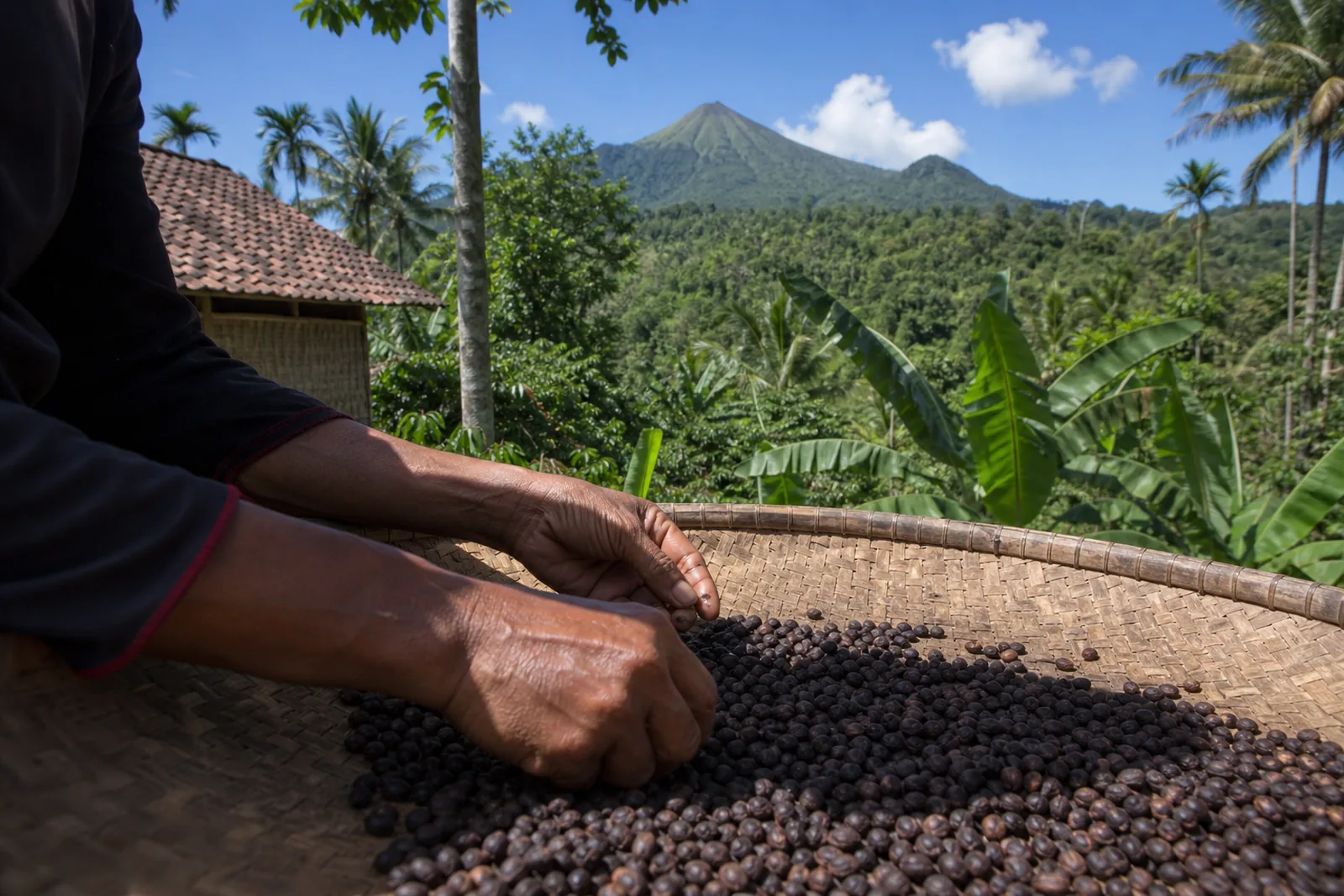
Daily Dispatch: BI Backs Indonesia’s Global Coffee Market Position
Bank Indonesia is seeking to strengthen Indonesia’s global coffee-market position, a signal investors should watch for its wider economic relevance.
Quick answer: Bank Indonesia is seeking to strengthen Indonesia’s position as the world’s fourth-largest coffee producer through the JCFF, according to Antara Business. For Lombok investors, the immediate relevance is macroeconomic rather than property-specific: it highlights an official effort to reinforce an Indonesian export sector with global visibility.
This is a small but timely signal from Indonesia’s economic policy landscape. In a market where investors often concentrate on individual assets, official efforts to support internationally traded industries deserve attention: they can shape the wider story investors use to assess the country’s commercial depth, institutional priorities and international presence.
The Context
Antara Business reports that Bank Indonesia, widely referred to as BI, is seeking to strengthen Indonesia’s presence in the global coffee market via the JCFF. The source describes Indonesia as the world’s fourth-largest coffee producer.
That ranking is the central fact in this dispatch. Coffee is not simply a lifestyle product in this framing; it is an internationally recognised Indonesian industry. BI’s stated effort therefore matters because it places an established export-facing sector within an institutional initiative aimed at strengthening the country’s global market position.
Indonesia is the world’s fourth-largest coffee producer, according to the Antara Business report.
For an overseas investor, the sensible reading is disciplined. The report establishes an official objective, not a quantified investment return, a forecast or a guarantee of commercial outcomes. It does, however, provide a current indication of where a major Indonesian institution sees value in reinforcing global visibility.
That distinction is important. International investors should separate three questions that are often blurred together:
- What has been announced: BI is seeking to strengthen Indonesia’s global coffee-market position through the JCFF.
- What is established in the source: Indonesia is identified as the world’s fourth-largest coffee producer.
- What remains unproven by this report: the eventual commercial effect of the initiative on producers, exporters, regional economies or property markets.
The underlying investment point is not that a coffee-market initiative changes the case for every Indonesian asset overnight. It is that investors assessing Indonesia should register credible signals of institutional attention to sectors where the country already has global standing.
Why the JCFF Signal Matters
The most useful way to view the JCFF is as a live policy and market-positioning development. Antara Business presents it as the route through which BI seeks to strengthen Indonesia’s presence in the global coffee market. The supplied report does not provide further operational detail, so investors should resist filling the gaps with assumptions about scale, timing, beneficiaries or financial impact.
Nevertheless, the direction of travel is clear enough to merit notice. The initiative is explicitly outward-looking: its stated purpose concerns Indonesia’s position in a global market. For international capital, that language matters because it is directed at a familiar investor question: how does a country convert a recognised productive base into stronger international relevance?
The answer, in this case, cannot yet be reduced to a return model. No yield, revenue effect, volume target or timetable is supplied in the source. There is no basis here to claim that the JCFF will increase coffee prices, expand tourism, alter land values or improve the performance of a particular business.
What it can do is sharpen the analytical lens. Investors should regard this as one component of a broader country assessment rather than as a standalone trade. A robust assessment asks whether official initiatives are aligned with sectors where Indonesia has an identifiable competitive presence, whether the claims are followed by practical execution, and whether the resulting opportunities are accessible through investable structures.
That framework is particularly relevant for European, Australian and American investors, who may be accustomed to seeing Indonesia through a narrow geographic or tourism-led lens. The Antara report points to a different dimension: a country with a major position in a globally consumed agricultural product and an official institution seeking to reinforce that position.
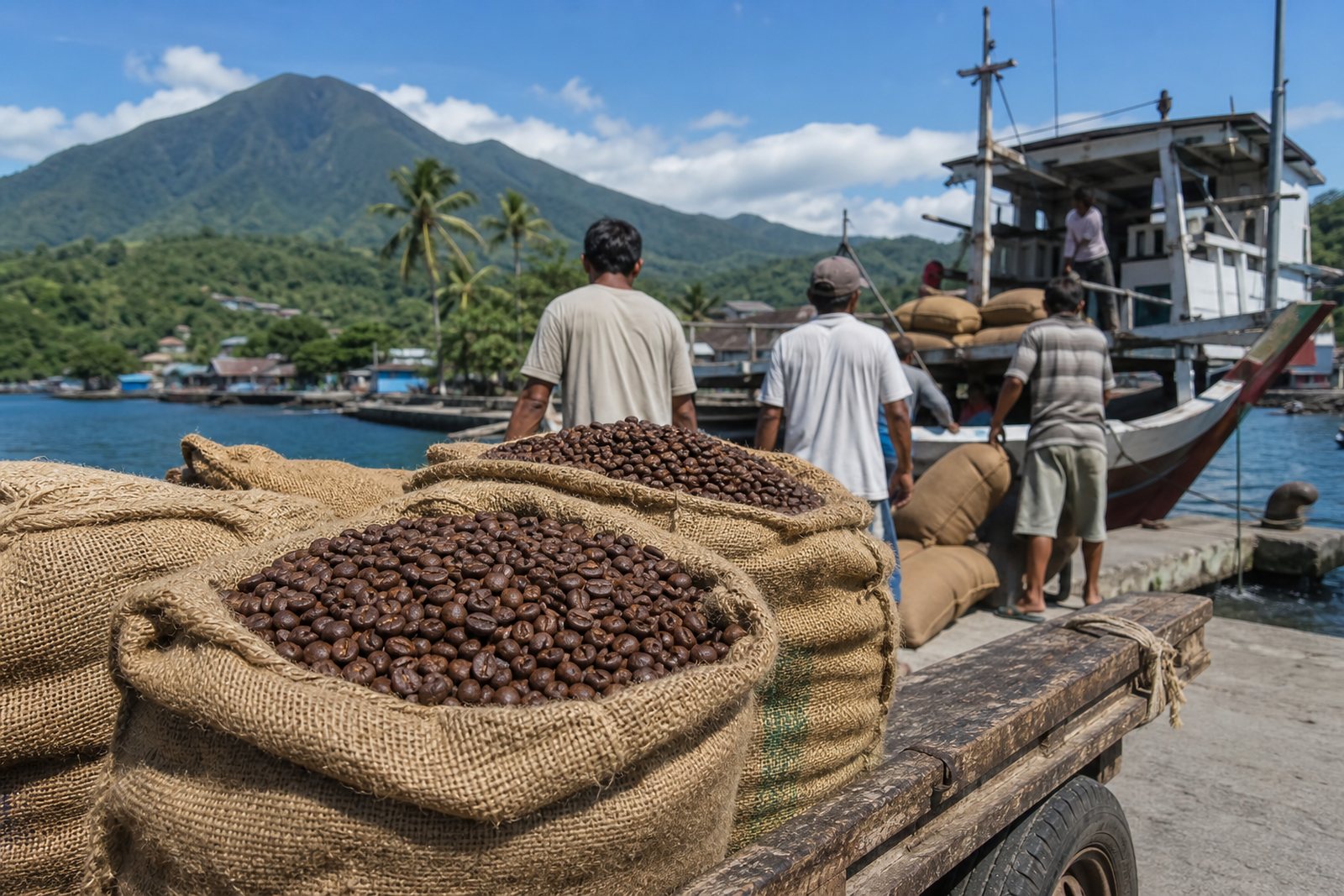 Daily Dispatch · Illustration: HubLombok (AI-generated)
What the Report Does, and Does Not, Establish
Breaking economic news can create a temptation to extrapolate. In this case, restraint is a virtue. The report supports a concise conclusion: BI is pursuing stronger global positioning for Indonesia’s coffee sector via the JCFF. It also supports the description of Indonesia as the world’s fourth-largest coffee producer.
It does not establish a direct link between the initiative and Lombok’s property market. Nor does it substantiate a claim about a specific coffee-growing region, a named company, export volumes, consumer demand or future policy measures. Investors should therefore treat any such connection as a question for further due diligence, not as an implication of the announcement itself.
A useful reading table is below.
| Investor question | What this report supports | | --- | --- | | Is Indonesia active in a globally relevant coffee sector? | The source identifies Indonesia as the world’s fourth-largest coffee producer. | | Is an official institution seeking stronger international positioning? | Yes. BI is seeking to strengthen Indonesia’s global coffee-market position through the JCFF. | | Does this prove an investable return or a Lombok property effect? | No. The source provides no such figure or causal evidence. |
This is not a limitation of the news; it is the proper boundary of the evidence. Sophisticated investors benefit from preserving it. A headline can indicate a change in attention or emphasis, while the investment case still depends on execution, access, valuation, legal structure and risk.
For Lombok-focused readers, that discipline is especially valuable. The island can be part of a wider Indonesian allocation thesis, but each local opportunity must stand on its own merits. A national initiative in coffee-market positioning should not be used to overstate the case for an unrelated villa, plot or operating business.
What This Means for Investors
The practical implication is to watch the JCFF as a developing signal, not to force an immediate conclusion. Investors reviewing Indonesia should note that BI is seeking to strengthen the country’s global coffee-market presence at a time when Indonesia is described by Antara Business as the world’s fourth-largest coffee producer.
For a portfolio manager, entrepreneur or prospective Lombok buyer, the announcement is relevant in three measured ways:
- It adds a current example of official attention directed towards an Indonesian sector with established global standing.
- It encourages a broader country lens: Indonesia’s investment narrative is not confined to leisure assets or one destination.
- It reinforces the need for evidence-led underwriting. A policy objective is meaningful, but it is not a substitute for asset-level due diligence.
The next question is not whether the announcement is positive in the abstract. It is whether subsequent information clarifies the JCFF’s practical scope and whether that information changes an investor’s own opportunity set. Until then, the highest-quality response is observation rather than overreaction.
For HubLombok readers, this dispatch belongs in the macroeconomic file: a live development that speaks to Indonesia’s international commercial positioning, while leaving Lombok-specific investment decisions subject to their own evidence. The report is a reminder that national credibility is built not only through destinations and infrastructure, but also through the global standing of sectors that investors can recognise and assess.
The immediate conclusion is straightforward. BI’s stated aim is to strengthen Indonesia’s global coffee-market position through the JCFF. That is worth tracking because Indonesia is identified as the world’s fourth-largest coffee producer; it is not, on the evidence currently available, a reason to make claims beyond the announcement.
Stay informed, subscribe to the free Lombok Briefing for market intelligence like this, published twice a month.
What has Bank Indonesia announced about the global coffee market?
According to Antara Business, Bank Indonesia is seeking to strengthen Indonesia’s position in the global coffee market through the JCFF. The supplied report does not provide a timetable, financial target or quantified commercial outcome for the initiative.
Why is Indonesia’s coffee position relevant to international investors?
Antara Business identifies Indonesia as the world’s fourth-largest coffee producer. That gives the announcement macroeconomic relevance: it concerns an Indonesian sector with recognised global standing, although the report does not establish a specific investment return or asset-market effect.
Does the JCFF announcement change the Lombok property investment case?
Not on the evidence supplied. The report concerns Bank Indonesia’s effort to strengthen Indonesia’s global coffee-market position. It does not provide a direct link to Lombok property, land values, rental performance or any particular investment opportunity.
The Lombok Buyer's Field Guide
Legal structures ranked by risk, the honest ROI math line by line, all six zones ranked, and the 24-point due-diligence checklist. The whole book, free in your inbox.
See what's inside