Lombok Notebook: Why NTB’s Tourism Plan Depends on Joined-Up Execution
NTB’s latest coordination meeting puts quality tourism at the centre of a cross-sector economic agenda. Here is what that ambition means for Lombok investors.
Quick answer: NTB’s provincial planning agency says quality tourism and a globally competitive creative economy require coordinated action across government sectors, local communities and destination businesses. For Lombok investors, the immediate implication is not a new market metric but a reminder that durable tourism demand depends on execution beyond accommodation alone.
A meeting can sound like administrative routine. Yet the subject of NTB’s latest provincial coordination meeting deserves closer attention: it frames tourism not as a standalone visitor industry, but as an economic system connecting landscapes, local enterprise, skills and public administration.
That distinction matters in Lombok. Property investors can readily see a plot, a villa or a view; they cannot underwrite a destination’s long-term quality from architecture alone. The more difficult question is whether the surrounding economy, institutions and communities can support the experience visitors expect, and share its benefits credibly.
The Context
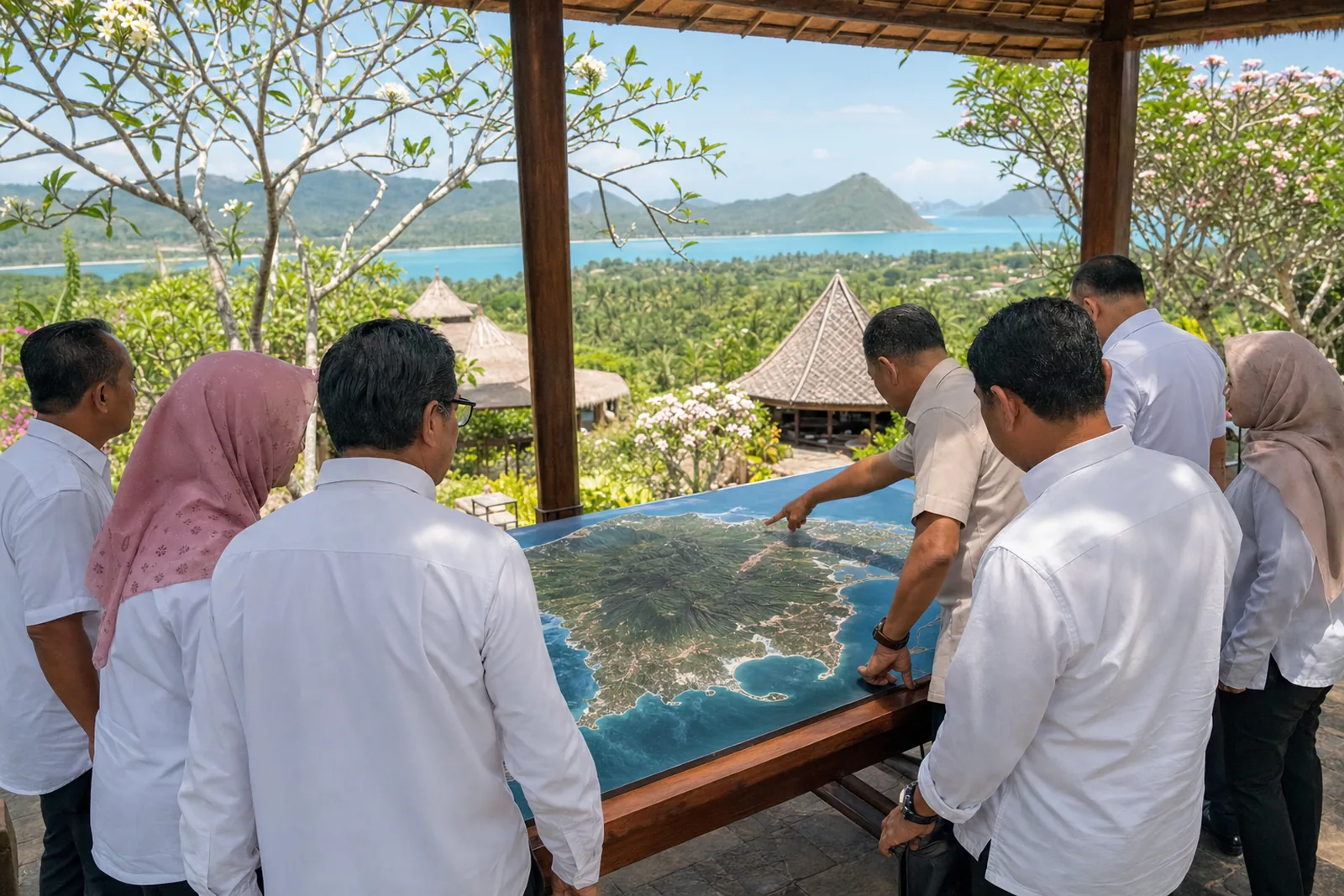
On 25 June, the official Instagram account of DPMPTSP Provinsi NTB reported that Bappeda, NTB’s regional development planning agency, had convened a coordination meeting in Mataram on its priority programme for quality tourism and a globally oriented creative economy. Representatives of provincial government bodies attended, according to the account.
The language was broad, but its premise was unusually important. Bappeda’s head argued that priority programmes require cross-sector collaboration and cannot be delivered piecemeal by a single government department. In the account’s description, quality tourism is linked to agriculture, forestry, fisheries, micro, small and medium-sized enterprises, the creative economy and human-resource development.
This is a useful corrective to the common investor habit of treating tourism as a narrow accommodation trade. Rooms, restaurants and transport are visible parts of the visitor economy. But a destination is also shaped by the quality and stewardship of its natural setting, the supply chains that serve hospitality, the skills of those working within it, and the degree to which local businesses can participate.
NTB’s tourism office, as reported in the post, placed emphasis on improving the quality of destinations, tourism products and human resources, alongside local-community involvement. These are ambitions rather than reported outcomes. The post does not provide targets, budgets, implementation milestones or evidence of results. Investors should therefore read it as a policy signal: provincial institutions are seeking to make tourism a more integrated development agenda.
The distinction between signal and delivery is essential. An official coordination meeting demonstrates attention and alignment; it does not, by itself, establish that an initiative has changed visitor behaviour, operating conditions or investment returns.
“Tourism is not only the business of the Tourism Office,” Bappeda’s head said, according to the official account, stressing that all sectors have a role in creating a quality, sustainable destination with economic benefits for communities.
From a destination asset to a local economic system
The official account identifies rice fields, forests, beaches and community life as NTB assets that can become economically valuable tourism attractions when managed in an integrated and sustainable way. That formulation captures both the opportunity and the discipline required.
For investors, natural assets are not simply scenery attached to a property brochure. Their value depends on how they are protected, accessed, interpreted and incorporated into a broader destination offer. A beach can attract attention; a coherent visitor experience requires many participants working around it. The same is true of rural landscapes and local cultural life: they may enrich a journey, but they should not be reduced to decorative inputs for external capital.
A practical reading of the provincial agenda is that tourism quality has several connected components:
| Component identified by the official account | Why it matters to an investor’s context | |---|---| | Destination quality | The wider setting influences how a location is experienced, not merely how it is marketed. | | Tourism products | A property is only one element of the reasons guests may choose to visit and return. | | Human resources | Service quality and local capability affect the operating environment around an asset. | | Local-community involvement | Participation is central to whether tourism’s economic benefits are broadly rooted. | | Creative economy and local enterprise | Local businesses can form part of the visitor economy and destination character. |
None of this removes the need for conventional investment discipline. A buyer still needs to distinguish gross from net income, test realistic occupancy assumptions, understand management and booking costs, and verify legal rights. In South Lombok, honest net rental yields are generally described as 7–12% after management fees and realistic occupancy, while developer-quoted gross yields of 12–22% exclude costs. Those are very different measures, and a quality-tourism policy discussion should not blur them.
The same caution applies to market recovery. South Lombok’s foreign-arrivals trend is estimated at +40–50% year on year, reflecting tourism recovery and the MotoGP effect, according to HubLombok’s verified market context. That provides useful background, but it is not proof that every site, asset type or operating model will perform equally well.
The more interesting point is strategic. If the provincial approach becomes operationally meaningful, it could strengthen the non-property foundations that make a place more resilient: better integration between visitor demand and local producers; greater attention to destination standards; and a clearer role for skills and community participation. Those are not guaranteed outcomes. They are the rationale behind the agenda Bappeda has described.
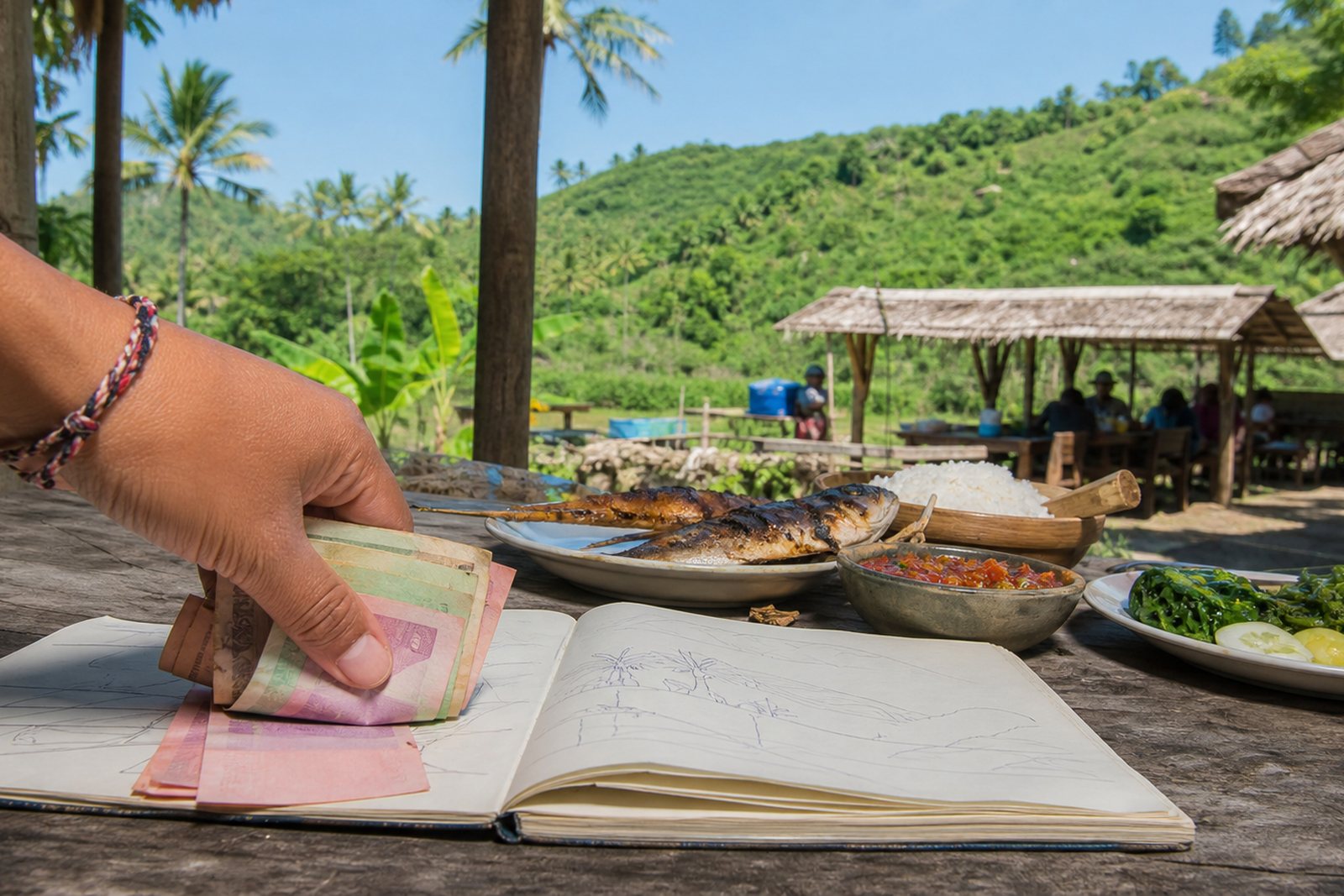 Lombok Notebook · Illustration: HubLombok (AI-generated)
Quality is a standard, not a slogan
“Quality tourism” is an attractive phrase because it promises a better class of destination without necessarily requiring a precise definition. The NTB post gives it useful substance by connecting it to destination quality, products, people and community involvement. It also leaves several questions unanswered, as a short official update reasonably would.
What standards will define destination quality? How will different agencies coordinate their work? What mechanisms will ensure that local enterprises and residents participate meaningfully rather than symbolically? And how will the province judge whether its intended economic benefits are being realised?
These are questions for policy delivery, not criticisms of the meeting itself. They matter because tourism’s externalities do not respect departmental boundaries. A hospitality investment may sit within a market that depends on water, roads, waste management, land-use governance, workforce development and the continued appeal of nearby natural assets. Investors often assess these issues in fragments because data and responsibility are fragmented. The provincial framing at least recognises the interdependence.
It also suggests a more mature way to assess destination risk. Instead of asking only whether demand is rising, investors can ask whether the conditions behind demand are being strengthened. Instead of assuming that a strong visual location is self-sufficient, they can examine how it fits with local enterprise, workforce capability and environmental management.
This is particularly relevant where Lombok is considered through the familiar Bali-overflow thesis: rising prices and congestion in Bali may encourage interest in a cheaper, earlier-cycle alternative. That thesis can help explain attention, but it is not an investment case on its own. A destination cannot simply inherit durable value from another island’s constraints. It must develop its own proposition and its own capacity to host visitors well.
The official NTB account’s emphasis on integrated, sustainable management is therefore more than institutional vocabulary. It is a recognition that a tourism economy becomes more credible when the benefits and responsibilities of growth are distributed across the sectors that support it.
What This Means for Investors
The near-term takeaway is measured. Bappeda’s coordination meeting is not a transaction trigger, a guarantee of infrastructure delivery or evidence that any particular development will succeed. It provides no basis for revising a valuation, projecting a revenue line or assuming a policy benefit has already arrived.
It does, however, offer a useful framework for better due diligence. Investors considering Lombok can apply it in a practical way:
- Assess the destination as well as the individual asset. Ask what guests will experience beyond the front gate and how that experience is supported.
- Treat local economic integration as a quality indicator, not a marketing flourish. Consider whether the operating model has credible links to local suppliers, services and employment.
- Separate official ambition from demonstrated implementation. Look for evidence over time rather than treating a coordination announcement as completion.
- Keep underwriting conservative. Distinguish gross promotional yield from net income after the real costs of management, booking commissions and occupancy.
- Conduct legal and title due diligence independently. Foreigners cannot hold freehold Hak Milik; lawful routes include leasehold, Hak Pakai for eligible residents, and a PT PMA holding HGB. Nominee arrangements are illegal and void in court.
For legal structures, title checks and transaction process, HubLombok’s advisory partner TerraNusa Advisory describes its role as covering due diligence on certificates, ownership history, zoning and encumbrances, as well as company setup, taxes, deed work and land-office transfer. Buyers should still obtain advice appropriate to their own circumstances.
The broader investment lesson is pleasantly unfashionable: destination quality is built through coordination, not declared through a rendering. NTB’s official account has set out an integrated ambition. Lombok investors should watch the substance that follows, patiently, independently and with a clear distinction between a policy direction and a proven result.
Stay informed, subscribe to the free Lombok Briefing for market intelligence like this, published twice a month.
What did NTB’s latest tourism coordination meeting focus on?
According to the official DPMPTSP Provinsi NTB account, Bappeda convened provincial agencies to strengthen NTB’s quality-tourism and creative-economy priority programme. The discussion linked tourism with destination quality, tourism products, human resources, local-community involvement and cross-sector collaboration.
Does the NTB meeting change the investment case for Lombok property?
Not by itself. The official post signals a policy direction but provides no targets, budgets, implementation milestones or performance results. Investors should not treat it as evidence of changed rental returns, asset values or operating conditions; it is context for ongoing due diligence.
How should investors assess quality tourism in Lombok?
Assess both the property and the destination around it. Consider the wider guest experience, local enterprise and workforce links, environmental stewardship and legal due diligence. Keep revenue assumptions conservative: honest South Lombok net rental yields are generally **7–12%** after management fees and realistic occupancy.

The Lombok Buyer's Field Guide
Legal structures ranked by risk, the honest ROI math line by line, all six zones ranked, and the 24-point due-diligence checklist. The whole book, free in your inbox.
See what's inside