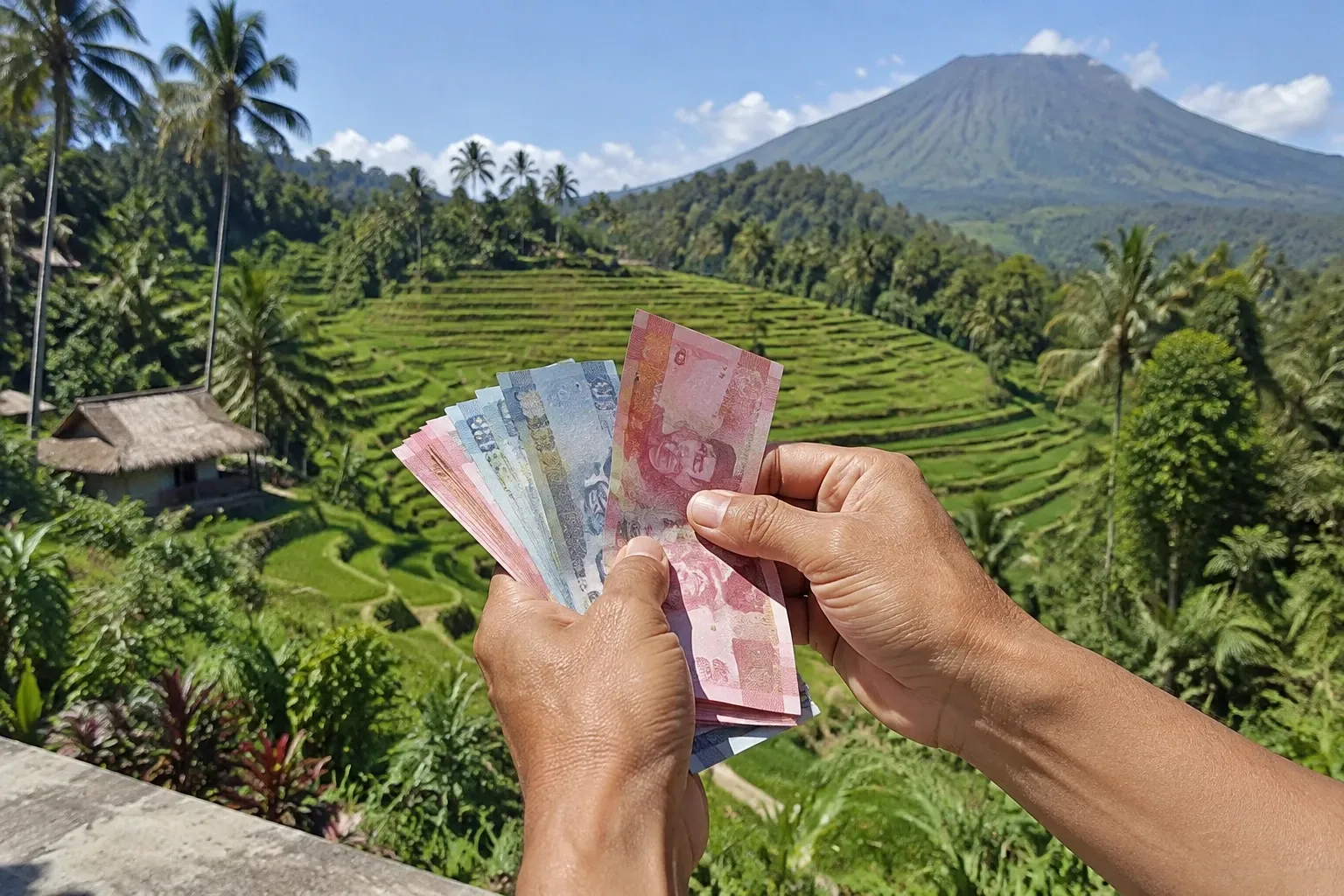
Indonesia Eyes Stronger Rupiah via Export Rules: What It Means for Investors
Jakarta plans to raise rupiah conversion caps on natural resource exports. We examine how currency stability and onshore liquidity affect South Lombok property assets.
Quick answer: Indonesia plans to revise natural resource export rules to encourage higher conversion of US dollar earnings into rupiah, lifting the current 50 percent conversion ceiling. For foreign property investors in Lombok, greater onshore foreign exchange liquidity stabilizes the rupiah, dampens imported inflation, and reduces currency volatility for PT PMA capital deployments and cross-border asset transfers.
At a Financial System Stability Committee (KSSK) conference in Jakarta, senior economic ministers outlined a targeted shift in Indonesian trade and monetary management. Rather than merely warehousing foreign currency offshore or in passive domestic bank accounts, the central administration intends to channel massive resource export proceeds directly into the local currency. For global investors allocating capital into frontier property markets such as South Lombok, this macroeconomic realignment carries tangible, structural implications.
The Context
Indonesia's natural resource export proceeds framework, enacted under Government Regulation Number 21 of 2026 on 1 June 2026, established stringent retention obligations across the extractive sector. Under existing mandates, non-oil-and-gas exporters must place 100 percent of their export proceeds in designated special accounts at state-owned banks for a minimum duration of 12 months. For oil and gas exporters, the mandate requires retaining at least 30 percent of proceeds for at least three months.
Crucially, existing provisions cap the mandatory conversion of these foreign currency proceeds into rupiah at 50 percent of a firm's total resource export earnings. Speaking on behalf of the fiscal authority, Finance Minister Suahasil Nazara confirmed that proposed amendments seek to lift or adjust this conversion threshold. As Minister Nazara explained, the overarching objective is to stimulate a higher rate of conversion from US dollars into the domestic currency, thereby deepening domestic financial markets and reinforcing domestic banking liquidity.
Trade Minister Budi Santoso affirmed that consultations with industrial exporters remain underway, ensuring that final statutory adjustments accommodate commercial viability while serving sovereign monetary stability. Minister Santoso also noted that the prospective regulatory shifts operate entirely independently of PT Danantara Sumberdaya Indonesia (DSI). This policy initiative unfolds against an encouraging macroeconomic backdrop: headline inflation for October 2026 stood at 3.23 percent, comfortably within the central bank's target corridor, while foreign portfolio inflows reached US$7 billion through October 2026.
Foreign Exchange Liquidity and Rupiah Stability
For international property investors evaluating Lombok against regional benchmarks such as Bali or Phuket, foreign exchange volatility represents a primary risk variable. Land transactions across South Lombok are conducted strictly in Indonesian rupiah, adhering to sovereign currency laws, whereas offshore investors routinely budget their commitments in US dollars, euros, or British sterling.
When resource exporters convert higher proportions of their multi-billion dollar revenues into rupiah, domestic currency reserves expand, providing Bank Indonesia with enhanced natural buffers against global monetary shocks. In recent years, private investors navigating Indonesian acquisitions have experienced periodic exchange rate fluctuations, with the currency hovering near Rp 16,500 per US dollar. A structurally supported rupiah reduces sudden imported inflationary spikes, which in turn anchors domestic construction material prices, logistical transport costs, and skilled contractor labour rates.
| Macroeconomic Indicator | Stated Policy / Verified Benchmark | Direct Impact on Lombok Real Estate | | :--- | :--- | :--- | | October 2026 Headline Inflation | 3.23% (within official target) | Predictable construction and development budgeting | | 2026 YTD Portfolio Inflows | US$7 billion through October 2026 | Enhanced liquidity in national financial system | | Natural Resource DHE Retention | 100% for 12 months (non-oil and gas) | Structural dollar supply parked in state banks | | Proposed DHE Conversion Revision | Encouraging conversion above 50% cap | Sustained upward support for rupiah stability | | Baseline Currency Reference | ~Rp 16,500 per US dollar | Clear baseline for capital conversion and land pricing |
By transforming export receipts into active onshore rupiah liquidity rather than dormant foreign exchange deposits, national monetary authorities create a more resilient domestic credit environment. For real estate developers and institutional hospitality funds operating in emerging hubs, predictable monetary parameters substantially improve financial modelling precision over multi-year build schedules.
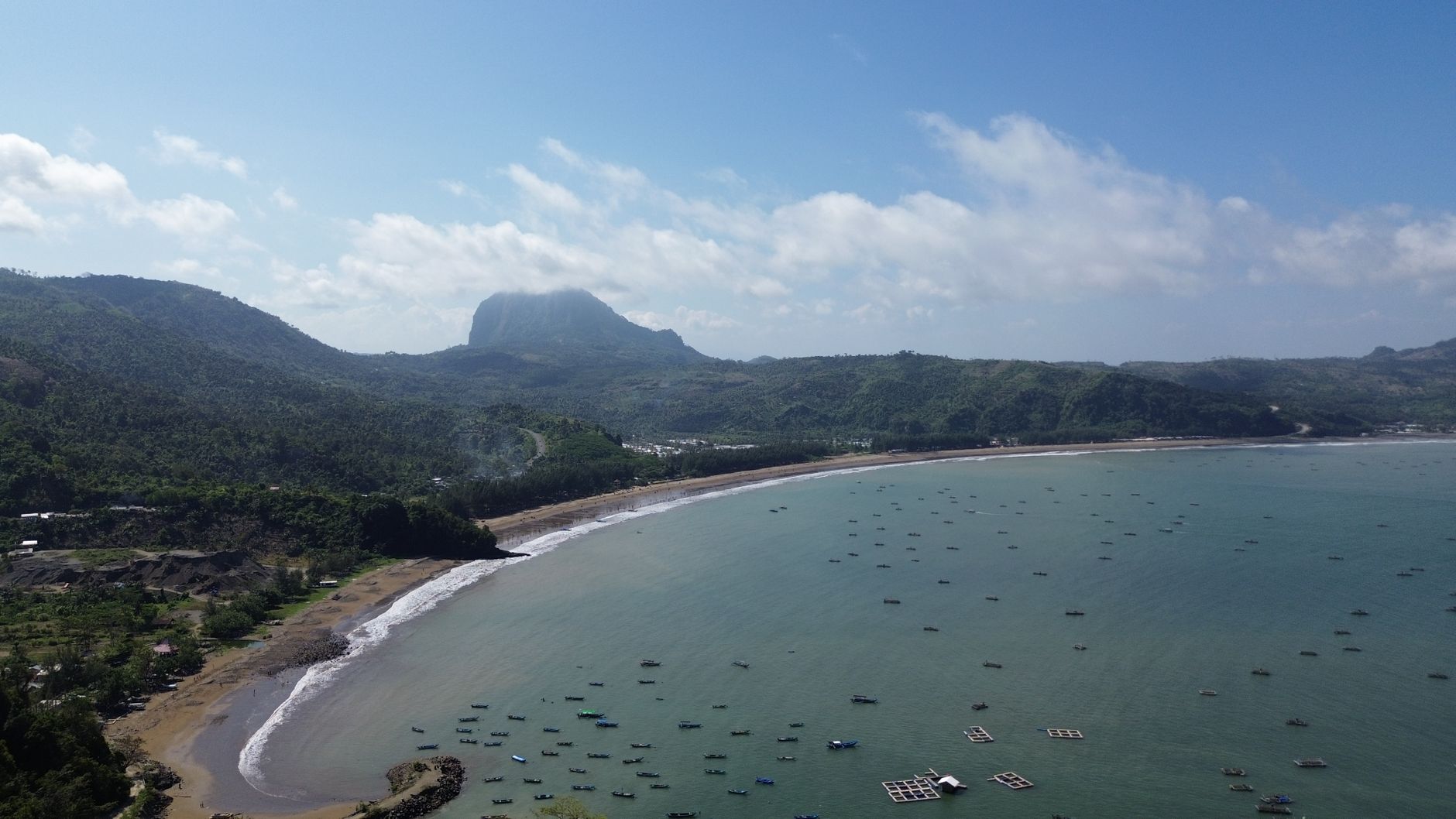 Indonesia Eyes Stronger Rupiah via Export Rules · Photo by Septian Dwicahya on Pexels
Implications for Land Pricing and Operational Yields
The ripple effects of national currency governance travel directly into provincial land markets. In South Lombok, where prime land spreads across diverse coastal corridors, land pricing operates on local conventions that require disciplined comprehension from foreign buyers. Land is formally quoted per are (where 1 are equals 100 square metres), never in four-figure US dollar per square metre sums.
At present baseline rates of approximately Rp 16,500 per US dollar, the land pricing landscape across South Lombok illustrates the island's compelling value proposition compared to mature regional destinations:
- Kuta (Township): Rp 300-400 million per are (~$18,200-24,200 per are), representing the commercial centre and primary liquidity leader.
- Selong Belanak: Rp 150-250 million per are (~$9,100-15,200 per are), celebrated for gentle surf bays and long-term capital appreciation.
- Are Guling: Rp 120-180 million per are (~$7,300-10,900 per are), an early-cycle coastal frontier displaying rapid expansion.
- Mandalika (SEZ): Rp 100-150 million per are (~$6,100-9,100 per are), bordering the international racing circuit.
- Mawun: Rp 50-80 million per are (~$3,000-4,800 per are), offering sheltered coastal plots.
- Bumbang: Rp 30-50 million per are (~$1,800-3,000 per are), marking the lowest emerging entry tier across the southern coast.
Across the prime tourist zones, land values sit at roughly Rp 150-400 million per are (equivalent to approximately USD 90-240 per square metre), compared to Bali equivalents that routinely command USD 200-500 per square metre. A robust, well-regulated currency environment ensures that foreign capital entering these land tiers does not suffer abrupt domestic purchasing power erosion between preliminary legal due diligence and final notary deed execution.
On the operational side, stabilised turnkey investment villas in South Lombok command entry valuations of EUR 95,000-350,000, presenting a notable capital efficiency advantage against comparable spec assets in Bali that trade between USD 400,000-800,000. Honest net rental yields in Lombok settle at 7-12% post-management deductions, with occasional top-performing assets touching roughly 15% net under prime operational execution. While promotional developer material frequently advertises gross yields of 12-22%, prudent portfolio managers must deduct management fees (typically 18-22% of gross revenue) and online travel agency commissions (15-20%), factoring in realistic stabilised occupancy rates of 55-70%. When the rupiah maintains stability through systematic export conversion, net yields converted back into home currencies remain predictable rather than degraded by foreign exchange friction.
Corporate Structures and Cross-Border Capital Flows
For sophisticated overseas investors, capitalising on Indonesia's macroeconomic resilience requires alignment with statutory legal channels. Under Indonesian agrarian law, foreign nationals cannot hold freehold titles (Hak Milik / SHM), which are reserved exclusively for Indonesian citizens without exception. Informal nominee arrangements, wherein a foreign buyer funds a local citizen to register freehold title, are entirely illegal, unenforceable, and void in Indonesian courts.
Legitimate foreign direct investment relies on formalised legal vehicles:
- PT PMA (Foreign-Owned Company): The institutional route for commercial property investment. A PT PMA holds Hak Guna Bangunan (HGB, right to build), granting a secure 30-year operational title with statutory extensions. Working capital and property acquisitions flow cleanly through licensed corporate banking channels.
- Hak Pakai (Right to Use): A personal registered title available to foreigners holding qualifying KITAS or KITAP residency status, granted over state or freehold land. Under this mechanism, the foreign resident holds strictly the Hak Pakai entitlement, not the underlying freehold Hak Milik title.
- Hak Sewa (Leasehold): A commercial contractual lease, standardly structured for 25 to 30 years with predefined extension rights, optimal for non-resident passive villa investors.
For buyers setting up a PT PMA or executing a leasehold transfer, legal due diligence should involve an independent licensed notary (PPAT) and specialized legal counsel, such as TerraNusa Advisory, to review certificates at the national land agency (BPN), oversee buyer transfer tax (BPHTB, approximately 5% of assessed valuation), and ensure compliance with municipal spatial planning rules.
What This Means for Investors
The Ministry of Finance's move to encourage greater export revenue conversion signals a mature, assertive approach to macroeconomic governance. Jakarta is actively leveraging its natural resource strength to shield the domestic economy from international monetary volatility. Rather than relying solely on high interest rates to protect the currency, the government is tapping real economic trade surpluses to fortify domestic banking reserves.
For real estate allocators in South Lombok, this regulatory trajectory provides three clear strategic advantages:
- Diminished Currency Slippage: Greater domestic foreign exchange liquidity dampens sudden depreciatory runs on the rupiah, protecting capital during multi-stage construction drawdowns.
- Controlled Development Inflation: Coupled with moderate inflation (3.23% in October 2026), currency stability preserves budgeted building costs for turnkey villa projects.
- Sound Repatriation Pipelines: Transparent export and foreign exchange regulations foster an open, compliant banking infrastructure, simplifying legitimate corporate profit repatriation through PT PMA structures.
South Lombok remains in an active growth cycle, propelled by foreign arrivals expanding by 40-50% year-on-year and Kuta villa rates climbing by approximately 38% year-on-year. As national economic policy systematically bolsters the rupiah, international buyers acquire hard real estate assets underpinned by a resilient sovereign foundation.
Stay informed: subscribe to the free Lombok Briefing, published twice a month (the 1st and 15th), for market intelligence like this.
What regulatory change is Indonesia planning for export earnings?
The government plans to revise export rules to encourage natural resource exporters to convert a larger share of their US dollar earnings into rupiah, adjusting the current policy that caps foreign currency conversion at 50 percent of total resource export proceeds.
How does higher rupiah conversion benefit Lombok property buyers?
Increased domestic conversion deepens onshore foreign exchange liquidity, insulating the rupiah against sudden depreciation. This reduces currency friction during land acquisition, protects development budgets against imported inflation, and provides stable cost predictability for foreign investors funding projects via foreign capital.
Can foreign investors buy property directly with foreign currency?
No. Indonesian law mandates that domestic transactions, including land acquisitions executed before a licensed PPAT notary, be settled in Indonesian rupiah. Foreign investors typically convert capital through licensed corporate PT PMA accounts holding Hak Guna Bangunan (HGB) titles or via direct leasehold contracts.

The Lombok Buyer's Field Guide
Legal structures ranked by risk, the honest ROI math line by line, all six zones ranked, and the 24-point due-diligence checklist. The whole book, free in your inbox.
See what's inside