Prabowo’s Kebumen shrimp harvest signals a stronger coastal economy
President Prabowo’s Kebumen visit spotlights area-based shrimp farming, with output reaching Rp2.8 billion per hectare and wider implications for Indonesia’s coastal growth.
President Prabowo Subianto’s appearance at the Area-Based Shrimp Farming facility in Kebumen is more than a ceremonial harvest stop. It is a live signal that Indonesia’s coastal production economy is moving from fragmented, smallholder-style output towards a more organised, scalable model with clearer investor appeal.
The headline figure is hard to ignore: Rp2.8 billion per hectare in harvest value. In a market where productivity, logistics and export consistency increasingly determine asset performance, that kind of output reframes shrimp farming from a rural livelihood story into an industrial and land-use story.
The Context
The immediate news is straightforward. On Saturday, the President reviewed a bumper harvest at the Area-Based Shrimp Farming (BUBK) site in Kebumen, Central Java, and the reported production value reached Rp2.8 billion per hectare. For investors, the significance lies not only in the number itself, but in the policy signal behind the visit: a visible endorsement of a model built around clustered production, improved farm management, and stronger downstream control.
This matters because Indonesia’s seafood sector has long had the ingredients for scale, but not always the coordination. Shrimp is one of the country’s most commercially important aquaculture products, yet yields can be highly uneven when ponds are poorly managed, disease control is weak, and cold-chain links are unreliable. An area-based system is designed to reduce those frictions by concentrating infrastructure, biosecurity, and technical oversight.
Rp2.8 billion per hectare is not a symbolic harvest number. It is a benchmark that suggests the coastal economy can be structured around higher-intensity, higher-value production when management is disciplined.
For a daily market lens, the broader lesson is that this is exactly the kind of policy-backed productivity story that can attract capital into Indonesia’s real economy. It links farm output, port logistics, processing, and export revenues in a way that is easier for institutions, developers and landholders to underwrite than dispersed, low-visibility production.
In practical terms, the Kebumen event points to three investable themes:
- Productivity over acreage: returns are increasingly defined by how well land and water are managed, not merely by how much land is available.
- Infrastructure premium: power, access roads, processing, and cold storage can be as valuable as the ponds themselves.
- Policy validation: presidential attention often accelerates local permitting, private co-investment, and public-private coordination.
| Metric | Reported signal | Investor relevance | |---|---:|---| | Harvest value | Rp2.8 billion/ha | Demonstrates high-output potential | | Production model | Area-based shrimp farming | Suggests scalable, replicable infrastructure | | Policy backdrop | Presidential site visit | Indicates state-level validation |
The central question is whether this becomes a one-off showcase or a repeatable template. In investment terms, that distinction matters. Showcase projects create headlines; repeatable templates create pipelines.
Why Area-Based Farming Changes the Equation
Area-based shrimp farming is not simply a different layout. It is a different operating philosophy. The model brings production into a managed cluster where water quality, disease prevention, feed efficiency and harvesting schedules can be coordinated more tightly than in scattered ponds.
That has several consequences.
First, it improves bankability. Lenders and equity partners prefer predictable systems, especially in agribusiness sectors where disease outbreaks or supply-chain failures can wipe out margins quickly. A clustered production zone, if properly run, is easier to monitor, audit and insure.
Second, it strengthens land value logic. Land near functioning agro-industrial nodes does not just reflect acreage; it reflects access to utilities, processing capacity and export pathways. This is familiar territory for property investors: infrastructure creates a premium, and premiums tend to compound.
Third, it widens the economic spillover. A productive shrimp hub pulls in ancillary demand for:
- feed supply
- ice plants and cold storage
- transport and logistics services
- maintenance contractors
- packaging and processing facilities
- local housing for workers and supervisors
That is why this kind of project is relevant even to readers who do not own agricultural assets. Once a production cluster becomes credible, it starts to influence nearby land use, labour markets and local service demand.
The structure also helps explain why the Indonesian government would showcase it now. When national growth narratives need real assets behind them, aquaculture offers a compelling mix of export potential, employment generation and regional development.
For context, investors watching Indonesia’s broader coastal economy will recognise a familiar pattern: the most attractive opportunities usually sit at the intersection of productive land, transport access and policy momentum. That is as true for industrial parks and logistics corridors as it is for resort-adjacent real estate. The same principle applies here.
A small but important comparison clarifies the point:
- Traditional pond model: fragmented, harder to supervise, more vulnerable to inefficiency.
- Area-based model: centralised, more measurable, more scalable.
- Investor outcome: a clearer route from productive asset to financeable platform.
The government’s visible support also matters because Indonesia’s domestic consumption story is not the whole picture. Shrimp is an export-minded product, and export businesses reward consistency. A farm that can sustain quality, timing and traceability is much more attractive than one that only performs well in isolated cycles.
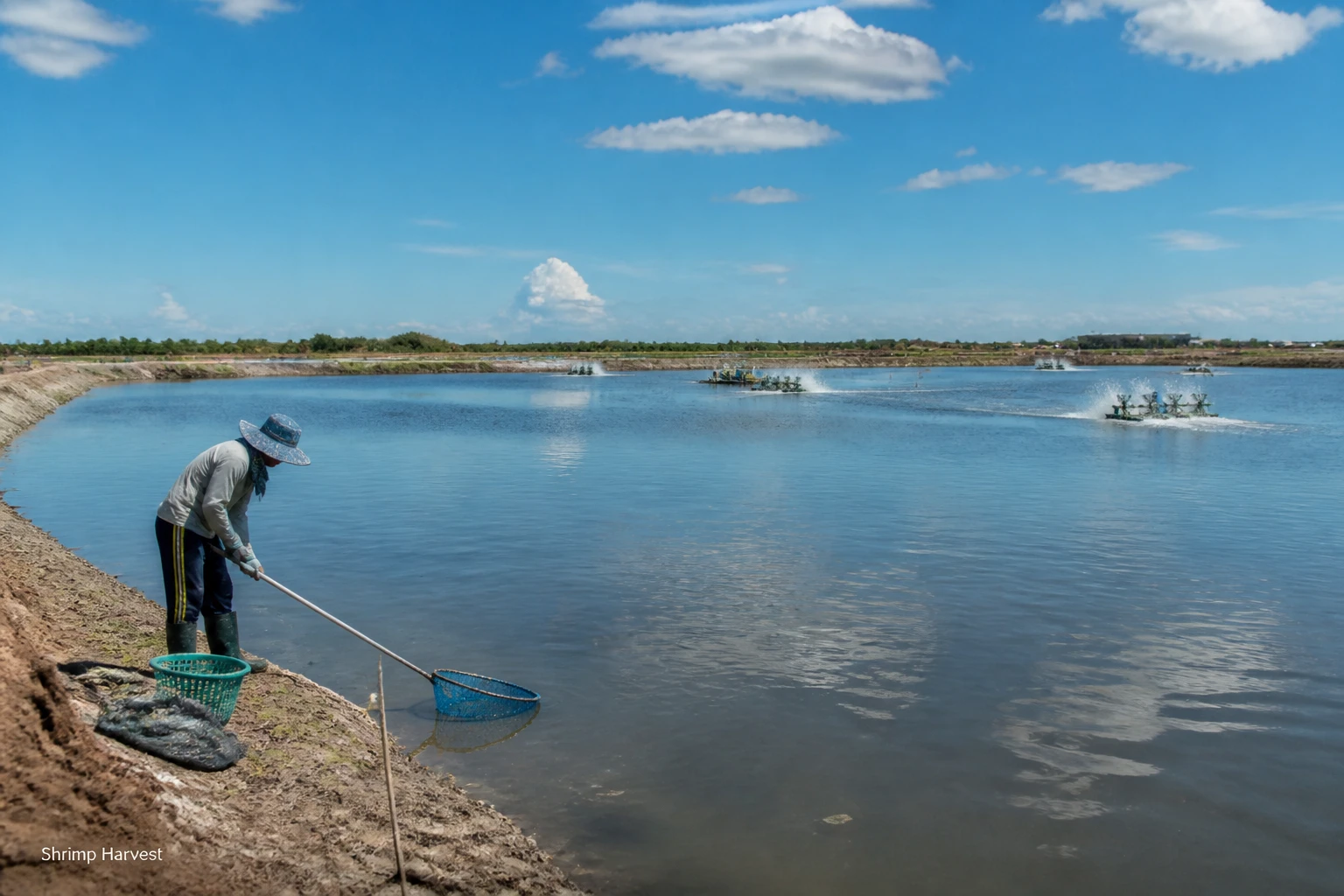
 Prabowo’s Kebumen shrimp harvest signals a stronger coastal economy · Photo by Tom Fisk on Pexels
The Wider Economic Signal
Kebumen’s shrimp harvest should be read as part of a broader shift in how Indonesia wants to frame growth. The emphasis is moving towards sectors that can combine rural development with industrial discipline. That is important because the country’s next phase of expansion will not be driven only by consumer demand or urban construction. It will also depend on whether productive regions outside the core cities can generate dependable cash flow.
This has a few implications worth noting.
One is that coastal land with productive use cases may attract more attention from capital than purely speculative holdings. The market increasingly distinguishes between idle land and land that produces revenue through agriculture, aquaculture or mixed-use infrastructure. The latter category is more likely to support financing, partnerships and eventual value uplift.
Another is that local governments may become more willing to back similar projects if the national leadership continues to showcase them. In Indonesia, policy signalling can be a market catalyst. A successful demonstration site can unlock planning decisions, encourage private operators and reduce perceived execution risk.
A third implication is reputational. If the model proves durable, it could strengthen Indonesia’s narrative as a country that can supply food and commodity products at scale while modernising the regions that produce them. That matters for foreign investors who are looking for growth stories with tangible assets rather than purely financial engineering.
The challenge, of course, is execution. High reported output in a single site does not guarantee sector-wide success. The pressure points remain familiar:
- disease management and biosecurity
- feed costs and input inflation
- export compliance and traceability
- water quality and environmental controls
- operator skill and management depth
These risks do not reduce the opportunity; they define it. The best-performing investors in this segment will be those who understand that the real asset is not just the pond. It is the system around the pond.
For Lombok readers, there is also a familiar regional logic at work. Across Indonesia, capital tends to follow visible infrastructure, policy support and export-linked income streams. That is why developments near tourism corridors, airport upgrades and logistics nodes often reprice faster than isolated plots. In that sense, Kebumen’s shrimp story belongs to the same investment grammar as high-quality coastal real estate: productivity first, speculation second.
What This Means for Investors
For investors in emerging Asia, the most useful takeaway is not that shrimp farming has suddenly become fashionable. It is that Indonesia is still producing sectors where operational improvement can translate directly into asset value. That is the kind of environment where disciplined capital can find mispriced opportunity.
The implications are clear:
- Agribusiness investors should watch for replicable area-based models that can be scaled beyond a single district.
- Landholders near functioning coastal production zones should assess whether their land can benefit from logistics, worker housing or service demand.
- Infrastructure investors should look at cold chain, access roads, processing and utilities as the real bottlenecks.
- Regional real estate buyers should pay attention to productive clusters, not just lifestyle narratives.
If the Kebumen model holds, it could reinforce a wider thesis: Indonesia’s growth story is increasingly about coordinated local economies, not just headline infrastructure or metro-area consumption. For capital allocators, that means looking beyond the obvious urban centres and asking where productive land, state backing and logistics are beginning to align.
The market will now watch for two things. First, whether the Kebumen result can be repeated across other coastal sites. Second, whether the state and private sector can convert this kind of productive visibility into durable investment platforms. If both happen, the value created by this harvest will extend well beyond one day’s output.
Stay informed, subscribe to the free Lombok Briefing for market intelligence like this, published twice a month.
What harvest value was recorded at Indonesia's Kebumen area-based shrimp farming site?
The Area-Based Shrimp Farming facility in Kebumen, Central Java, reported a harvest value of Rp2.8 billion per hectare. President Prabowo Subianto attended the site visit, which analysts treat as both a productivity benchmark and a policy signal, reframing shrimp farming from a rural livelihood story into an industrial and land-use opportunity with clearer investor appeal.
Why does area-based shrimp farming improve bankability for investors?
Area-based shrimp farming concentrates production into a managed cluster where water quality, disease prevention, feed efficiency and harvesting schedules are coordinated centrally. Lenders and equity partners prefer such predictable, auditable systems because disease outbreaks or supply-chain failures can quickly wipe out margins in dispersed pond models. The clustered structure is also easier to monitor and insure.
What economic spillovers does a shrimp production cluster generate for surrounding areas?
A credible shrimp production hub creates ancillary demand for feed supply, cold storage, ice plants, transport and logistics, packaging, processing facilities and local housing for workers and supervisors. This matters even to investors without agricultural assets, because once a cluster becomes established it starts influencing nearby land use, labour markets and local service demand, which can lift surrounding property values.

The Lombok Buyer's Field Guide
Legal structures ranked by risk, the honest ROI math line by line, all six zones ranked, and the 24-point due-diligence checklist. The whole book, free in your inbox.
See what's inside