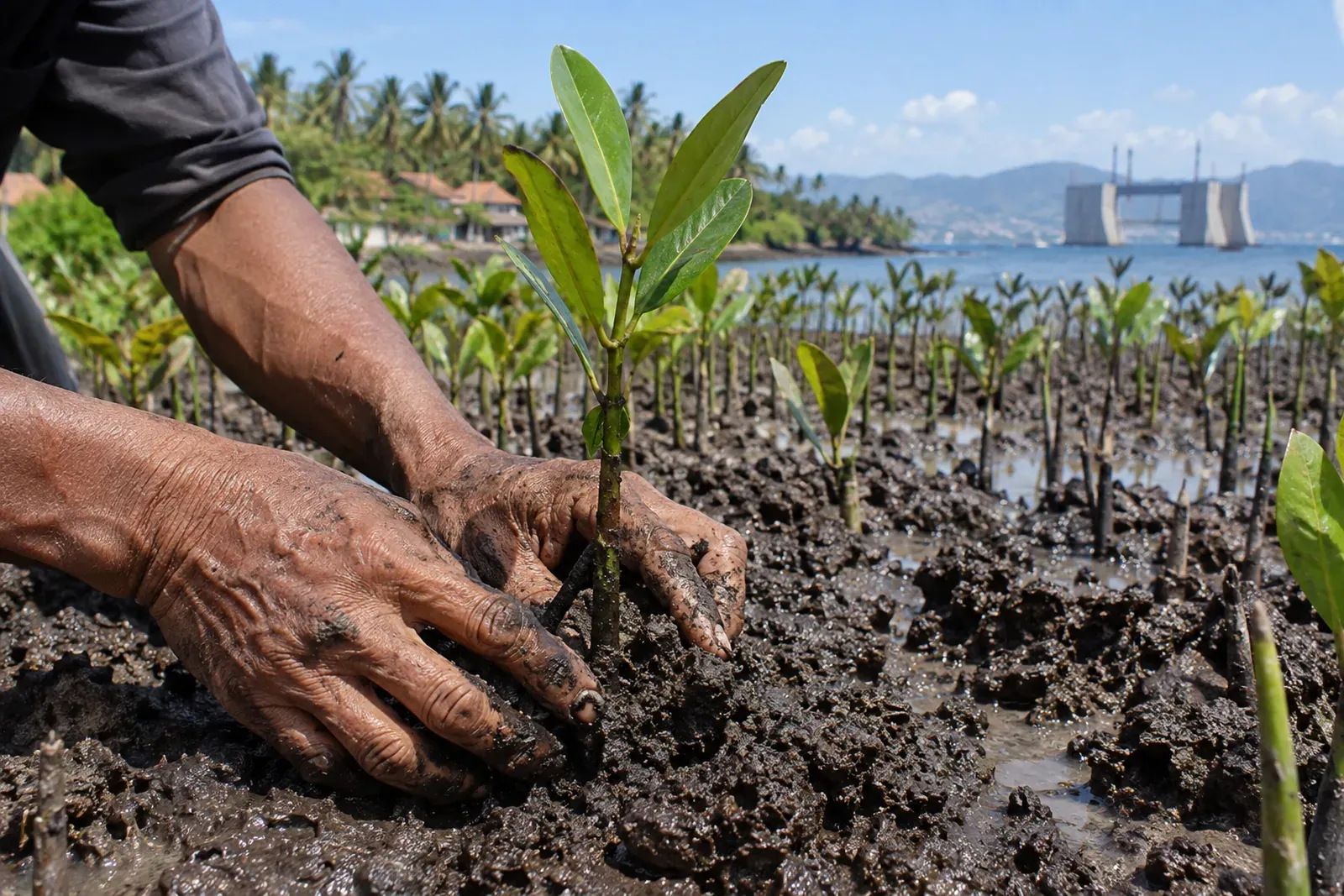
Prabowo Backs Java's 575km Giant Sea Wall as a Multi-Decade Bet
Prabowo reaffirms plans for a 575 km Giant Sea Wall protecting regions that produce 38% of GDP, with a target start in early 2027 and a timeline of up to 20 years.
President Prabowo Subianto has restated his case for a Giant Sea Wall along Java's North Coast, a barrier of roughly 575 kilometres meant to shield regions that generate 38 percent of Indonesia's gross domestic product. The message for investors is as much about time as money: construction is targeted to begin in early 2027, yet full completion could take up to 20 years.
What the president said
Speaking on the broadcast programme Presiden Prabowo Menjawab (President Prabowo Answers) in Jakarta on Wednesday, Prabowo framed the wall as an economic necessity, not only an environmental one, according to Antara. His argument rested on geography and on the growing environmental threats facing coastal populations and national economic activity.
"It is vital because a vast number of our industries are located on Java's North Coast. So, we need coastal embankments, sea walls, and breakwaters," Prabowo said.
He described the wall as one of the strategic projects the government must carry out, and he was direct that it will not be finished quickly. These are the president's own statements, and they are the basis for everything that follows. The reporting we have does not include engineering studies, a published budget or a signed financing agreement.
The scale of what is being protected
According to the figures cited by Antara, the planned Giant Sea Wall would stretch approximately 575 kilometres, from Tangerang in Banten to East Java. It is designed to protect roughly 50 million people while safeguarding the regions that generate 38 percent of Indonesia's GDP.
The northern coastal corridor is also described as a crucial backbone for the national logistics network. That description helps explain why the government frames coastal defence as economic infrastructure rather than a purely civil-protection measure.
The project by the numbers (as cited by Antara)
- About 575 km of coastline, from Tangerang in Banten to East Java
- Roughly 50 million people the wall is designed to protect
- 38% of Indonesia's GDP generated in the regions safeguarded
- 70 industrial estates and five economic zones on the northern coastal corridor
- 15 construction segments
Antara also links to two related reports: one on a government-drafted economic blueprint for the area along the seawall, and another on the government tapping universities for the project. We note them as signs of wider planning activity, but we have not drawn on their contents here.
A programme measured in decades
Prabowo was candid about the timetable. Construction is targeted to begin in early 2027, and the project will be divided into 15 segments. Timelines will vary across regions.
- Start: targeted for early 2027
- Jakarta: an estimated eight years for the capital alone
- Semarang: he suggested it might be faster
- Full completion: up to 20 years, or between 10 and 15 years if execution is accelerated
The president's own framing is that this is a multi-decade commitment. A target start date and a range of estimates are statements of intent, not construction milestones, and the gap between a 10-year and a 20-year outcome is wide enough that it should shape how anyone reads the project.
Financing: interest, not commitments
On funding, Prabowo said several potential investors have already expressed interest in financing the megaproject.
"There are already interested parties and those willing to provide funding. So, this is one of the strategic projects we must carry out," he said.
The distinction matters. Interest is not committed capital. The source names no backers, gives no amounts and does not describe a financing structure, so any assessment of who will pay, and on what terms, is premature.
What this means for investors
For readers of a Lombok-focused portal, the Giant Sea Wall is not a Lombok story. Nothing in the source connects it to Lombok, and we draw no direct line between the two. It is still worth reading for three reasons.
1. Treat announcements as intent. The 2027 start is a target, the timelines are estimates, and the financing is described as interest. Investors in any Indonesian market are better served by tracking what is contracted and built than by what is announced.
2. It shows where state priority sits. The government is making the case for protecting the industrial and logistics core of Java, the regions that produce 38 percent of GDP. That is a statement about national economic priorities, and it is worth understanding as context even if it does not touch a Lombok asset directly.
3. It is a lesson in horizons. A project that may take 10 to 20 years to complete sits alongside a Lombok market where our verified figures point to an honest net rental yield of 7-12% after management fees and realistic occupancy, and to foreign arrivals growing at roughly 40-50% year on year. These are different assets on different islands, and we do not suggest one influences the other. The shared lesson is discipline about timing. Foreign buyers in Lombok work within defined legal routes: leasehold (Hak Sewa, typically 25-30 years with extensions), Hak Pakai, or a PT PMA company holding HGB. Each should be judged against timelines and rights that can be verified today, not against projects that are still on the drawing board.
The next signposts are concrete ones: whether construction begins in early 2027 as targeted, and whether the interest from potential financiers turns into named, committed funding.
Stay informed, subscribe to the free Lombok Briefing for analysis like this, published twice a month.
How long will Indonesia's Giant Sea Wall take to build?
President Prabowo says construction is targeted to start in early 2027. He estimates about eight years for Jakarta alone, with Semarang possibly faster. Full completion could take up to 20 years, or 10 to 15 years if execution is accelerated. These are presidential estimates, not contractual milestones.
How big is the Giant Sea Wall and what does it protect?
The planned wall would run approximately 575 kilometres from Tangerang in Banten to East Java, in 15 construction segments. It is designed to protect roughly 50 million people and regions generating 38 percent of Indonesia's GDP, including 70 industrial estates and five economic zones.
Does the Giant Sea Wall affect Lombok property investors?
The source material links the project only to Java's North Coast and does not mention Lombok, so no direct effect can be stated. Its relevance for Lombok investors is contextual: it shows national infrastructure priorities and reinforces the need to underwrite on verified timelines rather than announcements.

The Lombok Buyer's Field Guide
Legal structures ranked by risk, the honest ROI math line by line, all six zones ranked, and the 24-point due-diligence checklist. The whole book, free in your inbox.
See what's inside