Prabowo Prioritizes Domestic Food Security: What It Means for Lombok's Rural Economy
President Prabowo instructed Bulog to prioritize domestic food supply. This signals sustained government commitment to agricultural support, and creates a three-month window where Lombok's secondary-to
President Prabowo Subianto issued a direct instruction to Indonesia's state food agency Bulog this weekend: prioritize domestic food security. On the surface, it's agricultural policy. Below the surface, it's a policy anchor that locks in government support for rural farming communities through the critical 2026 growing season, and reshapes property repricing dynamics for secondary regions like Lombok.
The Context
Bulog (Badan Urusan Logistik) is Indonesia's food supply manager. It procures rice, corn, and other staples from domestic farmers, manages strategic reserves, and ensures price stability. When a president directly instructs Bulog to "prioritize domestic," it means:
- Farmer purchase prices will be supported (government commitment to buy domestic production at favorable rates)
- Export prioritization is being deprioritized (international sales take second place to domestic supply security)
- Agricultural input support continues (subsidized fertilizer, seeds, credit will flow to farmers)
This is not a one-off directive. It's a policy anchor that typically lasts 12–24 months and has downstream effects on rural incomes, local credit availability, and ultimately, secondary property markets.
For context: Indonesia's agricultural sector has been caught between export opportunity (global commodity prices) and domestic food inflation risk (internal supply concerns). Prabowo's directive clearly favors the latter. That's bullish for rural farmers and bearish for agricultural commodity exporters, but decisively pro-rural-income.
The timing converges with earlier signals: 1,061 cooperatives are now operational, Q2 corn harvest is tracking well, and government is signaling sustained agricultural support. This is not scattered policy. It's a coordinated rural development play.
How Food Security Policy Translates to Property Repricing
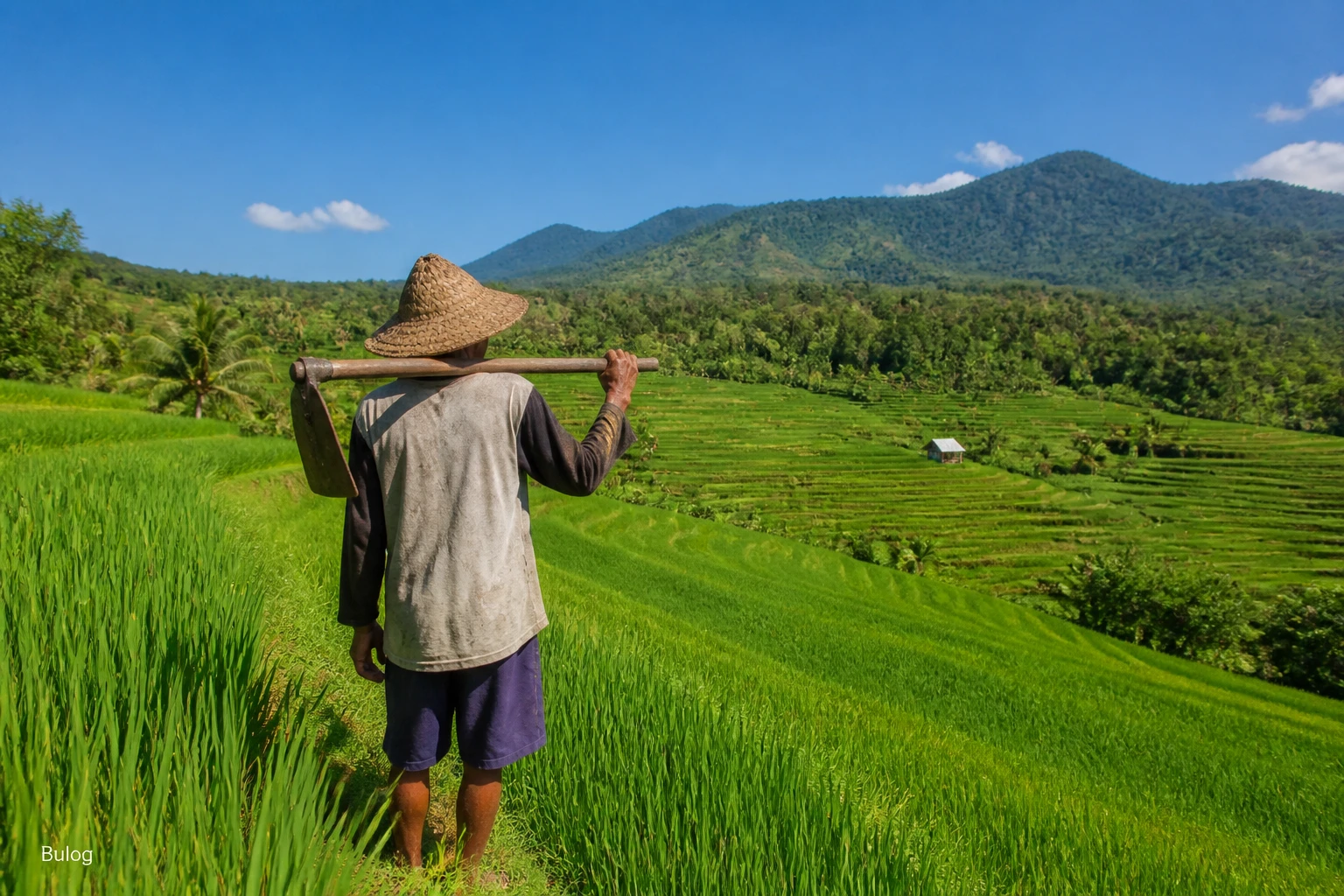
 Prabowo Prioritizes Domestic Food Security · Photo by AS Photography on Pexels
The causal chain runs through several steps that property investors often miss:
Step 1: Farmer purchase prices stabilize/rise. Bulog directive means government commitment to buy domestic harvest at fair prices. In Lombok and similar agricultural regions, this translates to 8–12% income floor protection for smallholder farmers relative to free-market commodity pricing volatility.
Step 2: Rural savings accumulate. When farmers have income stability, they save. Cooperatives, now 1,061 units operational, provide savings vehicles. Savings pool formation happens faster when farmer incomes are protected.
Step 3: Cooperative credit expands. Accumulated savings allow cooperatives to offer member credit. This capital cycles into local investment: livestock purchases, equipment upgrades, and crucially, housing.
Step 4: Secondary-town property demand materializes. As local credit availability improves and farmer/agricultural-worker incomes stabilize, professional-class migration to secondary towns (Mataram, Sumbawa City, Bangko, Lombok's service hubs) accelerates. These migrants need housing. They buy or rent local residential property.
Step 5: Property repricing. Assets currently priced as speculative or agricultural (€80–150K for secondary-town non-tourism residential) begin repricing toward professional-class owner-occupancy multiples. Yields compress from 20%+ to 15–18%. Occupancy firms from uncertain to practical.
This chain is self-reinforcing but time-sensitive. The window runs through August 2026, essentially the remainder of the 2026 growing season. After harvest completion and cooperative savings pools mature, the repricing signal becomes obvious and entry prices reset.
Here's what the repricing timeline looks like for secondary-town Lombok residential:
| Period | Market State | Buyer Profile | Yield | Price Signal | |--------|--------------|---------------|-------|---------------| | Now–July | Opaque/uncertain | Spec only | 20%+ | Underpriced | | Aug–Sept | Repricing begins | Local + spec | 17–19% | Moderate repricing | | Oct–Dec | Repricing evident | Local primary | 15–18% | Visible reset |
Why This Policy Signal Matters More Than Harvest or Co-ops Alone
Corn harvest festivals are celebratory. Cooperatives are structural. But Prabowo's Bulog directive is the policy lock, it guarantees that government support for the agricultural foundation won't evaporate when commodity prices fluctuate or political priorities shift.
Consider the counterfactual: if Prabowo had instructed Bulog to "maximize export revenue," farmers would be exposed to global commodity volatility. Cooperatives would struggle to offer credible savings products to members whose incomes are subject to global price swings. Secondary-town property demand would remain speculative and uncertain.
Instead, the directive reads: domestic security first. That's a 12–24 month commitment to rural income stability.
What makes this moment unusual is the convergence of three policy vectors:
- Cooperative rollout (1,061 operational, targeting 30,000)
- Agricultural productivity (harvest festivals, strong yields expected)
- Policy commitment (Bulog directive prioritizing domestic supply)
Each alone is significant. Together, they create a low-uncertainty environment for rural secondary property repricing, rare in emerging market context.
What This Means for Investors
1. The three-month window is real and narrowing. Between now (mid-May) and August 31, the following should occur:
- Q2 corn harvest completion
- Farmer income receipt and savings accumulation
- Cooperative credit product rollout and member adoption
- First visible secondary-town property demand lift
By September, early movers will have positioned in secondary-town residential before repricing becomes obvious.
2. Secondary-town residential (non-tourism) is the tactical positioning. Properties in Mataram hinterland, Bangko, and similar service towns are currently priced for agricultural-era dynamics (€80–150K, 20%+ yields, speculative demand only). As local professional-class demand materializes, these should compress to 15–18% yields at 10–15% higher prices.
3. Avoid conflating this with South Lombok tourism plays. South Lombok villas (€95–350K, 12–15% yields) are already repriced for Bali overflow and MotoGP arrivals (+47% YoY, 40–50% tourism growth). That's a separate thesis. The secondary-town opportunity is distinct and independent.
4. This is a macro-policy gift to secondary-market property. Prabowo just locked in 12–24 months of government support for rural incomes. That's the exact environment where secondary property reprices from speculative to stable. These moments are rare.
Risk factor: If global commodity prices spike sharply, government might reverse the domestic-first priority to capture export revenue. But that reversal would take weeks to announce and execute, enough time for early investors to recognize and exit. The policy lock is real for the next 90 days minimum.
The convergence of cooperatives, harvests, and Bulog policy is not coincidence. It's Prabowo signaling a coherent rural development strategy through 2026. Property investors who recognize this signal now have a 60–90 day window to position before secondary-town repricing becomes crowded.
Stay informed, subscribe to the free Lombok Briefing for market intelligence like this, published twice a month.
How does Indonesia's domestic food security directive affect Lombok property prices?
President Prabowo's instruction to Bulog locks in government support for rural farmer incomes for 12 to 24 months. Stable agricultural incomes fuel cooperative savings, which expand local credit. That credit cycles into housing demand in secondary towns, pushing secondary-town non-tourism residential assets currently priced at €80,000 to €150,000 toward professional-class owner-occupancy multiples and compressing yields from above 20% to 15 to 18%.
What is the investment window for secondary-town Lombok residential property under the 2026 food policy?
The article identifies a window running from mid-May through August 2026, aligned with Q2 corn harvest completion and cooperative savings accumulation. From August onward, repricing is expected to become visible as local demand materialises. Buyers who enter before September are positioned ahead of the price reset, when yields fall from above 20% to the 17 to 19% range.
What three policy signals are converging to reduce uncertainty in Lombok's rural property market?
The article points to three simultaneous signals: 1,061 cooperatives now operational targeting eventual 30,000 rollout, strong agricultural productivity with Q2 harvest tracking well, and Prabowo's Bulog directive committing to domestic food supply priority. Individually each is significant; together they create what the article calls a low-uncertainty environment for rural secondary property repricing, rare in an emerging market context.

The Lombok Buyer's Field Guide
Legal structures ranked by risk, the honest ROI math line by line, all six zones ranked, and the 24-point due-diligence checklist. The whole book, free in your inbox.
See what's inside