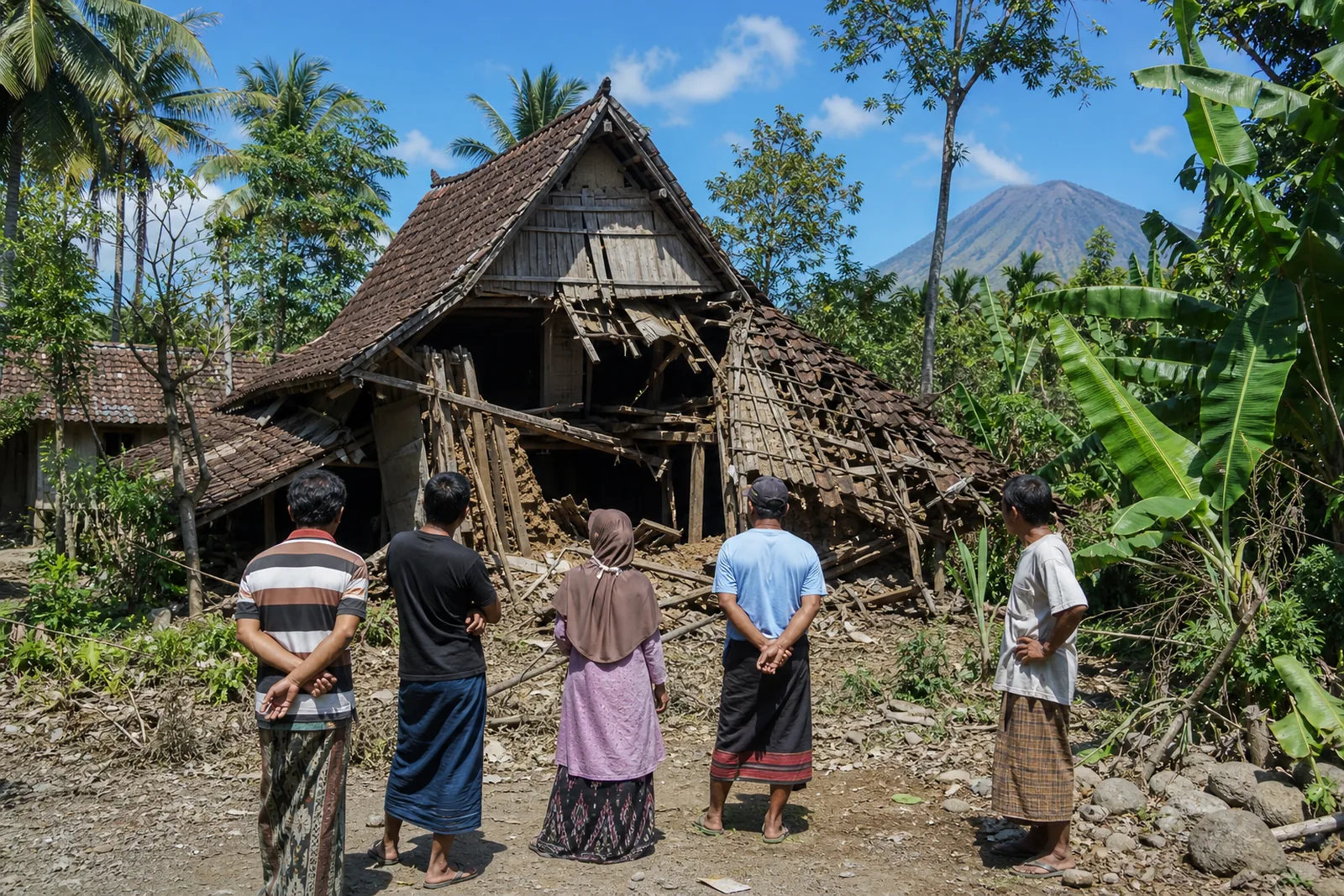
NTT Earthquake Death Toll Rises to 75 as Aftershocks Persist
BNPB reports 75 deaths and 907 injuries as persistent aftershocks keep affected NTT regencies on alert.
The human toll from the major earthquake in East Nusa Tenggara has risen again, with Indonesia’s National Agency for Disaster Countermeasure (BNPB) reporting 75 deaths as of Thursday afternoon. The agency also warned that persistent seismic activity requires residents in affected regencies to remain vigilant.
BNPB reports four additional fatalities
BNPB said four further deaths were recorded on Thursday, taking the confirmed death toll from 71 on the previous day to 75. Berton S.P. Panjaitan, acting head of BNPB’s Centre for Disaster Data, Information and Communication, confirmed the updated figure during a virtual press conference monitored from Jakarta.
The newly reported fatalities were distributed across three districts:
- Two in Sikka District
- One in Manggarai District
- One in Nagekeo District
The update underscores how casualty figures can continue to change as information is gathered across affected areas. BNPB extended condolences to the families of those who died.
Key update: BNPB reported 75 fatalities as of Thursday afternoon, after four additional deaths were recorded that day.
Injuries rise to 907
The number of people reported injured also increased. BNPB placed the total at 907, up by nine from the previous count of 898.
All nine newly recorded injuries were reported in Ngada District. BNPB said medical treatment for affected residents remains under way, despite what the agency described as challenging conditions.
For families in the affected regencies, the figures are more than a running tally. They reflect continuing demands on medical care, emergency coordination and the communities supporting those displaced or injured by the earthquake.
Thousands of aftershocks keep residents on alert
BNPB recorded 3,752 aftershocks in the disaster zone. Among them was a strong magnitude 5.7 aftershock on Thursday at 10:47 a.m. local time.
The agency urged residents across the affected regencies to remain on high alert because seismic activity was continuing. It also advised people to assess the structural stability of their homes carefully before re-entering buildings that may have been damaged.
That warning is particularly important in an evolving disaster response, when initial damage assessments may be incomplete and further tremors can create additional risks. BNPB’s guidance is clear: residents should not assume a damaged building is safe simply because the initial earthquake has passed.
BNPB has advised residents to assess structural stability before re-entering damaged homes.
What this means for investors
This is first and foremost a humanitarian emergency. For investors with interests in Indonesia, it is also a reminder that local conditions can change quickly following a major natural disaster and that official guidance should take precedence over assumptions.
The information currently reported by BNPB is specific to the affected areas in East Nusa Tenggara. The source does not provide an assessment of impacts on Lombok property, tourism, infrastructure or business operations. Investors should therefore avoid drawing broader commercial conclusions from this report alone.
The practical focus should be on verified updates from the authorities and on the safety of people in affected communities. Where an investor has a direct exposure in the disaster area, the immediate questions are likely to concern the condition of buildings, the wellbeing of staff and guests, access to medical treatment, and the ability to obtain reliable local information.
In this situation, the most useful distinction is between confirmed information and inference:
- Confirmed by BNPB: the death toll had reached 75, injuries had reached 907, and 3,752 aftershocks had been recorded.
- Confirmed by BNPB: a magnitude 5.7 aftershock struck on Thursday at 10:47 a.m. local time.
- Not established by this report: any effect on Lombok’s investment market, tourism demand, property values or individual developments.
That discipline matters. In periods of disruption, clear reporting is valuable precisely because it avoids extending the evidence beyond what the responsible agency has confirmed.
The next signals to watch
BNPB’s latest update makes clear that the disaster response remains active. Further revisions to casualty and injury totals may follow as authorities continue gathering information and supporting affected residents.
The agency’s continuing warning over seismic activity means residents in the affected regencies should remain attentive to official instructions, particularly when considering whether to return to damaged homes. Medical treatment is continuing, while the reported aftershock count highlights the unsettled conditions facing local communities.
For the wider investment audience, the appropriate response is measured attention: follow verified official updates, avoid speculation, and keep the humanitarian reality at the centre of the story.
Stay informed, subscribe to the free Lombok Briefing for analysis like this, published twice a month.
What is the latest reported death toll from the NTT earthquake?
Indonesia’s National Agency for Disaster Countermeasure, BNPB, reported 75 deaths as of Thursday afternoon. The figure rose from 71 after four additional fatalities were recorded: two in Sikka District, one in Manggarai District and one in Nagekeo District.
How many people were injured in the NTT earthquake?
BNPB reported 907 injured people, an increase of nine from the previous total of 898. All nine newly recorded injuries were reported in Ngada District, while the agency said medical treatment for affected residents remained ongoing.
What safety advice has BNPB issued after the earthquake?
BNPB warned residents in affected regencies to remain on high alert because seismic activity persisted. The agency recorded 3,752 aftershocks, including a magnitude 5.7 event on Thursday, and advised residents to assess damaged homes carefully before re-entering them.

The Lombok Buyer's Field Guide
Legal structures ranked by risk, the honest ROI math line by line, all six zones ranked, and the 24-point due-diligence checklist. The whole book, free in your inbox.
See what's inside