Indonesian Navy Deploys 217 Marines to Support NTT Earthquake Recovery
Indonesia’s Navy has sent 217 marines, medical teams and engineering equipment to support earthquake-hit communities in East Nusa Tenggara.
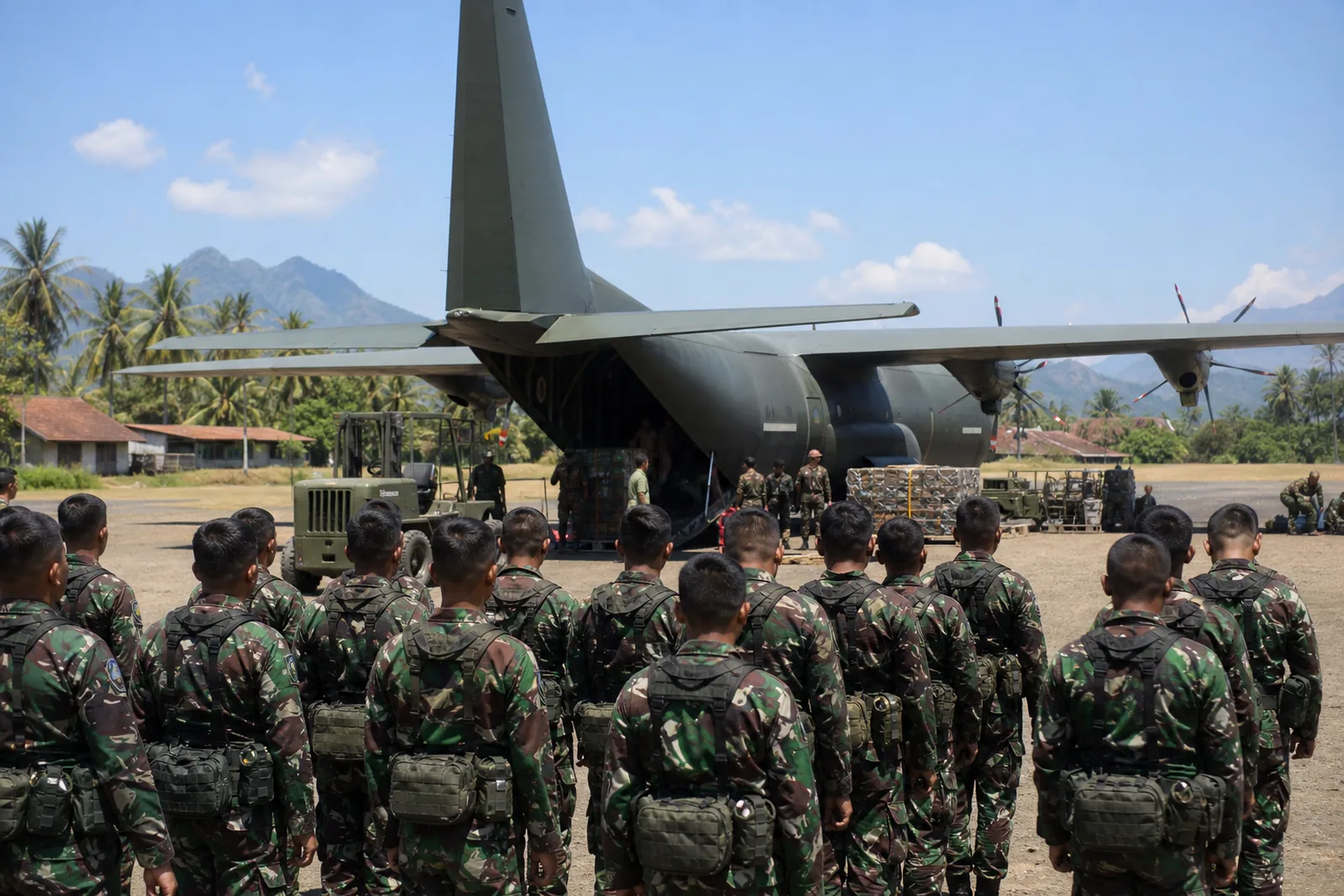
Indonesia’s Navy has deployed 217 Marine Corps personnel to East Nusa Tenggara (NTT) as the response to a magnitude 7.7 earthquake moves from immediate relief towards recovery.
The contingent combines medical, engineering and support capabilities, underscoring the importance of logistics and public infrastructure in the days following a major natural disaster.
A naval deployment built around recovery
According to the Indonesian Navy’s Marine Corps Information Office, the personnel form part of the 2nd Marine Force Disaster Mitigation Task Force based in Surabaya, East Java. The task force departed aboard the navy hospital ship KRI Dr. Soeharso from Surabaya on Wednesday, August 19, with arrival in NTT expected on Friday.
Colonel Rana Karyana, head of the Marine Corps Information Office, said the deployment includes medics, combat engineers and supporting personnel. The division of labour is consequential: medical specialists are assigned to provide health services to affected communities, while construction engineers are intended to help address damaged facilities and infrastructure.
The Marine Corps said its engineers would help handle and restore affected facilities and infrastructure, while healthcare personnel would provide medical services to communities.
This is not simply a personnel deployment. The Navy has also sent heavy equipment and practical field assets intended to support relief operations in difficult conditions.
Equipment for immediate needs and damaged infrastructure
The Marine Corps has mobilised a bulldozer and an excavator, as well as dump trucks, transport trucks, ambulances and operational vehicles. Its equipment list also includes public-kitchen and field-medical-treatment supplies, construction tool kits, field beds, tents and other supporting items.
That mix reflects the parallel demands of a large-scale emergency. Communities need healthcare, shelter and food provision, while access and damaged public facilities can require engineering capacity before normal services can resume.
For investors following Indonesia’s regional development story, disasters are a reminder that resilience is not an abstract planning term. The ability to move equipment, medical support and trained personnel rapidly is central to the recovery of local communities and economic activity alike. In this case, the Navy’s hospital ship provides a platform for personnel and relief capacity, while heavy machinery adds an operational capability beyond the delivery of supplies alone.
A wider response involving ships, aircraft and relief supplies
The naval effort is part of a broader government disaster response following the tectonic earthquake. The source reported that the earthquake had claimed 75 lives as of Thursday, August 20.
Since the first day of the response, the Navy has deployed five vessels, two helicopters and hundreds of personnel. Alongside KRI Dr. Soeharso, the vessels named in the operation are:
- KRI Hiu
- KRI Bung Hatta
- KRI Teluk Celukan Bawang
- KRI Teluk Parigi
The Navy also handed over 34 tons of relief supplies to the National Disaster Mitigation Agency, BNPB, in Jakarta on Thursday for distribution to communities affected by the earthquake in NTT.
The combination of naval vessels, helicopters, personnel, medical provision, engineering equipment and BNPB-directed supplies illustrates the multi-layered nature of disaster response. Early operations must address urgent humanitarian requirements; recovery then depends on restoring essential facilities and infrastructure as conditions permit.
The importance of staying with the recovery
Colonel Karyana said the marines would remain in NTT until conditions return to normal after emergency and recovery measures. That commitment matters because the practical effects of an earthquake do not end when the initial deployment reaches the affected area.
Recovery requires sustained support for communities dealing with disrupted services and damaged infrastructure. The task force’s structure, combining medics, engineers and logistical support, suggests an attempt to meet several of those needs at once. The construction equipment is particularly relevant where clearance, access or repairs are required, while field beds, tents and public-kitchen equipment address more immediate welfare needs.
The source does not set out a timetable for a return to normal conditions, nor does it quantify the full scale of damage. Investors and observers should therefore distinguish clearly between confirmed operational facts and assumptions about the eventual duration or cost of recovery. What is confirmed is that the Navy has committed personnel and assets to the response, and that its marine contingent is designed to support both emergency assistance and the restoration of affected facilities.
What this means for investors
For investors with an interest in Indonesia, the immediate priority is humanitarian: support for communities affected by the NTT earthquake and the recovery of essential services. The more practical lesson is that regional risk assessment should include the quality and mobilisation of public emergency-response capacity, not merely property or tourism fundamentals.
Key points to monitor from this development include:
- Operational continuity: the Navy has deployed medical, engineering and logistical capabilities rather than personnel alone.
- Infrastructure recovery: combat engineers and heavy equipment have been assigned to help restore affected facilities and infrastructure.
- Sustained support: the Marine Corps has said its personnel will remain until conditions return to normal following emergency and recovery measures.
- Official coordination: relief supplies have been handed to BNPB for distribution to earthquake-hit communities.
For now, the most reliable conclusion is straightforward: Indonesia’s Navy has committed substantial operational resources to NTT, with a deployment tailored to medical care, engineering support and field logistics. Further assessments should rest on confirmed updates from the authorities rather than on premature estimates of recovery outcomes.
Stay informed, subscribe to the free Lombok Briefing for analysis like this, published twice a month.
How many marines has Indonesia deployed to the NTT earthquake response?
The Indonesian Navy Marine Corps deployed 217 personnel from its 2nd Marine Force Disaster Mitigation Task Force to support communities affected by the magnitude 7.7 earthquake in East Nusa Tenggara. The contingent includes medics, combat engineers and supporting personnel.
What equipment is the Navy sending to earthquake-hit NTT?
The Marine Corps has sent a bulldozer, an excavator, dump trucks, transport trucks, ambulances and operational vehicles. It has also mobilised public-kitchen and field-medical-treatment equipment, construction tool kits, field beds, tents and other supporting items.
How is the Indonesian Navy supporting the wider NTT recovery effort?
The Navy has deployed five vessels, two helicopters and hundreds of personnel since the response began. It also handed 34 tons of relief supplies to BNPB for distribution, while the Marine Corps says its deployed personnel will remain until conditions return to normal.

The Lombok Buyer's Field Guide
Legal structures ranked by risk, the honest ROI math line by line, all six zones ranked, and the 24-point due-diligence checklist. The whole book, free in your inbox.
See what's inside