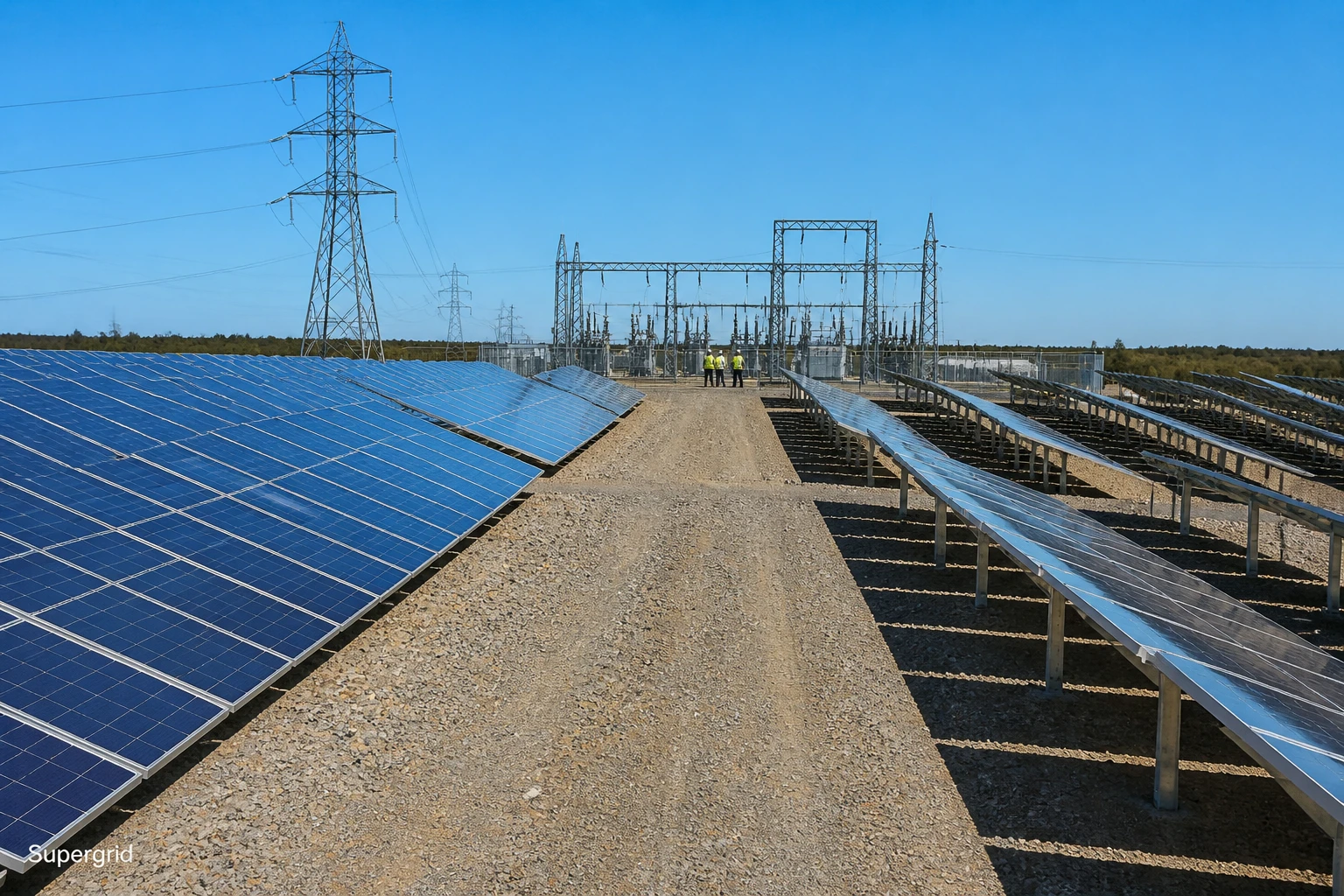
NTB’s Clean Energy Supergrid Could Reshape Lombok’s Investment Case
NTB’s feasibility study for a clean energy supergrid could strengthen Lombok’s long-term appeal, if grid reliability, scale and execution align.
The idea of a clean energy supergrid in West Nusa Tenggara sounds technical, but its investment implications are practical. If the province can connect more renewable generation to a more resilient network, Lombok’s tourism economy, land market and development pipeline could all benefit from a quieter but important form of infrastructure de-risking.
What matters here is not a headline about green ambition alone. It is whether the island moves closer to the sort of energy reliability, cost stability and planning confidence that serious capital tends to reward.
The Context
Antara Business reported on 24 May 2026 that the West Nusa Tenggara provincial government says a feasibility study is needed for a proposed clean energy supergrid project. That wording matters. A feasibility study is not an approval, nor a financing commitment; it is the stage at which a region tests whether the economics, engineering and governance stack up before money is sunk into a larger system.
For Lombok, the strategic significance lies in the island’s transition from an emerging leisure destination to a more complex asset class. Investors have already been drawn by the Bali-overflow thesis, the steady widening of tourism routes, and a pipeline of villas and boutique hospitality products that can, in the right locations, generate 12-22% gross yields. Yet those returns sit on top of fundamentals that still need strengthening: power stability, logistics, water access, road quality and airport connectivity.
A supergrid is not a silver bullet. But it is a signal that the province is thinking beyond isolated projects and towards system capacity. In practical terms, a cleaner and more integrated energy backbone can support a larger tourism economy, encourage higher-spec accommodation, and reduce one of the hidden frictions that often separates “interesting” markets from investable ones.
The broader macro context is also favourable. Lombok has benefited from stronger visitor flows, with some market observers citing tourism growth of 40-50% year on year in selected periods, and MotoGP-linked arrivals have been reported as rising by 47%. Airport expansion is also expected across 2025-26, which adds another layer of confidence to the island’s medium-term accessibility story.
For an investor, the key question is not whether Lombok is already attractive. It is whether the island is becoming easier to underwrite.
Why Energy Infrastructure Changes the Property Conversation
In island markets, infrastructure is often treated as background noise until it fails. Electricity, in particular, is one of the least glamorous but most decisive ingredients in asset performance. Hotels need it for air-conditioning and refrigeration; villas need it for guest comfort and water systems; mixed-use projects need it for construction sequencing and operations; and all of them need it for reputation.
A clean energy supergrid could matter in three distinct ways:
- It may improve reliability by allowing supply to move more efficiently across the province.
- It may support a greater share of renewables, which can stabilise long-term energy policy and project planning.
- It may strengthen the narrative that Lombok is not merely a spillover destination, but a market building its own infrastructure identity.
That last point deserves emphasis. Investors often distinguish between places that are riding a demand wave and places that are maturing into self-sustaining markets. Lombok has long been in the first category. The accumulation of new roads, airport upgrades, tourism events, and renewable energy planning is what pushes a destination towards the second.
This is especially relevant for South Lombok, where the entry point for residential and villa investors is often quoted in a range of roughly €95,000 to €350,000 depending on plot size, spec and proximity to the coast. In a market like that, infrastructure does not just affect utility bills. It affects exit liquidity, buyer confidence and the pace at which an area transitions from speculative to established.
Consider the practical investor lens:
- A villa buyer may not care how the grid is engineered, but will care if outages affect guest reviews.
- A developer may not model the supergrid directly, but will care if site due diligence becomes easier.
- A lender may not price in the project immediately, but will care if the province demonstrates execution discipline.
- An institutional buyer may view clean infrastructure as part of a wider ESG and resilience thesis.
There is also a useful psychological effect. Markets with visible infrastructure investment tend to feel less frontier-like and more governable. That perception can be almost as valuable as the physical asset itself.
| Investment Question | Why It Matters | Lombok Implication | |---|---|---| | Power reliability | Guest satisfaction and operational continuity | Supports premium hospitality assets | | Renewable integration | Long-term cost and policy stability | Strengthens sustainability narrative | | Grid scale | Ability to serve new development clusters | Helps South Lombok and tourism corridors | | Delivery credibility | Confidence in public-sector execution | Influences land and project valuations |
The feasibility study also arrives at a time when Indonesia’s regional competition for capital is intensifying. Bali remains the benchmark, but its limitations are precisely what create Lombok’s opening. If Bali is congested, expensive and operationally mature, Lombok can position itself as the next-layer market: less crowded, still differentiated, and increasingly infrastructure-aware.
That is the essence of the overflow thesis. It is not simply that investors are priced out of Bali and forced elsewhere. It is that they are seeking a market where returns can still be found without surrendering too much on access, brand recognition or future liquidity.
The supergrid discussion fits that narrative because it speaks to capacity. Tourists can be attracted by beaches and sunsets; capital is attracted by systems.
 NTB’s Clean Energy Supergrid Could Reshape Lombok’s Investment Case · Photo by ADollarForCoral on Pexels
The Risks Behind the Opportunity
A disciplined investor should not confuse feasibility with certainty. Many infrastructure ideas become stranded between concept and construction, especially when they require coordination across ministries, utilities, land use planners and private capital.
The most obvious risks are familiar:
- Execution risk: feasibility studies do not guarantee build-out.
- Timetable risk: infrastructure timelines often slip, especially when permitting is complex.
- Cost risk: capital intensity can rise if supply chains, land access or design assumptions change.
- Demand risk: if tourism growth normalises, projected energy loads may prove less urgent than expected.
- Policy risk: incentives and energy regulation can shift with administrative priorities.
For Lombok specifically, the market should also be read with nuance. Strong tourism growth does not automatically translate into uniformly attractive investment returns. Location, product quality and management still matter more than headlines.
That means a clean energy supergrid should be viewed as a contextual upgrade rather than a standalone thesis. It strengthens the background case for well-sited assets, but it does not rescue weak projects, speculative land banking or poorly planned resorts.
This distinction is important in a market where narratives can outpace substance. Infrastructure headlines can encourage optimism, but investors should still ask basic questions:
- Is the site close to the demand corridor, or merely adjacent to it?
- Does the asset rely on future infrastructure, or can it operate well today?
- Is the developer pricing in a long horizon, or marketing a quick re-rating?
- Are operating assumptions credible without assuming perfect execution from the state?
In other words, a better grid can improve the odds, but it does not change the need for due diligence.
What This Means for Investors
For investors watching Lombok from Europe, Australia or the United States, the clean energy supergrid story should be read as part of a broader maturation process. The island’s investment case is no longer built solely on low entry prices or the romance of an emerging destination. It is increasingly tied to whether Lombok can convert tourism momentum into durable infrastructure confidence.
That matters because capital markets tend to reward places that can prove three things at once: access, resilience and demand depth. Lombok already has the scenery and the visitor appeal. It is now working, piece by piece, on the other two.
The immediate takeaway is subtle but meaningful. A feasibility study is not news that transforms valuations overnight. But it is the kind of signal that serious investors track because it suggests state-level thinking is moving in the right direction. If the supergrid concept progresses, it could support stronger operating conditions for hotels, villas and mixed-use projects, particularly in growth corridors where tourism demand is already proving itself.
For existing and prospective buyers, the practical implication is to focus on assets that would benefit from infrastructure uplift rather than depend on it entirely. In South Lombok, that means prioritising locations with genuine access to beaches, transport and hospitality demand, and underwriting deals on current realities rather than speculative completion stories.
A more reliable grid will not by itself make every project successful. But in a market like Lombok, where the next phase of growth depends on turning a promising island into an investable system, it is exactly the kind of unglamorous progress that can matter most.
Stay informed, subscribe to the free Lombok Briefing for market intelligence like this, published twice a month.
What stage is Lombok's clean energy supergrid at, and what does it mean for investors?
As of May 2026, the West Nusa Tenggara provincial government has called for a feasibility study into a proposed clean energy supergrid. That is not an approval or financing commitment. It signals that the province is testing economics, engineering and governance before committing capital, which is an early but meaningful indicator of infrastructure planning ambition.
What gross yields can villa investors expect in Lombok?
Villas in the right locations in Lombok can generate gross yields of 12 to 22 percent, according to figures cited in the market. Entry prices for residential and villa investments typically range from roughly 95,000 euros to 350,000 euros, depending on plot size, specification and proximity to the coast. Net returns will be lower once operating costs are accounted for.
Why does energy infrastructure matter for property investment on a tourist island like Lombok?
On island markets, electricity reliability directly affects asset performance. Outages can damage guest reviews for villas and hotels, disrupt construction sequencing for developers, and reduce buyer confidence in an area. A more integrated grid can support higher-specification accommodation, reduce operational friction, and signal to investors that the market is maturing beyond speculative into more governable territory.

The Lombok Buyer's Field Guide
Legal structures ranked by risk, the honest ROI math line by line, all six zones ranked, and the 24-point due-diligence checklist. The whole book, free in your inbox.
See what's inside