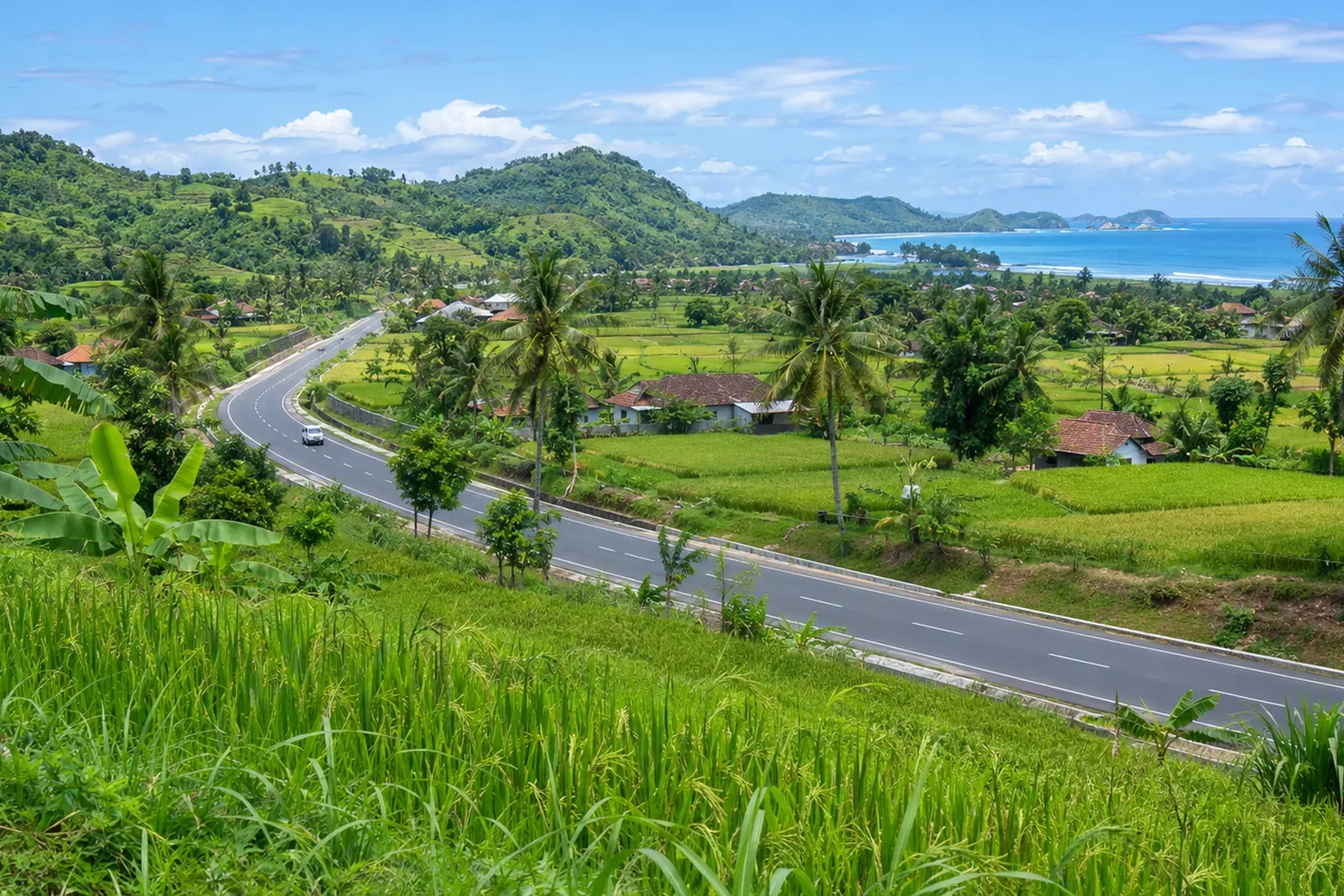
Beyond the Circuit: How MotoGP Is Anchoring Lombok's Creative Economy
Indonesia's Ministry of Creative Economy is leveraging the Mandalika MotoGP circuit to scale Mataram's 21 creative subsectors, creating broader regional value for long-term investors.
Quick answer: Indonesia's Ministry of Creative Economy is using the Mandalika MotoGP platform to expand Mataram's 21 creative subsectors, linking automotive modification, pearl crafts, and culinary industries into a formal financing and digital ecosystem. For private investors, this structural deepening transitions South Lombok from a seasonal race weekend into an integrated, year-round regional economy supporting sustained hospitality yields.
International sports events frequently face legitimate criticism regarding their long-term economic utility. When the Pertamina Mandalika International Circuit staged its inaugural races, cynical market observers questioned whether capital spent on tarmac and paddocks in southern Lombok would meaningfully penetrate the island's broader commercial fabric. The latest institutional policy initiative suggests that provincial and national authorities are determined to avoid the white elephant trap by deliberately tying event infrastructure to grassroots enterprise.
The Context
Speaking at the inauguration of CreaFIN (Creative Economy Ready for Financing) in Mataram, Abdul Malik, Secretary to the Deputy for Creative Economy Strategy Development, articulated a deliberate shift in central government policy. The CreaFIN programme directly facilitates access to structured funding and commercial financing for 50 local creative businesses in the provincial capital. Rather than treating MotoGP purely as a spectator spectacle, the ministry is deploying the event as an international showcase for domestic industry.
Mataram currently hosts 21 distinct creative economy subsectors. While culinary enterprise remains the principal foundation of this sector, the government is actively engineering commercial synergies between heavy global branding and local artisan capacity. The strategy prioritises three established regional trades: automotive modification, artisanal pearl jewellery, and traditional woven textiles. By integrating automotive workshops directly with the international MotoGP ecosystem, policymakers aim to turn transient sporting crowds into permanent export and service contracts.
"Developing the creative economy sector must be pioneered by strengthening the region's leading sectors, including automotive modification, so it can be integrated with MotoGP," noted Abdul Malik during the CreaFIN launch in Mataram.
This industrial linkage is reinforced by digital adoption. The ministry highlighted that mobile banking and payment digitisation have removed historic friction from local enterprise. Capital transfers and commercial billing that once required physical bank branch queues are now completed instantaneously via mobile applications, allowing small suppliers in West Nusa Tenggara to service regional corporate supply chains seamlessly.
Industrial Broadening Across West Nusa Tenggara
For international capital, the diversification of Mataram's creative economy provides an essential macro cushion. Monoculture economies that rely exclusively on transient sun-and-surf tourism remain acutely vulnerable to external demand shocks. When international sporting platforms actively stimulate local secondary industries, the economic multiplier of every inbound visitor expands substantially.
Consider the operational composition of Mataram's creative trade ecosystem:
- Automotive engineering and modification: Custom fabricators and tuning workshops are being repositioned to provide trackside support, bespoke engineering, and branded event merchandise.
- Pearl cultivation and jewellery design: Lombok's saltwater pearl industry, historically reliant on wholesale bulk export to Java or overseas auctions, is moving up the value chain through finished luxury retail.
- Lombok culinary traditions: Indigenous spice processing, specialty coffee roasting, and local culinary concepts are scaling into packaged consumer goods distributed across Indonesian retail networks.
- Heritage textiles and pottery: Traditional Sasak weaving and Banyumulek terracotta crafts are being redesigned to meet international architectural and interior decor specifications.
This structural evolution occurs against a backdrop of undeniable tourism momentum. South Lombok's foreign-arrivals trend is currently running at +40-50% year-on-year, propelled by ongoing post-pandemic recovery and the compounding visibility of the Mandalika circuit. Yet visitor numbers tell only part of the story. The critical commercial variable is economic retention: whether capital spent by visitors remains within the provincial economy or leaks back to Jakarta and offshore suppliers.
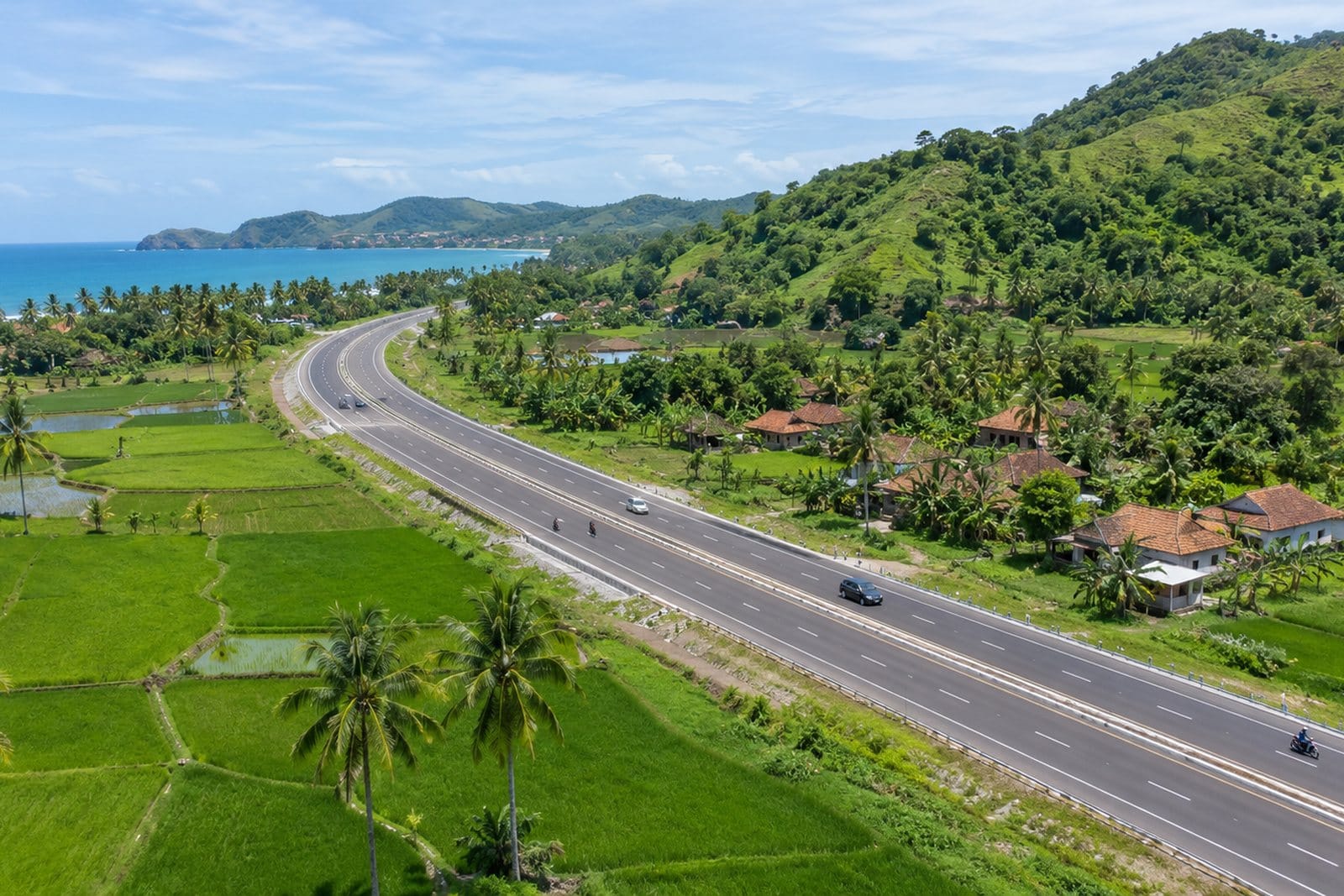 Beyond the Circuit · Illustration: HubLombok (AI-generated)
Infrastructure Spillover: Mataram to the Southern Coast
The relationship between the administrative capital of Mataram and the resort corridors of the south resembles the classic hub-and-spoke development model seen in mature holiday destinations globally. Mataram provides the logistics nodes, corporate banking, government agency offices, and skilled vocational trades. Mandalika and the wider southern coastline capture the high-end leisure and accommodation revenue.
| Location / Submarket | Strategic Economic Role | Prevailing Land Values (Rp / are) | Approximate USD Equivalent / are | | :--- | :--- | :--- | :--- | | Kuta (South Lombok) | Prime commercial, hospitality and liquidity hub | Rp 300-400 million | ~$18,200-24,200 | | Mandalika (SEZ) | Circuit zone, state infrastructure and major events | Rp 100-150 million | ~$6,100-9,100 | | Mataram City | Administrative centre, commercial banking and trade | Urban commercial rates | Varied regional base |
In the real estate sector, this commercial integration directly affects operational margins. Villa operators in Kuta and Mandalika face high operational expenditure if every piece of custom timber furniture, ceramic tile, uniform, or maintenance component must be shipped from Surabaya or Denpasar. When local workshops in Mataram gain financing through initiatives like CreaFIN, local supply chains shorten. Build-out costs rationalise, and replacement procurement during peak operational periods accelerates.
Moreover, the infrastructure built to connect Mataram to the southern coastline (including the upgraded four-lane bypass connecting Lombok International Airport directly to Mandalika) ensures that the creative output of the capital is accessible to luxury hospitality operators within a forty-minute drive.
What This Means for Investors
Sophisticated real estate investors look past superficial headline events to evaluate institutional foundation. The expansion of Mataram's creative subsectors provides several clear operational takeaways for foreign capital entering Lombok:
- Compression of operational leakage: A vibrant local manufacturing and artisan base reduces operating expenses for luxury assets. Turnkey investment-grade villas in South Lombok (typically priced between EUR 95,000 and 350,000, compared to USD 400,000 to 800,000 for equivalent specifications in Bali) benefit directly when interior fit-outs can be sourced from local pearl, ceramic, and timber artisans.
- Yield sustainability over pure seasonality: Race weekends create dramatic spikes in average daily rates, but long-term investment viability depends on year-round occupancy. Developer-quoted gross yields in South Lombok often range between 12% and 22%. However, disciplined underwriting models must adjust for standard market realities: management fees of 18-22%, online travel agency commissions of 15-20%, and realistic stabilised occupancy rates of 55-70%.
- Defensible net yield outcomes: Factoring in these operational deductions, honest net rental yields in South Lombok stabilise between 7% and 12%, with exceptional, top-performing assets reaching approximately 15% net under professional management. The emergence of year-round cultural exhibitions, automotive conventions, and creative symposiums helps cushion the low season, defending baseline occupancy against cyclical dips.
- Regulatory and corporate maturity: As provincial institutions familiarise themselves with commercial financing schemes such as CreaFIN, the broader business environment matures. Foreign investors operating through a formal PT PMA corporate vehicle find an administrative apparatus increasingly accustomed to modern corporate documentation, tax compliance via PBB and BPHTB, and formal commercial contracts.
Lombok's development trajectory is clearly charting a course distinct from its regional neighbours. Rather than allowing unregulated sprawl to outpace local economic capacity, state initiatives are deliberately building the small-business infrastructure required to service modern tourism demand. For institutional and high-net-worth investors evaluating portfolio allocations in Southeast Asia, this deliberate focus on creative industry financing signals an island transitioning from speculative frontier to a durable, multi-layered regional market.
Stay informed: subscribe to the free Lombok Briefing, published twice a month (the 1st and 15th), for market intelligence like this.
How does the Mandalika MotoGP circuit impact Lombok's broader economy beyond race weekend?
The circuit serves as an anchor for national initiatives like CreaFIN, connecting 50 Mataram businesses and 21 creative subsectors (such as automotive modification, pearl crafts, and culinary production) to international markets, creating year-round economic integration across the island.
What rental yields can property investors realistically expect in South Lombok?
While developers quote gross yields of 12-22%, honest net rental yields range between 7% and 12% after accounting for 18-22% management fees, booking commissions, and stabilised 55-70% occupancy. Top-performing assets can reach approximately 15% net.
How do local creative industries affect operating costs for luxury villas in Lombok?
A thriving local artisan and fabrication ecosystem in Mataram reduces procurement costs for hospitality operators. Sourcing furniture, ceramic fittings, and services locally eliminates expensive maritime freight from Bali or Java, preserving operational margins.
The Lombok Buyer's Field Guide
Legal structures ranked by risk, the honest ROI math line by line, all six zones ranked, and the 24-point due-diligence checklist. The whole book, free in your inbox.
See what's inside