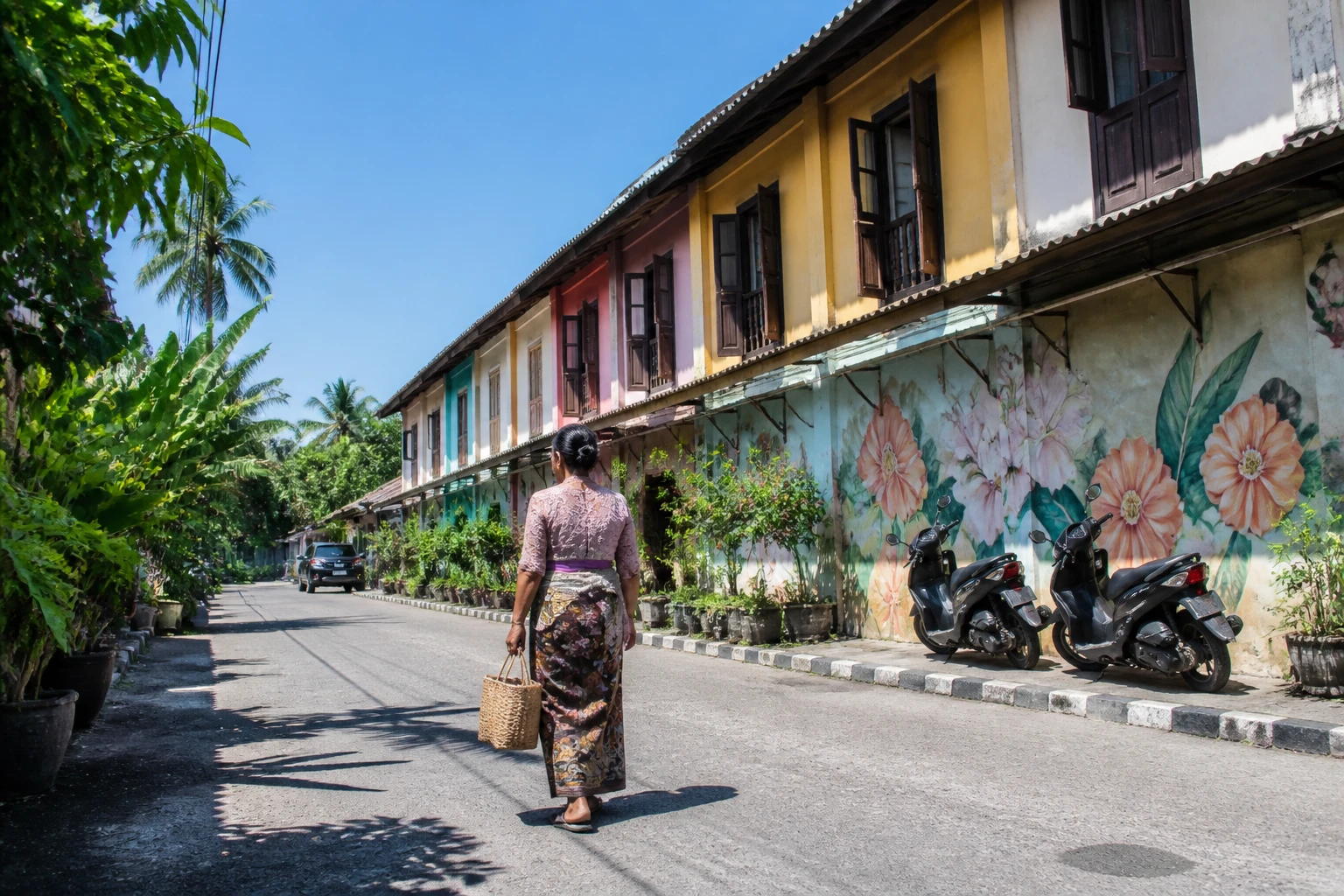
Mataram city property: a different Lombok investment to the beach
Mataram, Lombok's capital city, offers a distinct investment case compared with beach-zone villas: urban shophouses and residential property let to civil servants, students and local families. Occupancy is less seasonal than the tourism corridor, but gross yields are moderate and the capital-growth
Quick answer: Mataram, Lombok's capital city, offers a distinct investment case compared with beach-zone villas: urban shophouses and residential property let to civil servants, students and local families. Occupancy is less seasonal than the tourism corridor, but gross yields are moderate and the capital-growth story is quieter.
A city built for residents, not tourists
Mataram sits on Lombok's western coast and is home to around half a million people, serving as the administrative centre of West Nusa Tenggara province. It hosts government ministries, Universitas Mataram, busy commercial strips and the regional hospital network. Unlike Kuta or Selong Belanak, Mataram's economy runs on salaries and services, not room-night bookings.
For property investors, this distinction matters. In Kuta or Are Guling, income depends on how many tourists arrive each month. In Mataram, tenants are civil servants on fixed contracts, university lecturers, healthcare workers and small-business owners who renew annually. The demand curve is steadier.
What foreigners can own, and how
Foreigners cannot hold freehold title (Hak Milik / SHM) anywhere in Indonesia, including Mataram. The practical routes are the same as anywhere on the island: a leasehold (Hak Sewa), typically structured for 25 to 30 years with extension rights, or a PT PMA (foreign-owned Indonesian company) holding a HGB (Hak Guna Bangunan) title, which runs for 30-year extendable terms.
Shophouses, known locally as ruko, are a popular Mataram asset class. A foreign buyer would typically acquire via PT PMA, which also allows the property to be operated commercially as a rental unit. All deeds must be executed by a licensed PPAT notary, and buyer transfer duty (BPHTB) runs to around 5% of assessed value. If you are considering the Mataram market, independent legal due diligence is essential before signing anything. TerraNusa Advisory (terranusaadvisory.com) is an independent licensed-notary desk that handles the full chain: certificate verification, zoning checks, PT PMA setup and BPN title transfer.
See the zone-by-zone investment guide for how Mataram fits alongside the beach corridors.
The tenant base: locals, long-term leases
The Mataram rental market runs on 12-month contracts, denominated in rupiah. Tenants are less likely to negotiate down and more likely to renew if the property is well maintained. Vacancy rates in well-located residential and commercial streets tend to be low because the city has limited new supply relative to an expanding civil-service and student population.
This is a different risk profile from the beach villa model. Tourism-dependent yields swing with seasonality, platform algorithms and event calendars, as explored in the long-term vs short-term rental guide. Mataram rents move with local wage inflation and the government salary scale, which tends to track official CPI. Predictable, but not exciting.
Yields, upside and the honest trade-off
This is where honesty matters. The verified yield ranges for the beach corridor are net yields of 7 to 12% after management fees, with top-performing assets approaching around 15% net (see market data for zone breakdowns). Mataram's urban rental market does not match those figures. Shophouse and residential yields are lower, driven by annual rupiah-denominated rents that are modest by European comparison, and the absence of the premium that tourists pay for short-stay accommodation.
The upside case for Mataram is different: stability over growth. Civil-servant tenants do not disappear between seasons. Shophouses on busy commercial strips maintain high occupancy year-round. The capital-growth story is slower because Mataram does not benefit directly from the Mandalika MotoGP circuit's tourism wave or the "Bali-overflow" dynamic that is driving Are Guling (around +47% year-on-year in land value momentum) and Kuta, where prime land sits at Rp 300 to 400 million per are, the island's liquidity leader.
Investors drawn to the Lombok beach corridor, including those considering Are Guling where Samudra Villas (our parent company) develops turnkey villas from around USD 255,000, are targeting a different thesis: high gross yields, early-cycle land appreciation and tourism tailwinds. Mataram suits investors who want rupiah-denominated income stability and are comfortable with lower headline yields and a longer time horizon.
Practical guidance
Before committing to Mataram property, keep four points in mind.
Know the legal structure. PT PMA is the most flexible route for commercial shophouse investment. Set-up costs and ongoing compliance requirements add to total cost of ownership, so factor these into your yield calculation before comparing headline numbers with other markets.
Verify the certificate independently. In Mataram, as everywhere on Lombok, insist on independent verification of the relevant certificate at BPN before signing. Urban markets can carry disputed or encumbered titles that do not surface until due diligence is done properly.
Price in rupiah risk. Long-term Mataram rents are denominated in IDR. If the rupiah weakens against the euro or dollar, a nominally stable yield shrinks in hard-currency terms. Model both scenarios before committing.
Compare honestly with beach alternatives. If your primary goal is total return, the beach corridor's capital-growth profile and tourism-driven gross yields are structurally higher at this stage of Lombok's cycle. Mataram suits investors prioritising income predictability over upside. Neither thesis is wrong; they are simply different bets on different parts of the same island.
Can foreigners legally buy property in Mataram?
Yes, through a PT PMA (foreign-owned Indonesian company) holding HGB title, or via a long-term Hak Sewa leasehold typically structured for 25 to 30 years with extension rights. Foreigners cannot hold freehold (Hak Milik) anywhere in Indonesia. All deeds must be executed by a licensed PPAT notary; buyer transfer duty (BPHTB) is around 5% of assessed value.
How do Mataram rental yields compare with Lombok beach villas?
Mataram's urban rental market, driven by long-term local tenants paying annual rupiah-denominated rents, does not match the beach corridor's verified net yields of 7 to 12% (with top performers around 15% net). Yields are lower but more stable, with less seasonal fluctuation and predictable lease renewals. Investors should also factor in rupiah-to-hard-currency risk when calculating returns in euros or dollars.
What types of property are most suitable for foreign investors in Mataram?
The most common commercial asset is the ruko (shophouse), typically acquired through a PT PMA structure and let to small businesses on annual contracts. Residential property is also available via leasehold or PT PMA. Demand is supported by the civil-service workforce and the student population around Universitas Mataram, though capital-growth upside is more modest than in the beach zones.
The Lombok Buyer's Field Guide
Legal structures ranked by risk, the honest ROI math line by line, all six zones ranked, and the 24-point due-diligence checklist. The whole book, free in your inbox.
See what's inside