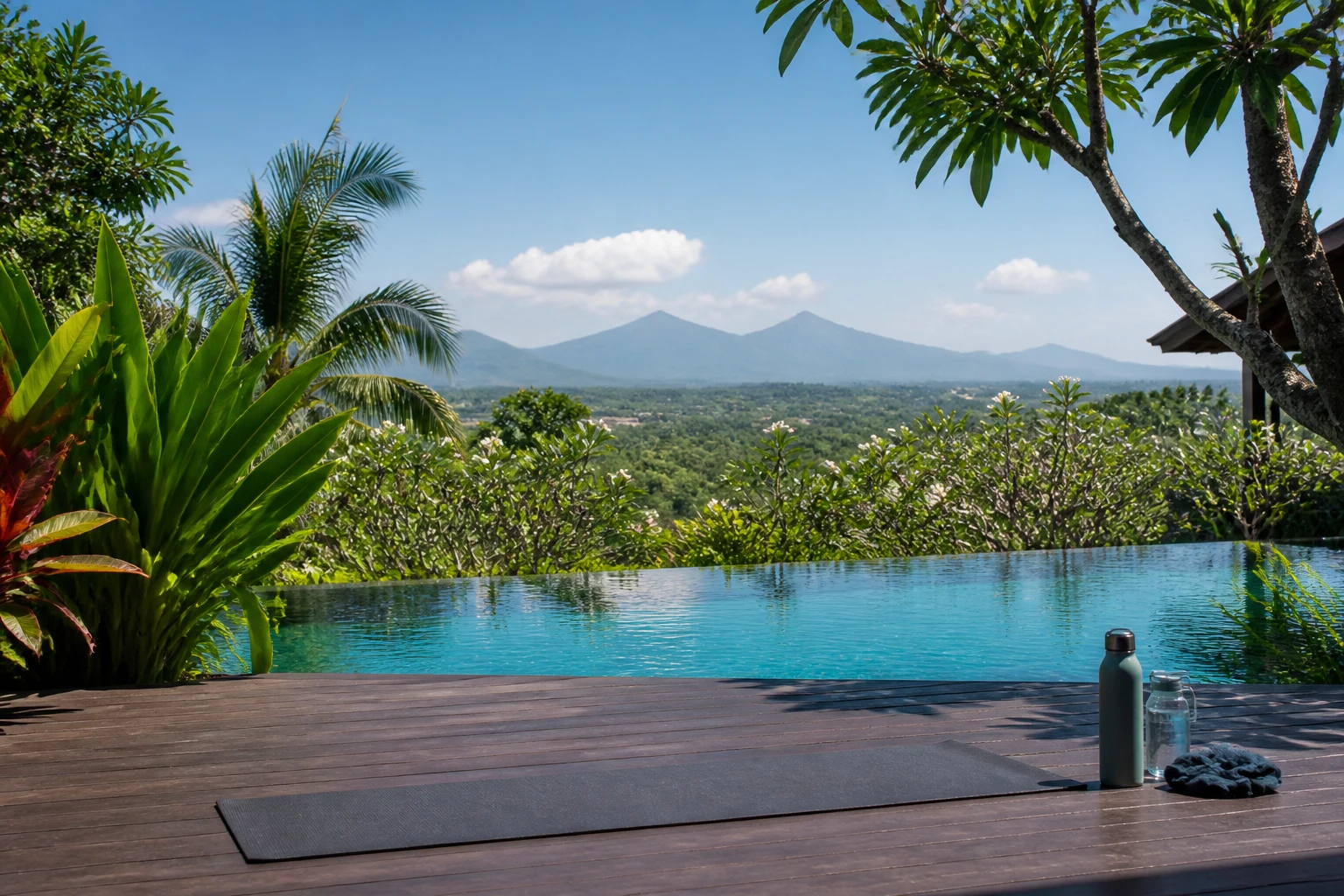
Wellness Tourism's Lombok Opportunity: How Bali's Fitness Boom Is Reshaping Investment Demand
Bali's fitness boom is pushing wellness tourists to Lombok. Savvy investors are targeting 7–12% net yields (an estimate) alongside 38–47% developer-quoted YoY appreciation in villa markets primed for retreat-style tourism.
Fitness and wellness have become as central to a Bali vacation as the beaches themselves. From yoga studios and Hyrox training camps to pilates refineries and curated fitness retreats, Bali has positioned itself firmly as a wellness destination for affluent, health-conscious travellers. The trend is undeniable, and it's reshaping investment opportunities across Indonesia's tourism landscape.
But Bali's success is creating a familiar pattern: rising costs, congestion, and premium positioning that pushes new demand to earlier-cycle alternatives. For property investors, that overflow is pointing directly to Lombok.
Bali's Wellness Economy Reaches Saturation
Bali has become fitness-obsessed. The wellness trend isn't incidental, it's now as much a pillar of the Bali tourism narrative as beaches and temples. Yoga classes, personalized coaching, surf-and-fitness retreats, and high-end wellness resorts are consistently booked. This legitimacy attracts a specific traveller: affluent, health-conscious, willing to pay premium rates for curated wellness experiences.
The economics are compelling. As Bali's wellness infrastructure strengthens, property prices have followed accordingly. A comparable villa investment in Bali now costs USD 400,000–800,000 for the same spec that enters at €95,000–350,000 in South Lombok. Occupancy in Bali's best zones runs 70–85%, but capacity is tightening and prices are climbing faster than income returns.
Lombok as the Wellness-Tourism Frontier
Lombok is capturing the overflow. Foreign arrivals are up 40–50% year-over-year, and villa rental appreciation in key zones has accelerated sharply: Kuta and Mandalika villas up 38% YoY, Are Guling up 47%. These aren't speculative price moves, they reflect a specific market inflection: demand from tourists seeking the Bali experience at earlier-cycle scale and cost.
The wellness narrative is beginning to apply here too. Lombok's beaches are as pristine as Bali's were a decade ago. Infrastructure is expanding: airport improvements are underway, road networks are improving, and digital connectivity is catching up. A wellness tourist in Lombok finds quieter coastlines, lower prices, and growing yoga and retreat infrastructure, plus authentic Indonesian culture that Bali has increasingly commodified.
For property investors, this is the inflection point. The tourists seeking wellness experiences are arriving; the infrastructure to serve them is scaling; and entry prices still offer meaningful upside before the cycle fully prices in the demand shift.
The Wellness Villa Model: Why It Works
Not all villas perform equally in the wellness era. A purpose-built wellness villa, spacious, quiet, anchored to retreat-style amenities, commands both premium nightly rates and higher booking frequency than general short-term rentals.
Consider the profile of a wellness tourist. They typically:
- Book for 7–14 days (not 3–4 night breaks)
- Pay 30–50% premium for villa space over hotel rooms
- Seek proximity to yoga, fitness, or wellness activities
- Value quiet, curated environments over nightlife
- Return repeatedly or refer others (high repeat and word-of-mouth)
A villa explicitly positioned for wellness tourists, marketed to retreat operators, yoga platforms, and fitness apps, attracts longer stays and better occupancy profiles than a general-purpose short-term rental. The combination of higher nightly rates and reduced vacancy compresses the payback timeline significantly.
The Investment Math: Honest Yields in a Growing Market
Here's where the thesis crystallizes:
Net rental yield: 7–12% after management fees and realistic occupancy (55–70%). Top-performing wellness-focused villas reach 12–15% net.
Developers quote gross yields of 12–22%, but this includes management costs (18–22% of gross), OTA commissions (15–20%), vacancy allowance, and maintenance. The honest net is 7–12%.
Across three South Lombok zones with strong wellness-tourist momentum:
- Kuta (action + wellness): Rp 300–400M/are (~USD 18,200–24,200/are) land; villa entry ~€194–344K; gross yield 14–22%.
- Selong Belanak (family wellness): Rp 150–250M/are (~USD 9,100–15,200/are); villa entry ~€151–301K; gross yield 13–19%.
- Are Guling (frontier, authentic): Rp 120–180M/are (~USD 7,300–10,900/are); villa entry ~€150–255K; gross yield 17–25%.
(Land pricing follows local convention: per are; 1 are = 100 m².)
The capital appreciation story is secondary. A €255,000 villa in Are Guling at an illustrative 9.5% net yield, the midpoint of the 7–12% honest range, would generate roughly €24,000 net income annually at stabilised occupancy. That is an estimate, not a promise, and it is before land appreciation or currency effects.
Zones for Wellness-Tourist Capture
Different zones attract different wellness segments:
- Kuta: The established premium zone. Best for villas targeting active tourists (yoga + surf + fitness community). Highest demand, lowest vacancy risk, but highest entry cost. Momentum: +38% YoY.
- Selong Belanak: The family-wellness play. Quieter than Kuta, strong appeal for retreat groups and family wellness operators, growing retreat-operator presence. Mid-range entry, strong capital appreciation (+22% YoY).
- Are Guling: The frontier. Lowest entry cost, highest capital upside potential (+47% YoY), attracting retreat operators and wellness pioneers. Developments like Samudra Villas in Are Guling are anchoring core infrastructure (yoga studios, co-working, community spaces) to build the ecosystem from scratch.
What This Means for Investors
Three takeaways frame the opportunity:
1. Timing. Bali's wellness economy is mature; Lombok's is in early growth. Entry prices are 60–70% lower than Bali for comparable spec. Markup potential is meaningful if you're positioned correctly.
2. Legal setup matters. Foreigners cannot hold freehold land in Indonesia. You'll operate via Hak Sewa (leasehold, 25–30 years with extension options) or PT PMA (foreign-owned company holding Hak Guna Bangunan, 30 years extendable). Both require a licensed notary to handle due diligence, company setup, and deed transfer at the land office. Budget 5% BPHTB transfer duty upfront. Firms like TerraNusa Advisory specialise in this process.
3. The yield clock is running. Occupancy and nightly rates benefit both experienced villa operators and first-time investors. Positions in Selong or Are Guling offer the highest developer-quoted gross yields (13–25%) relative to entry cost. If capital appreciation is your thesis, Are Guling offers the steepest momentum (+47% YoY).
The Larger Picture
The wellness-tourism boom in Bali is not a passing trend, it reflects a durable shift in how affluent tourists travel. As Bali's prices and crowding intensify, that demand migrates to earlier-cycle destinations with authentic character and room to grow. Lombok is where that migration is landing, and the property markets are pricing it in.
For investors with a 5–10 year horizon, a wellness-positioned villa in a high-momentum Lombok zone offers both current yield and meaningful capital upside.
Stay informed, subscribe to the free Lombok Briefing for analysis like this, published twice a month.
What makes a wellness-focused villa more profitable than general short-term rental?
Wellness tourists book 7–14 days (vs. 3–4 nights), pay 30–50% premium for villa space, and show high repeat rates. Longer stays reduce vacancy and marketing costs, boosting net yield from 7–12% to 12–15%.
Can I get the same wellness experience in Lombok as Bali?
Yes. Lombok's beaches, yoga studios, and retreat operators are growing fast (tourism +40–50% YoY). Entry prices are 60–70% lower than Bali. Quieter environment appeals to authentic-retreat seekers.
Which Lombok zone is best for wellness-villa investment?
For yield: Are Guling (17–25% gross, €150–255K). For established demand: Kuta (14–22% gross, €194–344K). For family retreats: Selong Belanak (13–19% gross, €151–301K). All three show strong YoY appreciation (22–47%).

The Lombok Buyer's Field Guide
Legal structures ranked by risk, the honest ROI math line by line, all six zones ranked, and the 24-point due-diligence checklist. The whole book, free in your inbox.
See what's inside